

Japan
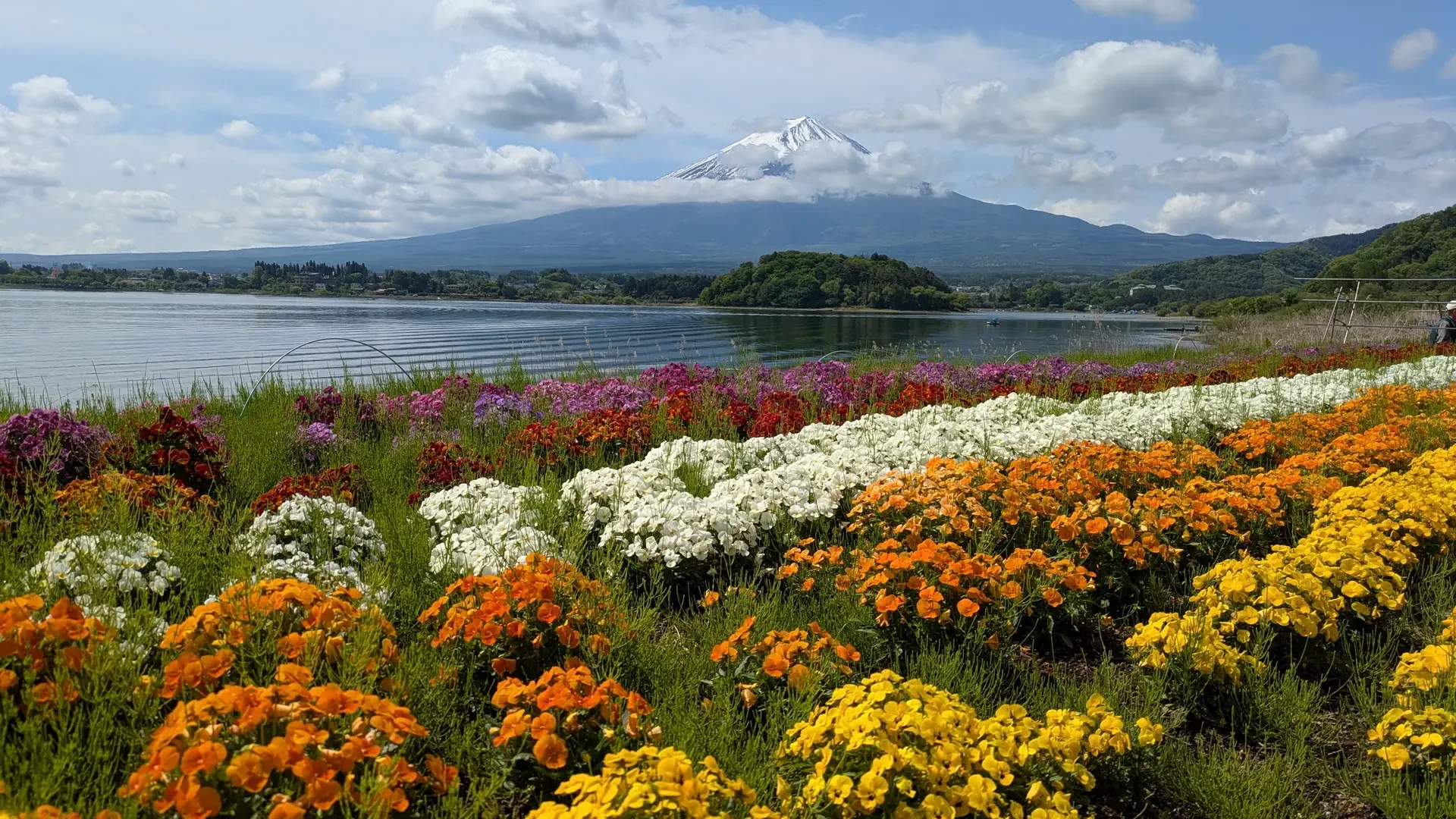
Ancient and modern combine perfectly in Japan, but it is the degree of civilization inherent in the character of its inhabitants that makes it a unique country. The nature of the southern islands of Kyushu and Shikoku is perhaps the real positive surprise, far beyond expectations. Nagasaki and Hiroshima, witnesses of atomic nightmare. Nara and Kyoto, where Japan was born and lived. The Japanese Alps culminating in the sacred mountain of Fuji. Finally Nikko and Tokyo, the sacred and the great beauty united with the sacred.
Map
Japan map - complete itinerary
MORE EAST THAN EAST – Ancient and modern combine perfectly in Japan, but it is the degree of civilization inherent in the character of its inhabitants that makes it a unique country. The nature of the southern islands of Kyushu and Shikoku is perhaps the real positive surprise, far beyond expectations. Nagasaki and Hiroshima, witnesses of atomic nightmare. Nara and Kyoto, where Japan was born and lived. The Japanese Alps culminating in the sacred mountain of Fuji. Finally Nikko and Tokyo, the sacred and the great beauty united with the sacred.
井の中の蛙大海を知らず (I no naka no kawazu taikai o shirazu)
A frog in a well has no knowledge of the great ocean (having a narrow view of the world because one's experiences and knowledge are limited)
Japanese proverb
Japan is in fashion these days: in addition to the convenient change of the moment, it has always had the charm of a culture permeated with spirituality corroborated by modern attractions. Perhaps it is not sufficiently renowned for its natural and scenic beauty, and it is precisely in this area that there is still a lot to discover, beyond the well-known charm of an imperial Kyoto rather than the delights for nerds.
Before visiting it, however, Japan must be understood. It is not just a question of a country that has remained out of history for centuries, distant in every sense from the others that have made the history of the world, for better or for worse. He lost, or perhaps avoided, that phase following our Middle Ages, remaining caged in his own by a closed and obscurantist political class, separated from the rest of humanity for almost three centuries and only entering it in the mid-nineteenth century with his neck, only to then rediscover his power. An ominous feeling that led him to unbridled imperialism, first at a regional level (invasion of Korea plus part of China) and beyond with the historic victory in the naval battle of Tsushima against Tsarist Russia, then at a planetary level with the Axis together with Germany and Italy during the Second World War. Humiliated, a term with a much heavier meaning if translated to those latitudes, by an unconditional surrender after two atomic bombs and catapulted into the West immediately afterwards. What could it have meant to become an economic power after military annihilation? Finding yourself in a context where skyscrapers outline the urban landscape alongside temples, but being able to rediscover yourself strong thanks to cars rather than cannons. Even more than the Buddhist religion, Shinto has represented an ideal connection between the spiritual world and the materialism inherent in business. Since ancient times, inari (foxes) have been venerated in sanctuaries, a symbol of cunning to which the faithful turn to see their successful intentions fulfilled. Requests not necessarily forwarded for philanthropic purposes, but felt in the depths of a concrete people.
National character and curiosities:
- The traditional and well-known courtesy of the Japanese in practice it is even more surprising. What is presented to us during our stay is not just a formality. Even people without specific interests (such as receptionists or waiters) prove willing to help us on any useful occasion. The language limit remains, but good will on both sides allows us to overcome every barrier using all possible means: single words, gestures, Google Translate, images taken from Google and anything else that may be useful. When they are unable to be of support one would almost console them for what they were unable to do. A perfect organization does the rest, limiting the risk of errors or misunderstandings as much as possible.
- Education: both on public transport and on the street the tone of voice always remains low, there is no concept of speaking loudly or shouting. When public transport tends to fill up, passengers are asked to refrain from making or receiving phone calls. In case, there are defined points to use so as not to disturb other passengers. Smoking is also prohibited in many central areas and the signs are clearly visible on the ground. In reality, smokers are considered pariahs: in the service areas there are closed external stalls (sometimes near the rubbish bins). We have frequently seen people with cigarettes in hand breaking away from their group of friends to get their "fix" without hitting them with cigarette smoke.
- Clothing: another surprise came from the way the Japanese dress. Now accustomed to the ripped jeans or jeans with the crotch at knee height in vogue in the Western world, which it is not clear whether they only portray intellectual poverty or also evoke an economic one, suits and suits are still in fashion in the Land of the Rising Sun. Men and women (not all managers) frequent the subways in sober clothes, men often with a jacket in many cases accompanied by a tie and women with elegant, classic-cut clothes. All grafted onto genetically slim physiques but without graceful shapes that further enhance their charm. The only shadow of decay can be found in the center of Tokyo, where modern punks show off black clothes with thick platform shoes, the girls in particular show off long fishnet stockings that almost reach their shorts.
- The fleet of cars it is made up of 95% local vehicles; the remainder are luxury cars, essentially of European origin (BMW, Mercedes and some Porches); we see some Fiat 500s, the only Italian cars encountered during the trip. It should be noted that many roads are particularly narrow, sometimes not even easy for a single car; the JSKN class is the most popular, compact cubic boxes, not at all aerodynamic and aesthetically unattractive from the outside but extremely functional and spacious inside, equipped with accessories and with reduced fuel consumption.
- Circulation: traffic is always characterized by order and respect, we did not find any queues or traffic jams despite the holiday period, thanks to the massive movement with tourist buses and efficient trains. The traffic lights are positioned horizontally and are placed after the intersection, which requires attention so as not to find yourself in the middle of it before realizing that it is red. Speed limits are perhaps one of the few topics on which the Japanese reveal a very flexible interpretation, as they are not, for example, with parking and driving while intoxicated (max. 0.3 per thousand): given the presence of an all too prudent limit of 80 km/h, people usually travel at 100 and even higher. Idling (i.e. keeping the engine running when the vehicle is stationary) is very frequent, both to keep the air conditioner or heating running as a form of convenience and to avoid turning off the engine when you are on board. As regards pedestrian traffic, we were unable to understand which side should be kept within public passage corridors (be they inside metro stations rather than escalators). Sometimes you are told to stay on the right, sometimes on the left.
- Urban planning: the destruction of the last World War required the reconstruction of entire neighborhoods, if not cities, which favored an urban reorganization based on more modern concepts, so that the road system and the development of routes for public transport could benefit from it. Economic development and the consequent financial availability allowed the creation of futuristic bridges and elevated bridges in the 70s and 80s which have represented the cutting edge in public works for years. Moving on to private construction, many houses are still built in wood today, as can be seen in the typical merchant or samurai neighborhoods, as well as in the castles that have made the history of the country
- Parking: We will often come across the intelligent parking system, which we know is a strictly managed matter in Japan. There is practically no free parking along the road: either it is private parking (therefore prohibited), at a business (e.g. the supermarket, but it can be used only during shopping times), or in the designated public car parks, normally for a fee. In this case the car is parked in the designated spaces, after a couple of minutes a platform is raised under the body to block the car's exit; when you return you type the pitch number on the appropriate screen, the display shows the amount due (just follow the instructions in Japanese...), you pay it in cash and the platform lowers allowing the wheel to pass over it, thus freeing the car. Obviously, if you are late, the platform goes back up, blocking the exit.
- Shops: throughout the trip the small markets that can be found almost everywhere will be a guarantee for finding drinks, breakfast foods, simple lunches (sushi, onigiri, etc.) and everything you need in everyday life. This type of shop is familiarly called konbini; there are essentially three chains (7/11, Lawson and FamilyMart) and they offer standard Japanese quality. Obviously if there is a way to find a specialized delicatessen rather than a pastry shop we try not to miss the opportunity. They often have a small but uninviting display of hot, essentially fried food.
- I prices they are quite low and at airports we don't see the speculation typical of practically every airport in the world: a coffee costs approx. €1.50, a liter of water €1, onigiri €2 each, biscuits in the shop don't reach €2, for a light but good dinner €15 may be enough, while paying €25 increases the quantity. The exchange rate around 160Y for €1 is certainly of great help, but in some cases we made a comparison with more unfavorable situations (just remember that just before Covid the exchange rate was around 115/120Y) and it emerged that it was not that unfavorable, taking into account that the quality always has a rather high standard. Exchange offices are scarce, except for the urban centers of Tokyo and Kyoto, in clear contrast to the habit of intense use of cash by the Japanese. Some are automatic, offer disadvantageous economic conditions and change small amounts, normally sufficient to purchase a ticket to visit a monument or little more.
- What in our eyes is a clear contradiction are the payment systems or totally automated check-ins with relatively little use of credit cards. For example, it is practically impossible to buy a metro ticket at a physically manned counter, but at the same time you have to pay in cash and there are no problems getting change. The same happens in restaurants, where in many cases you find yourself having to order via an app on a tablet (perhaps using Google Lens to translate) or via QR on your smartphone only to then pay the bill with banknotes. When you pay in cash there are always small trays on which to deposit the money, the employee (at the supermarket or elsewhere) counts it on the spot showing quite clearly how much has been given to him and collects it; this evidently in order to avoid disputes later with any remainder
- Kitchen: there is a lot of talk about Japanese cuisine and not without good reason. However, it is necessary to make a brief analysis and make some distinctions to make an objective judgement: if on the one hand eating good raw fish is a pleasure for the palate, is good for your health and honors a country that knows how to maintain the cold chain so as not to poison the stomachs, it should also be noted that sushi, sashimi, nigiri and the like cannot be considered real cuisine, lacking the combination of ingredients that lead to creating a dish with a different taste from the original components. Ramen, udon and soba themselves are good soups or pastas that would enjoy modest success in Italy. In essence: compared to impeccable ingredients that delight the taste, there is no matching creativity and elaboration that not only chefs, but also only mothers of the past knew how to cook. That said, eating in Japan is one of the reasons to buy a plane ticket.

Strangely, in a Far Eastern country where rice is thought to be almost the only choice when it comes to cereals, in reality, with the exception of sushi and when used as a complement to fish or meat dishes, it is used less than in other cuisines in the area. Wheat is the most popular and is consumed in ramen, udon and otonomiaki and is present in many typical recipes.
- Vending machines: present everywhere with an incredible capillarity and even in the least imaginable places, you can buy all kinds of fresh non-alcoholic drinks, in some cases even food, at a normal price.
- Face masks: even before Covid, many Japanese were wearing masks in public, perhaps out of a form of extreme hygiene or out of respect for those in front of them. Even now it is common to encounter people with their faces covered, sometimes with designer fabrics or in combination with clothes, especially on the subway or as receptionists, shop assistants or in general people in contact with the public in a customer relationship. However, we often see individuals who wear it by driving alone or walking outdoors. Of course there are no constraints of any kind and the choice is completely free. Wanting to be mischievous, you can read a sign of introversion to hide your feelings resulting from a grimace or other expressions, as we well remember from the times we lived during Covid.
- Baskets: in particular in Kyoto, but throughout the whole of the Japan we visited, we noticed the scarcity if not the total lack of rubbish bins. We have not been able to understand whether these are hygiene reasons, safety reasons to avoid attacks with bombs placed in the bins themselves or something else. The fact remains that depositing even a single piece of paper or an empty plastic bottle can become a difficult task if you are on the street or near a bus stop.
- Toilets: apart from the fact that we have not seen a single traditional toilet, not even in public bathrooms, and that they are all automatic with a more or less varied series of options and comforts, in men's urinals there is a small hook on which to hang the umbrella. In the female ones you can find seats to accommodate children and changing tables complete with every comfort. We see the best of it in a service area along the highway that leads from Nagoya to Kanazawa: just after entering the men's or women's services a display indicates how many toilets are free, so much so that as I'm entering the number one gives way to two, a clear sign that someone has finished their needs and has freed up the place. This is a fitting example of how certain comforts are generalized and usable by everyone and is probably also synonymous with a people who seem to have few desires to express
- Cables: probably due to the unstable ground due to the intense telluric activity, the electric wires seem to be all suspended on poles in a chaotic way, with dangling skeins and consequent optical pollution almost to the same extent as what is seen in much less tidy countries such as Vietnam or Nepal.
Tips and instructions for use:
- Visiting period: if the end of March/beginning of April coincides with the ideal time to see hanami (cherry blossom), the period we were in represents that of the explosion of spring greenery, punctuated by blooms of azaleas, rhododendrons and irises. A tail of hanami can still be enjoyed in mountainous areas where the season is further back. It should be taken into consideration that our visit radius ranges from the center (Nikko) to the south (Kyushu island). Another situation and other colors will be seen in autumn, when the enormous number of maples will take on the chromaticity of rust, further transforming the landscape. However, their green and reddish appearance has all its meaning. The temperatures are mild, with a couple of days where we wouldn't have minded a couple of degrees lower, while we encountered a total of two half days of rain.
- eSim: purchased online with Saily by Nord VPN. It connects immediately and automatically as soon as it hits Japanese soil and we've never had any connection issues.
- even if from Italy you don't need the seen, it is best to fill in the usual information required when entering the country on the site https://www.vjw.digital.go.jp and download the app to obtain a QR code to show to the staff when entering for passport control. It's not a must but it streamlines the practice.
- Taxi app: Uber works but gravitates to the local taxi network and isn't particularly convenient. There is also the GO app which is slightly better. In truth, we only took two taxis and for very short distances we used the usual Uber
- Weather forecast app: We used the Weather Japan app and it proved accurate. In the Fuji area there is a precise site that indicates the expected weather on the mountain in order to facilitate observation: https://fuji-san.info/en/index.html.
- Japan wifi auto connect: an app that helps you search for free wifi. Not bad, especially for smartphones without e-sim.
- IC card: Suica or similar ones are used to avoid paying in cash for the metro, buses, but also various businesses. We preferred not to take it (even if in the end it costs nothing) as by buying day tickets in the cities you can move around better, otherwise cash circulates a lot and there is no problem having money in your pocket.
- Credit cards: unexpectedly in Japan they are used less than in other countries. Tickets can be bought at vending machines but are normally paid in cash and often typical restaurants (izakaya) do not accept cards.
- Electrical adapters: 110v, the same type used in the United States.
- Power banks: we left it at home and we made a mistake. Between Google Maps, Translate, internet, photographs, etc. the smartphone runs out of battery quickly. Luckily we had the old smartphone which supported at least in photography and navigation when necessary.

TOURISM IN JAPAN: despite having gone during the peak season, we were pleasantly surprised by the absence of queues or extremely intense flows of tourists; thanks to the organization and education of the Japanese (a gift that ends up infecting foreigners too). Local visitors tend to travel on package tours; the groups normally arrive by tourist buses, go to visit the most famous monuments and return after stopping in some restaurant for lunch. If you manage to avoid them you are safe; in any case, just move away a little from the main place of attraction and you find yourself in a peaceful environment. However, it must be said that even when you are among many people, behavior is always polite and shouting does not belong to the culture of the island. This form of visiting the most popular temples or sanctuaries brings with it the advantage of being able to listen to the historical narrations from the guides, but at the same time ends up losing that mystical religious charm which inevitably requires a limited human presence, especially with the uninterrupted succession of photos which prevent one from enjoying a intimate atmosphere. Even in these highly touristy sites it is not easy to find someone who speaks English: those who do limit themselves to knowing the essential terms required by the profession, often without any grammatical basis. Asking questions or trying to make a speech gives rise to embarrassing situations where the interlocutor tries to make up for their shortcomings in any way, without succeeding and wasting time. Even the directions in many cases leave something to be desired: apart from usually being only in Japanese, even when there is something in English it is difficult to find a coherent next one. All signs to be attributed not to ill will or systematic disorganization, but rather to the recent development of the international tourism industry.
What is certain - and this is especially true for Kyoto - the increase in visitors is disrupting the orderly daily life of the average Japanese man, both on public transport and in shops or elsewhere. Everything revolves around the delicate rules of polite coexistence, which the interference of foreign tourists dangerously jeopardizes. Tourism must be seen at least from a dual perspective with further distinctions: while the Japanese travel compactly in groups and move in a homogeneous way especially by bus, foreigners can be in organized groups (not many) or alone (perhaps with a local direction to get out of linguistic, cultural, signage problems, etc.). Among the latter we clearly recognize Westerners, Middle Easterners or Indians, but we largely miss the massive presence of Asians who we cannot distinguish from the locals (a detail not to be told to the Japanese!). Among these we have identified several Taiwanese, inhabitants of Hong Kong and of course the Chinese, who due to culture and history cannot easily integrate with the Japanese. The casual attitude of some probably annoys and leads to some form of poorly concealed intolerance. We don't know if it has anything to do with this feeling, but sometimes it happens that we visit important monuments without there being documentation in English; the brochures exist, they are well made, but they are only written in Japanese.
The Japanese have a high sense of privacy, but the Italians who live in tourist areas also know it well that the presence and sometimes interference of holidaymakers does not always happen on tiptoe: changing the mentality takes generations and a period of favorable currency exchange is not enough to transform a population with the highest median age in the world to tolerate those who arrive with a different culture, even if they only stay for a few days. The globalization of the last 30 years has not affected the daily life of most Japanese, tied to religious and historical values that do not favor openness.
Itinerary
Travel days
Arrival in Tokyo
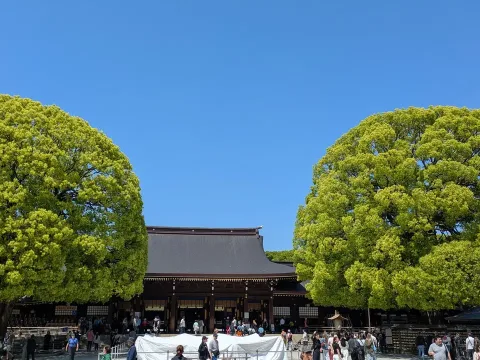
The easternmost capital of Asia.
Kyushu Island I
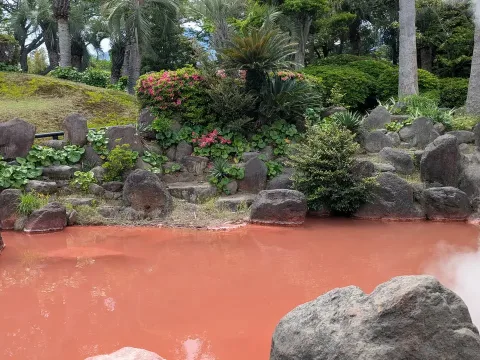
Devil and holy water: the hells of Beppu and the Dazaifu shrine.
Kyushu II Island
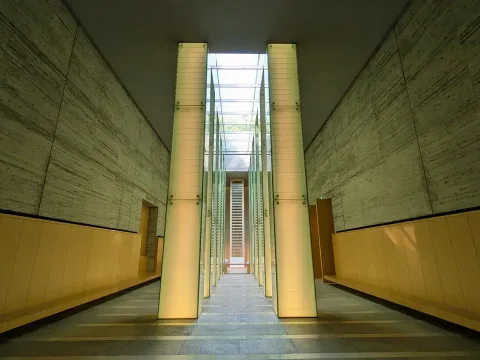
Nagasaki, the shadow of the atomic bomb looms large.
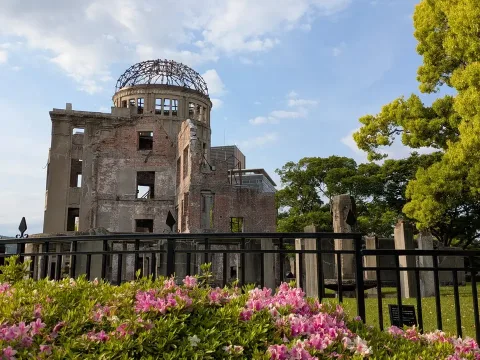
Hiroshima
Springtime – despite everything – is blooming at the site of the first atomic bomb.
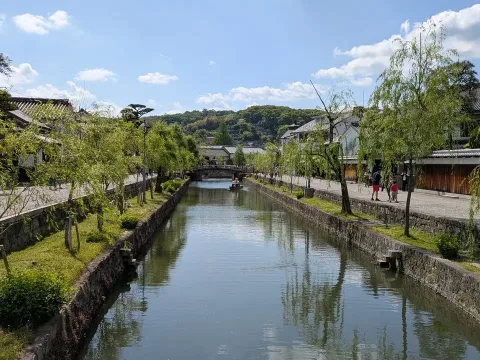
Shikoku Island I
The north: paradise on earth of the Ritsurin Garden, the force of the marine whirlpools at Naruto.
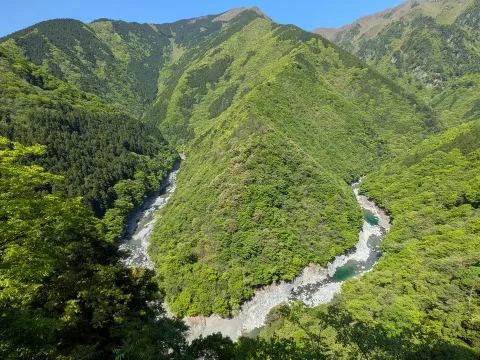
Shikoku Island II
The dominance of green in the central valleys. Narrow roads and mountain villages.
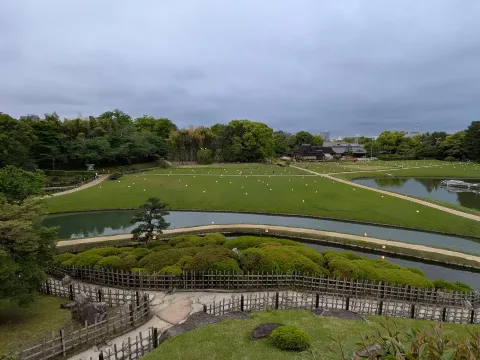
Shikoku Island III
Matsuyama Castle and the Koraku-en Garden in Okayama
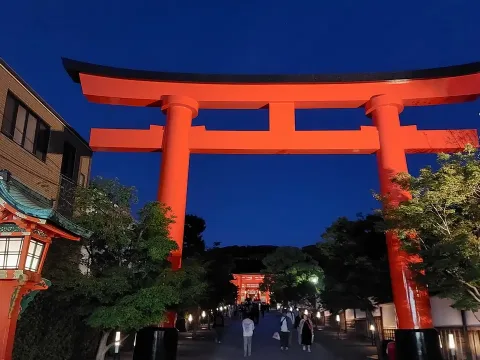
Himeji and Kyoto
The Himeji Castle, rich in history, and my first encounter with Kyoto: we arrived at the Fushimi Inari Temple.
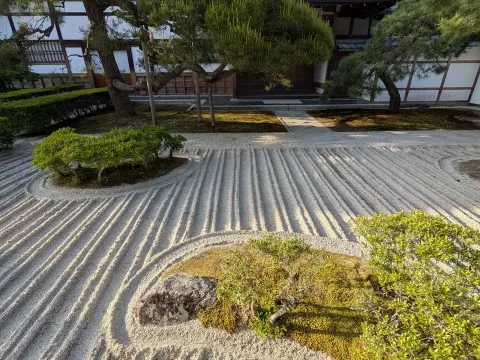
Kyoto II
The city of a thousand temples, and much more.
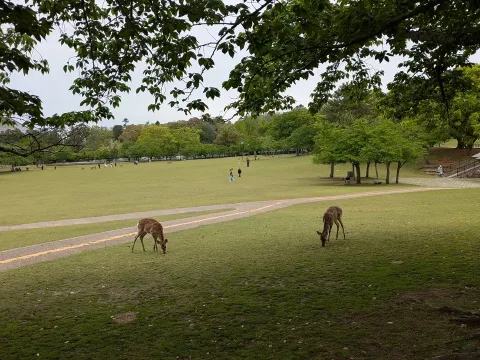
Nara and Kyoto III
The first capital of Japan and my last visit to this endless city.
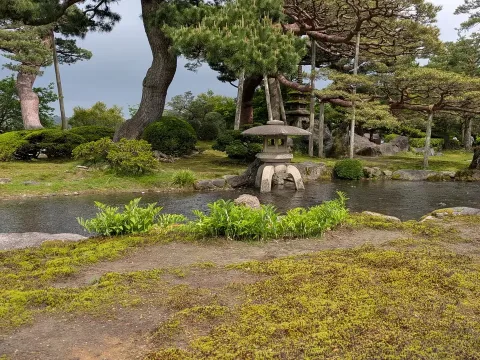
Japanese Alps I
Kanazawa, market and castle; but above all, the magic of the Kenroku-en garden.
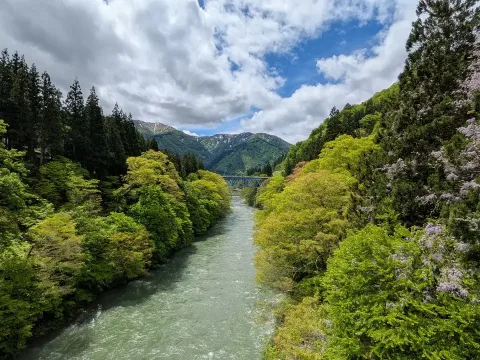
Japanese Alps II
Shirakawa and the Gassho-style houses, Takayama and its historic center, and Matsuyama with Castle of Crow.
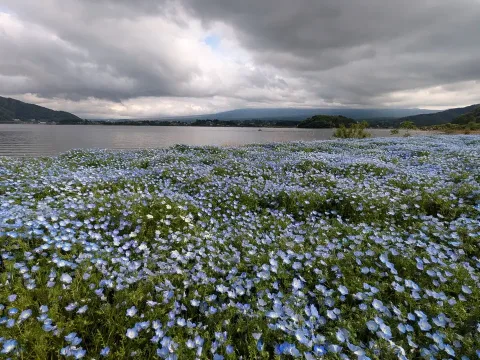
Japanese Alps III
Between the Shinto sanctity of the Suwa shrine and the natural beauty of Mount Fuji
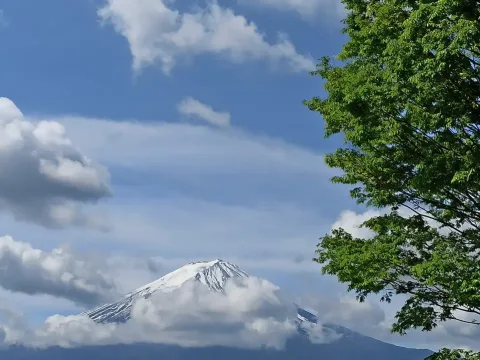
Japanese Alps IV
The day when Mount Fuji appears to us in its white splendor. Hakone, Kamakura and finally Tokyo
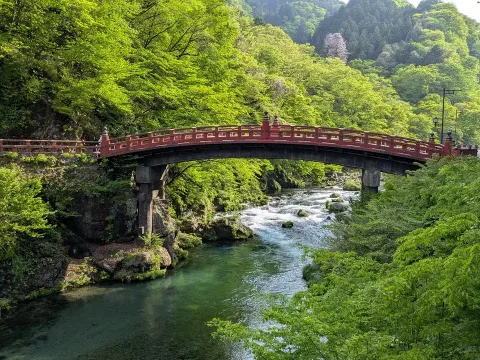
Nikko
Shinto shrines and Buddhist temples immersed in greenery, seamlessly.
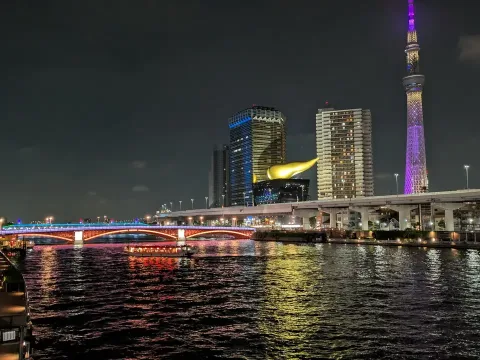
Tokyo
The easternmost capital of Asia, between ancient and hyper-modern.
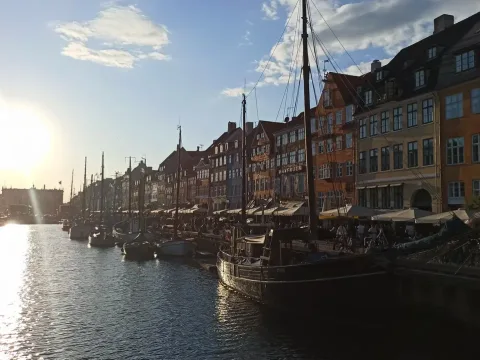
Copenhagen
A Saturday evening in springtime in the city of Ariel.