Day 11
Japanese Alps I
Kanazawa, market and castle; but above all, the magic of the Kenroku-en garden.
The subway in Japanese Alps
The rain stopped during the night, waking up at 5:40 AM, breakfast in the hotel's common area with a super-equipped kitchen where we prepared our first meal of the day, and then, as usual, we took the metro which takes us to Kyoto Station in just a couple of stops, from where we will take the last of the five Shinkansen journeys planned for today, heading towards Nagoya, a metropolis known as the city of Toyota. At the station, they attract attention and curiosity. three rental cabins, please contact reception for busy officials who don't want to waste time: you can access it with a pass obtained through a subscription, and inside this modern phone booth, you can enjoy all the privacy needed to complete your daily tasks. The only minor inconvenience we encountered was while waiting on the platform for the arrival of the fast train, when we decided to have a coffee from the vending machine: disoriented by the wide choice and not having much time, we inadvertently chose the cold coffee, which wasn't quite what we had expected to start the day, although the ambient temperature is more than acceptable.
The journey follows the strict Japanese punctuality rules; Nagoya station is very busy, even though it's early Saturday morning (we can only imagine how it is on other weekdays); in this case, the rental car is located near the arrival station, where we pick up our third rental vehicle for our Japanese adventure (this time it's a small Toyota). We are now accustomed to driving in Japan and even leaving a metropolis like Nagoya doesn't pose a major problem. After a few drops of rain and some initial delays, we get onto the highway that runs along the Japanese coast (the inner one, facing Korea and China) heading north towards Kanazawa. As always, the speed limits (50 km/h on the road leading out of town and 80 km/h on the fast lane) are a matter of debate and negotiation; it stops raining quite quickly, allowing some sunlight to break through, we pass several horse transport trucks (a clear sign of some equestrian competition near our destination), we encounter some construction sites but traffic is generally smooth. The landscape is characterized by high hills that give way to flat stretches where, like here villages and rice paddies alternate It's common to see workshops, factories, and even cemeteries literally surrounded by water, with just rows of rice seedlings hidden beneath; in some cases, the fields are cultivated with wheat. When it's almost midday, after about 3 hours and 30 minutes of travel, we arrive at the capital of Ishikawa Prefecture to immediately go and see (and much more) the interesting Omicho market This interest is not solely due to the variety of products on display and their colors, but also because of the food offered as if it were a huge covered street food market. Like in every place in Japan, cleanliness and order prevail here (even though it's a market!), chaotic in its bustle but without any shouting; the mix of foodstuffs, vegetables, and fish or shellfish cooked on the spot is pleasing to the eye. Many visitors come here for lunch, and we also don't miss the opportunity to try some eel, sushi, scallops, mackerel, and other delicacies whose names we don't even know, while stopping at another stall where we buy a sushi kit. Despite the gastronomic aspect, the market offers interesting observations of fruits and vegetables, sometimes similar to ours, but more often with products never seen before.
Castle of Kanazawa
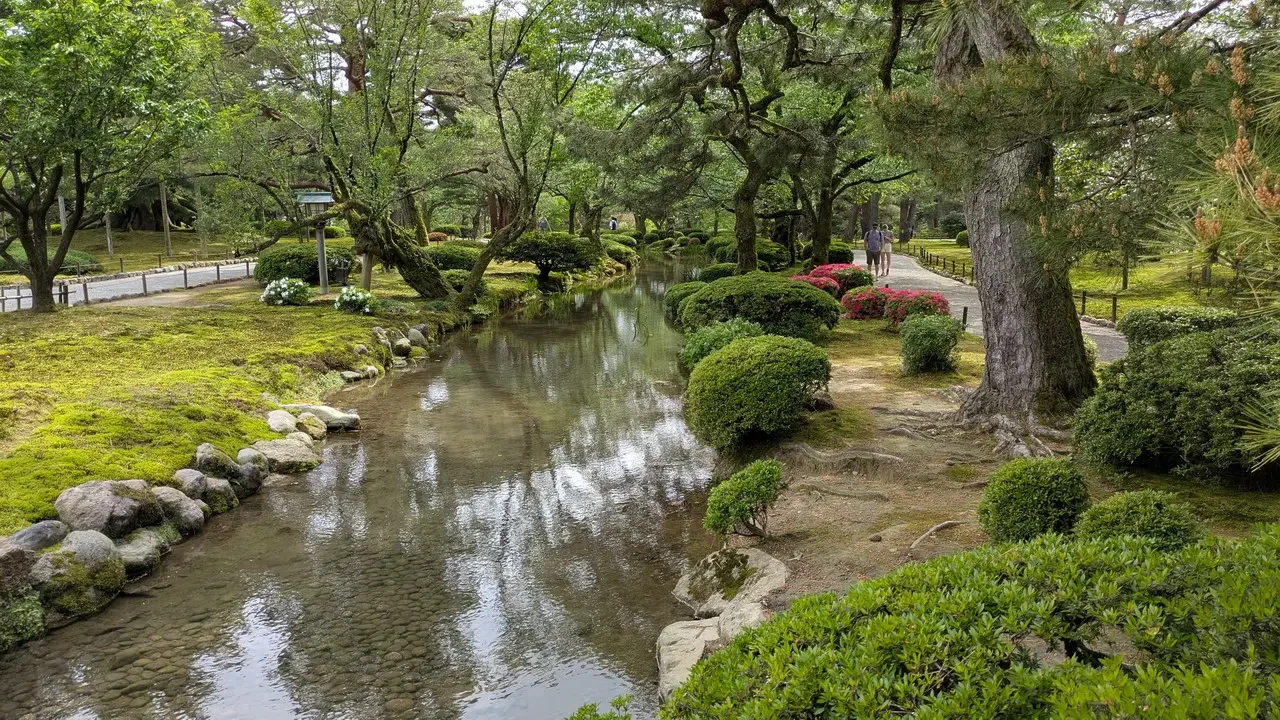
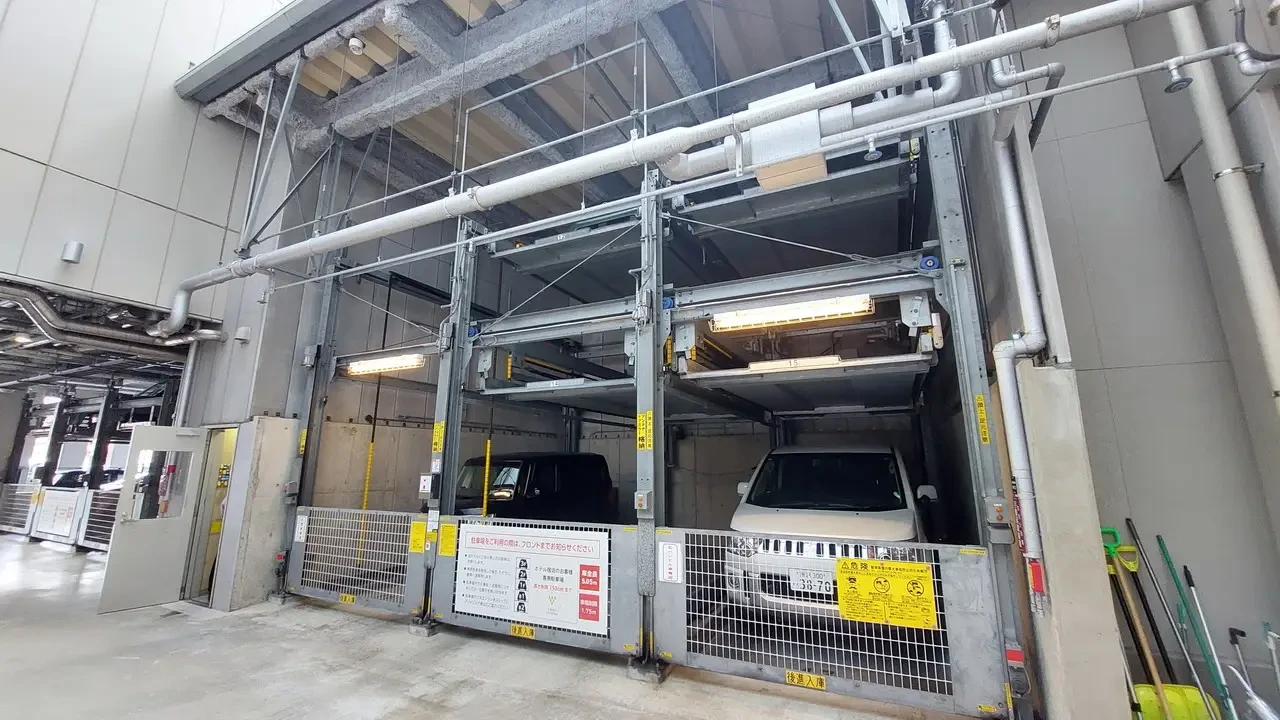
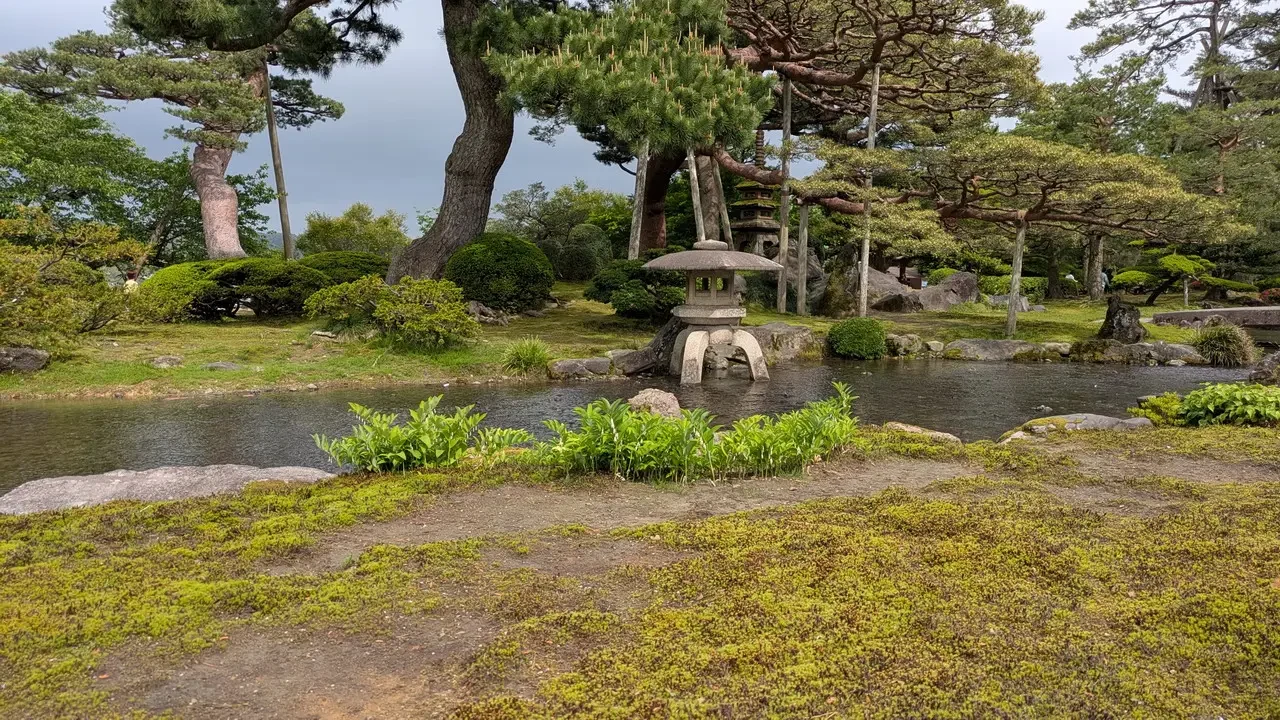
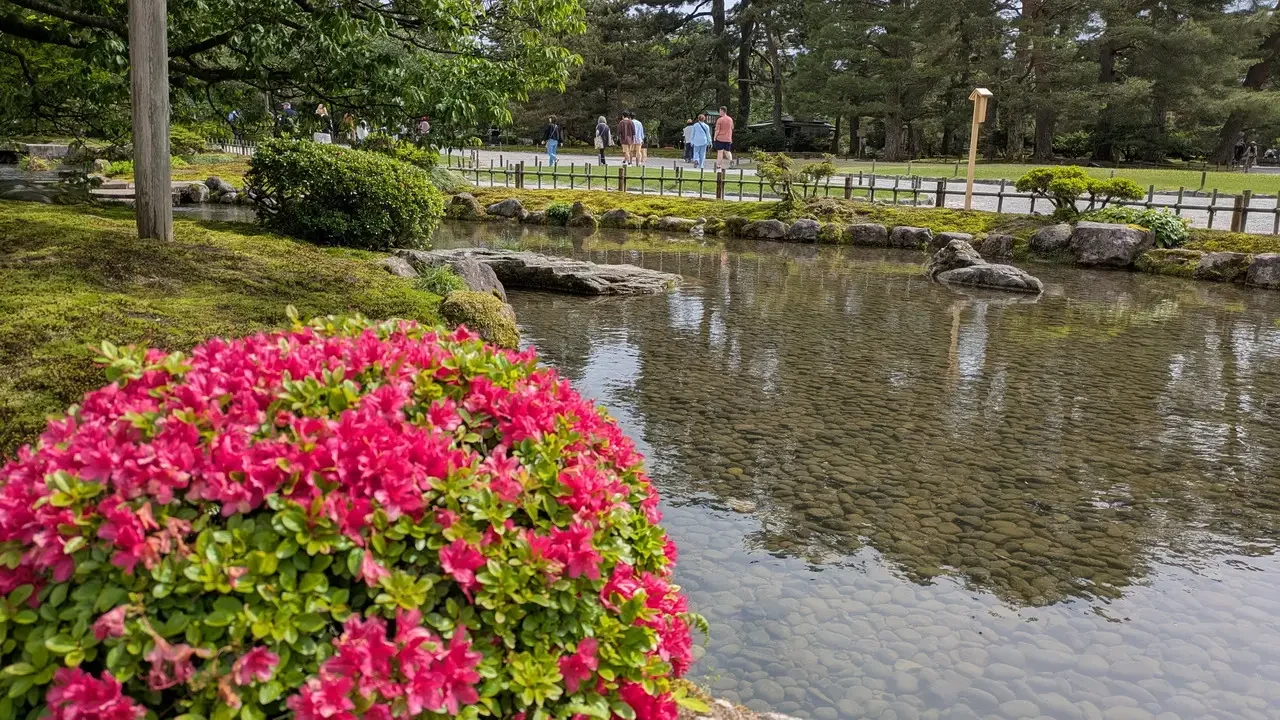
The castle of Kanazawa It extends over a large park, but it doesn't have many significant historical attractions, except for a room entirely made of wood. However, the soft landscape surrounding it is the best way to access the adjacent... Kenroku-en, officially considered one of the three most beautiful gardens in Japan, possessing all six classic characteristics (as Kenroku Garden does), and achieving perfection in each: secluded location, spaciousness, sophistication, antiquity, abundance of water, and views. Despite the difficulty in creating rankings, we remain enthusiastic, even though the sun only appears occasionally. Clever colored spots Represented by azaleas or rhododendrons, the garden provides a warm and beautiful view of the city, especially from its elevated position, which also offers quick glimpses of the urban landscape. Some of the trees were pruned from a young age. to expand horizontally rather than vertically; to prevent the large branches from breaking, they are supported by equally sturdy poles. From the small ponds, stone lamps, illuminate during special occasions, when they are wrapped in rice paper to prevent them from going out and to provide even lighting. The meadows can be made up of moss.... where careful gardeners take care to remove the grass that grows and offer a unique velvety surface, resembling a carpet spread under the trees; two French people wisely comment that here we remove moss to allow the grass to grow, while in our country it is the opposite. Finally, it is worth noting the bridges, which are made of a single block of arched stone, forming a slight donkey's back. Details that require careful observation would take hours and one could never finish discovering further interesting details. From here we go to retrieve the car and head to the hotel, immediately check in and have free time in the afternoon to visit the rest of the city. The parking system This place is particularly interesting because it's multi-level but operated with elevators that move the cars both vertically and horizontally, allowing for about twelve parking spaces in a limited area; a real gem for small city centers. The friendly attendant helps us park our little Toyota inside a designated spot where it can be mechanically moved within what resembles a large Rubik's Cube for cars: our car will literally disappear from view until the next morning when the elevator will retrieve it.
The Geisha District (Higashiyama Higashi Chaya District) features houses with wooden-clad walls and upscale shops, but there is now very little left of the charm it once had. Similarly, the samurai district (Nagamachi) is a quiet district, currently inhabited by the upper class, with beautiful gardens in front of the villas. Today's samurai are represented by the middle class, not so different from how they were in the past, only wearing a suit instead of traditional attire and a tie instead of a katana, large SUVs in the garages, and still maintaining polite and elegant manners.
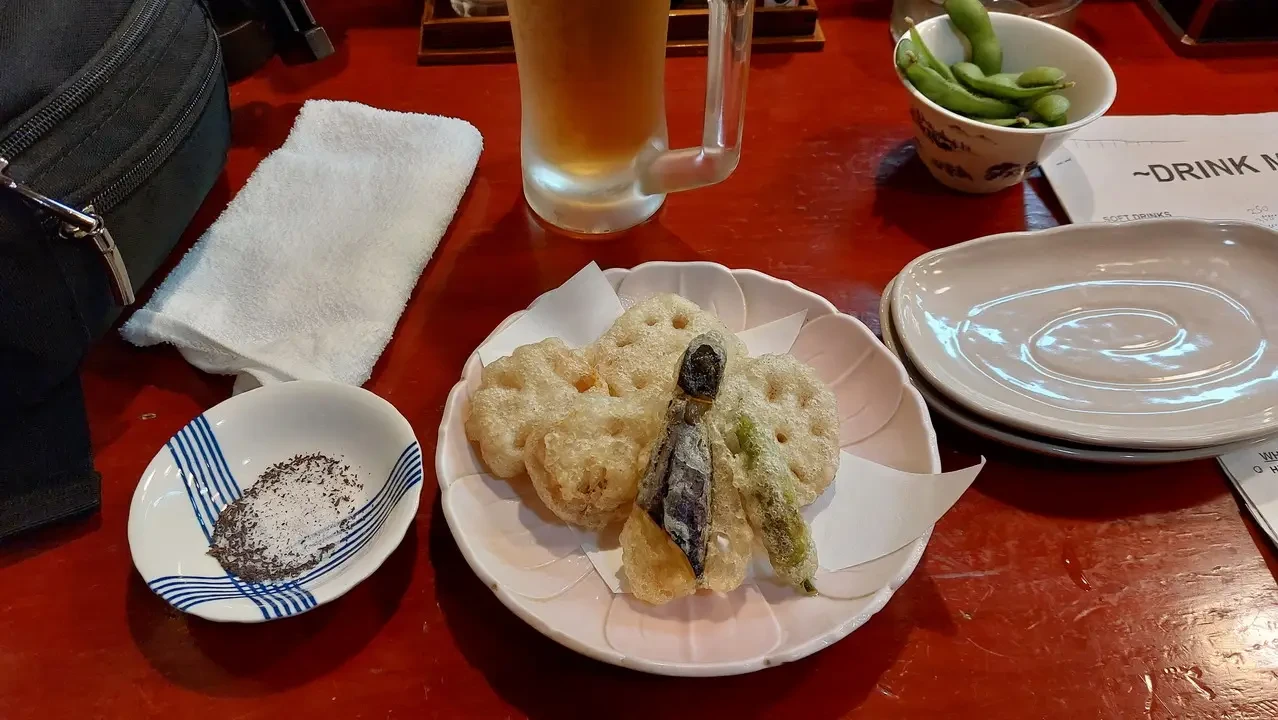
Dinner time is approaching, let's go downtown to the Tagamashi district where we find an izakaya frequented by locals to eat "something" sitting next to other customers at a table attached to the counter. A system that seems like a feeding trough but is frugal and effective if you don't intend to stay out late. The waitress doesn't have the classic Japanese physical features, and when we ask her where she comes from with a mischievous smile, she tells us she's Chinese. We get to know each other and discover that she is originally from Xinjiang and that we were there. She speaks good English and has already learned Japanese at an acceptable level: we chat together during the moments when she doesn't need to serve customers, and it turns out to be a wonderful (and delicious) evening. Of course, we eat raw fish and there's also the opportunity to taste an excellent tempura Now all that's left is to go and pick up the car from the nearby parking lot and return; every now and then, some raindrops fall, but at this time of day it doesn't cause any concern. Kanazawa presents itself as an ancient city, even old in places; a characteristic that, upon closer inspection, translates into a positive aspect because it has not experienced heavy bombing during World War II.