Day 5
Shikoku Island I
The north: paradise on earth of the Ritsurin Garden, the force of the marine whirlpools at Naruto.
Shikoku Island I
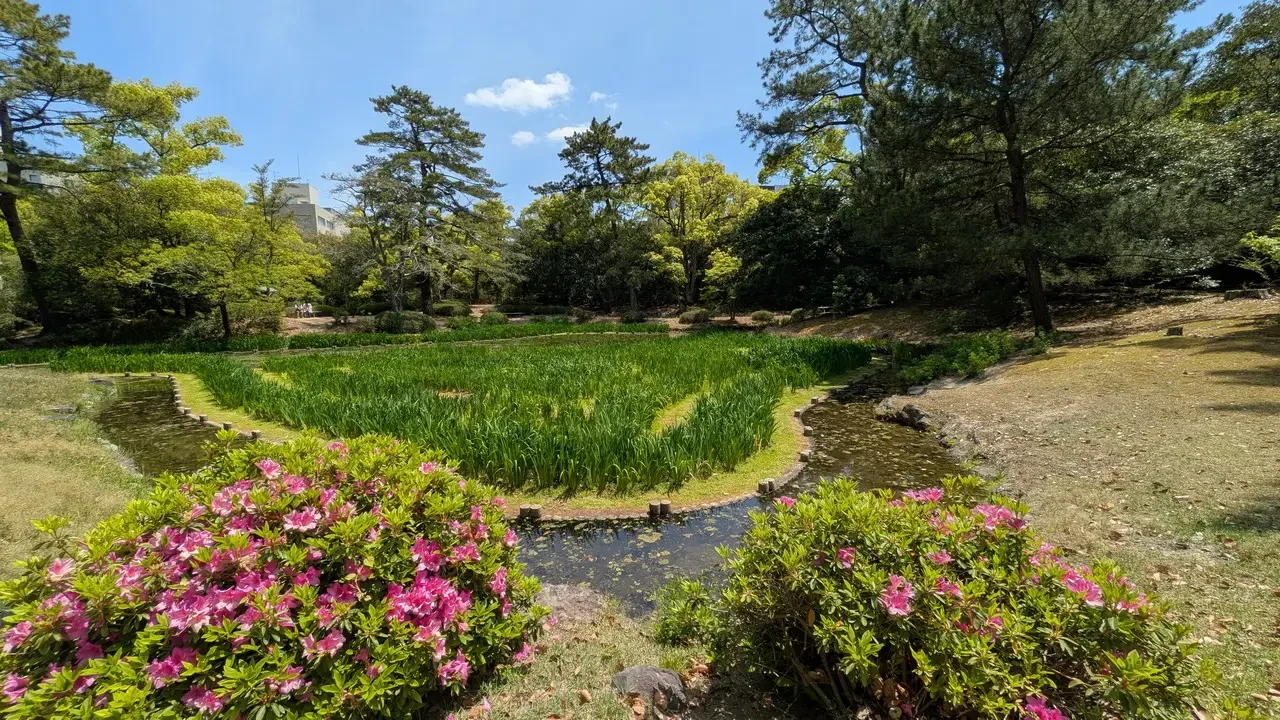
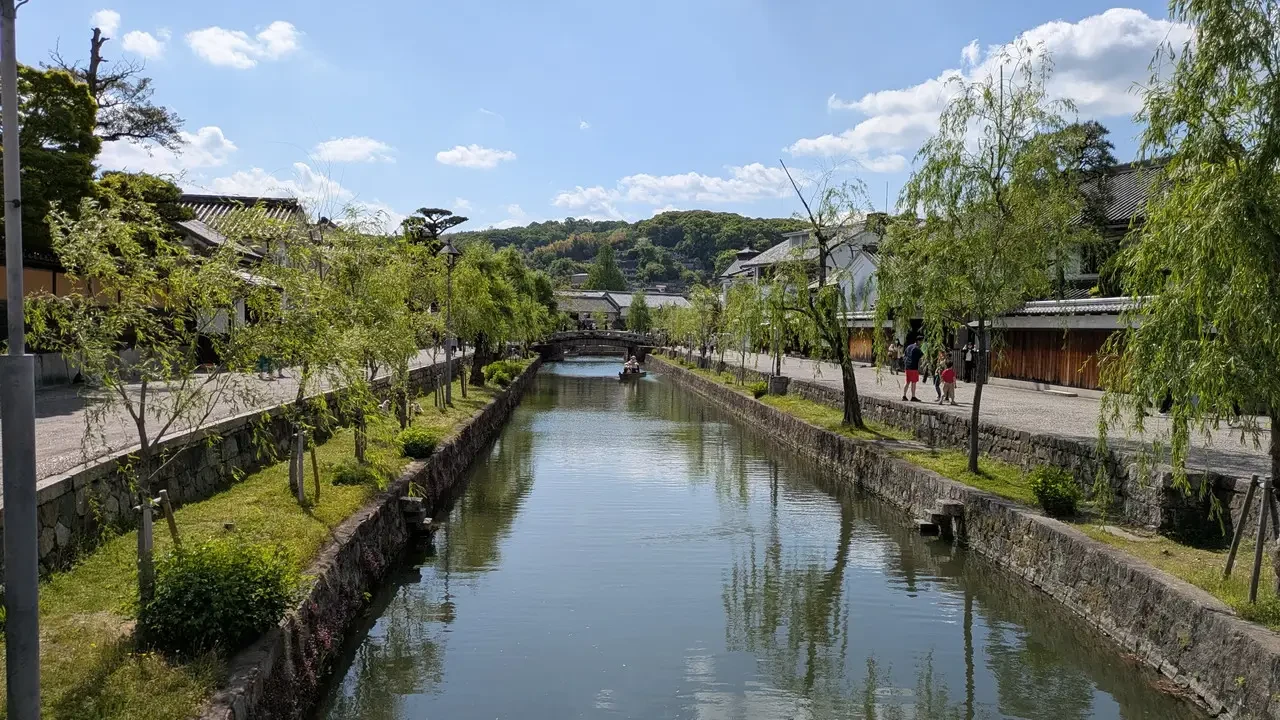
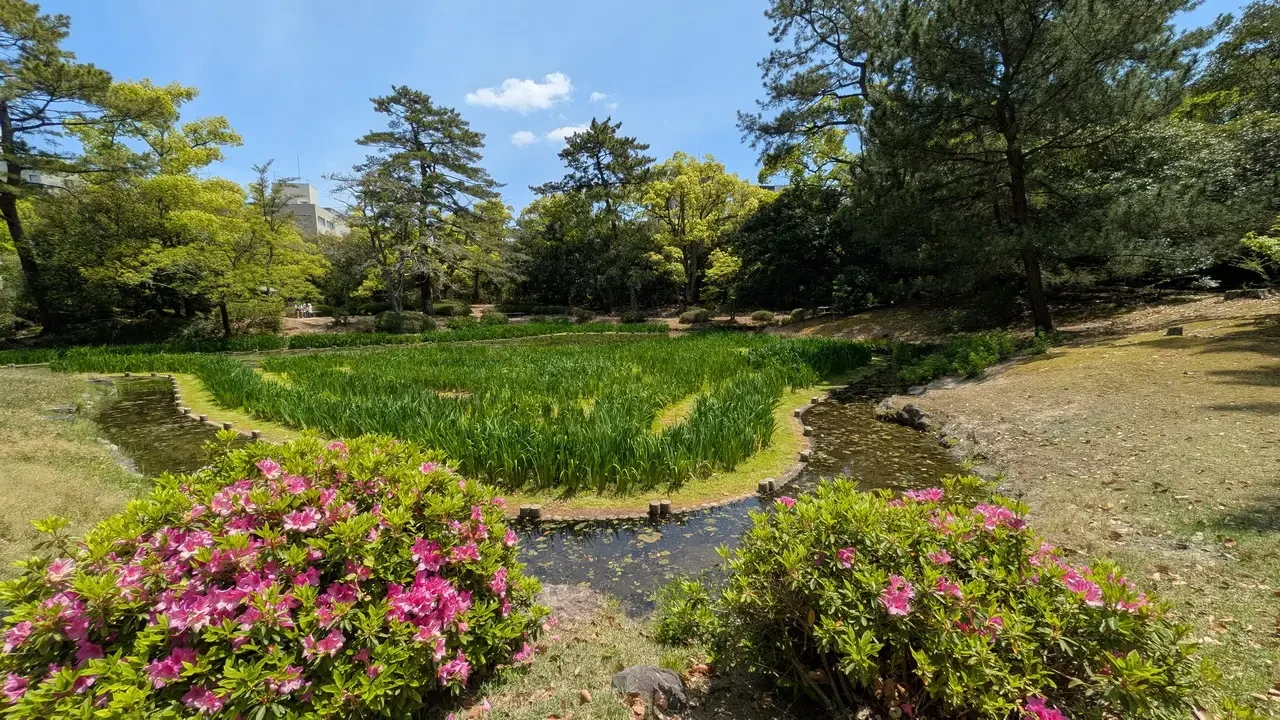
To avoid any risks, we called a taxi with Uber and, after just three kilometers, we arrived at the station where the Shinkansen bound for Okayama was waiting (as much as one can say). We arrive shortly before 8 am, opening time of Budget. After walking a few hundred meters, we are ready to rent the second vehicle (a small Mitsubishi) which will take us along the roads of Shikoku Island, the smallest of the four major islands in Japan. But first (still on Honshu), we make a stop in Kurashiki, a town that contains the historic Bikan district, divided by a beautiful canal along which you can find typical houses and the temple nestled on a small hill, with a series of pines pruned in an artistic way. The tourist flow arriving by bus hasn't yet started to flow along the narrow streets, so we can calmly view the site with its nice shops as they are opening. At this point, it is time to cross one of the three long bridges that connect Honshu with Shikoku, the Seto Ohashi Bridge, which stretches for a total of 13.1 km, two levels and earthquake/typhoon-proof; one of the many engineering feats that have managed to unite this fragmented and difficult country, further complicated by the extreme seismic activity of the region. After an hour's walk, our first stop is Takamatsu, where we visit the splendid Ritsurin gardens: this will be the first encounter with Japanese garden design, a perfect balance of nature and spirit, capable of infusing feelings of serenity and reflection. Despite being located in a city center with buildings in the background, this green island is able to escape from urban reality with its graceful alternation of streams. crossed by small bridges or stones using the classic Japanese style, meticulously manicured shrubs, trees with branches alternating on opposite sides, intentionally leaving spaces to create a quiet void between the foliage. The gardens are truly enchanting, perhaps the best among the many attractions of the country; we will try to repeat this experience wherever possible, until the last day in Tokyo. It immediately catches the eye as if one were trying to... moderate use of flowering plants, just a few spots of azaleas or rhododendrons. It's too easy to impress with colorful displays: the art is in adding some warm colors, but harmony should come from green, water, and stone. Emotions that arise from within, capable of warming the soul slowly.
Flight to Shikoku Island
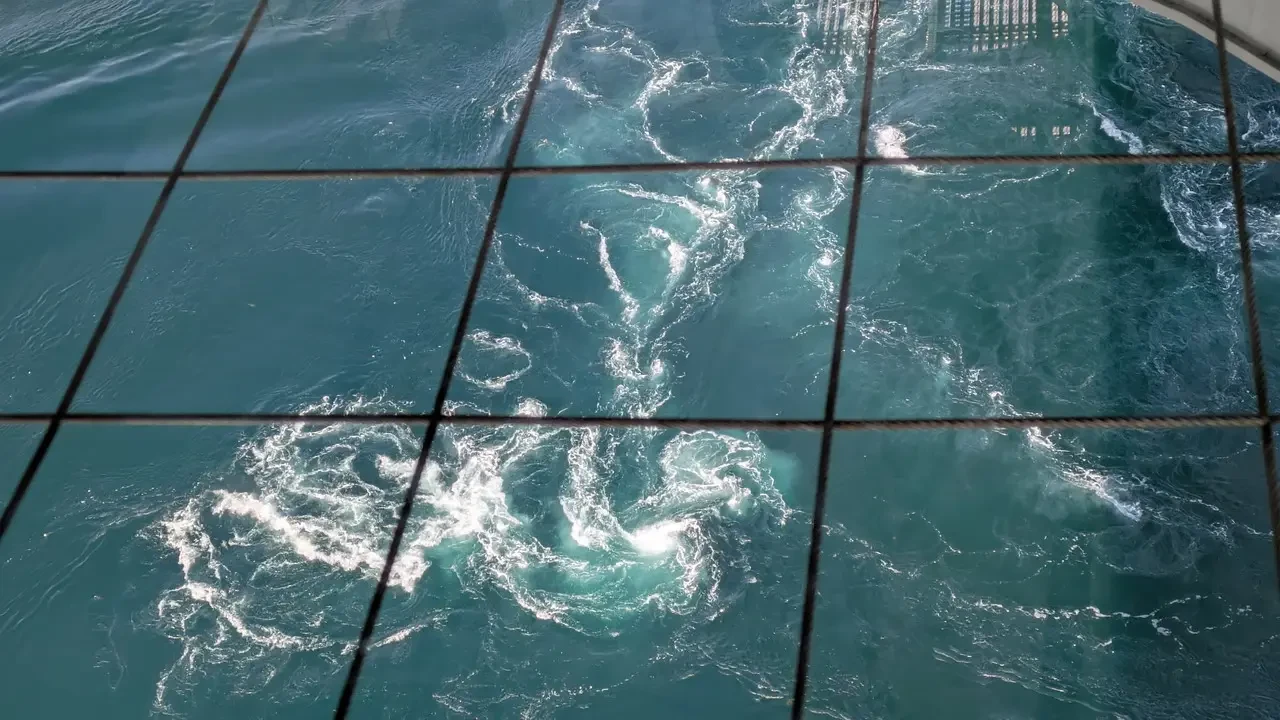
A quick stop at a 7-Eleven to buy some sushi and onigiri along with steamed puddings, using the waitress as a table. We then drove about 60 kilometers on the highway towards Tokushima, specifically to Naruto in the western part of the island, where we found another bridge connecting Shikoku to Kobe and Osaka; here you can find the internal sea and the Pacific Ocean, forming whirlwinds (Uzunomichi Observatory) The size varies depending on the tide and therefore the time of day. Right under the Onaruto Bridge, a shelter measuring 450 meters long has been built with transparent flooring to see the meeting of the waters located 45 meters below us. It is essentially a new experience, which we were only familiar with in the infamous maelstrom south of the Lofoten Islands off the Norwegian coast. Of course, there are many people present due to the holiday, but the organization is as always impeccable: ample parking spaces are provided and shuttle buses take visitors to the entrance of the site. There is also a museum and the possibility of seeing the whirlpools up close with a boat tour, but there isn't enough time to do everything, so we settle for an informative walk along the pier. Several panels indicate the peak of high tide that creates the largest whirlpools, which are expected at 17:20. It is currently 16:30 and we can still get a good idea of this natural phenomenon.
It's time to return, retracing part of the journey, passing beyond Takamatsu where you can occasionally see the sea amidst hills with no space for even one more tree. We briefly pass through Kotohira, home to the Kompira San shrine, which involves climbing over 1300 steps, theoretically scheduled for tomorrow but which we will have to skip due to lack of time. Due to poor signage, it's difficult to locate the starting point of the staircase leading to the religious complex; however, we find ourselves making a one-way trip where we barely manage to pass with the car, even in this stunning environment, we won't be unhappy when returning to Kotohira. Amidst beautiful rice paddies illuminated by the setting sun, we reach the guesthouse in Mitoyo, where we will have our first experience of sleeping on futons placed on the classic tatami mats. The owner of the guesthouse explains that in the past, the site was a storage for onions; it's located in the countryside and without maps, we would never have found it: the country roads are narrow but become almost terrifying when entering villages, where a short and very narrow strip of asphalt leads to the group of houses where our accommodation is located, requiring maximum attention to avoid falling into the rice paddies at least one meter below. Even a slight deviation of about ten centimeters would mean seasoning the rice or, worse, ending up in the irrigation canal.
Before enjoying the rest on the futon, we need to have dinner. We are in a small village in an agricultural province, but it's Sunday evening and the locals want to enjoy themselves at the only restaurant that seems to serve excellent chicken. The young girl who works as a waitress tells us there is no space and politely asks us to come back in an hour; we have no choice and will return at 8:30 PM after shopping at the Lawson store for breakfast tomorrow and something to snack on, which we'll call lunch. We almost always buy the steamed puddings with caramel sauce, which are very popular even though they aren't strictly homemade. The wait will be well rewarded by a simple but high-quality dinner; sitting on the floor with our legs crossed, at a low table, we can finally enjoy the chicken, taking it with our hands and temporarily abandoning chopsticks. In reality, we first deboned it using the scissors provided, then used the chopsticks to eat the meat, and finally, we cleaned the bone by bringing it to our mouths with our hands.