

Day 13
Japanese Alps III
Between the Shinto sanctity of the Suwa shrine and the natural beauty of Mount Fuji
Morning at the Taisha Shimosha Akimiya Sanctuary
In the night, it rained as predicted; in the morning, the sky is overcast with some patches of clear sky. Today we also leave the guesthouse quite early to face – that of Mount Fuji – a day that would be best if it were calm, but will only be partially so. Not far from Matsumoto is the first stop in the town of Suwa, peacefully located on its namesake lake. To get there, we take a curious and narrow road along the embankment, one-way, between the river and rice paddies, which alternates sections with alternating directions to strange intersections from the main road, which runs parallel. It's early morning, and in Taisha Shimosha Akimiya shrine A sense of tranquility prevails. An elderly woman with a broom clears away any remaining dirt after the holiday, while a few people approach the altar with reverence, admiring the golden colors that stand out on it. Beyond the tatami mats, where worshippers usually sit during ceremonies, there is an almost obsessive order; you could spend hours searching for something out of place, but you wouldn't find anything. Like in other places of worship, outside there are fences to hang omikujii(prayer slips on paper with an auspicious phrase), torii and the inevitable waterways to combine the natural dimension with the divine one. Finally, leave them amazed by the Shimenawa... a thick rope made of tightly wound rice straw bundles: enormous size and absolute precision in the finish. The grey sky does not even diminish the charm of this place. The garden with azaleas (even less in bloom than the two southern islands) cannot be missing. small lakes and various harmonies combined.
Stop at Motosu Lake
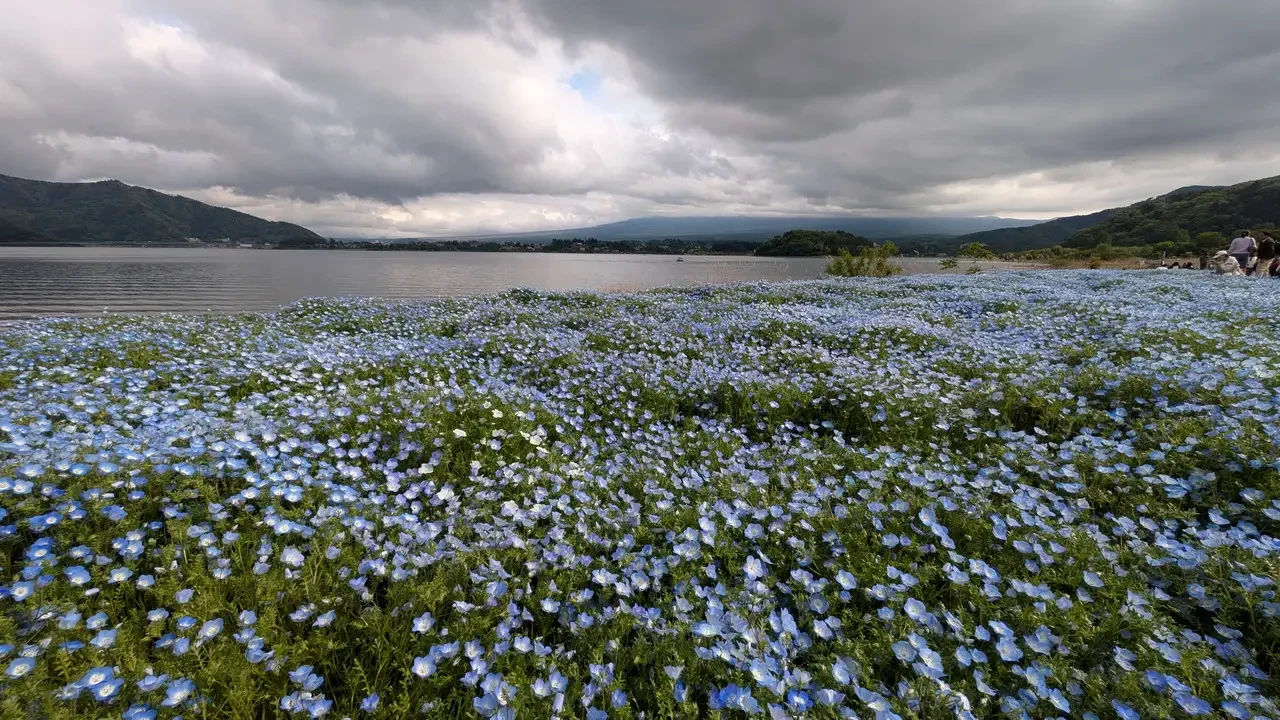
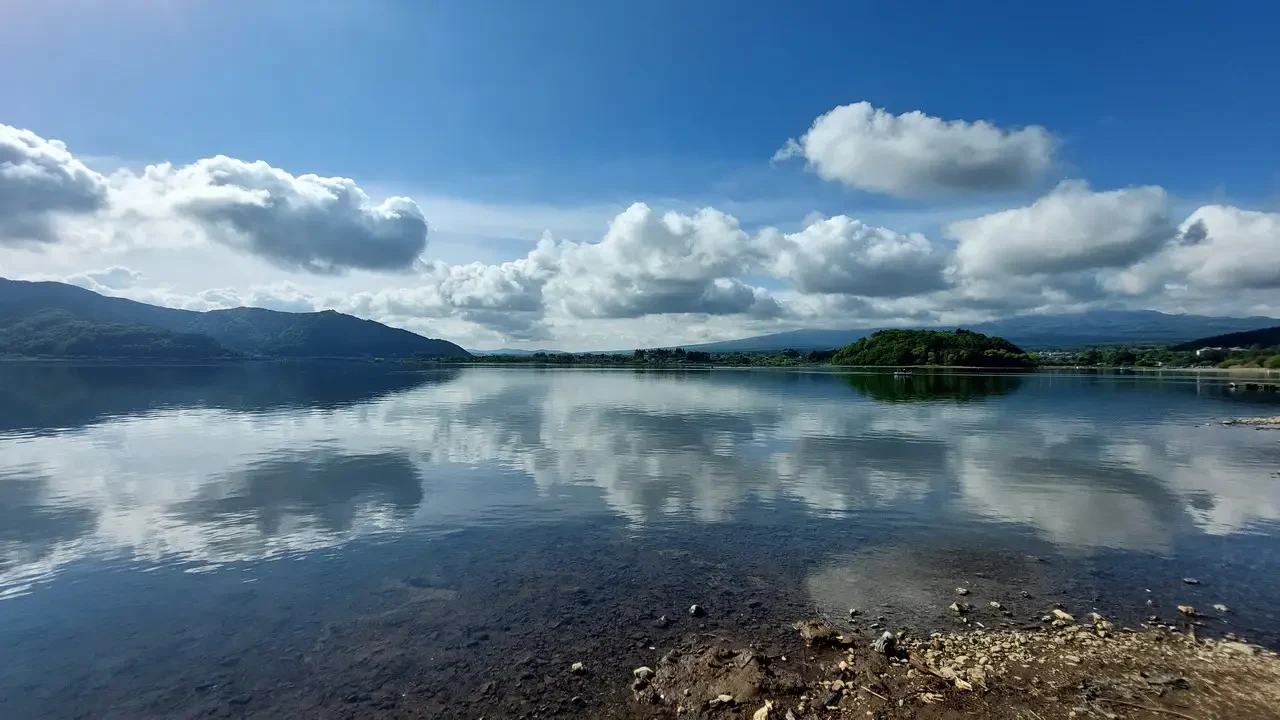
There are just 13 degrees (also unusual according to the locals). After a refreshing coffee, we return to our small car and set off, with today's plan being a visit to the area around the Five Lakes, north and west of Mount Fuji. Staying nearby, tomorrow morning we could dedicate some more time to these places in the hope of having the good fortune necessary to admire the capricious, cloudless Mountain. We take a road that winds along a row of trees, descending into the lake area; the Japanese Alps should not mislead us from their very definition, most often we are talking about strong undulations of the terrain designed to outline hilly areas, but without the ruggedness we are used to. The same Mount Fuji, from its height of 3,776 meters, declines cone-shaped and regular towards the plain as volcanoes usually do. In this context, winding roads are nestled within a hyper-green vegetation. The area of interest today is called the Five Lakes, whose name obviously derives from the basins that are located right at the base of Mount Fuji. The one furthest north (the Motosu Lake) offers a special view towards the iconic Japanese mountain, which is also featured on 1,000 Yen banknotes; however, today it is only partially visible as the summit is covered by clouds. Overall, it is enchanting, with rays of sunlight appearing as spotlights directed onto the lake surface surrounded by white and fragrant flowers. We complete the missing part of the journey along a very narrow road that follows all the curves created by the basin, continuing to follow the Shoji Lake and the Saiko Lake from the north. Not far away, we find a place to have a warm lunch and green tea ice cream. We continue until we reach the Kawaguchi Lake, near which we will be staying. Here, we can also stop at the Okukawaguchiko Sakuranosato Park, where a staircase made of wooden logs leads steeply and quickly to a couple of viewpoints from which you can enjoy the view. Great view of the lake Besides a snake crossing the path when we were already at the peak, there were only good experiences.
Oishi Park
Not far away, the Oishi Park In reality, it's a stunning garden of flowers intended to provide a foreground view of Mount Fuji when it decides to appear; today it is not difficult to see its slopes, but the complete view remains out of reach. The sun occasionally... highlights the blooms – Throughout the year, around a hundred varieties bloom – including now the beautiful azure Nemophila flowers with violets and primroses; however, without such a backdrop, the experience remains incomplete. The Japanese precision has created a dedicated website with accurate forecasts on when and where you can admire Mount Fuji: https://fuji-san.info/en/index.html. Indicate the week, divided into morning and afternoon, with the probability percentage depending on whether you are north or south of the mythical mountain.
As already seen elsewhere, maintaining the green spaces requires a lot of work, and the staff tasked with manually removing the grass is always very busy. Imagine that the costs must be high, but the result is obvious to everyone. One of the iconic viewpoints for seeing Mount Fuji is at the top of the hill where the Churei-to pagoda stands; upon arriving at its base, we find a large crowd and organized tourism, which discourages us from attempting to climb the 400 steps to reach a point that can also be reached by cable car, albeit with the disadvantage of not being able to see our desired object, obscured by clouds. In addition, we believe we have already admired enough pagodas. We therefore arrive at today's ryokan, which is also quiet, where we find a friendly manager with whom we communicate perfectly, despite not having a common language; tonight we will also sleep on the winning combination of the futon on tatami. Once our luggage is arranged, it is time to depart for Fujiyoshida, where there is nothing particularly interesting to see except the historic wooden torii, the Kanadorii. Built in 1788. But the real reason for being here is not just to experience a particular cultural or natural attraction, but also to enjoy some culinary delights. Knowing that dinner will be early, around 7 pm, we are already at a restaurant where you can order raw fish and meat (ox tongue and Wagyu beef steak, local veal) to cook on the grill as desired. Everything is fine, it's only a shame that I have to limit myself to drinking one beer while driving. We return, and falling asleep on the futon is certainly not difficult, just as it wouldn't be falling out of bed while sleeping on tatami, while a group of frogs in the adjacent meadow sing us a beautiful serenade. The fog continues to descend, enveloping the villages around Mount Fuji, but tomorrow morning will be important.


