Day 14
Japanese Alps IV
The day when Mount Fuji appears to us in its white splendor. Hakone, Kamakura and finally Tokyo
Oishi Park
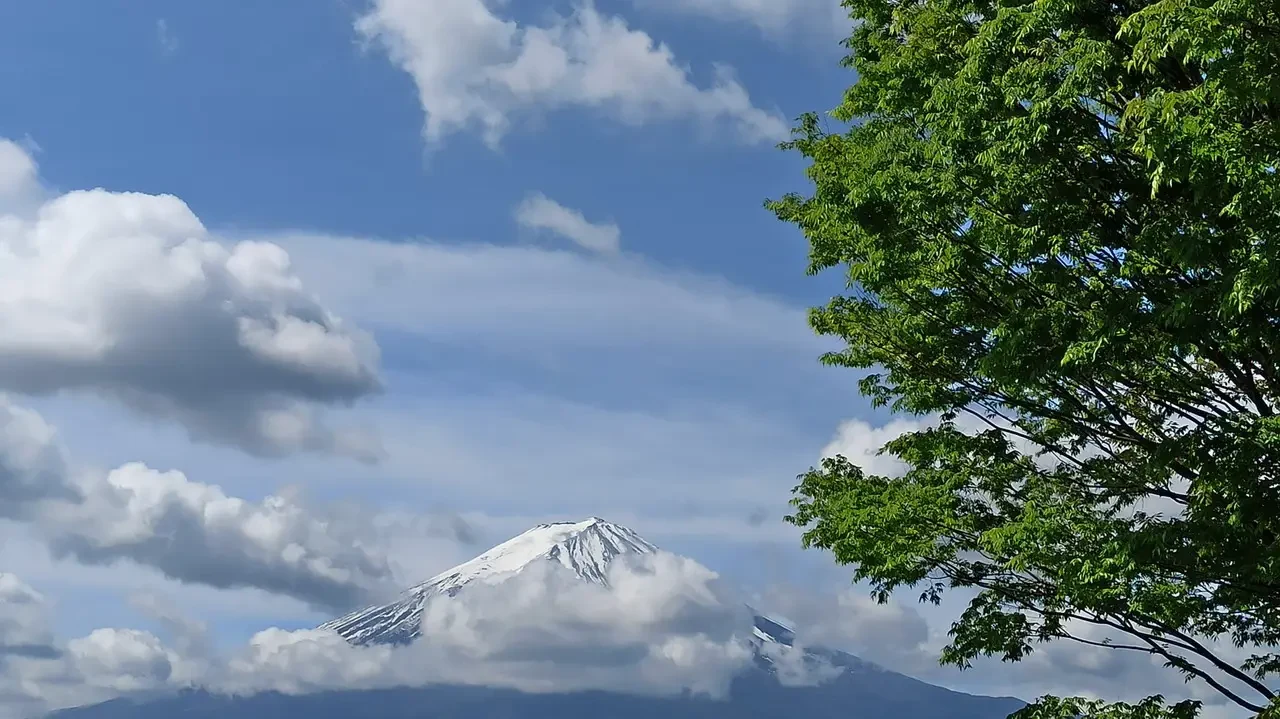
The room had been booked (for a few extra Yen) with a view of Mount Fuji. We have only a few useful hours left to see it in its full white glory, and we come up with all sorts of plans, including the double alarm system: by taking advantage of the early morning sunrise, we set the first alarm for 5:30 am, when we realize that he is still asleep with his head buried in a grey blanket, so we turn over; the second one rings an hour later and at this point the sky is clear but we haven't quite managed it yet. We go down to have our usual, simple breakfast, and when we return to the room, the window has become view of Mount Fuji, as it is commonly called here. Finally visible in its entirety, we manage to take a couple of photos from a distance before it disappears again, and then get back into the car for a quarter of an hour to Oishi Park. It's 7:30 AM. the sky is now clear of clouds, except where it is relevant to us. After all, many years of visiting these high lands have taught us that the peaks are places where clouds tend to gather. With plenty of sunshine and very few people around, we will recreate the photo shoot at the garden with a thousand colors, with more time available to recognize its various species, many of which are also found here (Saint John's lilies, lavender, gladioli, etc.). To avoid getting carried away and spending the whole day here, we promised ourselves to wait for an hour, after which we would set off for the other destinations on our itinerary. As in every good performance, the best part comes at the end: at 8:30 it seems that we have reached the crucial moment, and the last clouds should disappear. We break our "promise" of leaving early and decide to stay until the Moment arrives. This delay will prove to be so rewarding! the Mount Fuji is visible in its entirety, covered in snow on much of the slope. Immaculate and imposing at the same time, the sacred mountain of Japan stands before us, completing... the painting of the flower garden on the smartphone and camera screens, to avoid mentioning the immediate emotional transmission to the brain and spiritual centers. The lower half of the picture represents sweetness and sensitivity, while the upper half represents strength and majesty, divided by the rippled lake that seems almost to mediate with its gentle waves: a unique combination that nature alone knows how to transform into sublime beauty. Touching on the absurd, one might think it was more tiring to wait for it than to ascend it, an option that is not even conceivable at this time due to snow and perhaps even prohibited with skis on.
Arrival at Peace Hotel
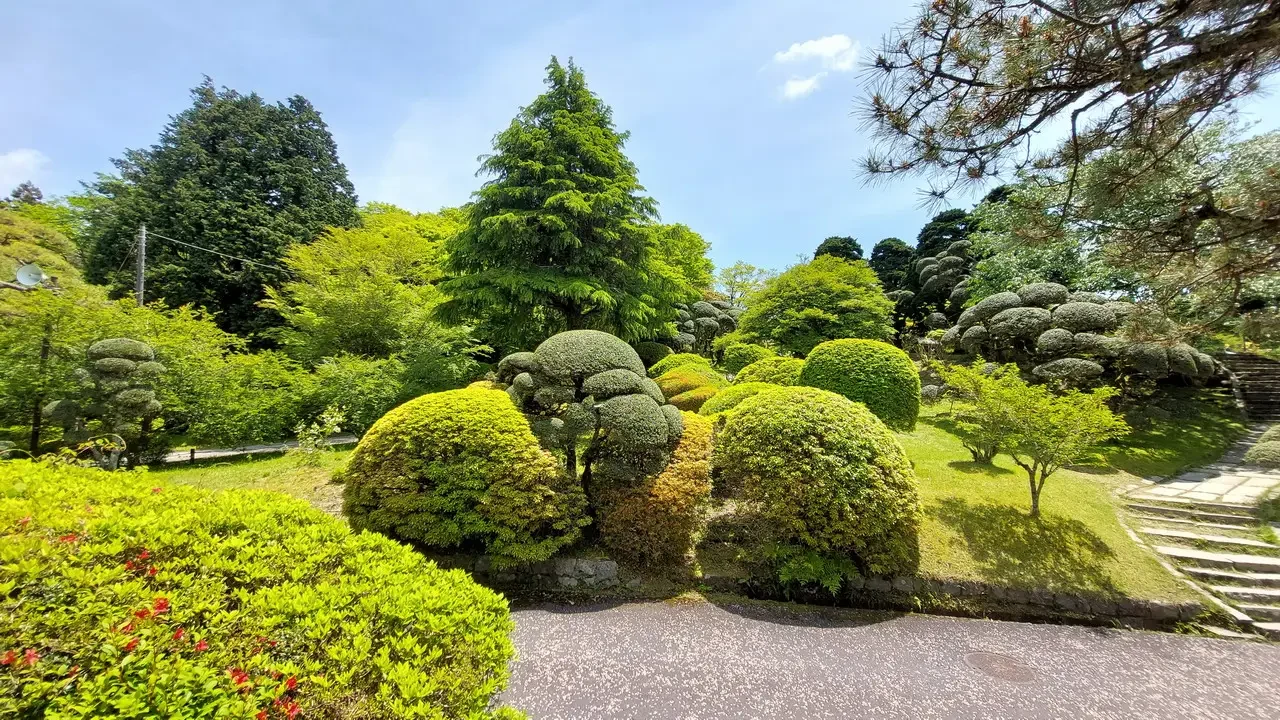
At 9:30, two hours after arriving and filling our eyes with everything we wanted to see, we are ready to depart on an itinerary of great interest that will take us to the end – not yet the end – of this trip to Tokyo, passing through Fujiyoshida with its tourists and admiring Mount Fuji standing between the buildings and threads of light. The first stop is actually a paid route – the Hakone Skyline – which runs along the crest of the hill towards Hakone. The road first passes through a sequence of enchanted forests; narrow, it winds along these low mountains with moss-covered walls until reaching the toll booth and crossing over to view of Lake Ashi, its floating torii and Hakone under the sun on a hillside, and the slopes of the Izu Peninsula southward to the other. In the background, you can also see the steam from the onsen, which comes from the quiet earth, a volcanic residue dating back 3,000 years. This city, a popular resort town not far from the capital and its surrounding area, is always characterized by a large tourist presence, to the point that we don't think it's necessary to visit the Peace torii(similar to that of Miyajima but less famous) due to the lack of parking and time: after all, Mount Fuji is worth visiting again. We also make sure not to miss the Onshi Hakone Park, which is located on a peninsula of the lake, once a summer residence for the imperial family and today a wonderful observation point both over the lake itself and over the group of trees and bushes cultivated in the most classic Japanese style. Azalea bushes, trees pruned into artistic shapes to create raised shrubs and every other ingredient designed to define the scene as sublime. The ultimate combination of fantasy, taste, and harmony; we admire it when we pass by the barriers or sound systems placed at a distance that creates music with the passing of the wheels, in what could be defined as a kind of pneumatic melody: for a sad people, the Japanese certainly are not lacking in creativity!
Kamakura, also easily accessible by car or train from the capital, boasts a beautiful range of religious sites, among which stands out the Buddhist temple of Kotoku-in, where you can find the Daibutsu, the enormous Buddha statue. Regardless of its size, what particularly strikes is the expression of Siddhartha, so serene that it infuses a sense of peace in those who look at it and transmits a silent message of peace and hope. in its usual position The ability of those who designed it, but also the peaceful nature of the religion itself. Around, as always, trees and carefully maintained gardens provide a worthy frame for the main monument. It is rare to find religious buildings in Japan that are not surrounded by gardens, parks or other natural elements.
On the road to Kamakura, we come across a view that makes us question our own blood alcohol level, even though it's still morning and we haven't even touched a drop of sake yet. a tram is traveling above us, suspended on rails that run along the roof of the vehicle, supported in turn by sturdy frames. This is neither a dreamlike vision nor a miracle: simply Japanese technology.
The urban face of Peace Torii
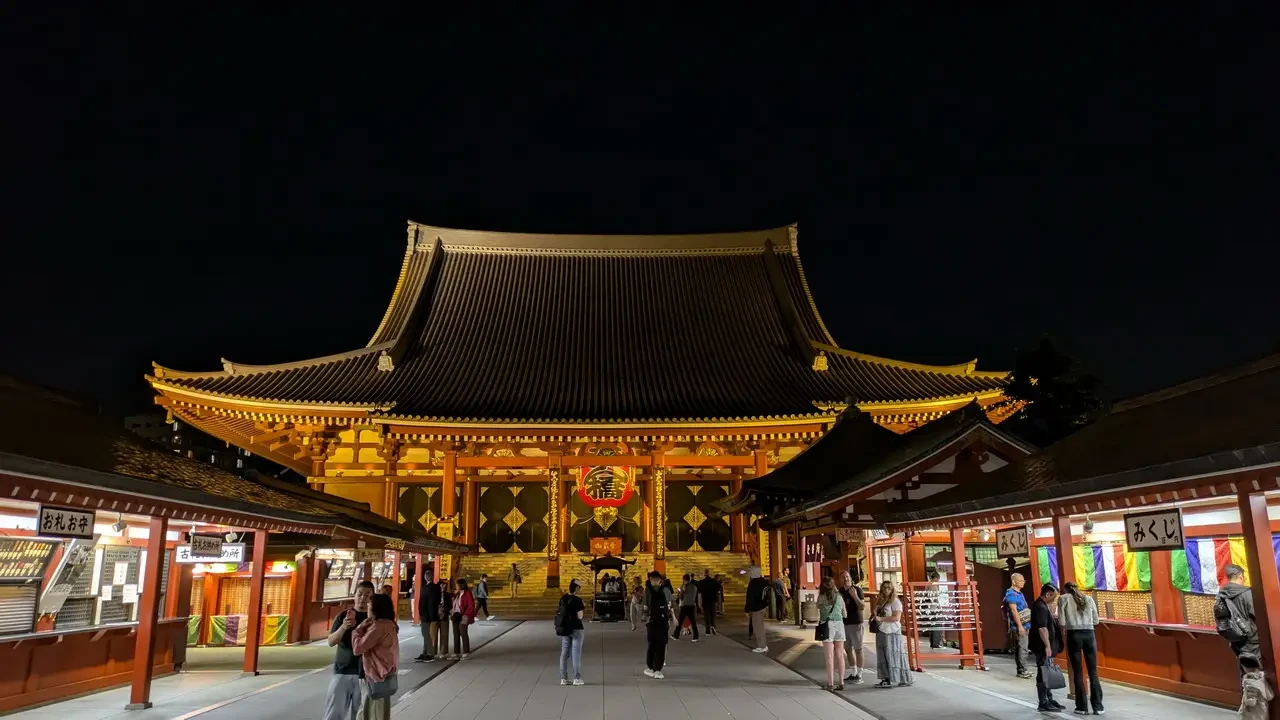
It's time to head towards the capital, but the road ahead still offers plenty of interesting sights. The beautiful mix of rice paddies and hills near Kamakura once again fills your eyes with lush green colors, and the road becomes two lanes, but in a very particular way: it’s essentially a highway running alongside the sea on one side and residential areas on the other, often slowed down by fast traffic lights. At first glance, the proximity of this fast-moving road to the houses nearby might seem dangerous, especially given the constant speeding, but in civilised Japan, drivers are always focused on what they're doing, just as pedestrians are. Lunchtime is approaching; while travelling at 80 km/h in traffic, we spot a small restaurant, manage to pull over safely without any risk, and go to see what they have to offer. Today, our luck has brought us a truly delicious meal, with excellent menu options, quality, and price. It's a shame that we're just passing through and can only enjoy it once. We continue on towards the airport along the road, which continues to alternate between sea and countryside depending on whether you look to the right or left. Of course, it’s essential that the driver looks primarily straight ahead. Besides being convenient from a logistical point of view, this road remains interesting even as the landscape transitions from natural to urban, starting with Yokohama. Tall buildings replace the two-story houses, and industrial areas with huge refineries are now an integral part of the landscape. perched between the city and the sea... in a fantastical network of streets that few and large metropolises can boast. The Budget airport location is located in a secluded area, and it's interesting to take a look behind the scenes of an airport like Haneda: warehouses, container maintenance centers, and airport service companies. Here too, no bureaucracy; we pay the local ETC (toll system) and are boarded onto a shuttle bus heading for the airport. Unlike our first arrival, today we are not as disoriented by travel and time zone changes, furthermore we have already had an experience 15 days ago; therefore, the Tokyo airport does not present any particular points of confusion: we purchase a Keykiu Line ticket, which as it passes through the stations becomes Asakusa, and in one hour we are near the hotel, right in the Asakusa district. However, we hadn't realized that the APA chain has other hotels along the same street nearby the metro station, so we will visit two more before reaching ours, the last one, but still close to the Tokyo Skytree. The usual automatic check-in, luggage storage in the room, and then dinner at a restaurant specializing in typical Hokkaido cuisine, the northernmost island of Japan, characterized by long winters and colder seas: today it's fish again, delightful. The neighborhood where we will stay for three nights is particularly convenient for visiting the Sensō-ji, a magnificent Shinto temple complex. worth visiting at any time: let's start with the evening version, when perfect lighting highlights the colors tending towards purplish hues of the five-story pagoda, of wood used to construct the temple, as well as the various red torii. And let's not forget the crowds of paper lanterns Decorate with elegance and sophistication. It feels like living in a surreal dimension, only slightly affected by some Western tourists who are keen on taking photos in "creative" poses in front of the imposing monuments. The typical Western and Chinese practice of being photographed mimicking appearances is at least disrespectful towards symbols and religions (including this one and others) that represent ancient cultures and stories, usually characterized by suffering and conquests achieved at a great cost to believers. Meanings and symbolism are undermined by brazen modern attitudes, which are synonymous with the poor education (deliberate euphemism!) of a segment of our society, regardless of whether they have religious faith or not.
We were staying up late; the shops on the busy Nakamise street are now closed for several hours, and even the stores along the charming arcades are starting to remove the displayed products. It's also time for us to return to our small but comfortable room at the hotel, after one last look at the well-lit Skytree and the Sumida River flowing beneath it.