Day 4
Hiroshima
Springtime – despite everything – is blooming at the site of the first atomic bomb.
Morning in Hiroshima
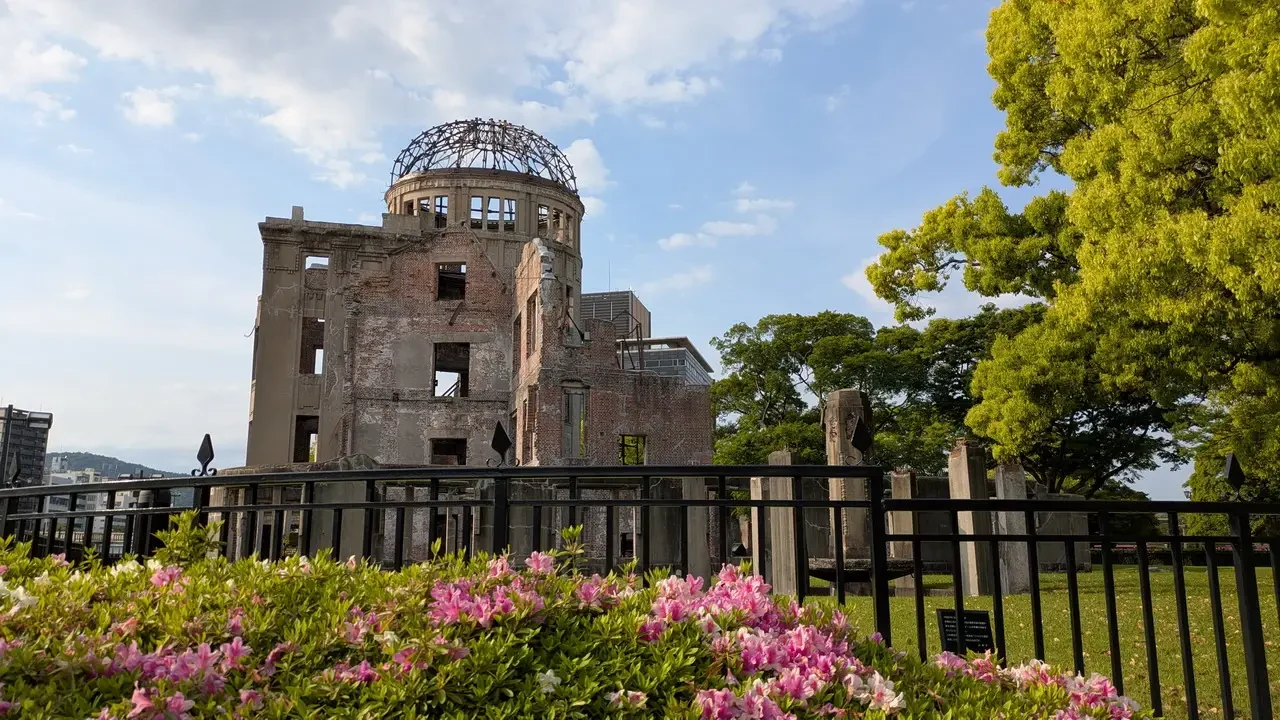
Wake up at 4:45, quick breakfast in the room and we cover the 500 meters that separate us from the station. Fukuoka is just waking up, and everything is calm at the station, to the point that the Shinkansen gates are not even open yet. Our train departs at 6:00, but there's still half an hour left, and the vigilant staff will only open them for a quarter of an hour: no problem, after clarifying with other passengers waiting, we have found our correct place. We had booked everything in advance by logging onto the JR Central website, accessing via QR code, the counter automatically issues a ticket, which in reality will be useless since to exit you simply need to scan the QR code again, and when we arrive at the platform The white train is already waiting on the tracks.…it seems they have just cleaned the car, the interior is simple but perfectly clean. The information is clearly indicated in English as well, there are even shoe markings to indicate where to stand before boarding, with precise instructions on the platform and seats depending on the type of train that will stop at that point. We take our assigned seats and keep an eye on the clock as the train departs… or vice versa. The landscape quickly passes through towns and rice paddies until we reach Hiroshima station, covering 280 km in 1 hour and 7 minutes. Upon arrival, we try to catch a local bus: using Google Maps, we identify the bus number and departure location, board it, and use gestures or Translate to confirm that we can pay with cash when we get off, using the machine located next to the driver, who also gives us change. The fare varies depending on the stop. Everything works perfectly, and in just a few steps, we are at the hotel, leaving our luggage. We will only discover later that the hotel, conveniently located near the most interesting places to visit, is just a few meters from the underground where the bomb exploded; actually, this was supposed to explode at the intersection of bridges, primarily for easy identification, but the explosion occurred a few hundred meters away due to wind and, perhaps, pilot error. Given the size of the device, it would not have made any difference, but it is quite striking to know that 80 years ago, exactly 580 meters vertically from where we will spend the night, the Hiroshima bomb exploded. A light breakfast and a short walk along the river bring us to… monster, the ruined palace which was the Industrial Promotion Center, the skeletal building that had become a symbol and synonym for the nuclear disaster. It's just 8:30 am and there are still few people around, so the atmosphere feels more peaceful. Large bushes of azaleas in bloom try to soften this ruin, which is a painful reminder for humanity; we saw the other one just yesterday in Nagasaki; on the surface there are still the rubble has fallen at the moment of the explosion. His story is interesting: the building was not completely destroyed as happened to others, because it was "too" close to the point of explosion, therefore it was not directly hit by the destructive wave. In the immediate post-war period, when the city had been reduced to rubble, all the debris were removed in order to begin reconstruction. Someone asked that what would later be called the Atomic Bomb Dome should not be completely demolished, so that it could remain a memory of what happened, while others preferred its complete demolition to turn over a new leaf. The first idea prevailed: the ruins became a protected monument by UNESCO and is famous throughout the world as an example of atomic destruction. The contrast with the flowering bushes and the river flowing slowly Beside it, they seem to be a reminder that the end is never truly final and that even atomic ashes can lead to rebirth. This rebirth was surprisingly quick, as in the general tragedy of destruction, the fact that the bomb was deliberately detonated at half a kilometer from the ground to cause greater damage and irradiate its radioactive rays over a larger area prevented it from impacting the ground, thus avoiding surface radioactivity, as happened in Chernobyl more recently.
Arrival in Hiroshima
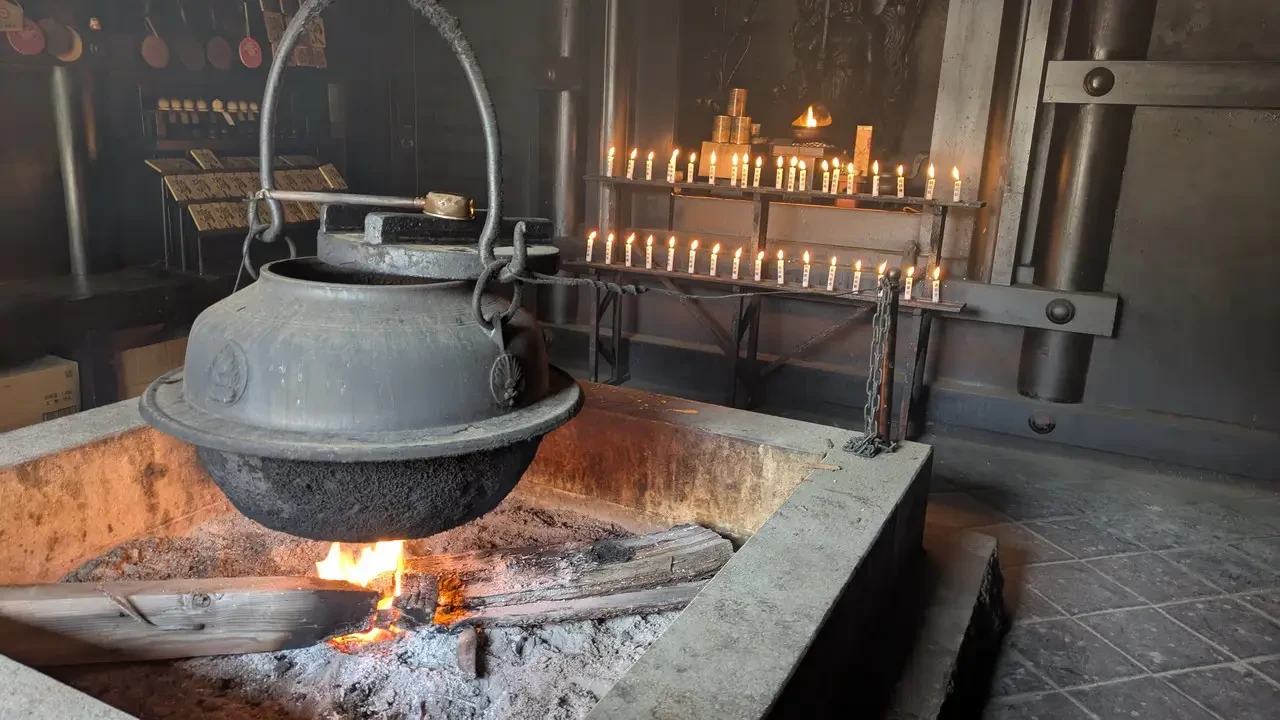
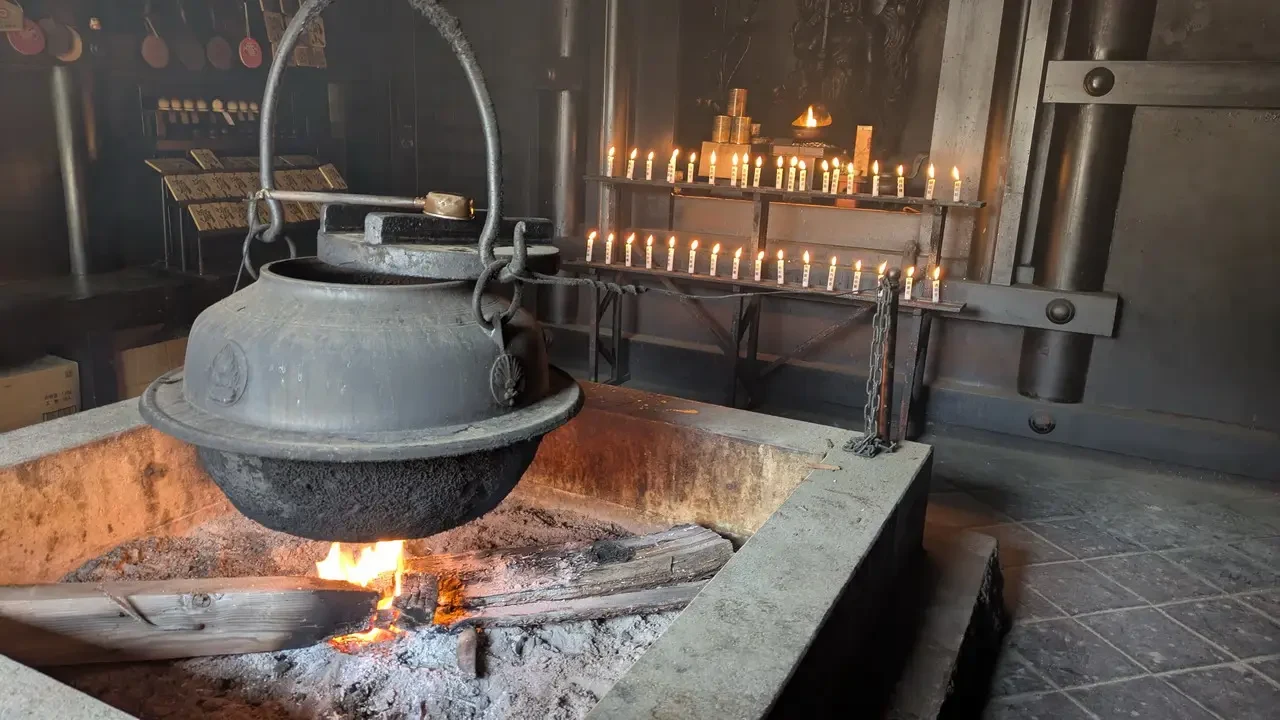
At 9:00, we need to board the ferry for Miyajima, which had been kindly booked yesterday through the hotel receptionist in Fukuoka. Embarking from this point is more expensive but allows us to start the journey close to the hotel and the most important sights in the city center, saving a lot of time and enjoying a different view of the Hiroshima River. We had previously found the website, but it was not possible to make the booking as the English version did not allow it; while with the Japanese version we had some difficulty interpreting; we were worried about being fully booked due to Golden Week, but there were no problems. After 45 minutes of sailing, we arrive at the disembarkation port on Itsukushima Island, where we begin to see the famous " floating torii". The trip is an interesting mini-cruise because it goes from an urban environment that winds along both banks of the river to open sea, but still amidst small islands and rocky outcrops scattered everywhere. A recorded voice explains what we encounter along the way. The ticket includes a tourist tax of 200Y, which is amply compensated by the organization offered upon arrival, maps, etc. It's quite early, even though it's Saturday during Golden Week, there isn't yet the crowds we will encounter in the afternoon, but the red torii is one of the most recurring images throughout Japan (along with Mount Fuji and Fushimi Inari in Kyoto), so you need to find space to photograph it without including people posing. The sanctuary It's already crowded and there's a queue to get in; frankly, we haven't come to this natural paradise just to be stuck inside an interesting historical building. Instead, we're interested in covering the 2.5 km with a 530-meter elevation gain (a bit more with some inclines) that leads to Mount Misen, the highest point on the island: at 13:25 we have our return ticket, so we need to keep this deadline in mind. Thanks to our training in the Alps and lightweight equipment, we start the steep ascent with good pace. paved path which passes through the Momijidani Park. The day is warm, fortunately the dense vegetation provides good shade and we don't suffer too much. Japanese maple trees (momiji) are predominant; we notice how their leaves are smaller than those of our small red Japanese maples. Once we have reached the first sanctuary The path is not far from the highest point, and it narrows down, sometimes passing very close between huge rocks, until it reaches the horizon. It stretches out endlessly, on a beautiful green and blue vehicle, dominating the Hiroshima bay and the surrounding archipelago up to the coast of the island of Shikoku, our destination for the next few days. There's so much to admire for hours, but we have to return; we descend again to... shrine, where there is a burning... wood, burning for about 1,200 years, when the monk Kobo Daishi stayed there for his meditation and from where we begin a new descent path, crossing a long brown snake, and to reach the Daishoin sanctuary, which seems to be a mix of Buddhism and Shintoism. A visit and some nice photos are definitely recommended here. stone dwarfs Interestingly, they are covered with a red beret that seems to be hand-knitted; there is a series of prayer wheels, which can be turned using a rope to make small metal pots ring, and you will find the familiar bell that is rung by pushing a large stick horizontally; access to the altars is silent, devotional, and barefoot. As elsewhere, here too, it's impossible not to mention the harmony created by the perfect integration between religious buildings and vegetation of all sizes, with prominent green and red maples. It is now getting late, and lunch will be missed as we boarded just a few minutes before the boat left its moorings. The descent was definitely more difficult, as the staircase does not have any steps; it's better to descend. Another 45 minutes of travel in reverse, and finally we enjoy delicious but not easy-to-digest skewers filled with rice and wrapped in pork, purchased from a stall near the dock. It is now 2:30 PM, and the quick climb up Mount Misen has left its mark on our appetite. It's interesting to note that Hiroshima is located on the Ota River delta, which divides into six branches before reaching the eponymous bay.
The urban face of Hiroshima
The day is beautiful and will remain so until 5 PM, allowing us to visit the interesting sites. Crossing the bridge, we find ourselves in... Monument to Memory Park... where among the trees are scattered various monuments: the first one encountered is that commemorating the 20,000 Koreans who were in the city and killed at the time of the explosion, due to forced labor as Korea was a Japanese colony, representing approximately 10% of the victims; it should be noted that there were also several allied prisoners, as well as foreign workers for whom things did not go better. Next is the Tumulus under which the ashes of many of the victims were buried, the Children's Peace Monument, the pond and the flame lit as a reminder and warning... which will only be deactivated when nuclear weapons disappear from the planet (an operation that does not appear imminent). Finally, a large building houses the Peace Museum, which is of great interest even though it is full of visitors. This museum essentially consists of three parts: after the first part, which deals with the event itself with images of victims and sick people that are truly shocking, there is another part where the technical aspects of the bomb are explained in detail from a physical and chemical point of view (the Hiroshima bomb used enriched uranium 235 while the Nagasaki bomb used plutonium), as well as how the detonation and the execution phase occurred. The last – and perhaps most interesting – part tells about the political aspects, the background, and explains many of the reasons for the use of atomic weapons. For example, the historical reason that justifies the bombings (including the one in Nagasaki) is the tenacity with which Japan insisted on defending itself in the summer of 1945 despite the surrender of the German and Italian allies, so as to avoid the human cost associated with the invasion. In addition to this reason, there seem to be two other reasons that were not declared: the opportunity to test atomic weapons in the field to verify their effects and learn from them for the future, but above all, a form of deterrence against the Soviet Union, an ally in the anti-Nazi war, but with whom differences were emerging that would later lead to the division of Europe into two blocs. At the same time, the bombing represented the nuclear arms race. It should be noted that the USSR declared war on Japan only on August 8, 1945, two days after the Hiroshima bombing. Another reason, not necessarily the most important but significant from a political point of view, is that the frantic search for a nuclear solution before the Nazis meant investing 2 billion dollars in time, using it at a critical moment would have meant possible government retaliation. Finally, Japan did not accept the Potsdam declaration, which demanded unconditional surrender (which eventually happened) and the resignation of the Emperor (who remained in power despite having to renounce his status as divine representative on earth). At the same time, it was explained how the United States, once they had control over Japan, initially downplayed the event and prevented the news from spreading within the country. Another interesting point – as seen in Nagasaki – is the dynamic model that faithfully reproduces the explosion, showing what happened before, during, and after. It is tragic but also remarkable to know which cities were "candidates" for atomic bombing, reduced to a shortlist before choosing Hiroshima and Nagasaki. In the end, 200,000 people died and an area of 2 square kilometers was turned into ashes.
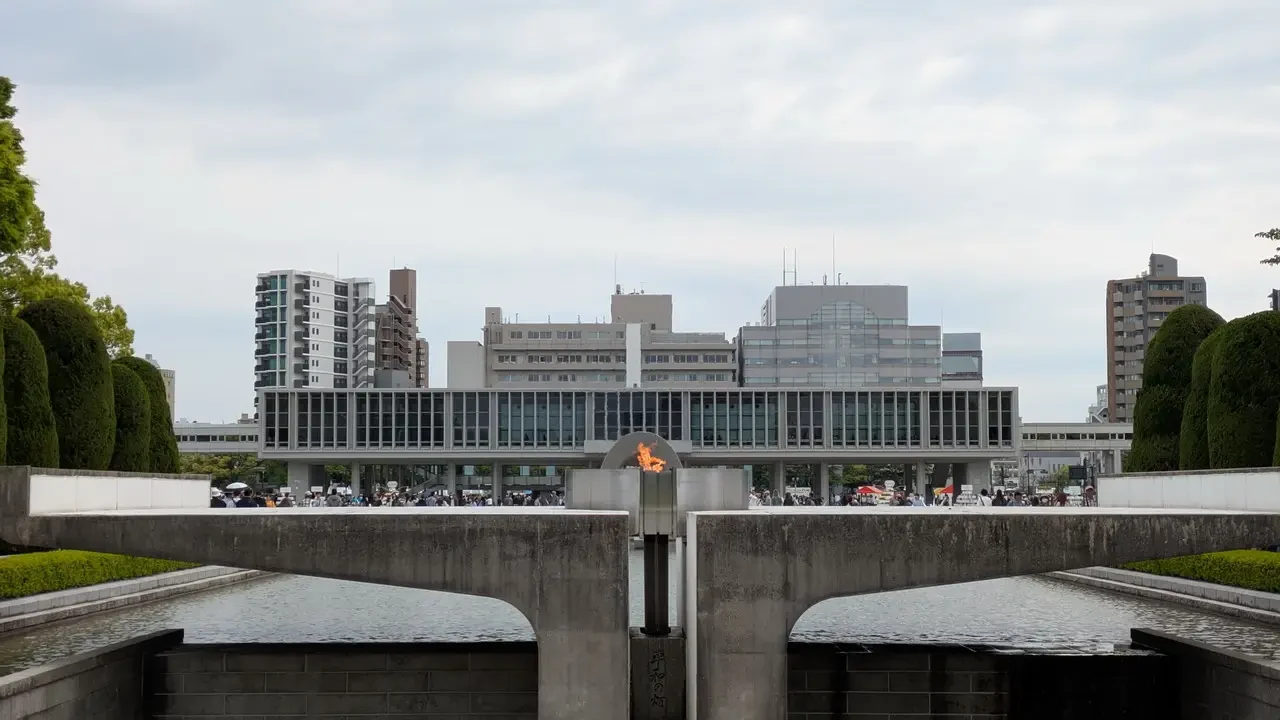
A final visit to the A-Bomb Exhibition Hall, where you can see original ruins: the area where the park now stands was a populated neighborhood, completely destroyed, and all its inhabitants died except for one person who was in an basement doing maintenance work. The area was later transformed into green space and here the Hiroshima National Peace Memorial Hall... a modern structure inspired by silence, with a central cylindrical block whose upper base forms a clock showing 8:15, the exact time of the explosion. Water flows from this symbol, which is also a symbol because it was what the victims implored, drained by the wind and heat of the blast. In the area of the explosion, the temperature reached 2000°C (up to 3000° in certain points), leaving only shadows on the ground where human bodies were. Just outside the museum, a modern music concert is about to begin, with young people gathering eagerly: at first glance, it seems almost disrespectful to this place. But upon closer inspection, it has had to turn over a new leaf; ultimately, it is right that here and now, carefree enjoyment prevails, even for those who would have wanted to experience the same feeling 80 years ago. It's called Peace Park, and what better demonstration than an opportunity for serenity to make it so? Even the concrete embankment of the riverbank, directly opposite the docking area for motorboats, has become a stage where musical groups play; around and on the opposite bank, convinced spectators enjoy the music on this festive day, illuminated by the sun. The water of the river flows through, carrying away negative memories.
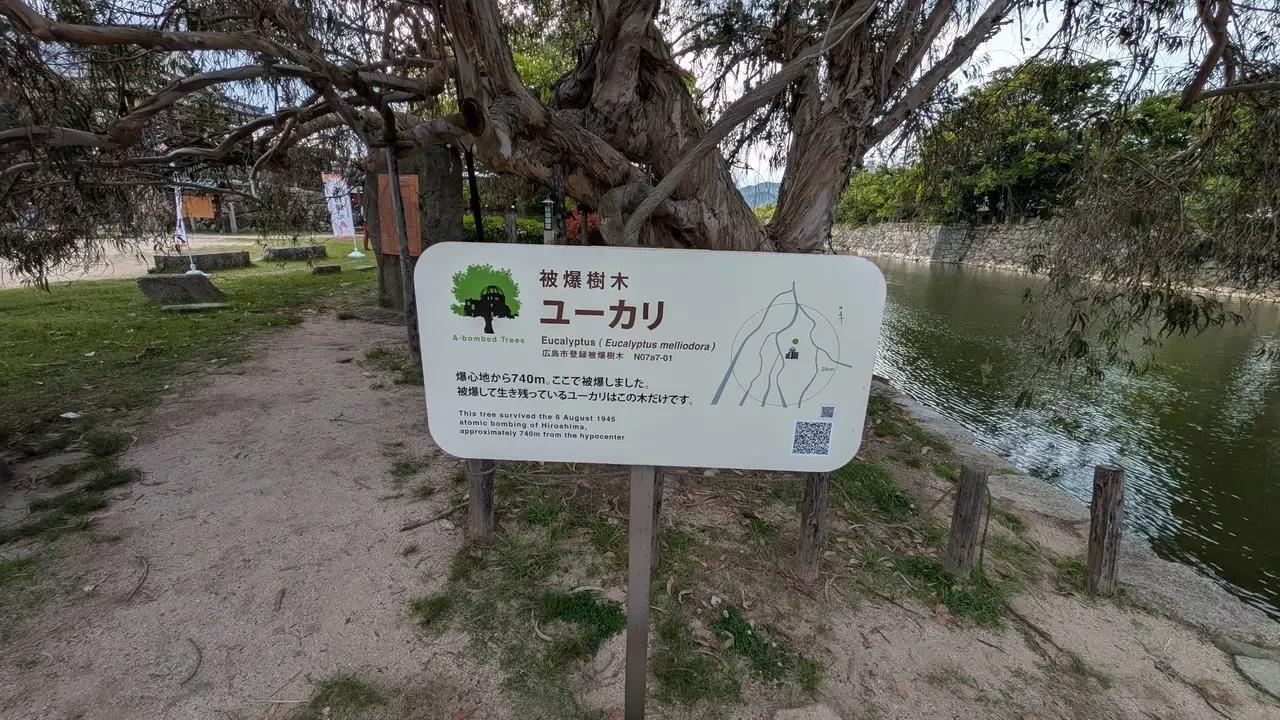
Having concluded this not-so-easy visit, but with a better understanding of what happened and having received answers to several questions, we set off towards the castle, recently rebuilt in its splendid original style after wars, earthquakes, and finally, the atomic bomb. In the adjacent park, you can find some trees that were already there before the bomb(eucalyptus trees) that were less than 800 meters from the epicenter, with signs explaining how they could have survived. There are scientific reasons to explain this, but popular belief attributes sacred reasons to their presence despite what they experienced. As neither scientists nor Shintoists, we are pleased that nature has succeeded in going beyond the sum of human destruction in some cases. It is now time for dinner; the sky has turned gray and threatens rain, so we find a restaurant to taste the typical okonomiyaki, a mixture of pasta, cabbage, fish, pork and soy, cooked on a grill according to the eater's preference.
Local wildlife
Just a few more steps, I'm almost there. The darkness fell over Hiroshima. completely, the A-Dome is well lit. in its macabre spectrality: a final look at the iron skeleton, what remained of the dome, leaning against tired walls where heaps of rubble and ashes lie in hopeless despair, as if everything had only happened a few days before: no image could be clearer and more emblematic, with the hope that nothing like this will happen again in a few days, months or years.