Day 6
Shikoku Island II
The dominance of green in the central valleys. Narrow roads and mountain villages.
Nagoro "Scarecrow" Village
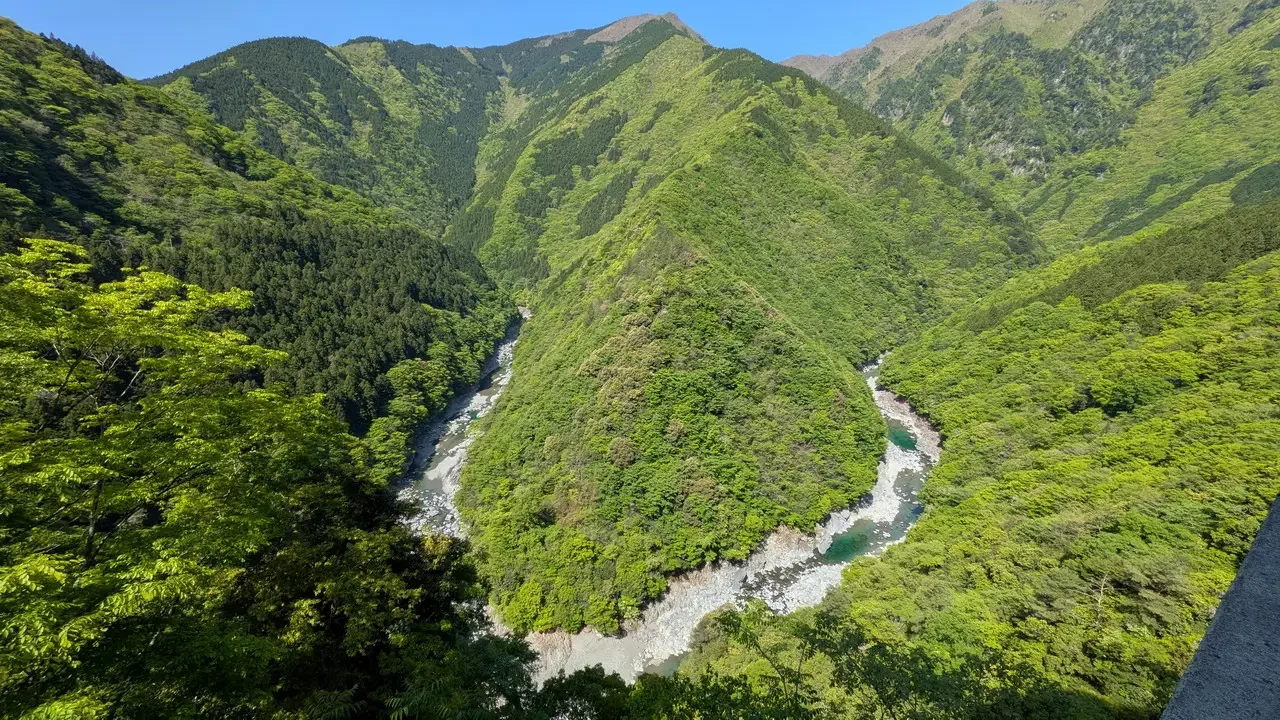
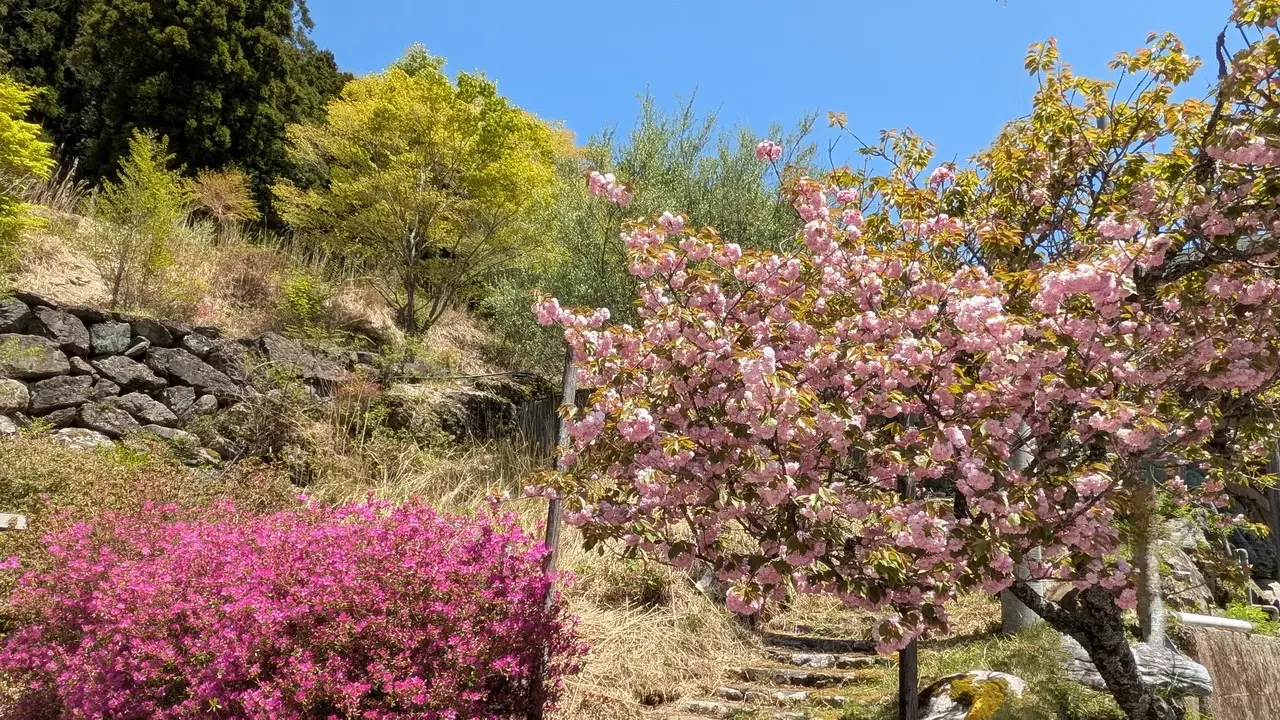
Access to the rooms is only permitted with slippers placed at the entrance, while access to the tatami area is barefoot. The experience of sleeping on the futon proves positive, and we are ready to face a day that appears again peaceful. We wake up at 5 am due to the light entering, but we manage to nap until 6:15 when the sun is already relatively high. If Japanese rooms normally have very small dimensions, this time we have available ample space, including a small room with a small table at the center where we will have breakfast. We ask the friendly manager for some information about the route to take and set off. We can say that we are familiar with the roads – paying close attention – and manage to travel them safely and without too much stress. Today, in particular, we intend to drive along roads 335, 32, and finally 439, which are extremely scenic but practically one-lane roads winding along the curves of the Shikoku mountains: when other vehicles appear, you have to hope to be near a parking area so as to avoid dangerous reversing maneuvers; luckily, traffic is limited (apparently, Japanese people are not particularly inclined to such adventures), also because it's early in the morning and we can easily pass without any particular difficulty. A tiring but exhilarating experience: we follow the right section of the Iya River, enjoying the bright day. lights up the forests from which all shades of green emanate, the path alternates between tunnels in the green foliage and viewpoints overlooking the canyon, with its bottom. clear, crystalline waters flow. All of this happens in Japan, which current rhetoric wants to portray as a vast urban and industrialized land. At some point, the characteristic appears... Peking Boy statue... representing a child attempting to use the toilet; nothing special, but what is notable is especially the natural backdrop that alternates between cypress trees, bamboo, and maples. We occasionally encounter small villages and are quite surprised by how people still live such a simple life in these remote locations (we are still in Japan); it's a source of admiration, we have no doubt about choosing to live here or in one of those urban accommodations where the subway seems to enter your room. Evidently, there is a simple economy that eludes us: tourism is scarce, the terrain makes life difficult, perhaps only the forests can provide what is needed for a decent life. Finally, the 32 road heads east, which we follow along the upper valley of the Iya River, which becomes increasingly narrow. Everything is so beautiful that we get caught up in it and reach the slopes of Mount Tsurugi, where we expect to find no one but are actually stuck in traffic. The reason is simple: if our side of the road is narrow and requires careful attention, the other side has access from two different sides and more densely populated areas. We immediately look for the first parking spot to reverse, while a zealous traffic warden issues fines to parked cars along the road. Nearby, we find trails but especially a cable car and restaurants: just as in Italy, amenities attract crowds. It is interesting to note (we are only at 1,400 meters above sea level) that spring has just arrived, the cherry trees are beautifully blooming allowing us to see the end of the hanami and the vegetation appears quite bare. The cherry trees are typical Japanese ones, fluffy and pink, forming a pastel patch without particular nuances; there are also white cherry trees, but they don't make much of a difference. It is now late morning, and we fear there will be heavy traffic uphill, which would not be ideal on such a narrow road; fortunately, there are no problems, although we pay close attention, traveling at around 30 km/h and carefully checking the mirrors near the frequent blind corners. Where the road becomes particularly narrow, there are smart traffic lights that flash, warning us to stop because another vehicle is approaching from the opposite direction, effectively creating a one-way system; an efficient radar system, which we simply need to know exists as it is not particularly marked: luck was on our side, as the first time we encountered someone ahead who acted as a guide.
Nagoro "Scarecrow" Village and Oku-Iya Double Vine Bridge
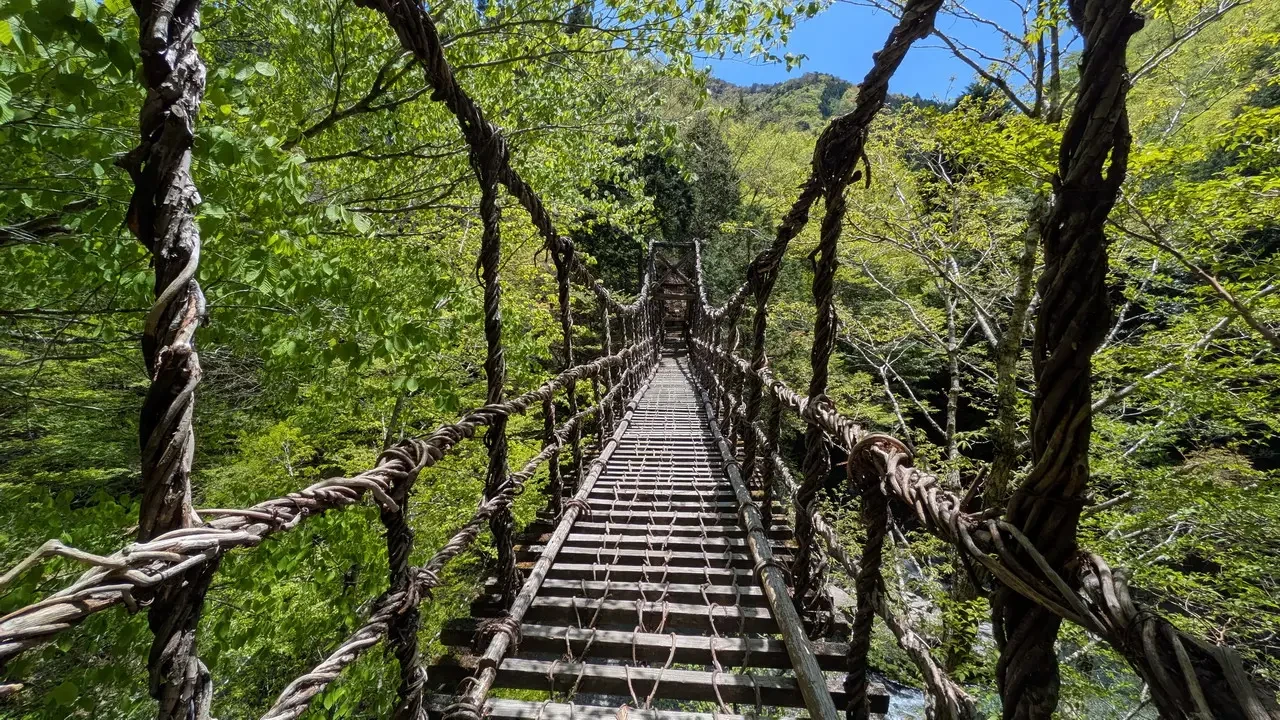
Escape the crowds and return to the greenery. Let's make a stop at... Nagoro "Scarecrow" Village, a small village that would have nothing to show if its inhabitants hadn't worked hard to make it popular with a multitude of scarecrows, filling old clothes with straw and placing them in the most "human" and traditional positions in every corner of the village or gathered on the edge of the central square. Another example of ingenuity can be found in the traditional suspension bridges. built with vines. There are actually two of them, the Oku-Iya, that cross the eponymous stream and allow for a short circular walk. Oku-Iya Double Vine Bridge (Oku lya Ni-jũ Kazura-bashi). These were used in the past and had the great advantage of being easily cut off in case of enemy attacks; of course, they require more maintenance and must be completely renovated after a few years. Signs indicate that you should proceed with caution and make noise along the paths, but there are no bears here, and today we will not risk encountering them. This is the perfect time to stop at a small restaurant on the other side of the bridge entrance: a nutritious meal consisting of soup with rice, eggs, chicken, and vegetables, plus a plate of fried rice with mountain vegetables and eggs, all prepared and served with care by two elderly but very experienced ladies. We are at an altitude of 1,000 meters, and the weather is perfect, with time to take some more photos. crystal-clear rivers which rush rapidly along valleys rich in vegetation to leave the Yia valley, pass over the Oboke Bridge and see some more green corners, drawing a horseshoe-shaped road with its reference point at Otoyo, and finally reaching the Seto Inland Sea with a final destination in Saijo, where we are waiting for a comfortable and spacious futon inside a small house used as a ryokan. It is located in a rural setting with views of the highest point on Shikoku Island, which reaches about 1,800 meters and still has snow-covered gutters. We even have time to chat with the manager, who speaks good English: he tells us about the quiet rural life in this area and some local history. Finally, we are not rushed and can take a walk before dinner, observing the elegant houses with perfect Zen gardens, surrounded by fields of potatoes, onions, zucchini, eggplants, broad beans, peas, strawberries, rice, and wheat (now ripening); all in a silence born from peaceful cultures. Almost all the fields are lower to be flooded when they are used for rice cultivation, and you can see a dense irrigation system of canals and dikes created for this purpose. The roads here are also narrow, almost to save land for agriculture, relying on the skills of drivers and the low traffic.
We arrive on foot at the Yuzuya izakaya, recommended by the guesthouse manager, and start ordering portions of fish and seafood in succession: fried octopus, grilled squid and tempura, fried whale, potato and cheese mochi, sweet potatoes with grilled vegetables, while enjoying lime and local beer without fear of further police checks since we are walking. We then go grocery shopping for the next meals at the nearby supermarket, including the inevitable steamed puddings and caramel for breakfast, and a bottle of sake (partially) for tonight; we return home just before it starts to rain heavily. It's only 8:30 PM, but this gives us time to plan out our detailed schedule for tomorrow. At the ryokan, we will find a family of five Japanese people, whom we appreciate for their respect in keeping quiet and managing the common areas carefully the following morning: the civilization of a people can be seen even in these details, which are not really details.