

Map
Vietnam and Cambodia map - complete itinerary
I am trying to find the right words to start this report, and what emerges most strongly from this wonderful journey is the term CONTRAST. I have never experienced places where the contrasts were so sharp. Vietnam: a country steeped in religious and humanist traditions, which over the last century, and indeed much of its history, has faced overwhelming enemies that it had to fight against. And yet, it managed to win despite having very limited resources, at the cost of unimaginable suffering and thanks to a tenacity unlike anything else in the world. A recent past and present with a communist ideology that is purely superficial, allowing capitalist speculation that would make Western speculators pale, except for them to recover later and enjoy themselves in fashionable resorts along the warm ocean beaches. The hard work of a people who are not well suited to the dominant ideology of the last fifty years, where at least on paper everyone should be equal. In reality, the Vietnamese people are merchants, and ideologies only serve as a glue, until prosperity decrees their demise. And that would be a good thing. It is hoped that there will still be a glimmer of Confucius' teachings, which tend to unite society with the state and consider family members to be supportive of each other, while respecting ancient hierarchies. These are values that the West has abandoned for a couple of generations and that force it to wander in the mists before the rocks of indifference, in a Halong social situation without return.
Entering Cambodia, the contrasts become even sharper. A people who are still recovering from a failed suicide attempt. Yes, because the people who try to kill themselves should not be categorized as genocidal, but rather as suicidal. This was the Khmer Rouge regime in Cambodia, an era that had ensnared an entire country, unable to recover after dragging a third of its population into mass graves, emptying cities in the name of pure communism; where everyone would achieve equality. In reality, many of them did: Cambodia has become a huge graveyard. There is no city without its mass graves, without its atrocities to remember. There are no martyrs in a country that itself is martyred.
I never get tired of repeating how much pride the Vietnamese people take in their history, a nation that has been fighting for two millennia to achieve or maintain independence. I don't believe it will ever be my fate, and even if it were, I would certainly try to avoid it. But if I were to reincarnate as a head of state one day, something I would definitely avoid is declaring war on Vietnam in an attempt to invade it. The story of Italy, which has suffered from invasions and raids for almost the same amount of time, bowing to whoever invaded at the time, explains and justifies its internal divisions and lack of national cohesion.
I am finishing writing these pages on February 9, 2010, but a month has already passed since our arrival, and the memories and lessons of this trip are destined to last.
Introduction
While Mongolia, with its landscapes stretching beyond the horizon, is a clear symbol of freedom, the same cannot be said of Vietnam, which is as tightly bound by a narrow territory and an excessive population. Everywhere people bustle about, and the streets become one continuous flow in perpetual motion that intersects with a style that we find incomprehensible. It seems there are no places where one cannot be seen, except in the remote jungles of the interior. The calm of the Mongols against the hustle of the Vietnamese, their patience as a common denominator, along with their distrust of China, an atavistic and intrusive neighbor to both peoples. The rebirth of Buddhism after years of true communism, now dormant, infuses both countries with a new wave of spirituality and binds them to a distant past from which their culture originates. This religion, which remains fundamentally a great philosophy of life, could be a useful means to allow for regulated development. But it is still too early to say, and the worrying signs are not lacking. The neighboring countries certainly do not set a good example. Religion also emerges as a moral rigor, with the limitations of contextualization in time. Vietnam has chosen a path of pragmatism. Nominally, it is a Socialist Republic, and the only party allowed is the communist one. To remind you, Ho Chi Minh's sharp face appears everywhere, with some political messages written in yellow on a red background, completing the picture. In reality, the system is capitalist with an unknown development and profitability rate elsewhere. Hard work is an important component, lack of rights completes the picture to maintain social peace. However, in the face of the world and a certain way of seeing things, there remains a left-wing regime that maintains its people in conditions of equity. This system has already been successful in China, and here it is being reviewed in a local version. Those who work in private companies do not have holidays, while construction sites operate 24 hours with poor nighttime lighting and consequent risks. A different situation applies to Cambodia. A peace that has not yet completed its tenth anniversary and a different people make it incomparable to its neighbor. It is highly unlikely that a Vietnamese parent would send their children into the streets to beg; their pride would prevent it. Even poverty knows its own principles and limits, things that do not seem to exist in the contradictory Cambodia. It should be noted that the Cambodian people may have suffered the worst hardships since the end of World War II, perhaps even worse than this. No one has suffered as much as they did during the civil wars that preceded and followed the era of pure Khmer Rouge terror. It is still too early for the wounds to heal, allowing the present to transform into history. The state is nothing more than a collection of interests now convergent or conflictually divergent. The example of Cambodian politics is represented by the former king Sihanouk, a Talleyrand in tyrannical form, capable of allying with all his enemies and making political changes unthinkable just to maintain power and impunity. This has succeeded perfectly, along with the ex-leaders of the Khmer Rouge. The only values present in the face of a starving population seem to be only power and money. Not that governments are not driven by other passions, but here it is particularly striking, and the "silence" (from the title of a well-known film set right in Cambodia) rises even louder. Someone renames Phnom Penh as Lexus City, due to the gleaming SUVs that drive through the city, while children who have had their legs and hopes torn away by mines crawl along the sidewalks like reptiles. Two and a half million tourists visit Angkor every year, and 10 five-star hotels are ready to welcome those who combine Khmer culture with the beautiful beaches of Thailand. This is a level of tourism that visits the Angkor sites. Ladies in evening gowns stroll through the fashionable restaurants of Siem Reap; in this third world corner, where people have only had the unfortunate luck of being born in the wrong place. A night at the best hotel in Siem Reap costs $2000, while the average of those who live in the muddy pools of Lake Tonle can barely scrape together the equivalent of $500 per year. The accounts quickly add up: 4 years of work to pay for a night in a hotel! The stark contrast is more than evident and has justified liberticidal theories until madness, such as the Khmer Rouge. Seeing Angkor does not mean seeing Cambodia; the differences remain in all their evidence and injustice. In Vietnam, like in the rest of the world, there are different classes, and perhaps it is even right that they exist, but here it is particularly offensive, both for tourists and for indigenous people who have been enriched. The rich profits from the new Angkorian economic empire end up in the pockets of a few, corruption is rampant, and only 10% of the income goes to maintaining the archaeological sites. The rest is distributed among local gentlemen. It will be no different at the end for funds for solidarity with indigenous populations. The wealth that is seen cannot be taken from the poor because they do not have it. And the incomes are those, ending up being an insult to their own history and universal solidarity. Perhaps this status is nothing more than the social anarchy of a country that does not find identity in its imperial past and must recover from an era of conflict that has no precedent in the rich catalog of human misdeeds. However, it should be observed that the Cambodians are perhaps those who have suffered the worst hardships since the end of World War II, perhaps even worse than this. No one has suffered as much as they did during the civil wars that preceded and followed the era of pure Khmer Rouge terror. It is still too early for the wounds to heal, allowing the present to transform into history. The state is nothing more than a collection of interests now convergent or conflictually divergent. The example of Cambodian politics is represented by the former king Sihanouk, a Talleyrand in tyrannical form, capable of allying with all his enemies and making political changes unthinkable just to maintain power and impunity. This has succeeded perfectly, along with the ex-leaders of the Khmer Rouge. The only values present in the face of a starving population seem to be only power and money. Not that governments are not driven by other passions, but here it is particularly striking, and the "silence" (from the title of a well-known film set right in Cambodia) rises even louder. Someone renames Phnom Penh as Lexus City, due to the gleaming SUVs that drive through the city, while children who have had their legs and hopes torn away by mines crawl along the sidewalks like reptiles. Two and a half million tourists visit Angkor every year, and 10 five-star hotels are ready to welcome those who combine Khmer culture with the beautiful beaches of Thailand. This is a level of tourism that visits the Angkor sites. Ladies in evening gowns stroll through the fashionable restaurants of Siem Reap; in this third world corner, where people have only had the unfortunate luck of being born in the wrong place. A night at the best hotel in Siem Reap costs $2000, while the average of those who live in the muddy pools of Lake Tonle can barely scrape together the equivalent of $500 per year. The accounts quickly add up: 4 years of work to pay for a night in a hotel! The stark contrast is more than evident and has justified liberticidal theories until madness, such as the Khmer Rouge. Seeing Angkor does not mean seeing Cambodia; the differences remain in all their evidence and injustice. In Vietnam, like in the rest of the world, there are different classes, and perhaps it is even right that they exist, but here it is particularly offensive, both for tourists and for indigenous people who have been enriched. The rich profits from the new Angkorian economic empire end up in the pockets of a few, corruption is rampant, and only 10% of the income goes to maintaining the archaeological sites. The rest is distributed among local gentlemen. It will be no different at the end for funds for solidarity with indigenous populations. The wealth that is seen cannot be taken from the poor because they do not have it. And the incomes are those, ending up being an insult to their own history and universal solidarity. Perhaps this status is nothing more than the social anarchy of a country that does not find identity in its imperial past and must recover from an era of conflict that has no precedent in the rich catalog of human misdeeds. However, it should be observed that the Cambodians are perhaps those who have suffered the worst hardships since the end of World War II, perhaps even worse than this. No one has suffered as much as they did during the civil wars that preceded and followed the era of pure Khmer Rouge terror. It is still too early for the wounds to heal, allowing the present to transform into history. The state is nothing more than a collection of interests now convergent or conflictually divergent. The example of Cambodian politics is represented by the former king Sihanouk, a Talleyrand in tyrannical form, capable of allying with all his enemies and making political changes unthinkable just to maintain power and impunity. This has succeeded perfectly, along with the ex-leaders of the Khmer Rouge. The only values present in the face of a starving population seem to be only power and money. Not that governments are not driven by other passions, but here it is particularly striking, and the "silence" (from the title of a well-known film set right in Cambodia) rises even louder. Someone renames Phnom Penh as Lexus City, due to the gleaming SUVs that drive through the city, while children who have had their legs and hopes torn away by mines crawl along the sidewalks like reptiles. Two and a half million tourists visit Angkor every year, and 10 five-star hotels are ready to welcome those who combine Khmer culture with the beautiful beaches of Thailand. This is a level of tourism that visits the Angkor sites. Ladies in evening gowns stroll through the fashionable restaurants of Siem Reap; in this third world corner, where people have only had the unfortunate luck of being born in the wrong place. A night at the best hotel in Siem Reap costs $2000, while the average of those who live in the muddy pools of Lake Tonle can barely scrape together the equivalent of $500 per year. The accounts quickly add up: 4 years of work to pay for a night in a hotel! The stark contrast is more than evident and has justified liberticidal theories until madness, such as the Khmer Rouge. Seeing Angkor does not mean seeing Cambodia; the differences remain in all their evidence and injustice. In Vietnam, like in the rest of the world, there are different classes, and perhaps it is even right that they exist, but here it is particularly offensive, both for tourists and for indigenous people who have been enriched. The rich profits from the new Angkorian economic empire end up in the pockets of a few, corruption is rampant, and only 10% of the income goes to maintaining the archaeological sites. The rest is distributed among local gentlemen. It will be no different at the end for funds for solidarity with indigenous populations. The wealth that is seen cannot be taken from the poor because they do not have it. And the incomes are those, ending up being an insult to their own history and universal solidarity. Perhaps this status is nothing more than the social anarchy of a country that does not find identity in its imperial past and must recover from an era of conflict that has no precedent in the rich catalog of human misdeeds. However, it should be observed that the Cambodians are perhaps those who have suffered the worst hardships since the end of World War II, perhaps even worse than this. No one has suffered as much as they did during the
Itinerary
Travel days
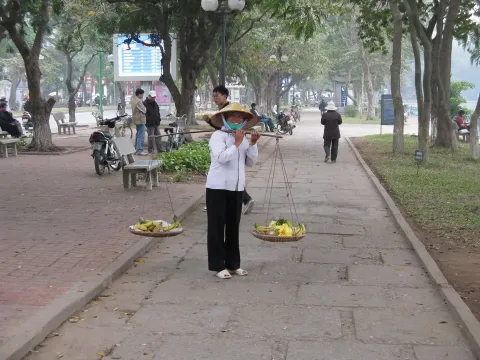
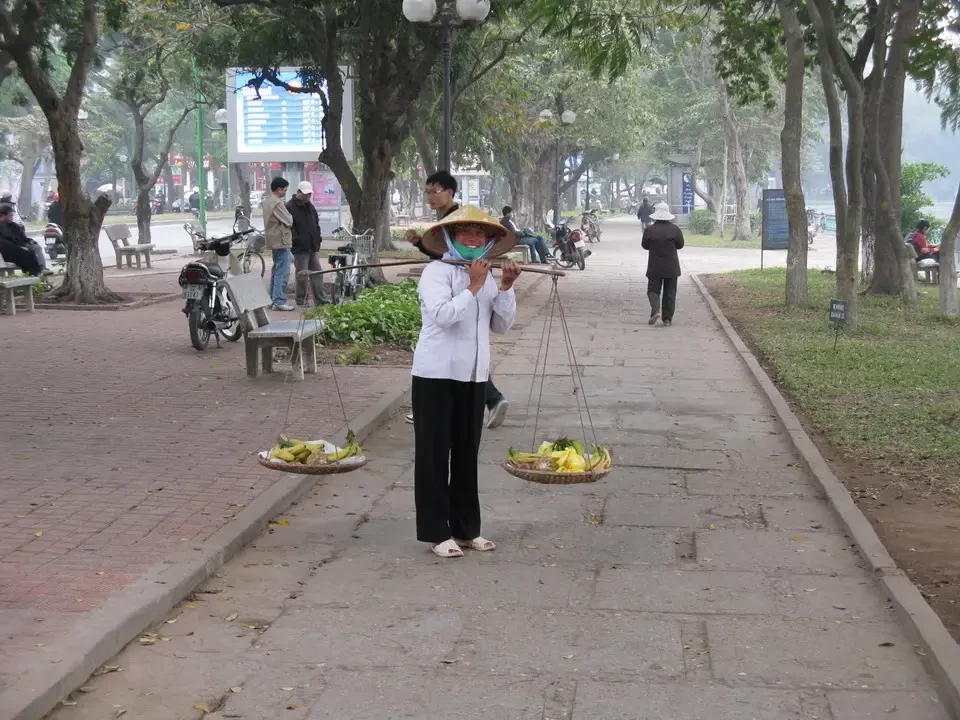
Hanoi I
Christmas Eve in Hanoi: Past and present meet.
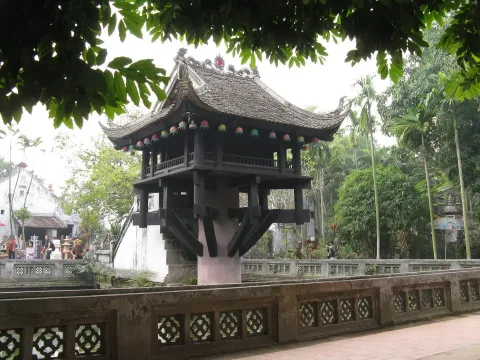
Hanoi II
Hanoi: austere city in the north. Active and industrious, but under the watchful eye of Uncle Ho.
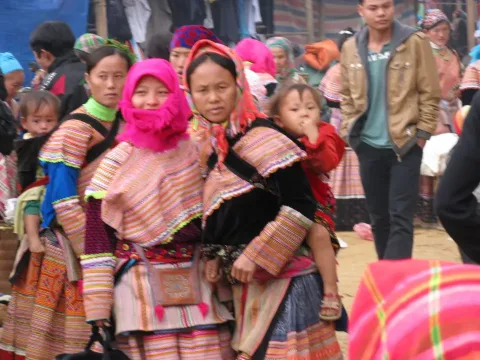
Sa Pa
Traveling by train towards the northeast. China is just a short distance away, within the territory of ethnic minorities.
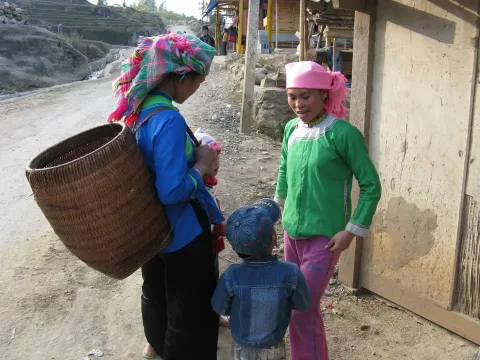
Northwestern Vietnam
Ethnic minorities among the rice-cultivated hills: between a backward social status, tradition and pride.
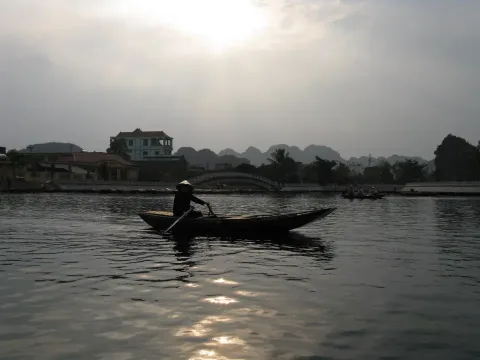
Tam Coc
Last visit to Hanoi and the magic of Tam Coc: where the landscape becomes spirit.
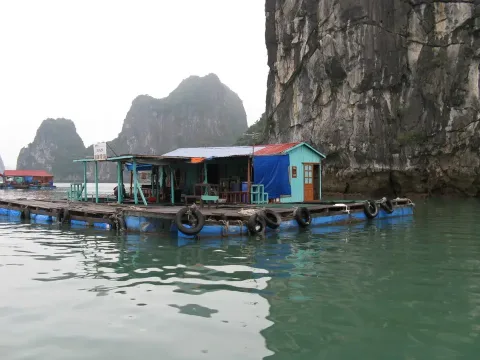
Bay of Ha Long I
Bay of Ha Long, where the magic of nature is affected by tourism.
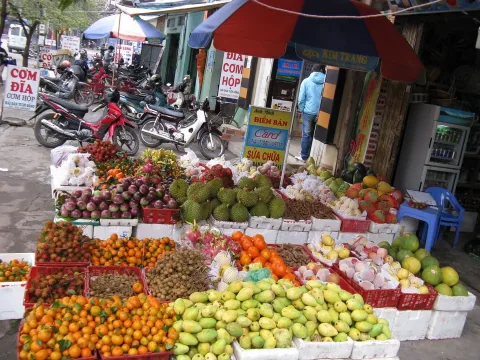
Bay of Ha Long II
Among the floating villages in Tonkin, heading towards the center of Vietnam.
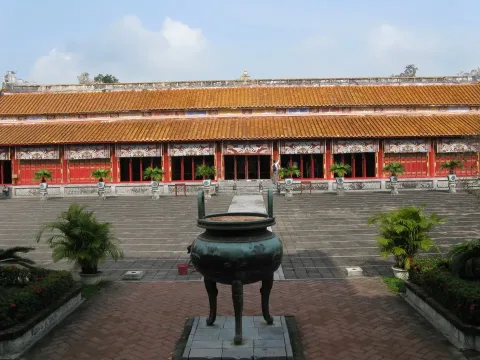
Huế
Huế: Imperial capital, imperial tombs and New Year's celebrations in a warm climate.
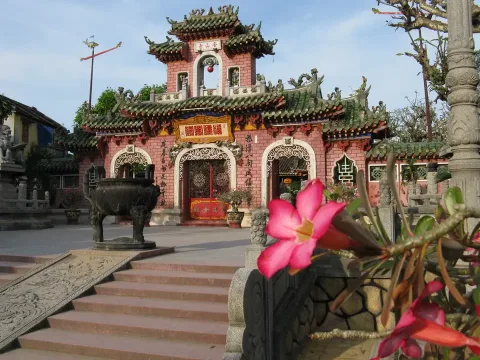
Hoi An
The Cloud Pass with sunshine and the pearl of the Center: Hoi An
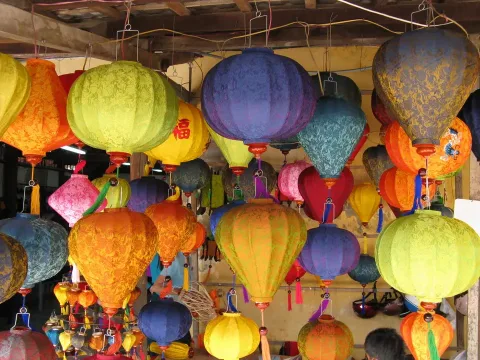
My son
A trip back to the glorious past of Champa in My Son, followed by a flight to Saigon on Saturday evening.
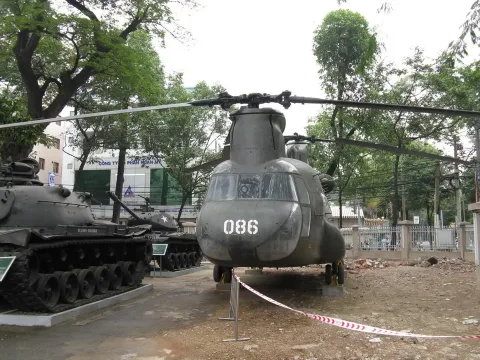
Saigon
War and peace in Saigon. The vast Mekong Delta, where Asian stories converge.
Mekong Delta
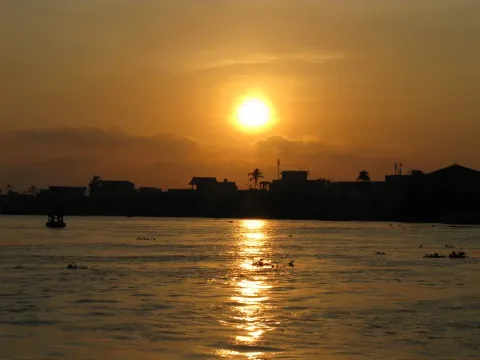
Floating markets on the Mekong River and then towards the border with Cambodia.
Phnom Penh
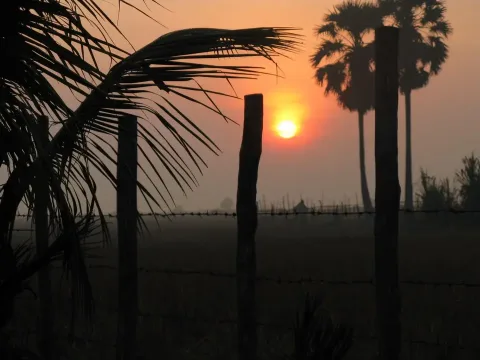
Phnom Penh, arriving from the Mekong River. Cambodia: a harsh reality.
Angkor I
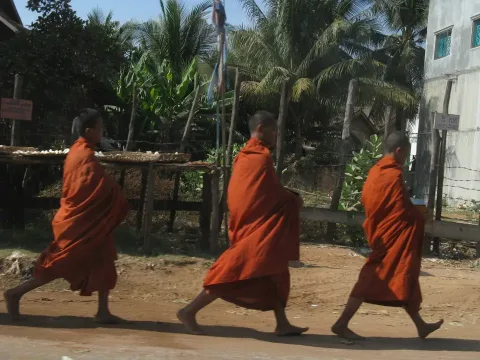
Heading north to the gates of Angkor. The sites of Roluos and Siem Reap, a stylish tourist destination.
Angkor II
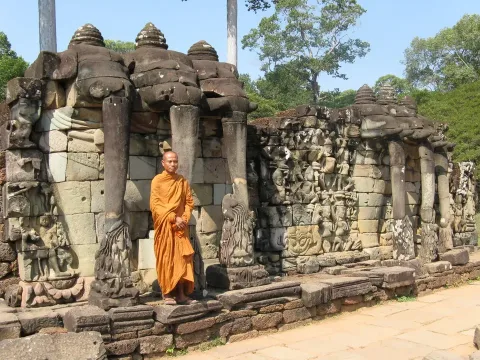
Angkor Thom, Bayon, Angkor Wat and Phnom Bakheng: The Khmer myth between stone, sunset, and tourism.
Angkor III
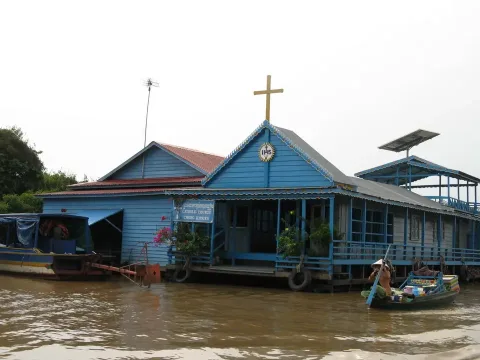
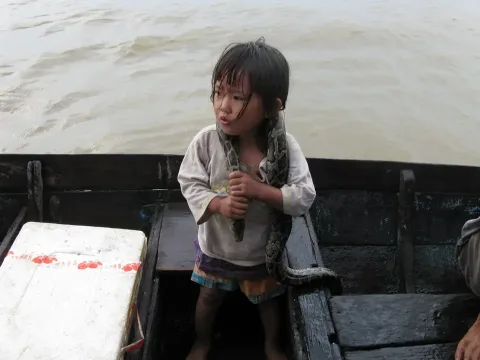
From Kbal Spean and Ta Prohm to the floating villages of Tonle Sap, amidst sacredness, nature, and everyday poverty.
Tonlé Sap
From the Cambodian countryside to Phnom Penh, through endless roads, Tuol Sleng, and sunset over the Mekong.
Phnom Penh
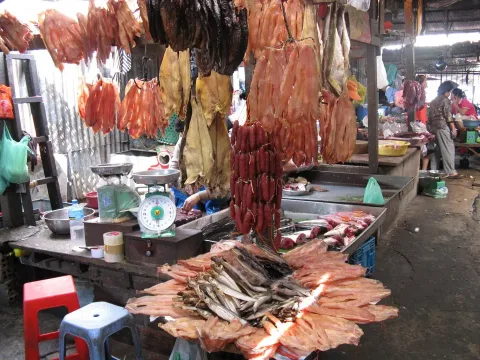
Conflicts in Indochina, between luxury cars and victims of landmines.