Waking up in Ha Long Bay
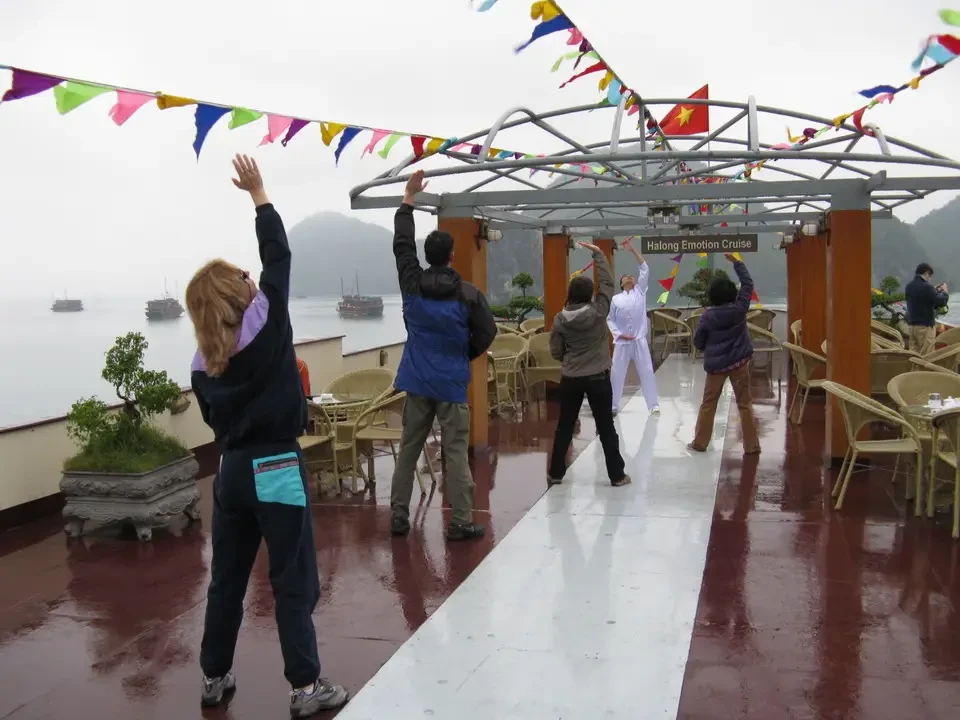
What was yesterday just a light mist, is now a thicker fog that covers the tips of the rocks. The view of the bay remains stunning, but less expansive. We wake up at 6:00 AM to attend the course of Tai Chi, a practice of Chinese origin that awakens the body with slow and balanced movements. In fact, sleep, lulled by the gentle waves of the Tonkin Gulf, was excellent. At 7:00 am, we will enjoy a rich breakfast buffet, in case dinner yesterday left some room for more.
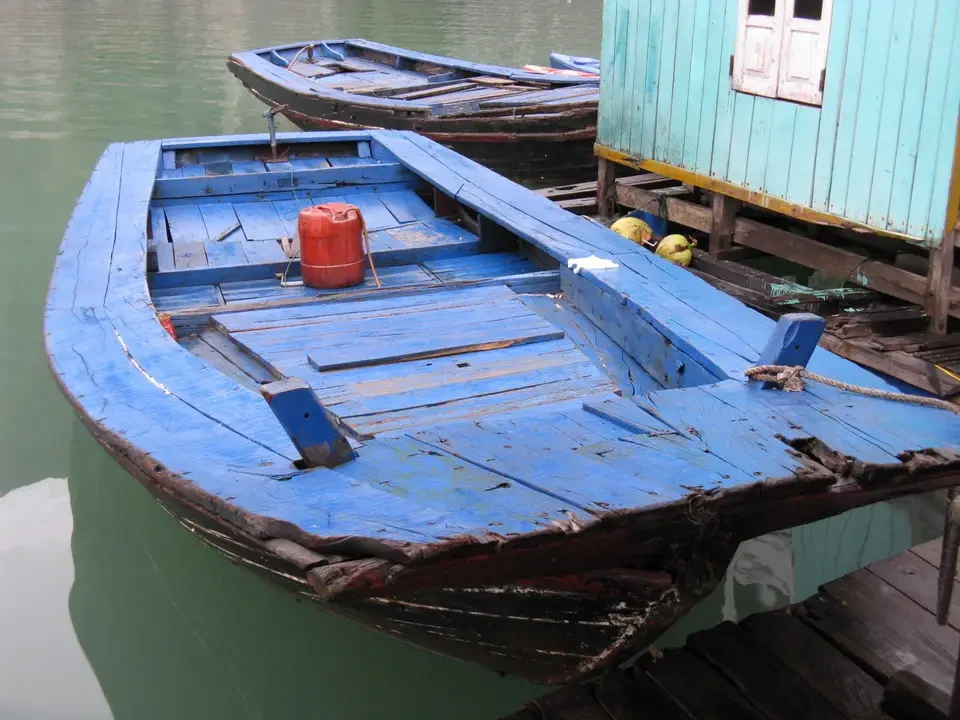
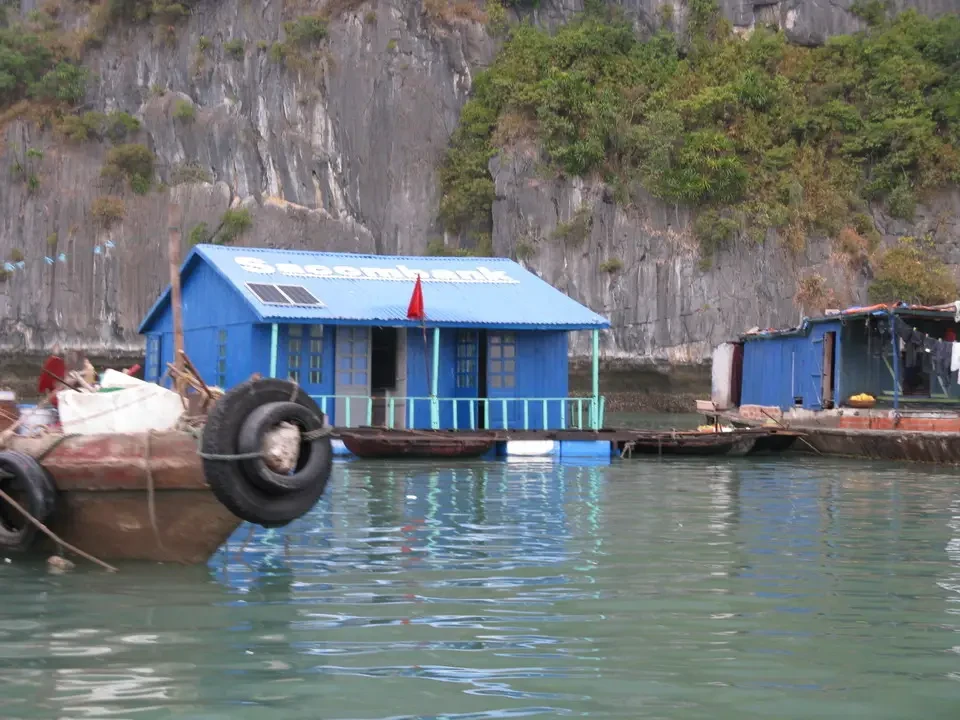
The floating villages of Halong
At 8:30, we are ready for another outing. With our usual small boat, we leave the larger vessel and go to visit the floating fishing villages It's a different experience than the ones I've had so far, because it allows you to understand how fascinating living on the water can be, only for those who observe it from the outside. Here, everything requires effort: moving around, taking care of oneself, going to school, and buying drinking water.
The villages are seven, for a total of about 1,200 people. The residents collect rainwater for non-food uses, while drinking water must be purchased on the mainland and transported by boat. A barrel can cost quite a bit, especially due to transportation costs, as a small boat can only carry two at most. The school is also organized in a particular way: the children attend the main floating structure and the teachers arrive on Monday, staying there all week before returning home over the weekend.
There are no hospitals. In case of emergency, the patient is loaded onto a motorboat and taken to shore, hoping that the 45-minute journey will suffice. The same applies to pregnant women, although many births still take place on board. Formerly, the dead were buried on the beaches; today, with the protected area, burials take place on land. The economy is essential: fishing in shallow waters, especially squid, selling at the shore, and exchanging for rice, vegetables, and basic necessities.
Bay Tu Long and return to land
These villages have existed for about two centuries, now in the fifth generation. When typhoons and storms arrive in the second half of the year, the houses are moved to safety behind the rocky islets or inside protected lagoons with high rock walls. In some cases, you enter through caves or natural tunnels, reaching internal basins where you wait for the bad weather to pass. Without these shelters, a stable life on the water would be unthinkable.
We then head towards Bai Tu Long to see more limestone formations: Coc Rock, Cap De Rock, Bo Cua Rock, and Vong Vieng Rock. After the visit, we return to the boat for check-out, and around 11:30 am, we reach land again, passing through... sharp rocky profiles emerging from the sea. Lunch is at a typical restaurant in Halong, where the sea once again confirms the quality of its delights.
From Halong to Hanoi Airport
So concludes our trip to the north of Vietnam. In three hours and a quarter, we reach Hanoi Airport. It's remarkable how scarce the signage is, considering that it's the international airport for the capital of a major emerging country. Along the way, we stop at a tourist center where buses unload travelers looking for the usual shopping. A quick look reveals that air conditioning comes at a high price in the products on sale.
During the return journey, we witness the spectacle of the airlines constantly overtaking each other to arrive first at the next stop and secure passengers. The competition seems almost competitive, but the risk of accidents is evident. The landscape alternates between rice paddies, brick-making ovens, and agricultural scenes: women with bamboo hats sowing by hand, buffalo plowing, farmers working in the fields. Some drops of water on the windshield immediately form small puddles, indicating a soil that is not very permeable and perfect for rice cultivation.
The flight from Hanoi to Hue departs at 5:25 PM and arrives at 6:55 PM with Vietnam Airlines. The Airbus 321 is new and the service is excellent, with elegant hostesses wearing ao dai. It's a pleasant surprise for those who would only judge based on the reputation of well-known airlines.
Arrival in Hue
Upon arrival, we meet the guide who will accompany us for the three days in central Vietnam. His name is Tuai, he has a casual appearance and a calm manner. Along the way to the hotel, we see small paper fires and incense. We discover that it's the full moon day, and on this occasion many Buddhists burn paper offerings as a devotional gesture.
We will meet others later as well, while out for dinner, along with the penetrating scent of incense. Hué appears much calmer than Hanoi: more polite traffic, wider streets, and sidewalks less crowded with shops. It's 23°C, and people also seem less insistent. After the density of the north and the suspension of the bay, entering central Vietnam has a different pace.