From Hue to Hoi An, passing through Hai Van.
It's the first day of the year, but apart from the greetings from the guide, we hardly notice it. The heat doesn’t really suit the festive atmosphere, and today feels like just another travel day. We set off for Hoi An, passing through a variety of spectacular landscapes. First, we pass by the fishing village of Lang Co, where eucalyptus oil is extracted, and along the way, we see stalls selling small bottles, mainly used by women to protect children.
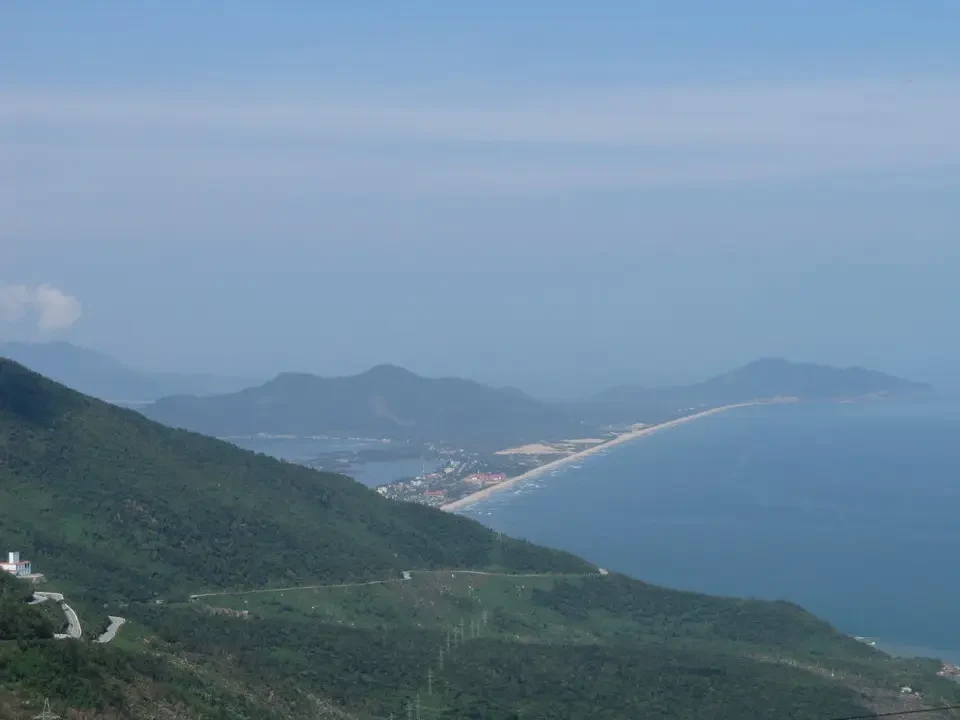
The lagoon is sustained by fishing, shellfish, and other marine life, thanks to its shallow waters. Further on, we will also see the characteristic round bamboo boats, similar to large baskets without a prow, used by squid fishermen. Then the road climbs towards the Hai Van Pass, the Cloud Pass, a geographical, climatic and cultural border between north and south Vietnam.
From above, we can see Danang and the long China Beach, which extends for over 30 km. We are very lucky: the name of this pass suggests clouds and fog, but instead, we find sunshine and clear visibility, with views in both directions – north and south. The strategic location is also evident in the two bunkers that remain on the hill: one made of bricks, linked to the Nguyen dynasty, and one American. Before the tunnel built by the Japanese in 2005, this was the only way to connect the two parts of the country without using the sea.
Danang and the Cham Museum
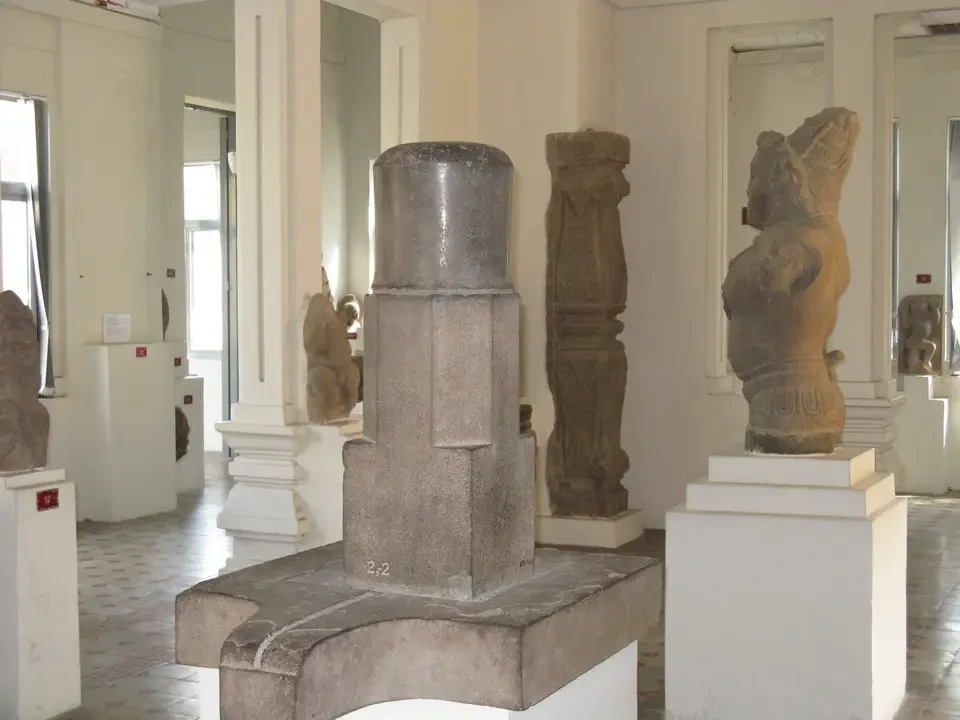
We arrive in Danang, the fourth city in the country and the main economic center of central Vietnam. It is a port city surrounded by mountains, and during the war it hosted one of the largest American military bases. Here we visit the Cham Museum, which is full of artifacts from the ancient Champa kingdom, and which is useful for understanding a civilization that for centuries rivaled the Khmer of Cambodia.
The sculptures open a window onto Hindu deities and, later, also on Buddhism. The linga, a symbol associated with fertility and creative power, is represented by a rounded upper part, an octagonal section, and a square base, respectively associated with Shiva, Vishnu, and Brahma. Below appears the yoni, the female symbol. Together, these elements tell of a sacredness in which creation, body, and cosmic order are not separate.
Resort, Marble Mountains and Vietnamese contradictions
Leaving Danang, we drive along one of the most beautiful beaches in Vietnam. In reality, we mainly see luxury hotels, resorts and golf courses, designed for Western, Japanese and increasingly Chinese customers. The contrast is striking: a country officially communist opens up to foreign investment and allows some coastal areas to be transformed into a tourist product for a select few. Socialist rhetoric remains on the signs and in portraits of Ho Chi Minh, but the real economy seems to operate according to very different logic.
We then explore the Marble Mountains, five marble hills that symbolically represented the five elements: water, wood, fire, earth and metal. We stop at a production and sales center for marble products. The items are well-made, from Buddhist to Christian symbols, but the insistence of the buyers ends up achieving the opposite effect: the more they try to sell, the less people want to buy.
Hoi An, silk and old town
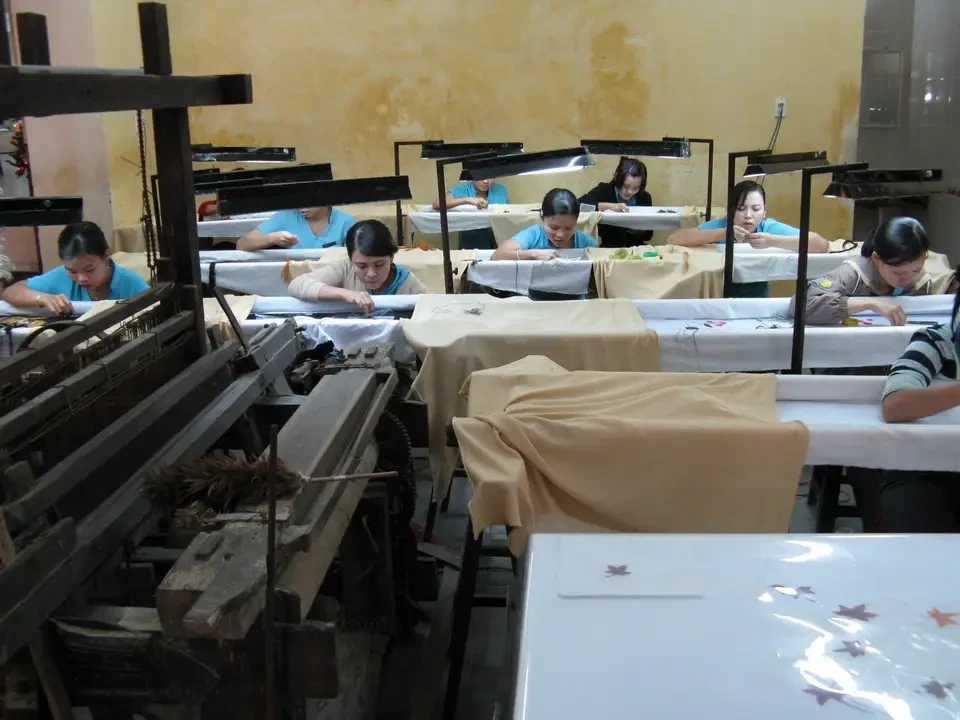
We arrive in Hoi An around noon. We leave our luggage at the hotel and have lunch at a small restaurant. opposite the old town, separated only by a branch of the river. The kitchen is, as always, excellent. We then enter the historic town and visit a workshop where silk is processed, but especially a tailor specializing in embroidery and custom-made clothing.
They show us the entire production process: silkworms that feed on elm leaves, the formation from the nest, the spinning, the fabrics, and finally the clothes. The silkworms are fed several times a day, and in just a few days they produce cocoons from which hundreds of meters of thread can be obtained. The experience is educational, but also very commercial: the museum-workshop inevitably guides visitors towards the shop.
We also see the production of lamps, wood carvings, and other items within the same company. woven mats, used instead of mattresses. These are handmade items that seem distant to our latitudes, and this is precisely what attracts tourists looking for local crafts.
Japanese Bridge and merchant houses
The Japanese Bridge Dating back to 1592, it is one of the symbols of Hoi An. It has an arched shape, a distinctive roof, and a solid structure, designed to withstand earthquakes. Over the centuries, it has maintained a simple decorative style that contrasts with the more elaborate styles of many Vietnamese and Chinese buildings.
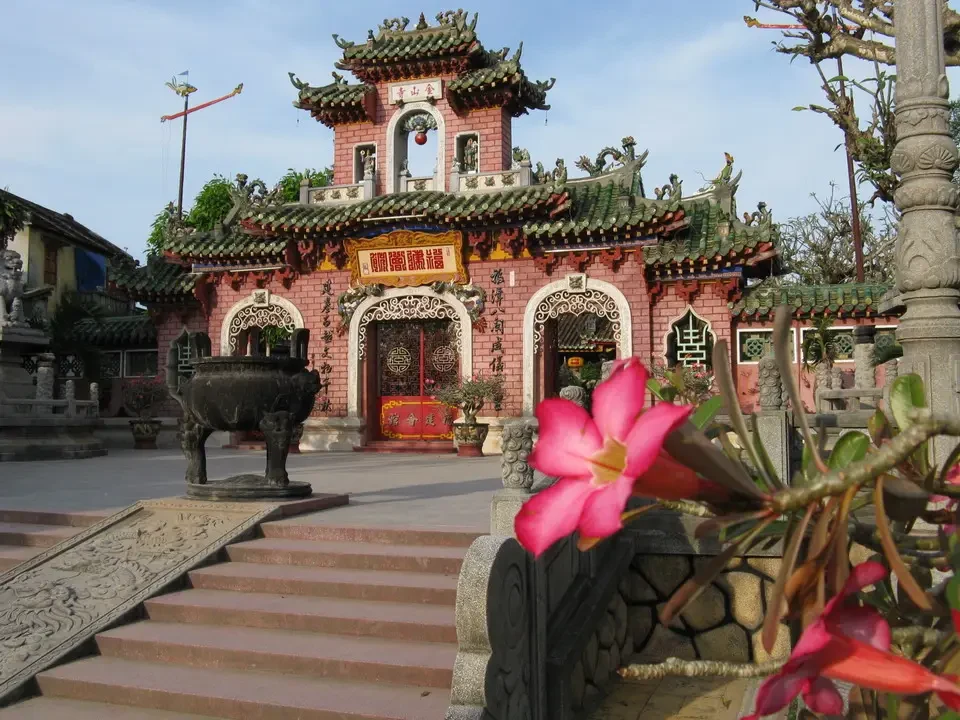
We then visit the Ceramics Museum, some merchant houses, and the Tran family temple, where Chinese, Japanese, and Vietnamese elements coexist. We also pass through the meeting room of Fukien and continue on our own in the old town. The main street is a succession of shops: clothing, fabrics, colorful lamps and souvenirs. Towards the Thu Bon River, there is a very lively local market with food of all kinds and, near the water, the fish market, easy to find even just by following the smell.
Dinner, a boat trip and high tide.
A memorable dinner at Morning Glory marks the first day of the new year. We enjoy grilled sea bass with onions and pineapple, served in a cast iron pot. After dinner, we return to the workshop-shop visited in the afternoon to complete the purchase of an ao dai. Only a few minutes remain until 10:00 PM when Bruna takes over. Tomorrow morning, the workers will start at 8:00 AM and by 11:00 AM, the dress will be ready: three people working for three hours between cutting, sewing and embroidery. A surprising level of efficiency.
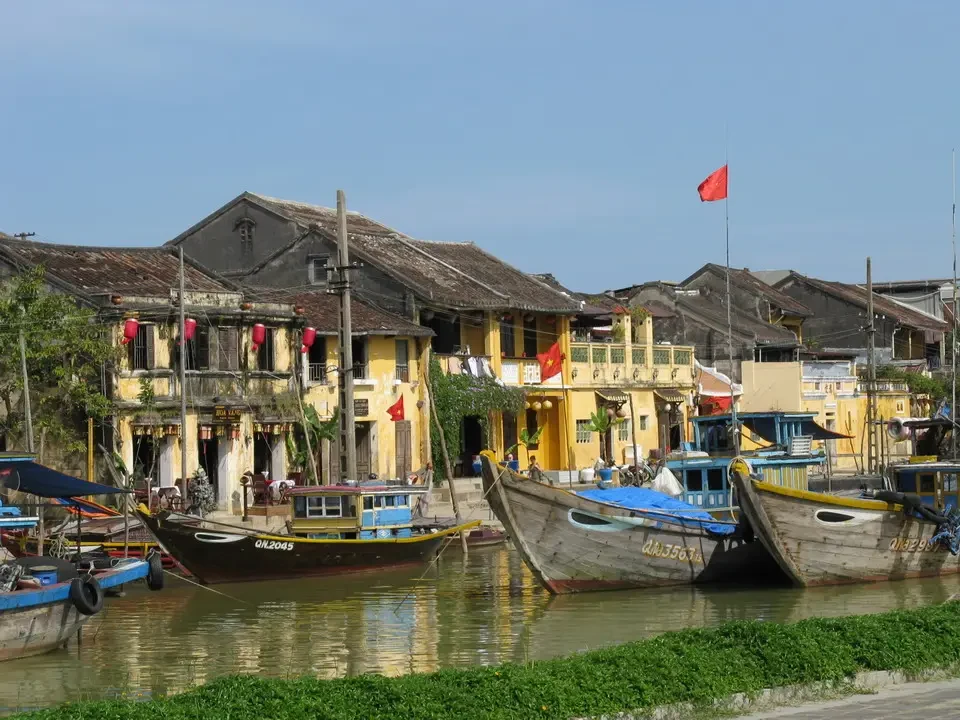
The river, very low in the afternoon, rises with high tide and floods the road along the bank, reaching even the sidewalks. This is not a rare occurrence: a merchant's house visited in the afternoon had been built with a trapdoor in the ceiling to lift furniture and allow the family to live on the ground floor while waiting for the water to recede. The one hundred pillars supporting it have concrete bases to prevent wood corrosion.
In the afternoon, while stopping at a bar for a smoothie, we saw the mark left by the September 2009 floods: the water had reached about one meter and eighty. The news from autumn spoke of devastating floods throughout central Vietnam, with dozens of casualties. In Hoi An, the beauty of the river and the fragility of the city coexist.