Farewell to Vietnam, retracing the Mekong River.
Today, the itinerary takes us out of Vietnam and into the Cambodian adventure. We leave the country with a touch of nostalgia: we had imagined it very differently, but it has managed to charm us and convince us that a people's identity cannot be reduced to the memory of wars. Vietnam deserves to be seen through its culture, its daily energy, and a tradition that goes far beyond the most well-known images of the 20th century.
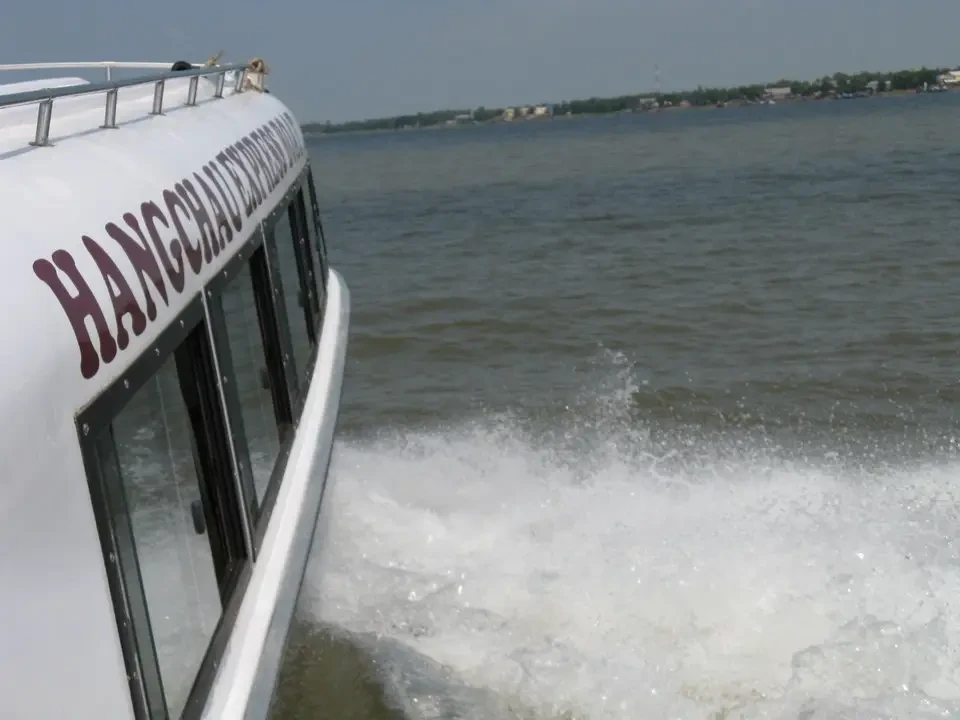
At 8:00, the speedboat departs from the Chau Doc river port heading for Phnom Penh. In reality, it's a false start: after a quarter of an hour, the captain realizes he has forgotten his passport and we have to turn back. The second departure is the real one. After one hour of sailing We reach the border. We stop first at the Vietnamese customs office, then at the Cambodian checkpoint, where the visa is issued. The whole process takes about an hour, partly due to some travelers who are not fully compliant with the documentation requirements. On the boat, there are around twenty people, all tourists, almost a small representation of the world.
Having crossed the border, the journey continues peacefully along the Mekong River. After four hours, we reach the Cambodian capital, passing through red earth plains and river landscapes where fields and villages are densely packed along the banks. The fishermen on the sampans They cast the nets and wait for the right moment to haul them in. The large river, nearing the end of its course, is preparing to split into the delta's branches before flowing into the South China Sea. The water is dark, full of silt and history, having traveled all this way from the mountains of inland Asia.
Until Phnom Penh, we didn't encounter bridges over the river; even ferries and traffic are rare. One of the most significant stops is Neak Luong, a place also featured in a movie. Silence's call: here was an American bombing during the war, which caused hundreds of civilian casualties due to an error in attempting to block the advance of the Khmer Rouge.
Phnom Penh and the Skuon market
Arrival in Phnom Penh occurs amidst the hustle and bustle of the porters, ready to grab suitcases in exchange for a tip. We have lunch at a restaurant overlooking the river, with a beautiful outdoor terrace and an Eastern-style cuisine adapted to Western tastes, but still of excellent quality. Here we meet our new guide: she is twenty-five years old, has refined manners, and possesses surprising knowledge.
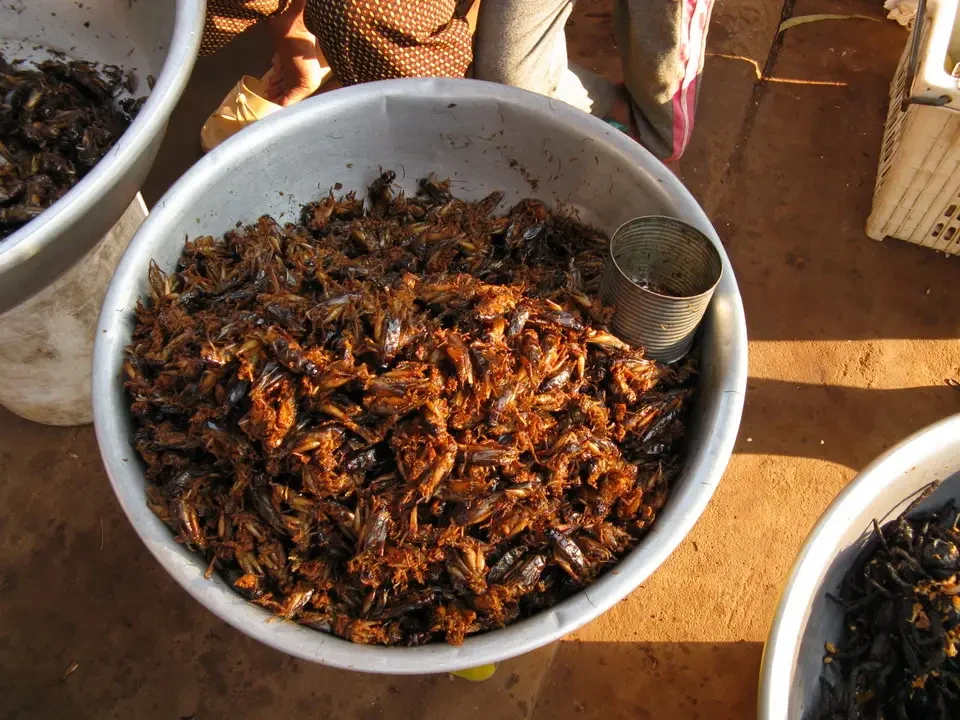
It's now 3:00 PM when we leave Phnom Penh heading north-east towards Kompong Thom. Along the way, we stop at... Spiderville. The country is actually called Skuon and is famous for its market where food is cooked and sold. fried spiders. There are also others: on the trays we find grasshoppers and other insects The presentation is neat and almost pleasant, although not particularly appealing to us, especially for flies and the relatively poor hygiene of the stalls. It seems that spiders are caught in holes in the ground, lured outside, killed, and then cooked with spices and oil.
Red Khmer, memories and open wounds.
During the transfer, our guide tells us about the tragedy of the Khmer Rouge. After taking power on April 17, 1975, the cities were evacuated under the pretext of an imminent American bombing. In reality, a radical and insane plan was being implemented: to erase urban life, move the entire population to the countryside, and create a forced equality based on agricultural work.
It's amazing to hear these stories from the perspective of a Cambodian, even though he is young. According to his account, the Vietnamese intervention that ended the regime should be viewed positively, although the subsequent ten years of Vietnamese presence were experienced by many as a form of external control. The situation only normalized much later: after the years of the regime, the 1990s were still marked by guerrilla warfare, attacks, and areas controlled by former Khmer Rouge refugees in the forests.
The family's account of the journey makes everything even more real. His family lived in Phnom Penh when the city was evacuated and they had to move to the countryside. In that chaos, even traveling just a few dozen kilometers could take weeks: there were no means of transport, malnutrition weakened everyone, and the roads were full of people fleeing. Those with a degree tried to hide it or live where no one knew about it: teachers, doctors, nurses and educated people could be referred to as "intellectuals" and killed.
The official story spoke of a temporary evacuation of two or three days. In reality, the regime wanted to rebuild the country by eliminating all independent thought. This phase lasted for 3 years, 8 months and 21 days. We discover that tomorrow, January 7th, Cambodia celebrates the liberation from the Khmer Rouge regime. It's a recent past, still imprinted on the demographics: a large part of the population is young, while the adult generation bears the void left by famine, deportations, and killings.
Night on stilts at Baray
In the evening, we stopped at the Khmer Homestay Village in Baray, a small tourist village run by local people. The proceeds contribute to the activities of the local community, and the hospitality is truly exceptional. The environment is very basic: water comes from rainwater, electricity depends on a diesel generator that shuts off around 10 PM, and lighting in the stilt houses works by connecting pliers to a 12-volt battery.
Staying overnight inside a stilted house, not built to cater to tourist desires but similar to those actually used in the area, it provides at least one night's experience of local life. We settle down on a mattress placed directly on the floor, protected by a mosquito net that hangs from the ceiling. The roof is supported by bamboo beams and covered with leaves, while the open space between the walls and the roof promotes ventilation in a hot climate all year round.
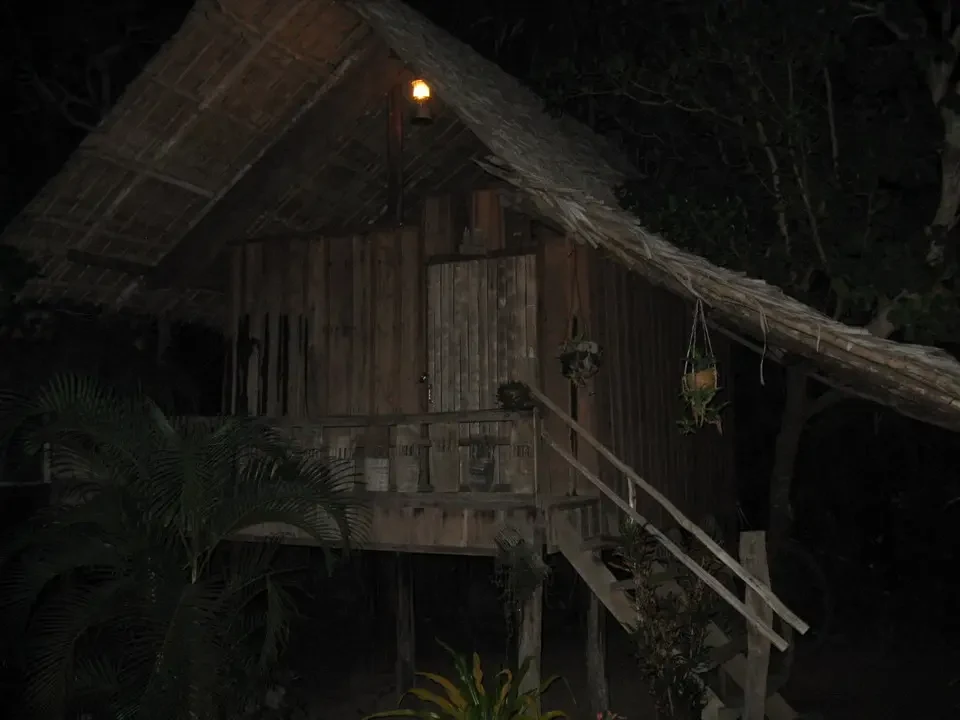
The same logic explains why many houses are built on stilts: the lower part remains shaded and is used for household activities, reducing the impact of the heat somewhat. Dinner and breakfast are served in another property belonging to the homestay, about two kilometers away. They want to emphasize that the fish comes from people in the village and the vegetables from the local market.
The evening ends with a children's show They spontaneously perform apsara dances and even involve us, with lots of laughter and amusement. Behind the simplicity of the moment, one can sense the desire of the organizers to nurture young people in a healthy environment. Unlike Vietnam, primary school is free; however, for high school and university, you often have to travel to Phnom Penh, which significantly increases the costs.
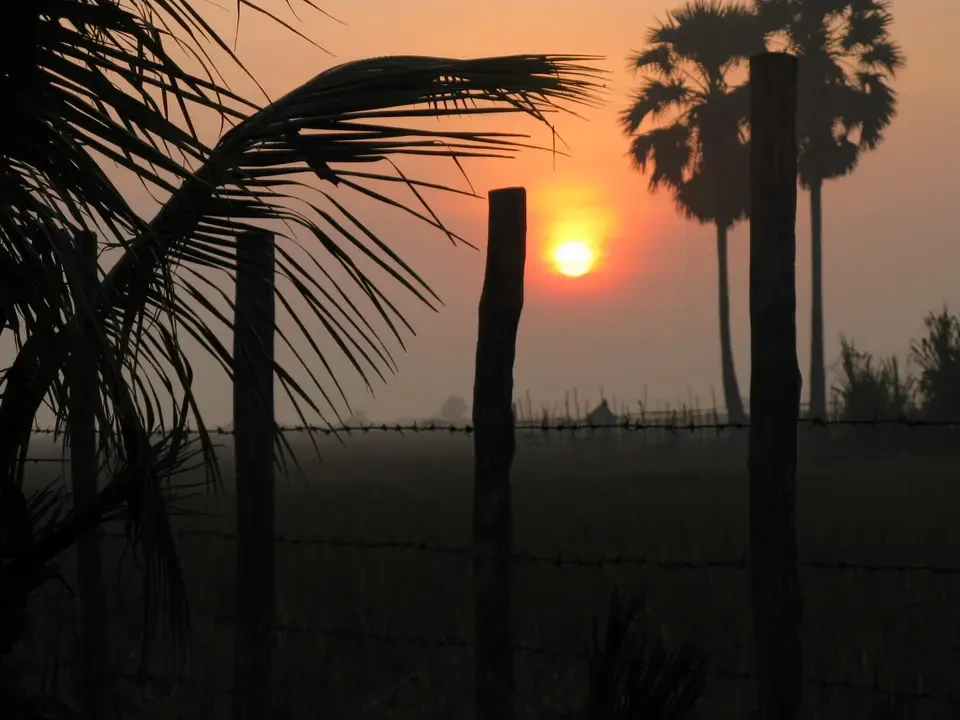
Compared to Vietnam, traffic is much less congested. You see all kinds of vehicles, but fewer motorcycles, which is a clear sign that the level of well-being hasn't quite reached this point yet. There are several bicycles and many people on foot. At first glance, Cambodia seems poorer than Vietnam, but also more orderly. The lower population density helps, yet there's something that makes this people a distinct entity from the neighboring one.