Between Cat Cat, Lao Chai and Ta Van
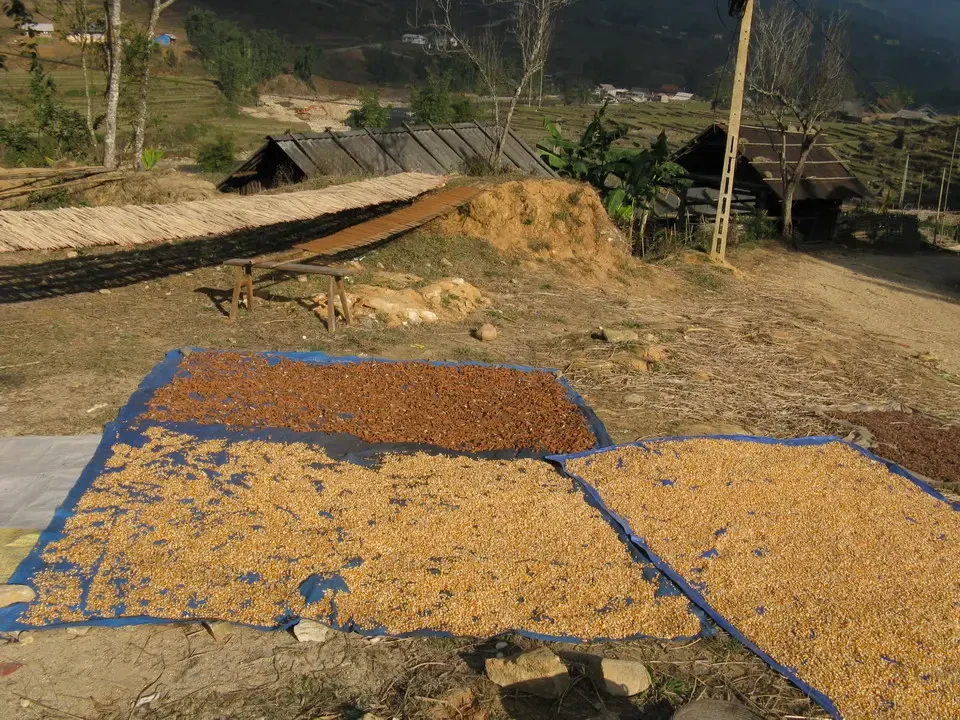
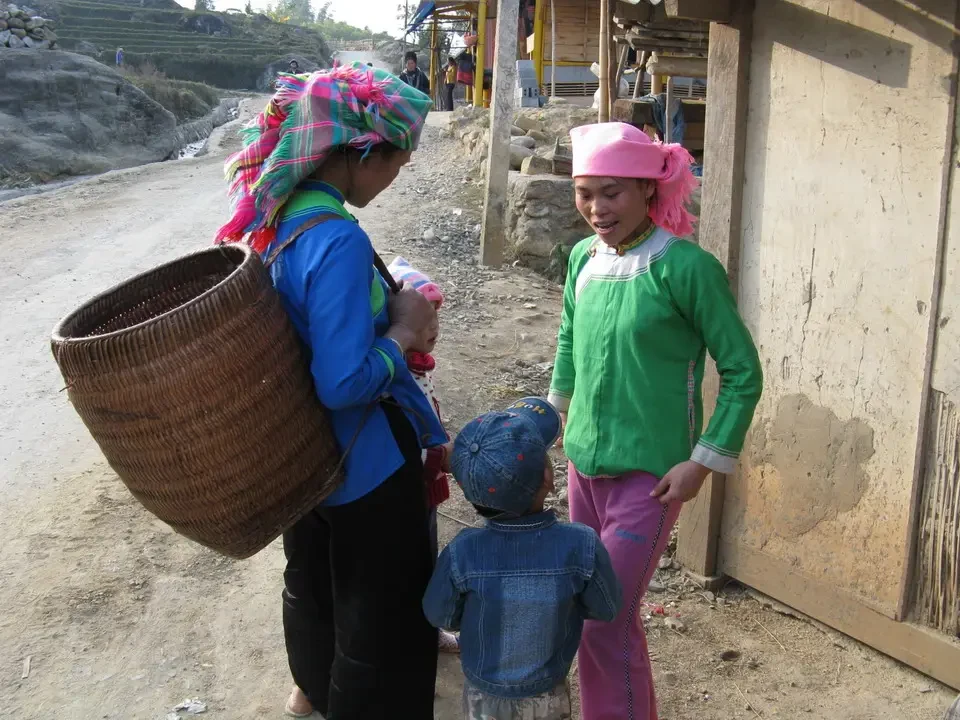
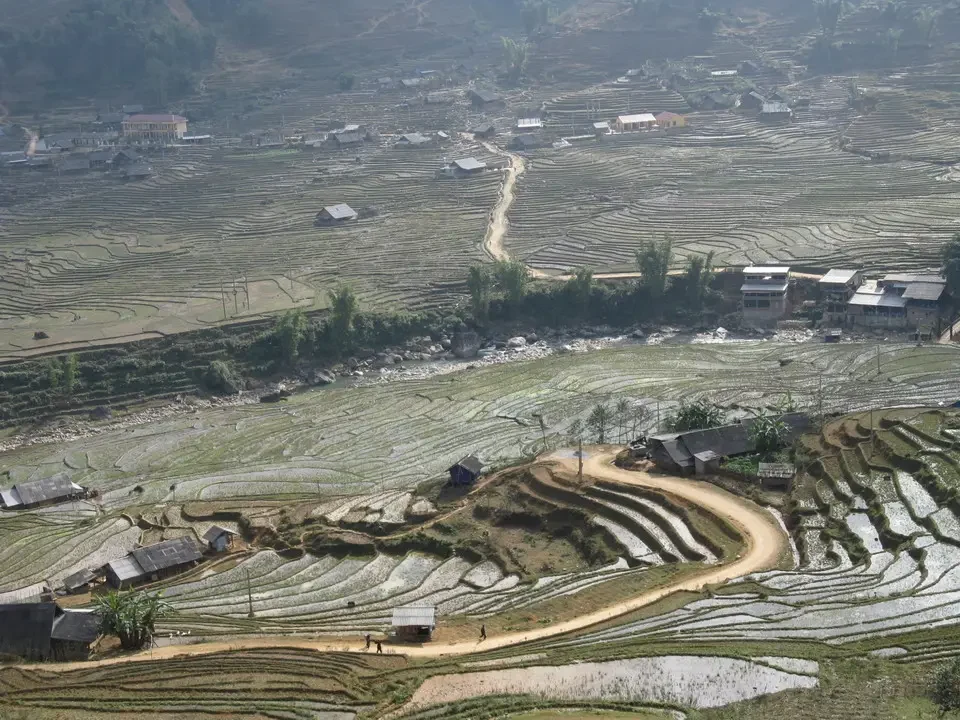
It's Sunday and we take the opportunity for a stroll through the market in the streets of Sa Pa. At 9:30 am, we set off on a 5.5 km walk to visit the Cat Cat village, home to the Hmong people. There are approximately twenty houses scattered along a beautiful landscape of rice paddies with terraces We descend to cross a stream where the beautiful Cat Cat waterfalls cascade. We climb back up, avoiding the various taxi drivers who offer rides uphill on motorcycles, and go to a restaurant for lunch. We also see plants that are cultivated to give the typical black color to the traditional Hmong clothing. The preparation of the material for dyeing requires a process that lasts about a week. In the afternoon, we descend to Lao Chai, where we meet some women from the ethnic group. Hmong Neri Returning from the Sa Pa market, we stop to chat with the locals along our journey. We are unable to communicate with the women, but a 10-year-old girl manages to speak good English, having learned it by interacting with foreign tourists in an attempt to sell them something. She has a basic but effective vocabulary, made even more unique by the fact that she is a local resident from a remote area of Southeast Asia. We arrive at Ta Van, home to ethnic minorities. Dzay, about 3 km away. We recognize this ethnic group by their distinctive pink and green clothing. The buildings are also different, and we were particularly struck by the house of a family whose main activity is creating stone sculptures. They explained that they struggle to find buyers for their creations, so many pieces remain unsold. All of this in a wonderful landscape of rice paddies with terraces, some of which are flooded. However, it is still a very dry area, to the point that you can only harvest once a year.

Population and education: The children of the ethnic minority populations typically only attend primary school. There are buildings where all the boys from nearby villages gather, and the teachers move around as needed, spending their entire working week on site. After the first few years of schooling, the boys should move to attend other schools, but at this point work obligations and the need for labor in the countryside prevent them from continuing their studies. Low levels of education contribute to a very widespread ignorance, steeped in ancient beliefs. This leads, for example, to neglecting medical care, which is normally provided by a wise elder who limits treatment to basic herbal remedies, seasoned with much mysticism. This results in a still very high infant mortality rate, around 3%. Hospital care is only sought in extreme cases and often when it is already too late. In the past, there was a policy aimed at reducing births, as a result of the relative prosperity following World War II. There were strong financial disincentives, even reaching outright penalties. Currently, efforts are being made to limit births to no more than two children, and this seems to be having a noticeable effect, as they tell us that the average is only 1.4 children per family. This seems like a very low figure, especially in relation to the many children seen running around the streets. In recent years, there has been a strong urbanization of rural populations. The "montagnard," which is the term used for the ethnic minority populations, see the city as an opportunity for easier earnings compared to the hard life that forces them to work on the land. This leads to major urban and social problems, especially in Saigon and Hanoi. It also poses economic risks: life in the city is mainly linked to small-scale trade, while those living in the countryside are unlikely to face starvation, although they are forced to work much harder, which may seem less remunerative in the short term. This situation seems likely to worsen further in the coming years, as rents and land prices in the two largest cities have reached stratospheric levels.
The destruction caused by wars and the subsequent prosperity have led to an increase in the population, while the middle generation has been decimated by the war. As a result, there is a young population and employment that begins from a very young age, such as serving as waiters or in other light jobs. We haven't seen children working in heavy labor, and it's also true that if there is exploitation, it doesn't happen openly. It remains to be discussed whether starting young people on a work culture is actually so bad as we think. The result is a population that may not boast a high density of intellectuals, but can instead rely on generations of people who know one or more trades. In the context of marriage, the future bride is heavily judged based on her practical skills, neglecting cultural knowledge. This is another reason that explains the need to start working early.
Vietnam has become the second largest producer of robusta coffee worldwide, while arabica production is negligible. While coffee was once produced almost exclusively for domestic consumption, it has now become one of the major exported products thanks to significant government investments in areas that would otherwise have suffered from severe depression.
Ethnic minorities and mountain life
Ethnic minorities: The Thay people live mainly in the lower areas where they cultivate tea and fruit, and live in charming houses on stilts. The Tzao and Hmong are instead located on barren high plateaus above 1,100 m. The most profitable product for the minorities is opium, which is not favored by the Vietnamese government. The Dzao, who grow fruits, raise livestock, and weave colorful and beautiful fabrics, without a written language, have passed down their cultural heritage orally from generation to generation.
Return to Lao Cai and overnight on the train.
Around 5:30 PM, we were returning to Lao Cai, taking a walk in a very rundown area, having dinner at a restaurant where we appreciated the food, and then boarding the train for another night crammed into the Vietnamese-sized bunks. We departed at 8:15 PM after dodging a series of persistent vendors, including those who kept asking us five times in a row if we wanted our shoes polished, never changing their minds suddenly, selling handicrafts and other items to earn some dong.