Choeung Ek, the site of the massacre
Compared to Hanoi, Phnom Penh gives the impression of being a more modern city, although the presence of beggars in many places does not do it any favors. However, one can sense that social inequality is more evident here and that many people still live on the margins. Unfortunately, there are also many victims of landmines, who are forced to seek every possible means of survival. It seems that the state is less present than in Vietnam: many visible structures appear to have been created primarily through humanitarian aid, philanthropic initiatives, or foreign commercial interests.
The last day is dedicated to visiting Phnom Penh. We head straight to... Choeung Ek extermination camps. After being tortured at Tuol Sleng, many prisoners were brought here to be killed; others arrived directly and were eliminated using the most brutal methods. It is a place that inspires horror: the fact that it has not yet been set up as a traditional museum makes the visit even more realistic than what actually happened. It's surreal. walking along the edge of the communal ditches... see bones protruding from the ground, fragments of clothing, and imagine that more than 17,000 people were executed there. And Choeung Ek is only one of the execution sites related to Phnom Penh: other similar sites are scattered throughout Cambodia.
Markets, Wat Phnom and Royal Palace
We return to the city, about 13 km from the center, to take a walk around. Phsar Tuol Tom Pong, the Russian market, and in the early afternoon we continued towards the Wat Phnom, a small temple located on an artificial hill that gives the city its name.
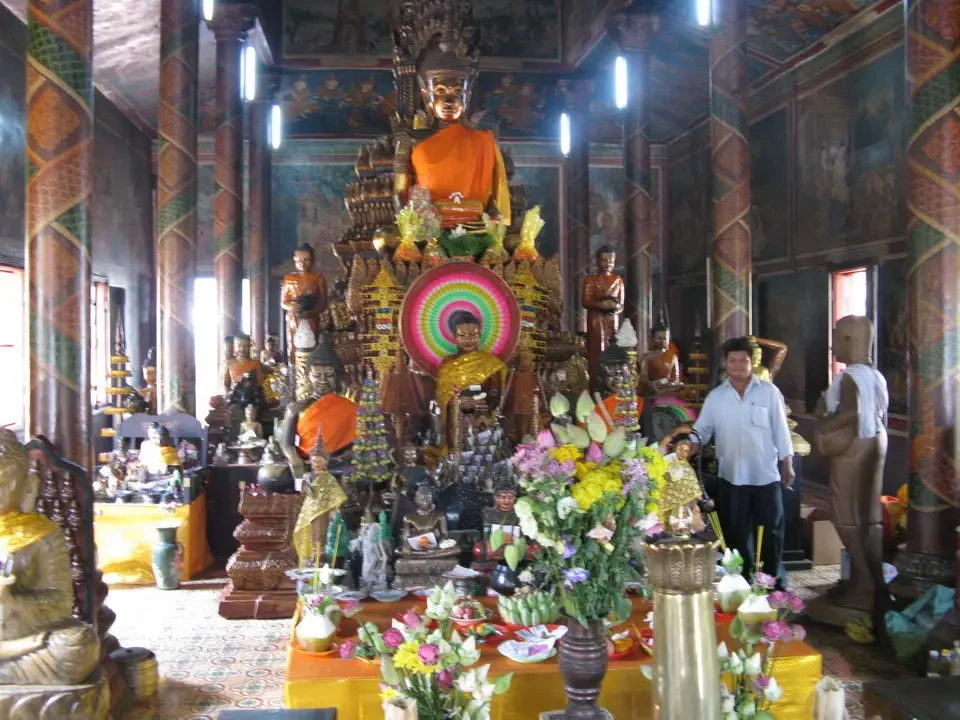
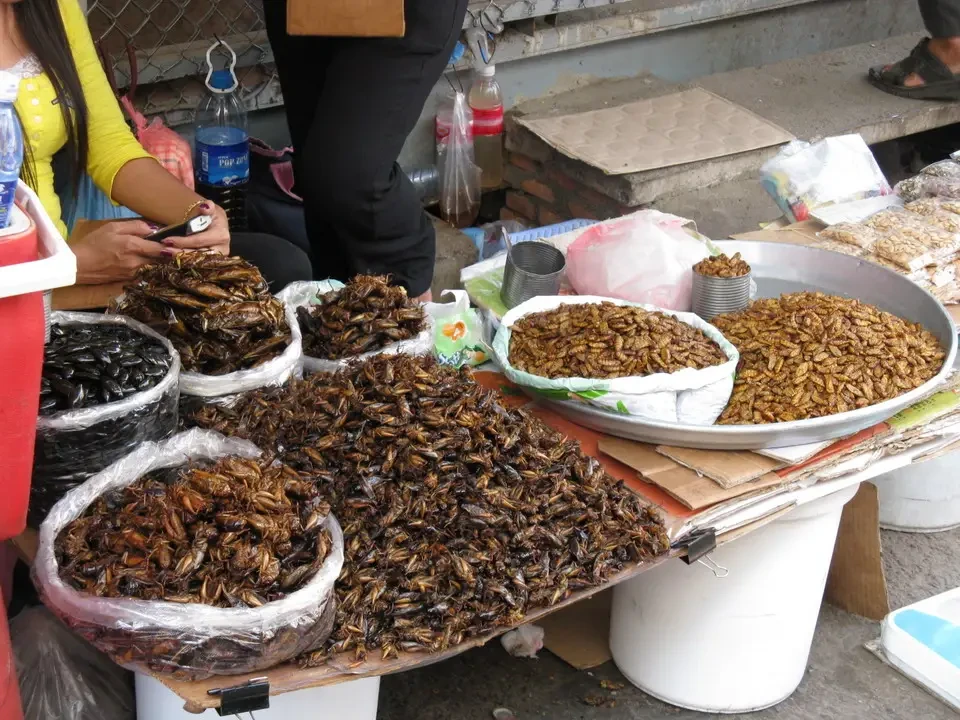
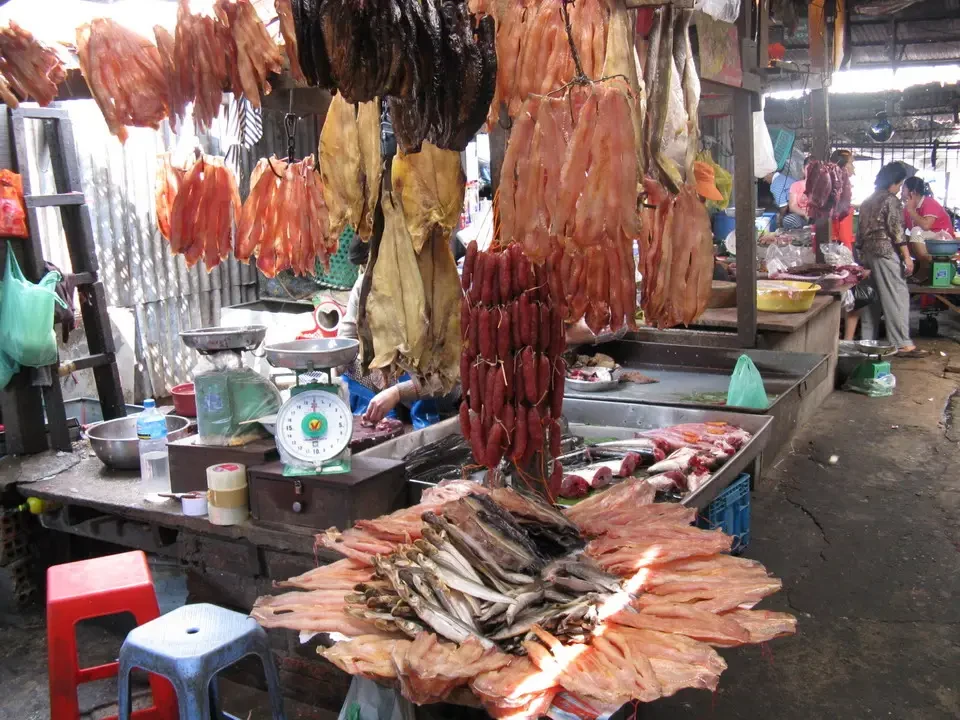
According to tradition, four Buddha statues were found here. The place is particularly popular with worshippers who wish to have their prayers answered. From Wat Phnom we go... at the Royal Palace, built in 1866 and still today royal residence Overall, we find the Throne Hall, where the sovereign holds audiences, and the Silver Pagoda, named for its floor covered with more than 5,000 silver tiles. We also take another walk around the Phsar Thmey market, observing the dishes without tasting them. fried spiders Then we return to the city center for a massage and dinner.
Phnom Penh – Hotel Blue River
Departure from Phnom Penh and return during winter.
After eighteen days of relentless effort, we finally allow ourselves some relaxation before the 24-hour flight that awaits us. The airport in Phnom Penh is small and quiet, nothing like the airports of other capital cities in Southeast Asia. A negative surprise arrives at departure time when we are asked to pay $25 each as a tax for leaving the country. This is a legalized theft that further confirms how fragile this country still is, especially in the face of millions of people living in extremely difficult conditions. We contribute to the local drivers so they can buy a new Lexus SUV and then depart. Arriving in Seoul brings us back to our reality: we arrive at 6:30 AM, it's -8°C outside, and airport staff are clearing the runways of snow. Winter has finally arrived and brought us home.