Saigon between cathedral and old post office
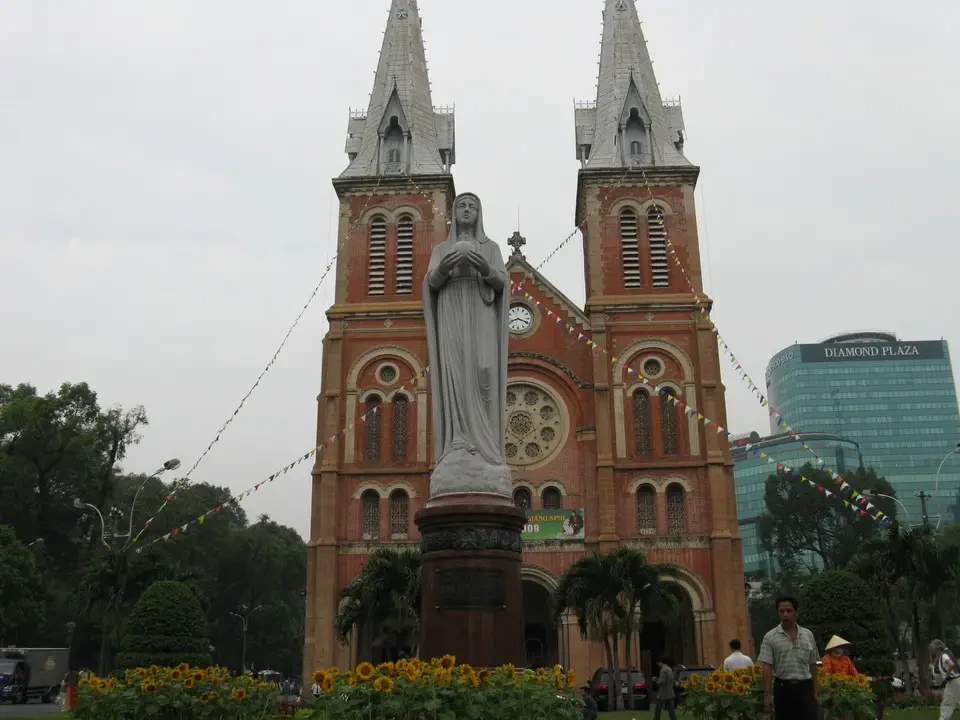
We leave the hotel at 8:00 AM to visit the Notre Dame Cathedral, also known as Duc Ba, built in 1877 in neo-Romanesque style. It's Sunday and mass is being celebrated inside, but the Vietnamese remains incomprehensible to us. We meet a couple getting wedding photos taken: at least they are getting married on a Sunday, while we saw weddings practically every day of the week in Vietnam.
On the other side of the square, we enter into the Central Post Office, often attributed to Gustave Eiffel. The building has survived through various eras: ancient maps of the southern part of the country, including the French colonial Cocincina, are displayed on the walls, while a large portrait of Ho Chi Minh dominates the lower level. The elongated face and expression, which combine mystical religious and political aspects, almost give the impression that Vietnam also has its own Mona Lisa.
The guide tells us that working for the postal service is highly sought after. Public sector employment guarantees a salary, job security, and a pension, benefits that many private workers do not have. The downside of this is the system of recommendations and bribes: to obtain certain positions, we are told, one must pay enormous sums compared to the average Vietnamese salary. This is another detail that helps us understand why so many people work seven days a week without real social protection.
War Museum
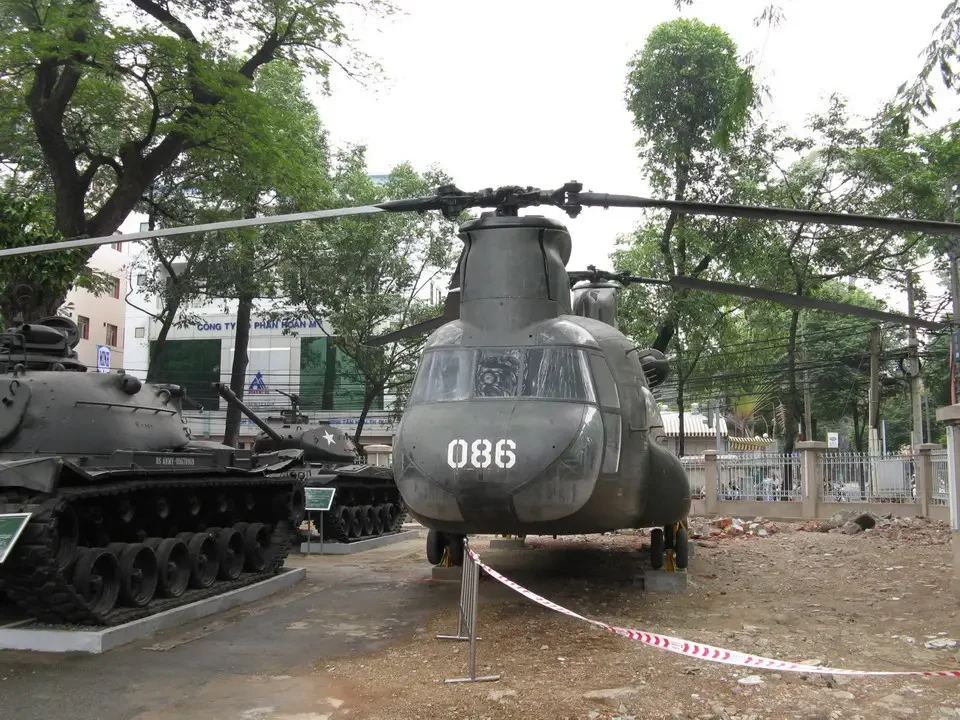
The itinerary changes because we ask the guide to skip, at least for today, another market. We prefer to visit the War Remnants Museum, which was formerly known as the Museum of War Crimes, a tragic and difficult testament to the conflict. The narrative is clearly biased, and the regime's rhetoric is evident, but it would be impossible to dismiss everything as propaganda in the face of such a catastrophe.
On the ground floor are displayed weapons and bombs, while on the first floor is a large collection of photographs: famous scenes, horrific events, and the effects of napalm and Agent Orange. One section is dedicated to war reporters, many of whom paid with their lives for attempting to document the conflict. Outside, military vehicles are lined up, including helicopters for troop transport and missile launcher.
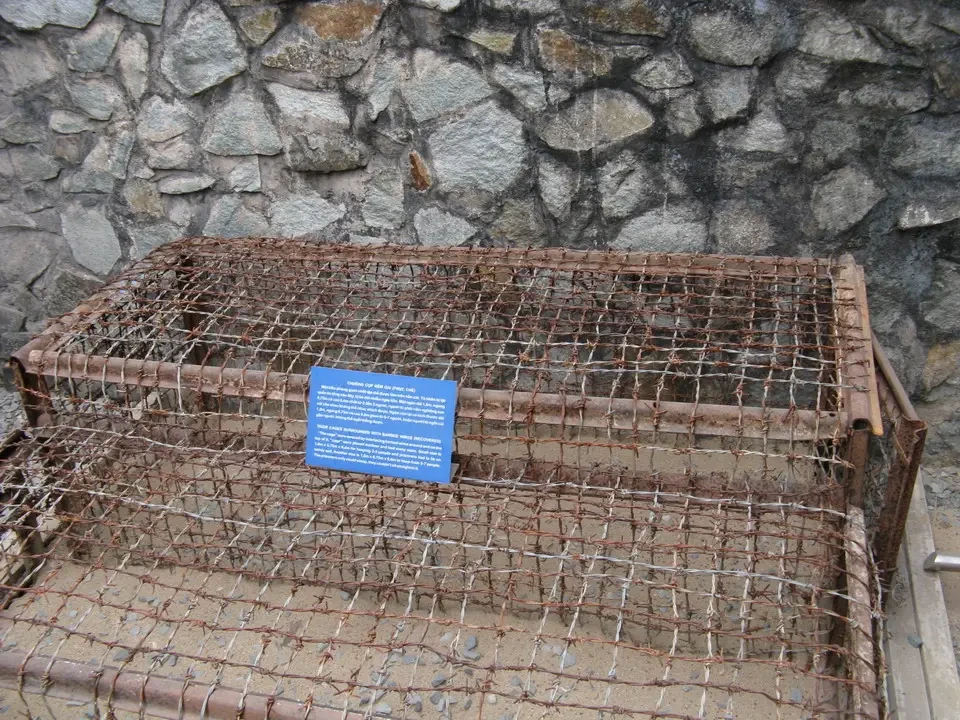
Upon exiting, we discover another section: the reconstruction of the cells where the Viet Cong were held captive, a guillotine still used during the French period, and the infamous. tiger cage The very thought of that torture, with prisoners forced to endure the sun and barbed wire while completely immobile, is enough to make you shiver.
Cholon and the Thien Hau Pagoda
With about ten minutes stuck in traffic, which even on Sunday mornings doesn't seem to ease up, we head to Cholon, the Chinatown of Saigon. Here we visit the Chinese temple, Thien Hau, the oldest Chinese pagoda in the city. The place is very popular with women carrying offerings To the Lady Celeste, protector of merchants and sailors. The atmosphere is filled with incense smoke and retains an intensity that persists even amidst traffic and the modern city pressing against the doors.
On the walls, you can see pink sheets which testify to the good fortune and prosperity achieved: they are thanks from believers who believe they have received a blessing. It is also said that no floods, earthquakes or other dangers occur in the area around the temples. Beyond the belief, the neighborhood truly retains its own identity: Emperor Minh Mang had thousands of Chinese brought in to open trade with China; over time, Cholon has been incorporated into Saigon, but it has not completely lost its character.
Memories, scars and children of war.
From the sacred temple, we move on to the specialized workshop for lacquering production. We are shown the manufacturing process: lacquer is a vegetable resin and objects are decorated with fragments of seashells, eggshells, or brush-painted designs. The procedure also takes three months, involving polishing, successive layers, and finishing.
One of the artisans catches our attention: he has long blonde hair, but with clearly Eastern features. She will be around forty years old, and we find ourselves face-to-face with one of the many children of war. The Americans didn't just bring destruction; in some cases, they also left behind children born from violence, prostitution, or genuine relationships with Vietnamese women. We want to believe that the lacemaker belongs to this last story, the less tragic and more human one.
Towards the Mekong Delta
We head towards the Mekong Delta, passing through My Tho and Cai Be, which are approximately 90 km from Saigon. We stop for lunch at a restaurant designed for tourists, but built in an area that still retains its local atmosphere. The menu features a breaded carp, served vertically on a stand, and a fried rice dessert that expands during cooking to become almost a perfect ball.
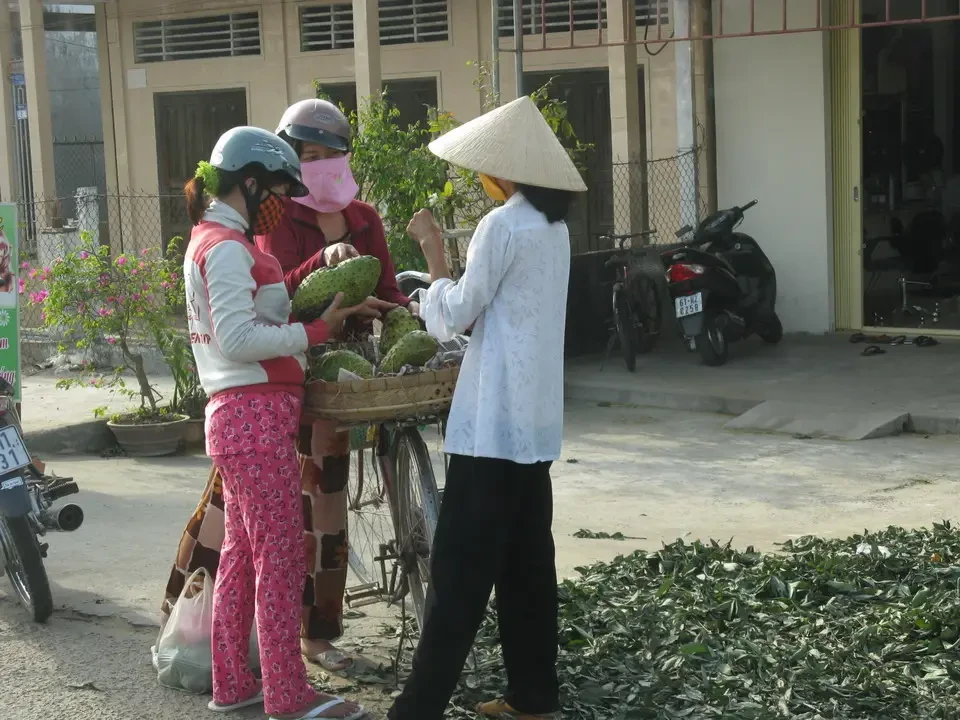
We're heading to Can Tho, where the need for a stable bridge between the two banks of the Mekong is clearly apparent. Despite the ferries working tirelessly, the wait exceeds an hour. This delay allows us to observe daily life: incense sticks drying in the sun, coconut shells left to dry for use as fuel, and negotiations between housewives and street vendors.
Let's also comment on the role of motorbikes, a true status symbol of Vietnamese mobility. Japanese models cost much more than Korean or Chinese ones, and you can see all kinds in the big cities. Older motorcycles, such as the Russian-made Minsk, seem to be reserved for older people who travel from the countryside to the city to do some shopping.
Overnight stay at a private hotel in Can Tho.
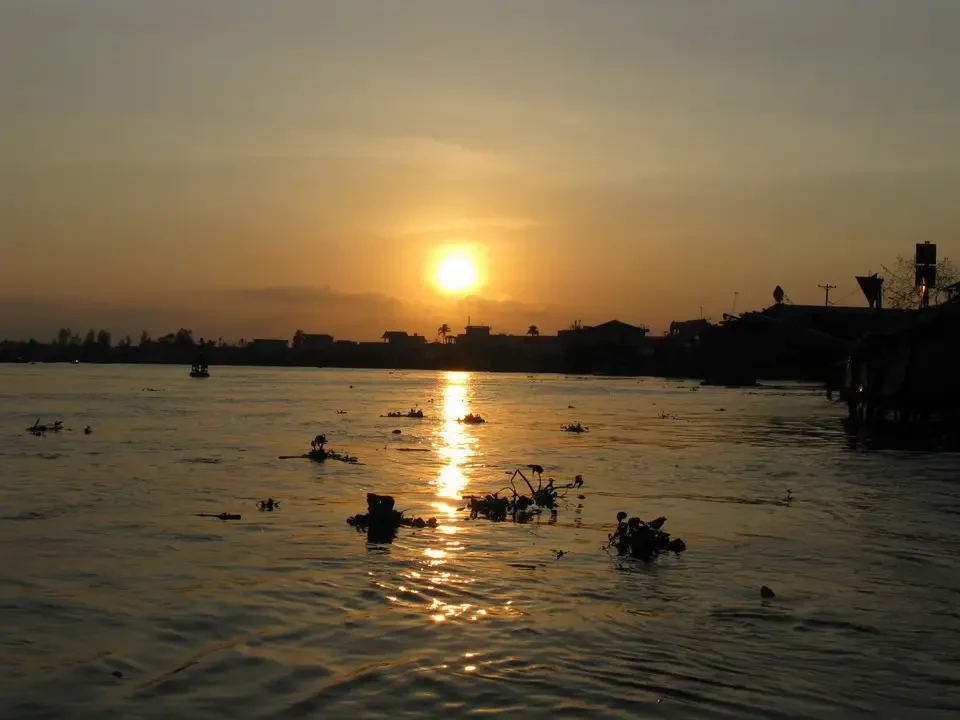
We disembark on the other side and reach Cai Rang, where we meet the gentleman who will host us for the night. He speaks fluent English and exudes a calming presence. On his small motorboat We walked along the canals until we reached the house, completely mesmerized by... sunset over the Mekong The sun, after a day at 35°C, seems jump into the river to refresh themselves, by coloring the water.
The the environment is simple, but we immediately feel right at home. The room is certainly not luxurious, but it's perfectly fine for one night, and there's also mosquito netting above the bed. The family has created a small farm stay and seems to live entirely from this activity. The spaces are open for visitors, so let's go to peek into the kitchen, where three stoves support an equal number of woks. Tradition dictates that the stoves should be arranged unevenly.
For dinner, we enjoyed freshly prepared carp, spring rolls, and other homemade rolls with rice paper, vegetables, and fish. The watermelon, grown in the owner's garden, completes a simple and pleasant evening. A short walk outside helps to sleep soundly.
The monkey bridges
One of the most distinctive sights in the Mekong Delta is the monkey bridges. These are simple arched pedestrian walkways, often built with irregular logs and a single bamboo pole as support. They connect houses, gardens, and small villages to the main roads, suspended over the canals at various heights.
For us, they seem unstable, but the locals cross them with ease, sometimes even on bicycles or carrying heavy loads on their shoulders. The government is trying to replace them with wider and safer bridges, but there are thousands of them in the delta, and some will remain for a long time, a practical memory of a way of life on water.