Day 11
From Jardín to Salento
Transfer by bus to the Eje Cafetero icon.
Riosucio
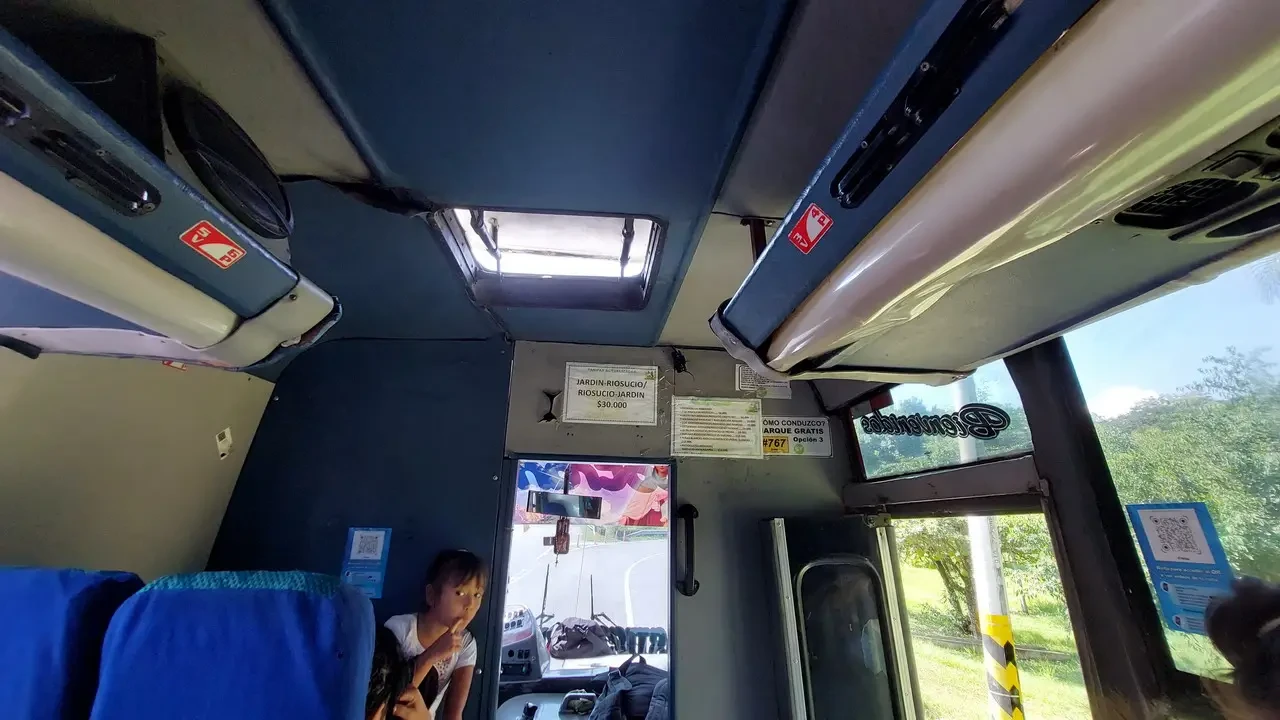
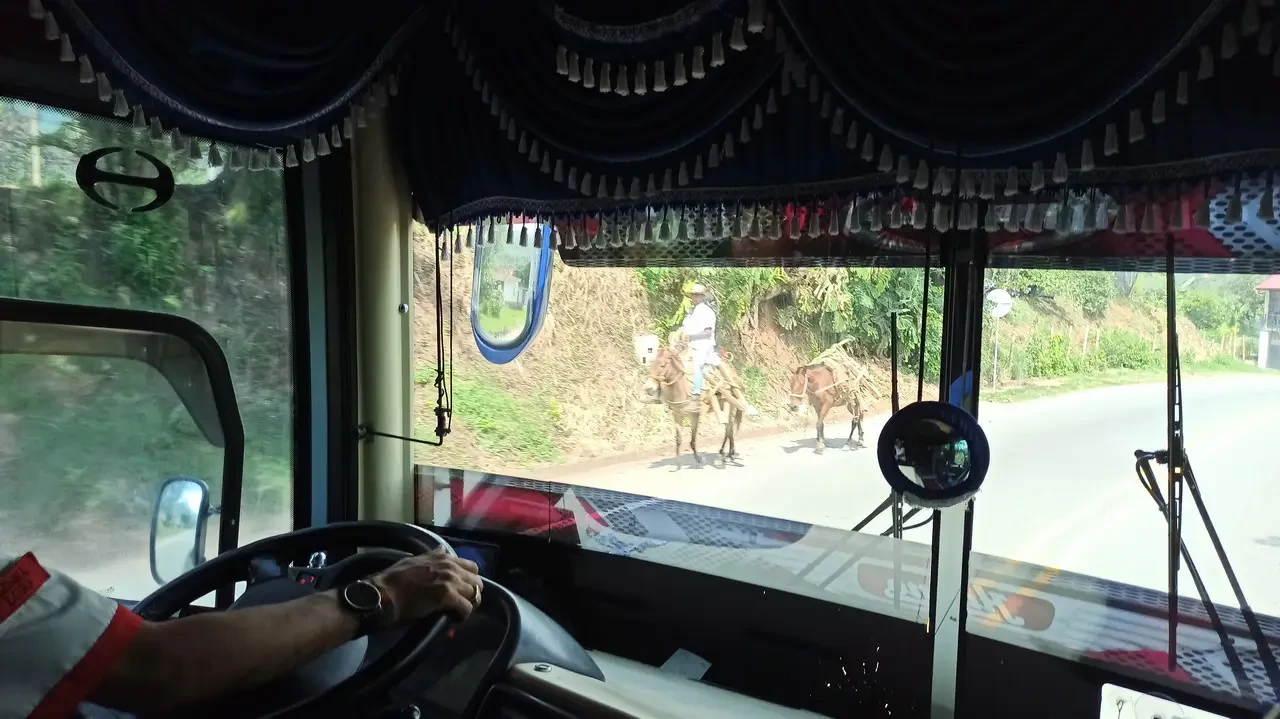
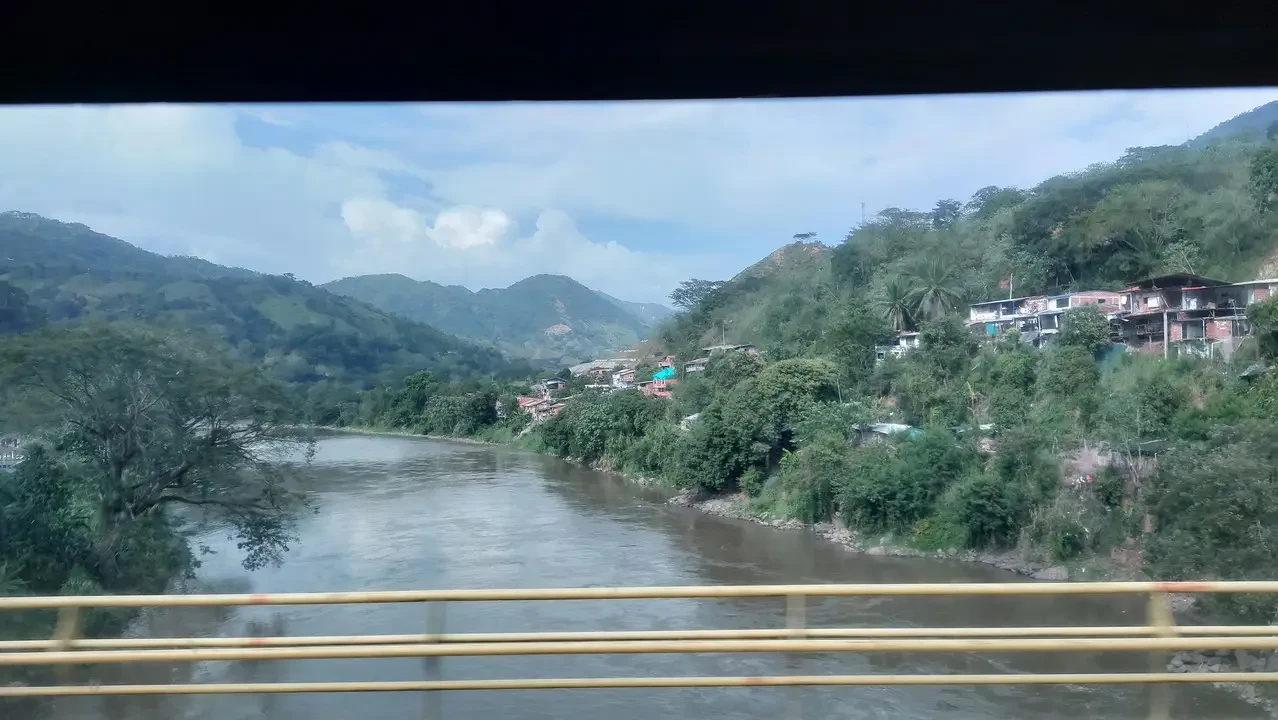
Today was a travel day, and we chose this option to see this green region in its entirety. With the ticket purchased yesterday in our pocket, we go to the bar/osteria where we had lunch yesterday (we are now regular customers), where we have a meal. rich breakfast, particularly useful on a day when lunch will be just a quick meal. The The bus looks like it's coming from a movie from the 1960s., where he might already be considered old, we take our seats in the second row and this turns out to be a lucky move: without air conditioning, ventilation is ensured by the front door and from the roof The shops are constantly open, and so the first row ends up being completely covered by them. Unfortunately, the unpaved road that takes about fifty kilometers to Riosucio is closed due to landslides, so the route involves returning back to Andes, but we are reassured that we will arrive in time for the connection to Salento. Departure at 8 am and we retrace the same road as yesterday until we meet the Cauca River: let's start following it by turning south; its course divides but at the same time collects the waters of the western and central Andes. The Magdalena River (the most important one in the country) is instead located between the central and eastern Andes, where the capital, Bogota, extends. Its flow is considerable, especially considering that we are not during a period of heavy rainfall.
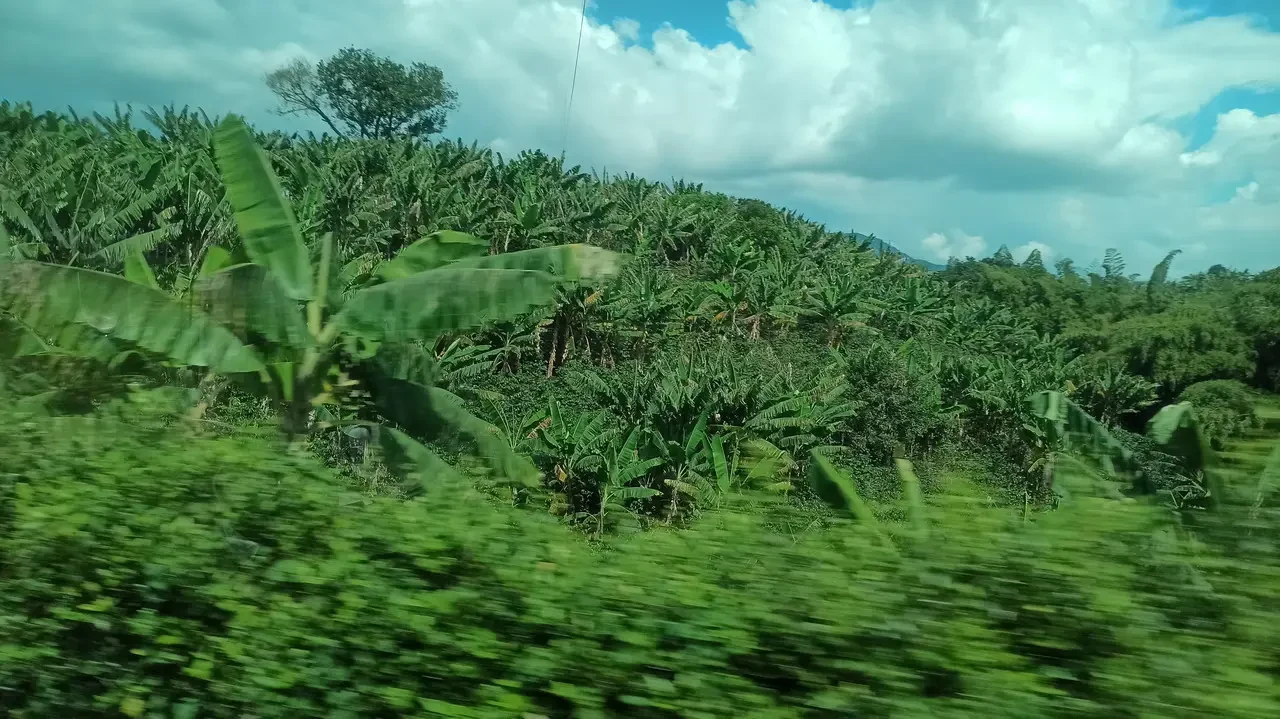
There will be a total of 200 km of beautiful road, which becomes quite steep in the final section towards Riosucio, nestled on winding hills, where the old bus struggles to navigate the curves with determination. When we arrive, our legs can't stand being still for long, but in any case, there isn't much time to waste: check-in for the journey to Salento with Flota Occidental, a quick shower, and some basic supplies, and then we depart at 13:30 (15 minutes late), this time with a most comfortable option Before departure, the driver makes the sign of the cross three times and recites a short prayer in a low voice, which is a sign of devotion but not entirely reassuring for us, as we are his passengers. Along the way, it's interesting to see operators cutting grass wherever they find it, and in one case there were three of them, with one using a lawnmower and the other two holding up a makeshift tent to prevent stones from being thrown at the machines. There are alternating fields and pastures dotted with some flocks, interspersed with goats or cows, in a continuous green where the color of the earth is rarely visible due to the intensity of the vegetation. The topography features extremely steep slopes but always covered in dense undergrowth when not consisting of coffee plantations – today under a bright sun – and only some rocky walls appear occasionally. Even along this stretch, the driver stops on request to allow passengers to get on or off, apparently without fixed stopping points; just let him know in advance. There will be another 5 hours of travel, which adds to the already 4 and a half hours from Jardín. But first, we still need to make a "layover" in Pereira, entering its chaotic city center until we reach the terminal; we wait for the connection with another vehicle driven by a brilliant woman, and then depart for the last hour to Salento, from where we walk on foot up a steep path towards the main square, and from there, in just a few dozen meters to the pre-booked hostel, when it was already 6 pm and dark. A day in which we didn't walk much, and that's why it was tiring.
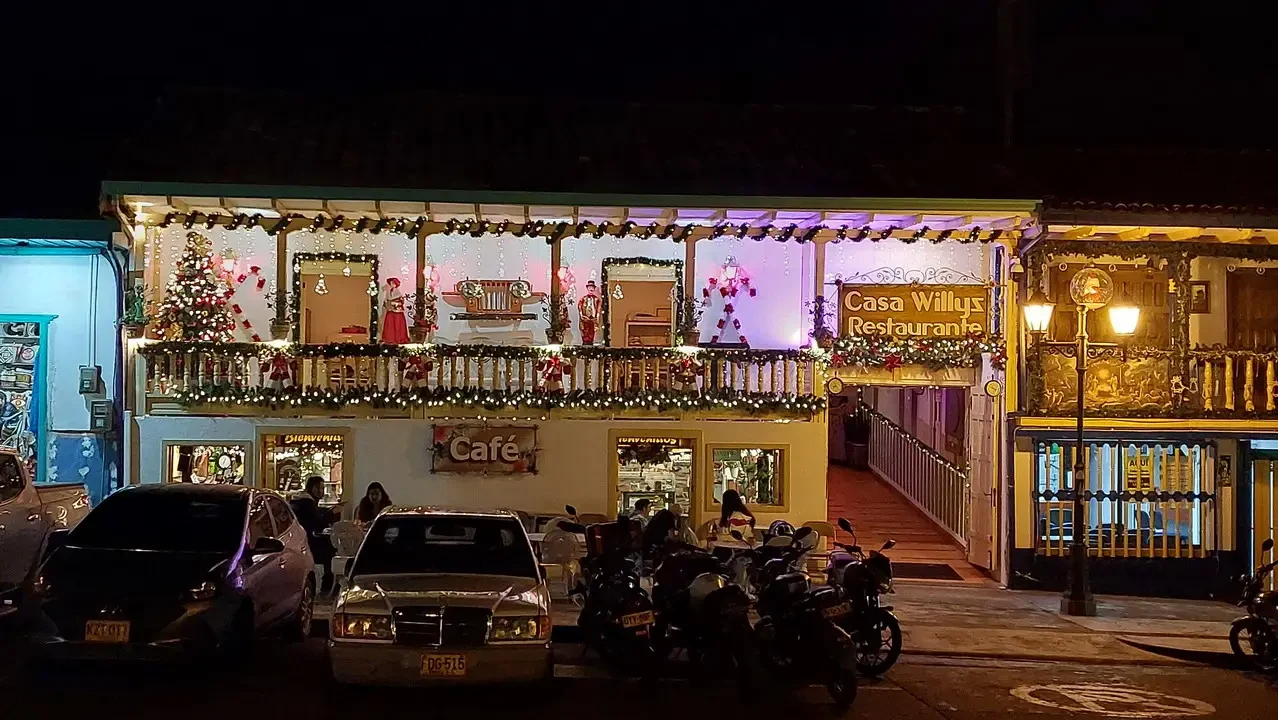
We return to the central square, of course named after Simon Bolivar, in an attempt to figure out how to do the Eje Cafetero tour tomorrow: there are not many alternatives other than renting a Willys with a driver, since public transport cannot guarantee efficient travel between the various villages. Overwhelmed by fatigue, we need to regain energy and decide that the best way to do this is by enjoying the region's most famous culinary specialty: the plate with typical Colombian ingredients. Let's say "paisa" is the name that proud residents give themselves (derived from "paisano"), nothing could be more suitable to satisfy our cravings for meat and culture, emphasizing local specialties. This is a calorie-rich dish containing red beans, rice, ground meat, pork, eggs, blood sausage, chicharrones (fried pork rinds), avocado, fried plantains, and arepa; it's traditionally served in oval dishes called "bandejas" (platters).
Salento This town is famous for its coffee plantations and lush scenery. It's a charming village located in an ideal position on a soft plateau and is typical of the coffee region, featuring old houses made of woven cane and mud, and has a colonial architecture, with the only drawback being that it is too touristy compared to Jardín or other villages. 95% of the income comes from this sector, and even the houses are increasingly owned by foreigners; high prices lead to selling to tourists and buying elsewhere at better conditions. This has ultimately distorted traditional life, so those who remain comment with regret about the lack of roosters crowing, ceremonies, or other distinctive signs of a bygone era. Even the sound of church bells or the barking of dogs annoys vacationers, and they try to reduce everything to a quiet that is pleasing to new arrivals, at the expense of human and anthropological aspects.
The main street, known as Calle Real, is bustling with tourists and shops of all kinds, attracting travelers. However, we wonder what brings so many people here when in the typical villages for coffee production, there are hardly any people, and the hiking tour in Cocora Valley is only for some, not everyone; we conclude that many come here to enjoy the place itself, its atmosphere, without any particular reason other than a walk at the beginning of the area where the famous wax palms can be found. There are many young people and you can see foreigners, although those who don't speak Spanish are very few, while the temperatures are mild with cool mornings justified by the 1,900 meters above sea level.