Day 4
Tour of the Upper Guajira – 2
Taroa: where the ocean meets the dunes before reaching Punta Galinas, the northernmost point of South America.
Morning in Baia Honda
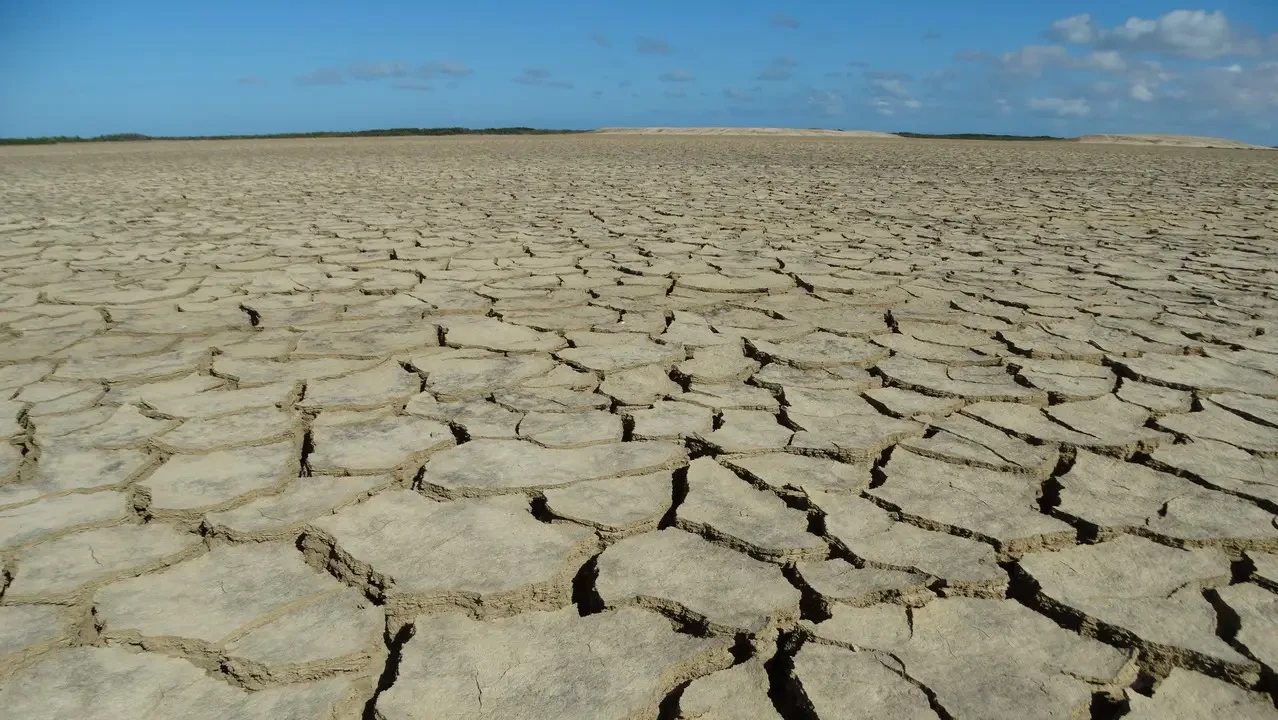
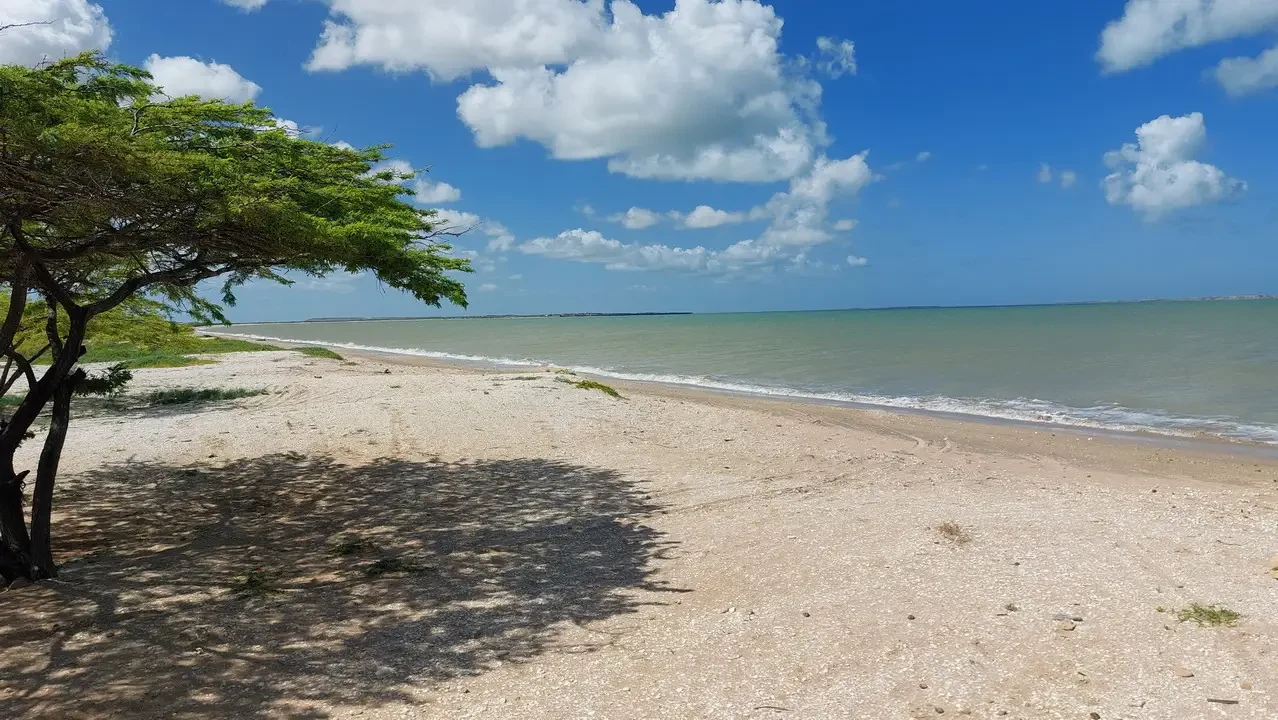
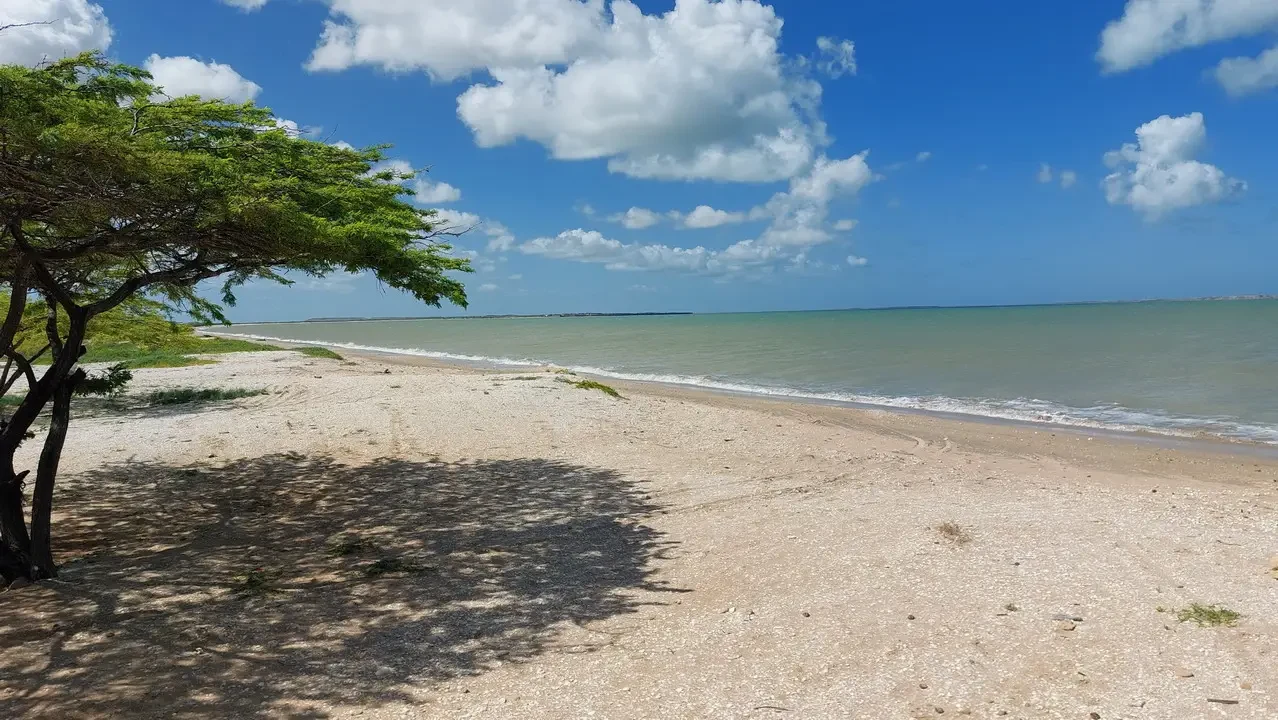
Breakfast at 6:30, with the sun already rising in the sky for an hour. From 7:30 we start to walk along trails that... skillfully dodge the cacti, cross through flat, cracked plains similar to images presented as examples to demonstrate desertification around the world, we cross rivers that only a true expert can navigate, and finally reach the beach of Baia Honda, where a wonderful sense of seclusion adds further value to the remarkable environment. Lunch under a canopy covered in palm leaves, enjoying a delicious finely chopped and fried fish (Salpicon de Raya) and we continue on, still heading towards the desert. After Cabo de la Vela, there are no more roads. it's about traces... scribbles in the sand with corresponding detours that drivers need to skillfully understand: the conditions are changing!
It should be noted that we are in the dry season following the rains, which normally end by October (but this year they extended until November), making it seem impossible. see green grass and bushes Intense sand; it will take only a few weeks and everything will return to its usual yellowish desert color. We pass by some Wayuu cemeteries: when someone dies, they are buried, and their grave is watched for a couple of days in the cemetery, where those present spend time in a sort of party with drinks. After 5 years, what remains of the body is removed and buried again, as it is assumed that after the first few years spent in a state of suspended animation/purgatory, the deceased definitively passes into the afterlife. Even in a matriarchal society, women have important duties: girls typically marry at 13 or 14 years old, at a certain age there is a seclusion, meaning the young girls are isolated from the rest of the world for six months during which they are taught various activities and do not attend school outside of their mother and aunt. At the end of this period, there is a celebration that corresponds to a social introduction, where interested boys can ask for her hand in marriage. Of course, a dowry must be paid, which will be settled with goats. Wayuu men can have several wives if they are able to pay more dowries; the value of the dowry is related to the future husband's financial situation; if he does not have enough for the first wife, he can ask his father or a relative for a loan. The ceremony is secular, no religious rituals are celebrated. Goats have always been the means of exchange instead of money, and even now that money is taking hold, the animals remain a form of payment. Wayuu people are on average taller and slimmer than Colombian mestizos, and for this reason women are usually more attractive. In the communities, young Wayuu boys only attend primary school, which however is not compulsory, so attendance depends on the parents' wishes; if the children intend to continue their studies, they can move to Uribia where there are completely free schools. If the young person does not have relatives in the area, he can stay at a boarding school where he will be offered a bed and free meals. The girl at the reception desk where we will sleep at Punta Galina has already completed her first year of university and is waiting for the new courses to open.
Dunes of Taroa
The next appointment is at Dunes of Taroa, where after walking through the row of sandy hills, the vastness of the ocean opens up before your eyes. Reaching the top, a steep descent leads directly to the beach, in a setting that is unique in the world. There are not many people here, which makes everything more pleasant and natural; whereas, where there is absolutely no life, it is near a bay with an inner lagoon Surrounded by lush vegetation, in a true triumph of green, blue, and sand colors.
Punta Galina
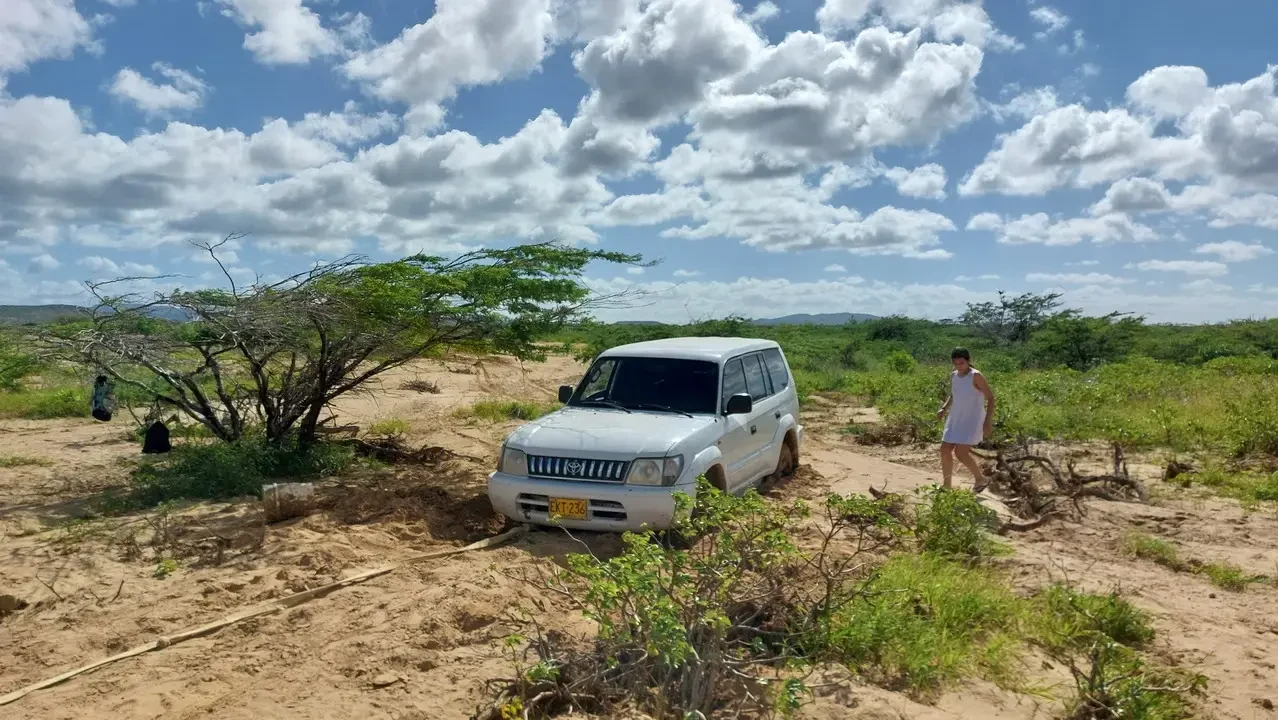
Among the jeep drivers, there is a friendly relationship and great solidarity to help each other in this far from simple situation; it's common to see someone stuck in the mud, and if there wasn't another vehicle ready to pull them out with the cable, it would be serious trouble. We are fortunate to have a true expert at the wheel, as well as a leader among his colleagues. The off-road vehicles are mostly Toyota (Prado and Land Cruiser), but above all they must have powerful engines (at least 4.5 liters) in order to navigate the difficulties that arise; however, it is important to note that if you don't know how to perfectly read the terrain, the mechanical vehicle will be of little use. With a jump of about ten kilometers we reach Punta Galina, which is the northernmost point in all of South America. It must be an extremely windy area, but apparently Eolo is occupied elsewhere today. In reality, there isn't much to see: a pole with indications of the most important countries in the world and those nearby, some lagoons, the sea, but especially a beautiful sunset. After visiting Ushuaia in the extreme south, we are now at Punta Galina, in the extreme north of South America. Sometimes seeing nothing has its own meaning. that of infinity!
A couple of kilometers further on is the Hospedaje Luzmila, a well-equipped center where you can take a good shower, eat well, and sleep, of course, in a traditional room to better integrate with the local culture. Still under a covered area, but today we will be about twelve people and we will sit in two rows, in what is essentially a well-ventilated dormitory without walls. It's a shame that around 3 am the sky suddenly brings down... heavy rain in three waves It's also a shame that the rain from Stravento arrives right in our direction. This results in my first shower of life while (perhaps) I am sleeping; luckily, there were feet on the outside side and the warm climate didn't create any particular problems. Fatigue still helps me to close my eyes, but when the alarm goes off, we are already awake. Unlike hammocks, being wider with the chinchorro, you don't risk falling over when you turn or get down; in the end, we spent two nights sleeping, but we don't really know if it was due to fatigue or comfort. We certainly had a new and interesting experience in a unique place, overlooking lagoons and mangroves, and today even with the parrot that adds a touch of color.
For dinner, unsurprisingly, we chose fish: among the varieties we've enjoyed during these days are the mojarra (a type of sea bass), seabream, dentex (pargo), mackerel (caballa), and of course trout in the inland waters of the highlands; all are fried with a side cut to flavor the meat and served with rice and a little vegetables. A special mention should be made for the trout, which are prepared so that they can be cooked completely open.