

Colombia
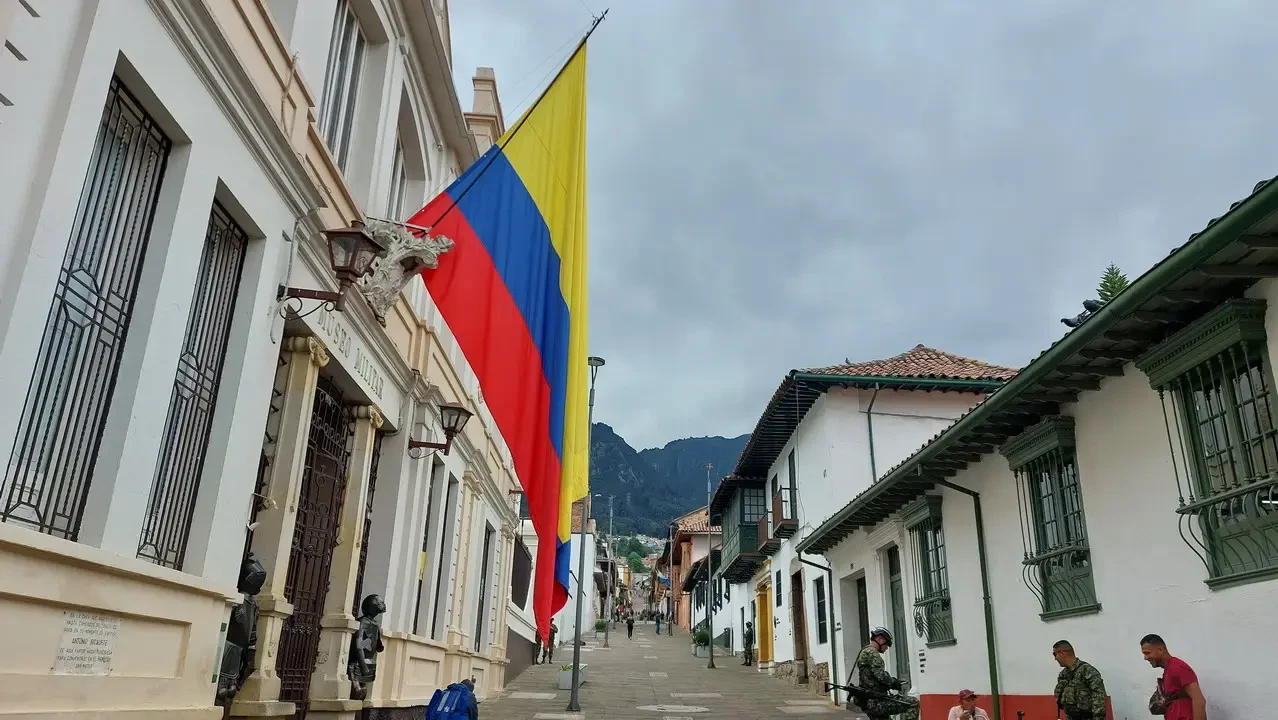
Colombia is moving away from its difficult past, a country with an incredible variety of landscapes: Caribbean coasts, highlands and Andean peaks, high dunes overlooking the sea, coffee plantations and cultural aspects linked to the colonial and pre-Columbian past. All this is complemented by a multicultural population that represents one of the most interesting surprises.
Map
Colombia map - complete itinerary
My assessment of the country's geopolitical situation is regarding:
Historical profile of Colombia and national character.
Introduction
Life is not what one has lived, but what one remembers and how one remembers it to tell.
Gabriel García Márquez
Although the country bears its name, Christopher Columbus never landed in Colombia. However, almost everyone else eventually arrived: the Spanish in large numbers from the early 1500s, black slaves from Africa starting a century later, immigrants from all over depending on the historical period, and finally Venezuelans fleeing the economic and political crisis that gripped their country. In the end, we also arrive, challenging deeply ingrained prejudices: when talking about an imminent trip to Colombia, one has the perception of being a potential troublemaker.
With the whole world at my disposal (or what's left of it), I have to go investigate that land of drug traffickers, guerrillas, and paramilitary patrols. In the best-case scenario, this could put my safety at risk, perhaps encountering a petty criminal who is amazed that the contents of our wallets are equivalent to a year's income for an "unemployed worker"?
Instead, we will meet people who are approachable and have a great quality: they prefer to communicate rather than talk. They won't all be saints, but we haven't seen many like them, as the saying goes...Los Honestos are more."; the majority of the population has now moved on, believing in a future that is no longer ideologized or solely linked to the theory of easy money. That same majority still lives in a state that could reasonably be described as poverty, although not one of extreme deprivation, but the intention to seek the future through legitimate means seems to have prevailed for a decade now.
However, while it is true that paradise holds the kindest people, it is in hell where the most interesting encounters take place. If you want to understand the critical aspects and contradictions of the northernmost country in South America, you need to immerse yourself in its depths, read about its history, interpret its recent past, and learn to understand its present.
Once again – as has already happened in Iran and elsewhere – we need to descend the aircraft stairs and try to experience its true essence, resetting everything we have read and heard in the comfortable living room at home. Of course, this is done without neglecting potential risks that may arise, preferably anticipating them.
From the very first contact with the Colombian soil, I began to perceive a reality far different from what I had imagined the day before. The interaction with the locals is immediately characterized by cordiality and collaboration; it seems that the interlocutors realize that the foreign visitor in their country is not simply passing through, looking for an easy and affordable tourist destination. In fact, the lingering reputation of a past often tragic history further encourages hospitality, fostering a desire to convey the message that the nightmare is over, with a willingness to calmly discuss any topic.
One element that is difficult to observe from Europe is the strategic position that Colombia has had over time and still has today from a geographical, economic, and consequently political point of view. Being immediately south of the islands where Christopher Columbus landed, but with the advantage of being on land, it quickly attracted the attention of the colonizers, so much so that in 1525 Santa Marta was the first city in South America to be founded. Unlike other regions where empires such as the Inca, Maya or Aztecs reigned, Colombia presented several independent tribes that divided the territory, but only the Muisca in the Bogota area could boast a certain power; however, they were unable to cope with the superiority of the Spanish military. This lack of homogeneity made the assimilation process easier, especially when it did not involve the physical elimination of ethnic groups present. Today, isolated tribes still survive in the Amazon rainforest, marginalized for better or worse, rather than the Wayuu that we will encounter in the desert areas of the Guajira. In the rest of the country, one can barely observe some mixed features combined with Spanish characteristics. In this melting pot of races, the black descendants of slaves are also present, mainly in the Caribbean coast and along the rainy Pacific coasts, where they found refuge from persecution.
Its strategic location made it a key port for the slave trade (Cartagena is its symbol), but also a major departure point for goods destined for Europe, especially gold, but also silver mined locally from the Bolivian mines of Potosí rather than those in Peru.
The Colombians appear to have a more refined and less "Latin" character compared to other populations I've encountered so far. What initially seems like a detached approach (they tend to use more... good morning that hello(tend to use "you" excessively until a relationship is established), which actually should be interpreted as a more noble attitude, focused on giving the other person greater consideration. It's rare to see someone raise their voice, whether in jest or in anger.
One interesting fact is that among friends, greetings are exchanged with a "Hello", never heard before in other Spanish-speaking countries; when addressing someone you don't know, the term "front" is placed before. Sir.
Another aspect that immediately stands out is the ease with which almost everything can be done. This makes it easy to spontaneously offer help to others, so one could travel comfortably simply by gathering information kindly provided by those being asked; all further simplified by streamlined procedures (at least during the experienced trip) that don't require particular formalities, from changing money to buying a SIM card. This attitude of formal respect and seriousness should not lead one to believe in a people without passion for fun, dancing, and celebration, which is particularly visible during this pre-Christmas period. One could summarize it as "making hay while the sun shines," that the Colombian character has the positive connotations of provincialism.
Despite experiencing extreme poverty alongside a working class with virtually no means of support, based on my experience, I get the impression that this is one of the most developed Spanish-speaking countries in Latin America. It's incredible to think that just ten years ago, there was such a high rate of crime and civil wars that tore apart society.
From a logistical perspective, Colombia is not an easy country to visit: there is no "tourist hub" to refer to, the interesting sites are scattered throughout, and it's best to use internal flights to avoid endless road trips by car or bus; passenger trains are practically non-existent. The roads are very crowded, with speeds on highways limited to 80 km/hour, and the topography doesn't help at all, with narrow roads winding through hilly areas, traversed by slow vehicles and filled with deep potholes. Domestic tourism is dominant thanks to the growth of the middle class, but there is also a significant presence of Central American or South American visitors (especially from Brazil). As in Italy, there is everything to see: starting from the Caribbean Sea, which doesn't need any introduction, to the wild desert of Guajira, the Andean peaks over 5,000 meters, and the cool high-altitude plateau, the wilderness of the Amazon rainforest towards the Brazilian border, the culture of pre-Columbian populations that have left behind ruins and monuments of great interest (although in a smaller scale than neighboring countries), ending with the legacy of quiet colonial-style villages where time seems to have stopped two centuries ago, where narrow streets lined with white houses converge towards the central Plaza Mayor and where monasteries and churches indicate the religion imposed by the conquerors. Nature offers spectacular performances thanks to its equatorial location and geological structure, offering a truly unique variety of landscapes.
TRN – MAD 12:00 – 14:20 IB1248 – Flight duration 2 hours and 20 minutes.
Transit MAD: 2 hours and 15 minutes.
MAD – BOG 16:35 – 21:00 IB0153 – Flight duration 10h25'
Itinerary
Travel days
From Bogotá to the Caribbean
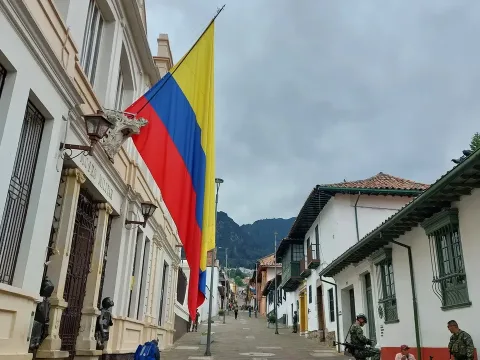
A taste of the capital and immersion in the Caribbean context.
Tour of the Upper Guajira – 1
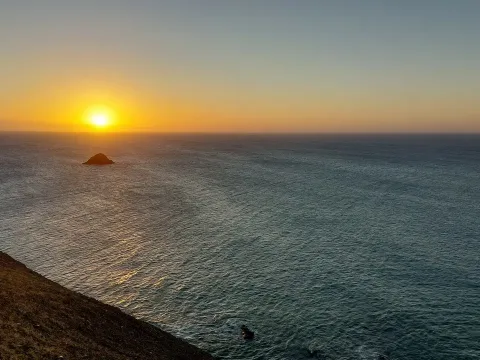
The desert around Cape of Vela, with the Pilon de Azúcar and beautiful beaches.
Tour of the Upper Guajira – 2
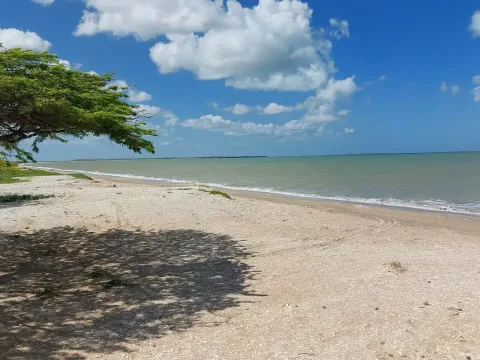
Taroa: where the ocean meets the dunes before reaching Punta Galinas, the northernmost point of South America.
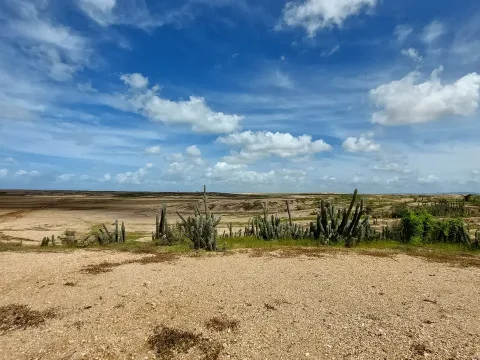
Tour of the Upper Guajira – 3
Still in the desert, and a moment of suspense after the rain.
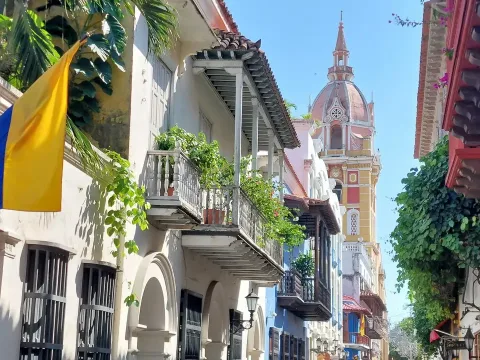
Cartagena de Indias, the "Heroic"
City with a magical atmosphere that blends history, nature and the pleasure of living.
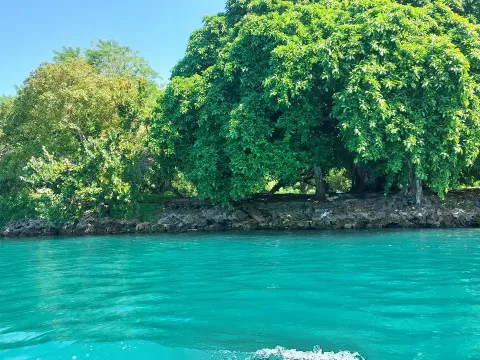
Caribbean Islands
On a boat to the Rosario Islands: crystal-clear waters, luxurious villas, and idyllic marine landscapes.
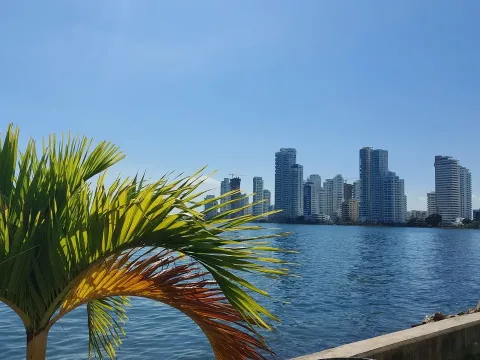
Cartagena and Medellin
A quick flight from the Caribbean sun to the clouds above "The City of Eternal Spring"
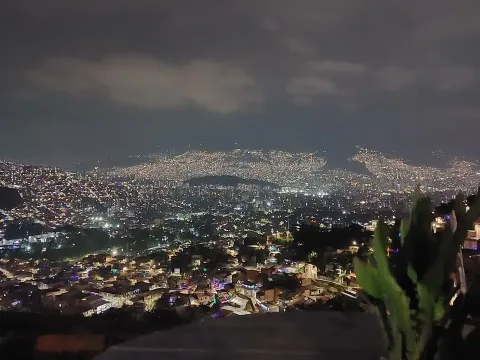
Guatapé and Comuna 13
The natural beauty of the Piedra del Peñol and my experience in Medellín, in the neighborhood that has become a symbol of renewal.
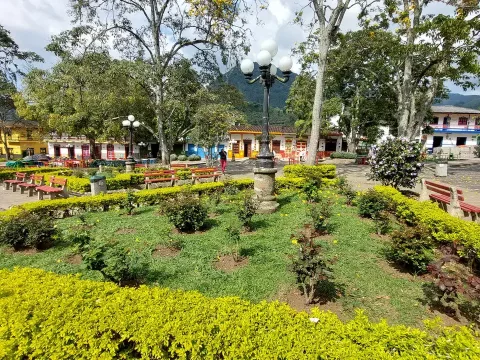
Jardin, a true garden
On a bus from Medellín, stopping in a small village that seems straight out of an old book.
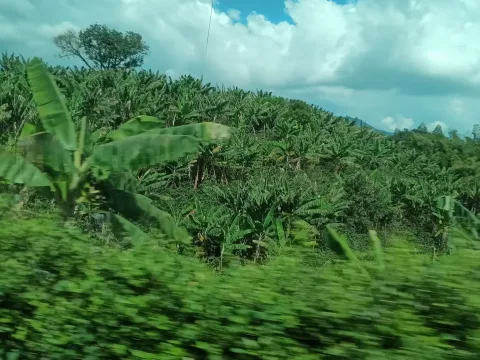
From Jardín to Salento
Transfer by bus to the Eje Cafetero icon.
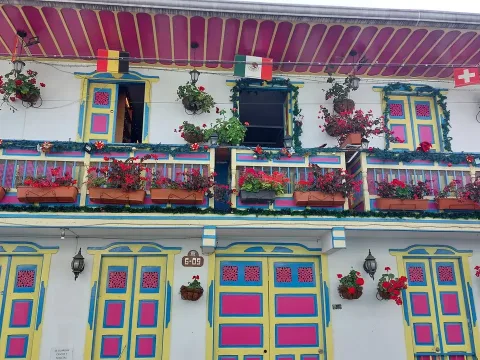
Eje Cafetero
Tour of charming villages where coffee is king, aboard the legendary "Willys" bus.
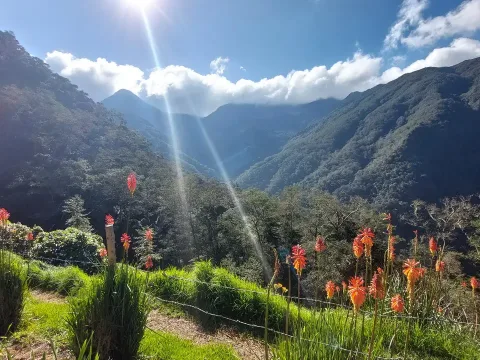
Cocora Valley
The paradise on earth of Cocora with its wax palm trees, the charming town of Filandia, and flight to Bogotá.
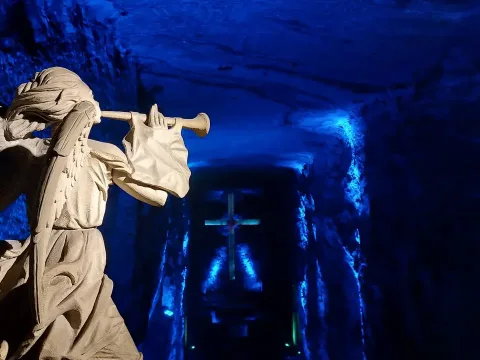
Zipaquirá and Villa de Leyva
Weekend with rental car: The Wonder of Colombia and the exclusive rural town.
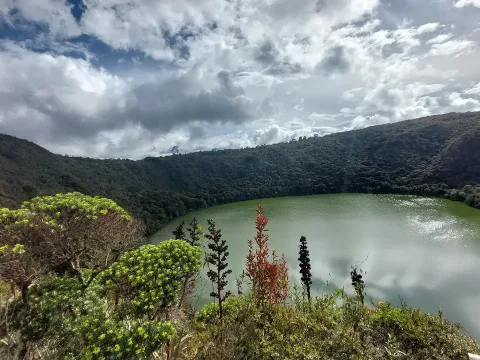
Villa de Leyva, Ráquira and Guatavita
Immersion in colonial history, ceramic craftsmanship, and pre-Columbian mythology.
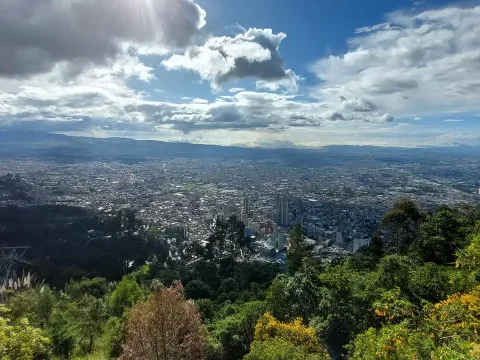
Bogota
Learning about Colombian history and stunning views from Cerro de Monserrate.
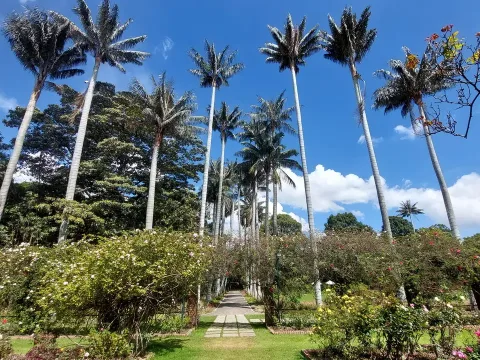
Bogota
Last glimpse of the beautiful Botanical Garden and then off again, with sparkling eyes!