Day 16
Bogota
Learning about Colombian history and stunning views from Cerro de Monserrate.
The urban face of Bogotá
We have now reached the end of this long journey and, for once, we're taking things at a relaxed pace. Today, we're heading to the center of Bogotá to better understand this capital city, which didn't particularly impress us during the first half of our trip. We return to Candelaria, on Plaza de Bolivar, and from there, we begin a walk that will lead us to Parque de Santander, where the Free War & Peace Tour starts, recounting the events that have characterized Colombia in recent decades. After investigating Medellín's darker side, it might be helpful to have a broader perspective. The tour takes place along the historic part of the city, and the guide provides a series of interesting details about what happened and why. Some information about what was told can be found in the report section, which mentions the history and national character. We go to the place where Jorge Gaitán, a politician considered too left-wing for the time, was assassinated in 1948. We enter the literary café on the first floor of a bookstore, where we can listen to other terribly true stories. After the conquest, the imposition and subsequent massacres, there was no peace in Colombia until recent times: wars for independence, internal conflicts, guerrilla warfare, and drug trafficking have negatively impacted the entire country. Finally, we go to Plazoleta del Cuervo, where a large the 17 articles of the declaration of human rights Il text was secretly translated into Spanish in 1794 by Antonio Nariño, an aristocrat with independence aspirations.
Excursion to Cerro di Monserrate
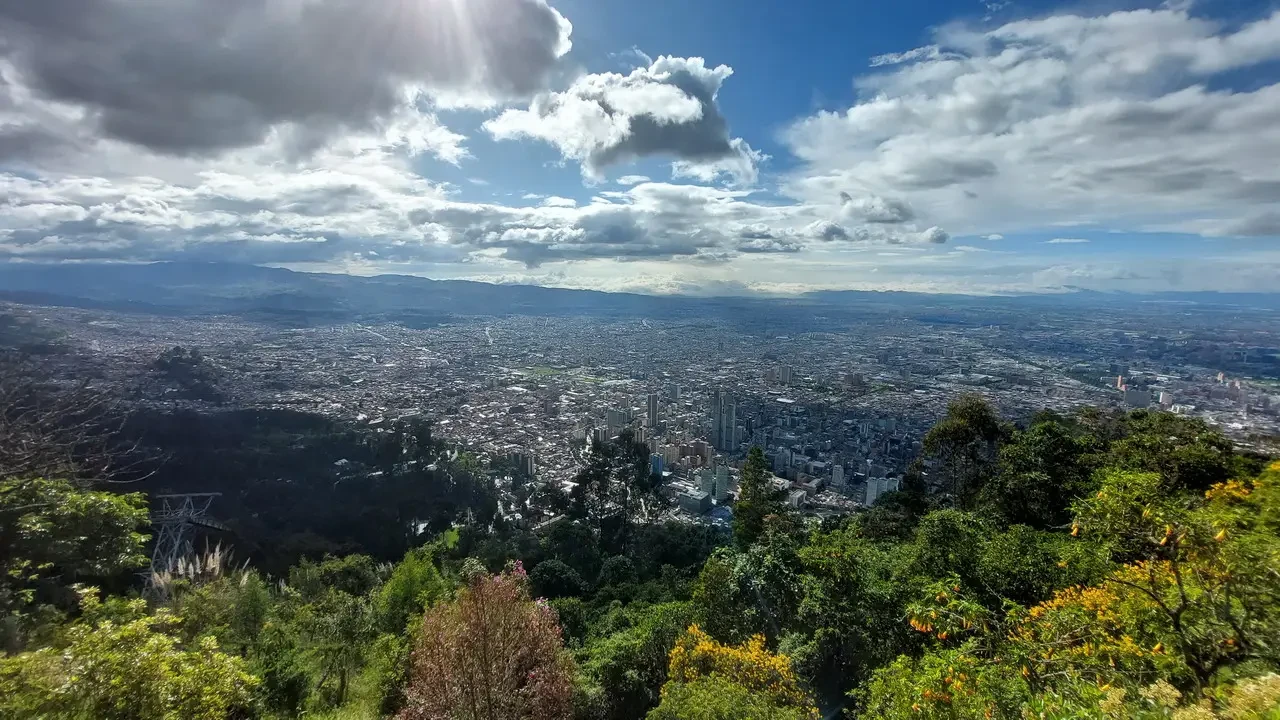
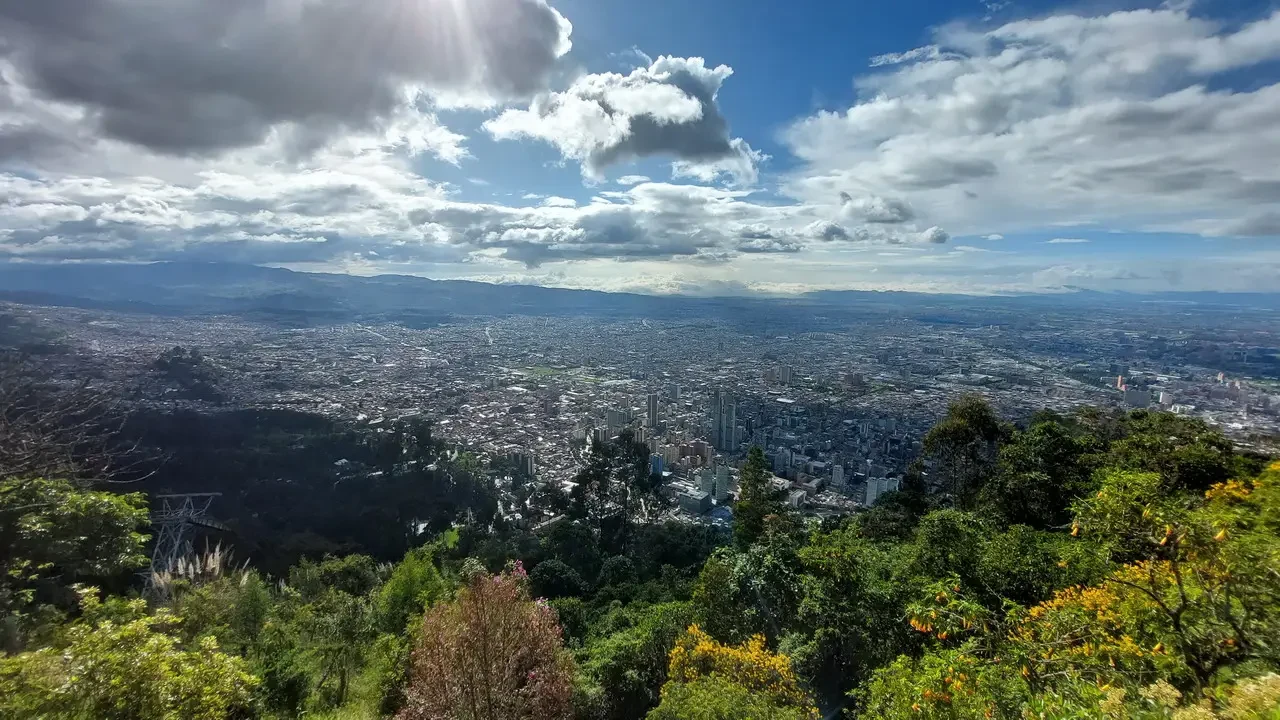
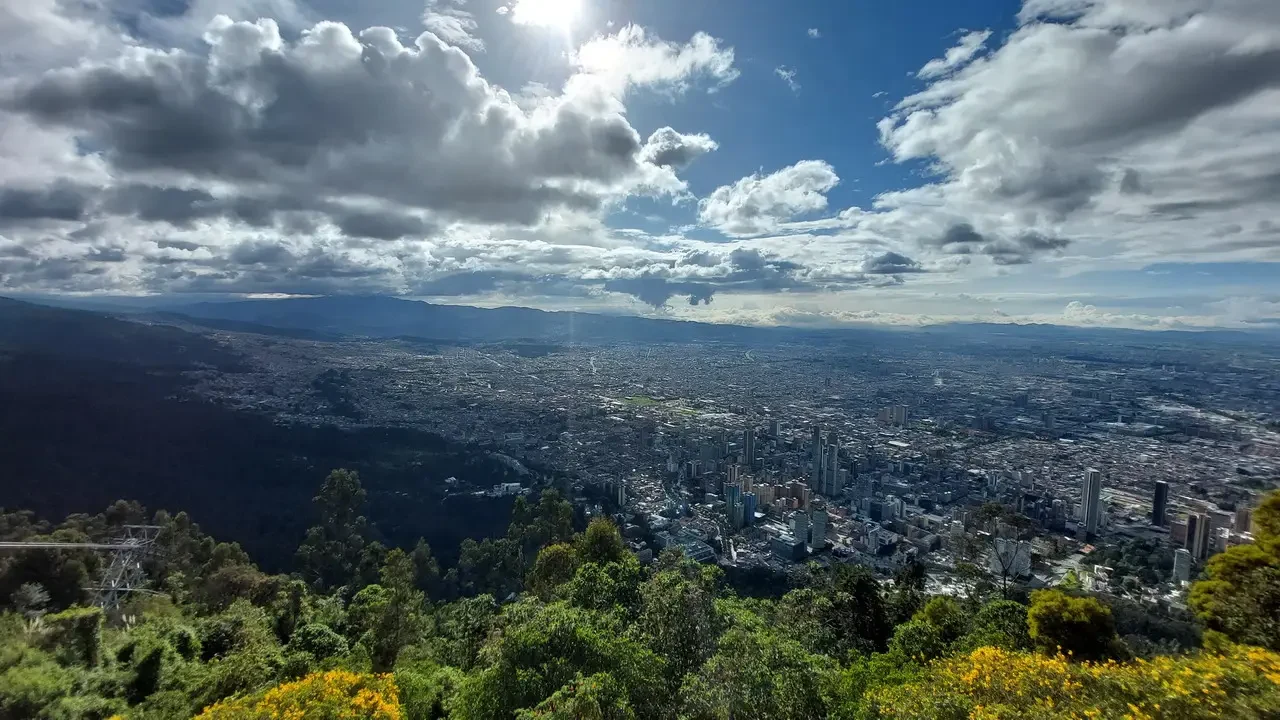
A quick but satisfying lunch, and then we head to the starting point for the Monserrate Hill; unfortunately, the pedestrian path uphill closes at 13:00 due to a somewhat incomprehensible (for us) alternative system, so we can only purchase a ticket to ride up/down on the cable car or funicular, as we prefer. We would like to go up by cable car; as we ascend, the city opens up below us in a calm sea of roofs and streets, made slightly lively by the tall buildings in the university area. We are at 3,150 meters, and it only takes a few steps to clearly feel the altitude, despite the impression of being lower when looking at the lush vegetation. The terraces overlooking the city allow you to see the finished the task that cannot be captured in a single image. Like in Medellin, the southern neighborhoods rise from the bottom up to the hill, although the amphitheater is not the same as that of the Antioquian metropolis.
Stop at the Sanctuary of Our Lady of Guadalupe
Another amazing thing is that Bogota is located on a plateau, the savanna, which continues north towards other countries and grasslands. Essentially, it's an Andean hill where almost 10 million people live, with vast space for agricultural cultivation – something unimaginable in European settings. Equally impressive is the stark contrast between the green of Cerro and the city below; however, the hillside rises so steeply that it was impossible to build on, and perhaps this is why it has been preserved. During a walk through the wide spaces at the top of the hill, we immediately come across the church with its beautiful mechanical nativity scene, where the rather harsh image stands out. Shepherd attempting to stab the lamb. and just behind it, another one is cooking on the spit; a completely natural but unusual scene inside a nativity scene. On the other side of the hill, you can find instead the Virgin of Guadalupe Sanctuary... where every now and then a beam of sunlight arrives to illuminate it, making the statue of the Madonna almost resemble the image of the less famous star with the same name when she performs on stage. We continue to encounter an interesting mix of goods, from shops selling... legitimate and authorized products derived from coca, a substance very different from cocaine, to tamales(plantain rolls filled with a mixture of corn, meat, and vegetables) and dishes full of cooked and minced beef entrails.
We descend using the cable car.... enjoying a thrill in this kind of vertical elevator. As soon as we exit, we start walking along the wide Carrera 1 when we are called back by two men, one middle-aged and the other young; they politely but firmly invite us not to continue, making the obvious thumb gesture under their chins if we intended to go that way. Initially, we don't know whether they are being serious, whether it's a joke or a scam. In an instant, we decide to follow their advice, as the area where they are is relatively populated, while going straight there is no one around. Approaching them, they explain that the area is dangerous and it's best to follow Calle 22, which runs almost parallel to Carrera 7, full of people returning from Cerro if you want to get there. Bogotá and the main cities are like this: a secluded area is safe, but in the next one you will be robbed. Honestly, during these two weeks we have been in much less comfortable areas, but we don't feel it's appropriate to test our luck (or our intuition), so we trust the locals. This is also due to the fact that a young man we met a few days earlier had found himself with a knife pointed at him several times by a desperate person looking for small change in the university area.
In the late afternoon, the lights come on and it seems that the city is illuminated. In reality, everything is relative; someone tells us that El Niño brought very little rain this year, the dams were not full, and they are trying to conserve electricity. We can only imagine what happens in "normal" years.
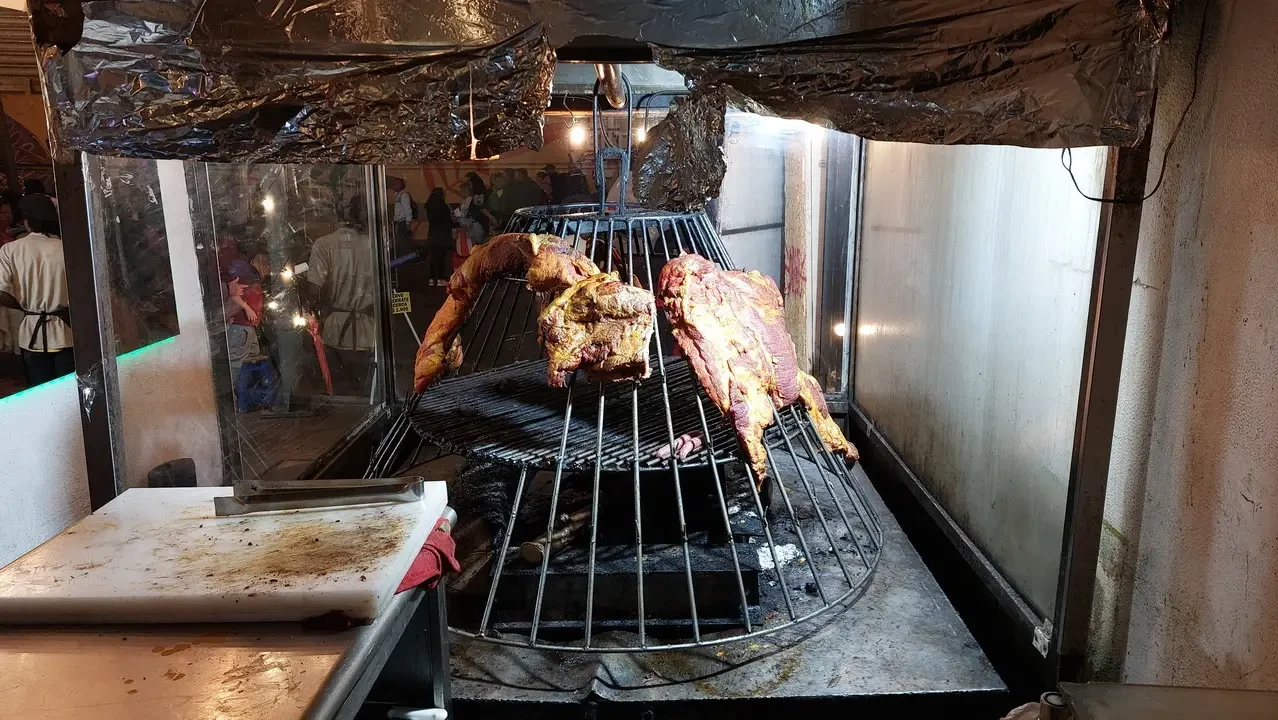
We walk for a couple of kilometers towards the pink zone, but we don't see anything particularly interesting except for tall buildings (the Colpatria skyscraper is beautiful), street vendors with lots of traffic and smog that make your throat burn, until we reach the Macarena neighborhood. We take an Uber and in 3.5 km we find ourselves in this large urban shopping center, which is the pink zone. We cross the Andino Shopping Center and realize the striking social differences: it's full of shops you might find in the centers of the most opulent Western cities, the atmosphere is chic and interesting to see, although there isn't much, as far as I'm curious. Just after that is Zone T, which takes its name from two pedestrian streets that meet at a right angle; nothing special to see here either. We decide to return to the center and find a restaurant worthy of saying goodbye to this wonderful country. In the meantime, the streets have filled with people, today there's a light show in Plaza de Bolivar and access is restricted. This doesn't interest us much, we continue on knowing that the area with restaurants isn't here but almost hidden we find a place where some lambs on stakes; we enter and order a rich grill There's even a piece of capybara, a South American rodent larger than Indian pigs, which will be the gastronomic highlight of our trip. Stepping outside, we find ourselves back in the bustling crowd of vendors eager to sell their wares; it’s a special evening because it’s the night before Christmas and people are out in force. We think this is enough for today and return to our accommodation for the fourth consecutive night.