Day 3
Tour of the Upper Guajira – 1
The desert around Cape of Vela, with the Pilon de Azúcar and beautiful beaches.
Pilón de Azúcar
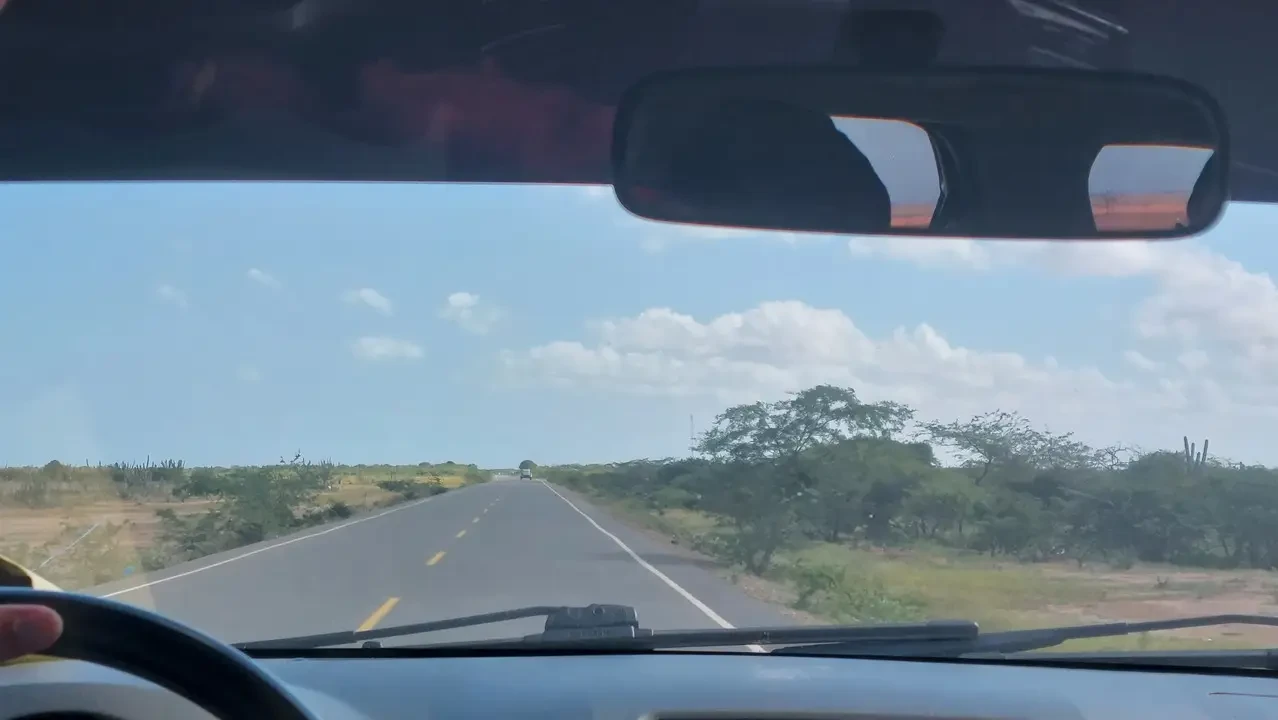
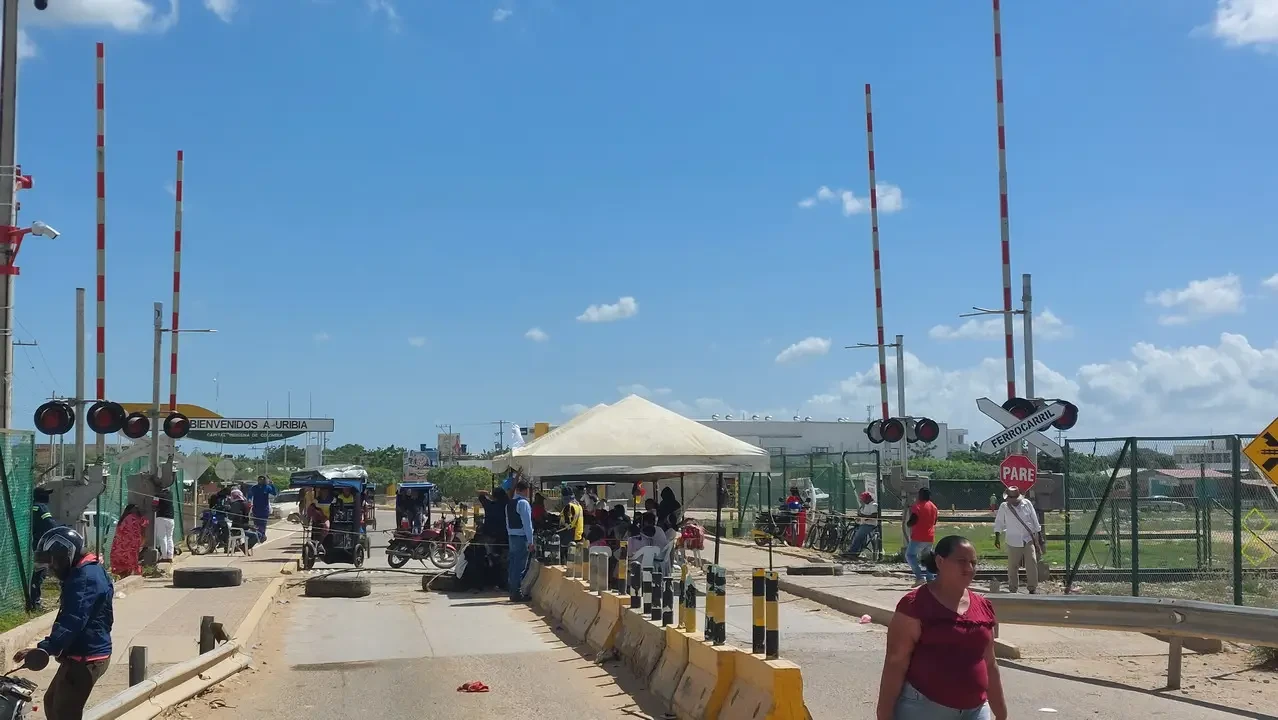
As soon as we wake up, we go to see the lights of a sun that in this area has very early habits, so much so that by 5:30 it already starts to spread its rays along the coast. A new walk along the beautiful pier in wood, to see the coast under different lighting and return to the hotel for breakfast on the terrace with a limited view of the surrounding buildings, but still suggestive in embracing part of the city and the coast. We tried to withdraw local currency at an ATM, but the Peso was offered at 4.150 against the usual 4.450/4.500 + a fixed commission of 5%: we decided to exchange when necessary and in cash. Check-out from the hotel and with our luggage, we walked the 0.5 km that separates us from the agency where we booked the tour of the Alta Guajira. With the other three travelers and our excellent driver, at 8:30 am we were ready to leave the town, and even from its outskirts, we realized how difficult it would be to move around in the next few days: improbable roads, when they exist, river crossings and a lot of sand. We knew this was part of the experience. The vehicle has a Venezuelan license plate. because until recently, importing off-road vehicles from the neighboring country was convenient, even though cars could only circulate in this area, not the rest of Colombia. As soon as we exit Riohacha, there is a traffic stop at the bridge over the local river, resulting in a line of waiting cars; a small contribution from the drivers helps to reduce the demands of the protesters for a few minutes, and although with some difficulty due to the congestion, we manage to pass through. The driver is a true pro, and during the three days we will have the opportunity to experience his skills. Upon arriving in Uribia, a group of teachers are blocking the railway line which connects the enormous coal mine with the port, but here reality and fiction blend almost theatrically. The tracks are used for transporting goods from the controversial mine owned by a multinational company and for delivering water via railway tankers to an area where water is practically non-existent underground, due to the lack of sources and rainfall in this very arid region. We are told that road closures are the norm in the area, while the rest of the country has a much better situation: a few weeks ago, there was a protest after a driver accidentally killed a rooster crossing the road; normally, these are just pretexts for getting money, in a kind of blackmail against tourists and local workers.
The Alta Guajira is an unusual territory from both a historical and geographical and cultural point of view; it is extremely difficult due to the desert, drought, and strong winds, covering the northern part of Colombia and South America, bordering Venezuela and being forced to import problems related to illegal trafficking and refugees. At the same time, it shares significant mineral wealth with the neighboring country (Maracaibo is only a couple of hours by car), primarily coal and oil. The inhospitable coastline has allowed the indigenous Wayuu population to continue their existence without excessive intrusion from the Spanish. It seems that there are still approximately 300,000 individuals divided between Colombia and Venezuela, with dark skin and characteristic physical features, without the classic physical characteristics of other indigenous tribes. In reality, they occupy a difficult territory to live in and not very interesting outside of mining and minimal tourism, subsisting on basic aid and activities in small huts scattered throughout, which struggle to form villages. Their livelihood is also due to tourists and… toll system – sometimes in close rows just a few meters apart – that have set up operations in a somewhat questionable manner. While it may make sense to offer something to the "hosts," it is less commendable for children to collect aid and be paid with sweets, cookies, and other treats. There is a well-oiled organization in place for managing donations/tolls. Uribia is also the administrative capital of the Wayuu people, but its mayor is not necessarily the representative of this community; upon arrival, we make our final purchases, and at the store where we buy drinks, a man approaches us asking for a moment of attention: he explains that the local population suffers from difficulties related to the territory and offers a "package" of aid worth 35€ to be distributed on the go, focusing especially on the more distant area where it is difficult to get anything. This consists mainly of water, coffee, rice, pots, cookies, etc. The system of extortion does not appeal to anyone present; we follow suit, buying a kit containing several bags of water (a very scarce food source in the area) and continue on our way. It is also true that the Wayuu live in extreme conditions, with limited water sources and the impossibility of cultivating desert land; it's hard to imagine how they manage to survive solely on fishing and goat or rare cattle products. These animals will likely need to be rationed during the dry season as they will be difficult to feed. On the other hand, the system of tolls imposed by children who block the road with ropes or logs in the Cabo de la Vela area is highly questionable; they only remove them after collecting a small payment. It will be the driver, who has a good supply of sweets, who decides when and where to stop, knowing exactly the family situation and the delicate balances that result from it; preventing anyone from having too much and profiting from it by reselling goods (through a barter system) to the less fortunate families; when he decides not to give gifts, he speeds up just before the simple barrier, and the children rush to pull it down. The act of asking for money on the street is a cliché that has been seen especially in Africa, although begging can be considered an activity present worldwide; we have never witnessed such a systematic and organized formula, which starts from the store in Uribia (which benefits economically) and uses young children as small couriers, who should be doing something else at this age. I do not intend to make easy moral judgments in a difficult context, but I well remember when in similar places in other parts of the world we were asked not to give out sweets or sugary products due to the complete lack of dentists and doctors (it would be better to donate money to a known and reputable foundation). Furthermore, if it is necessary, it would be more appropriate and dignified if the parents were present on the side of the road. When they are there, they are given tea, rice, or coffee.
Leaving Riohacha, we proceed to... long roads The road was only used by rare trucks carrying goods or sacks, which we would later discover contained salt. In short, we eventually reached the Saline of Manaure where we can see a brief explanation of the salt production process: floating aquatic organisms, called plankton, are found inside the settling basins and are visible in a small pavilion near the entrance to a example container: they feed on reddish substances containing vitamins A and E, taking on a pigmentation that tends from pink to purple, in the same way as salmon meat. Approximately every three weeks, the pools are dried by sunlight, and it is possible to extract the salt, which is divided into three layers: the upper layer is white room This is usually used in the kitchen and is still ground up. It follows a middle layer that is yellowish-brown and tends towards brown, which is mainly used for medicinal purposes, and a lower brown layer used for industrial purposes. Approximately 2 tons of salt are extracted from each vat; the product is then put into bags and sent to refining plants located nearby. We can see several trucks loaded with heading towards what we could define as a mill. In this area, 70% of the salt consumed in Colombia and 95% of marine salt is produced; the other main salt extraction site (in this case, mineral) is located in the Zipaquirá area, which we will visit at the end of our trip.
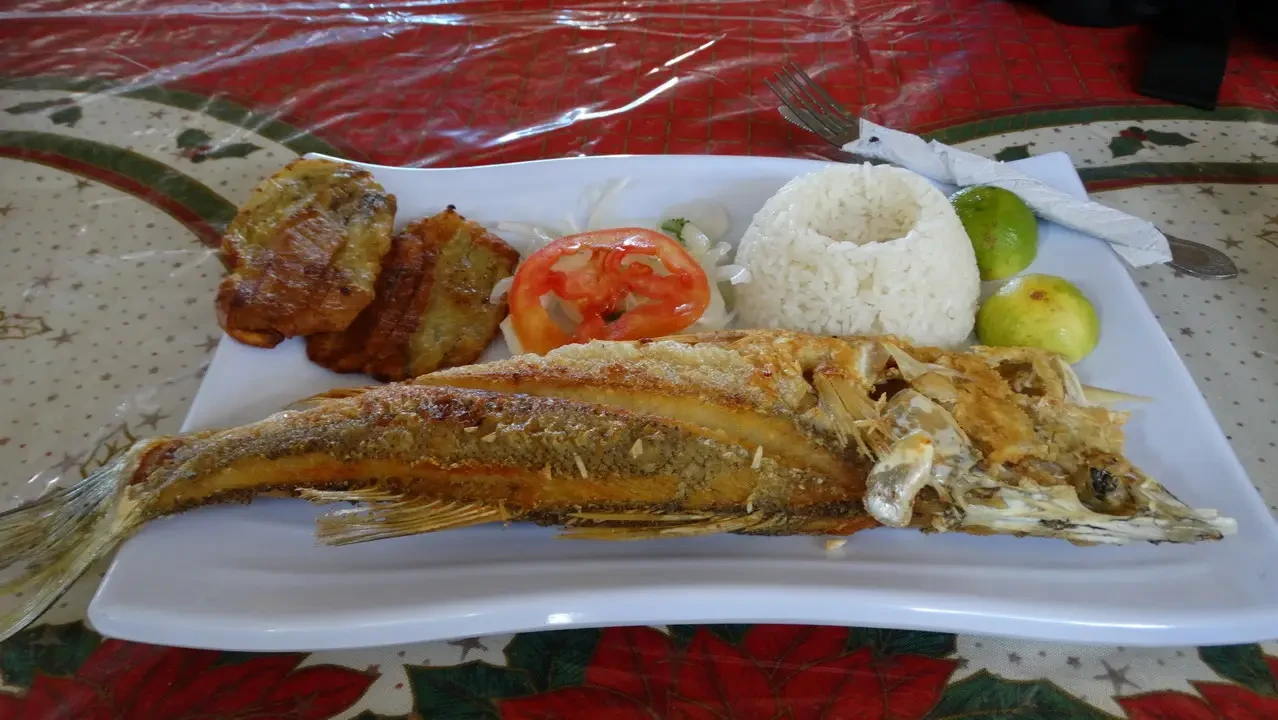
The road continues, unpaved. and very rough until a village not far from Cabo de la Vela; to our surprise we see a couple of tourist buses and discover that there is a longer, but slightly better road. Along the way, there are few signs of human activity: some off-road vehicles, villages consisting of simple huts, and arid landscapes. In the small town of Cabo de la Vela, we find the local... have lunch (fish) and spend the night.
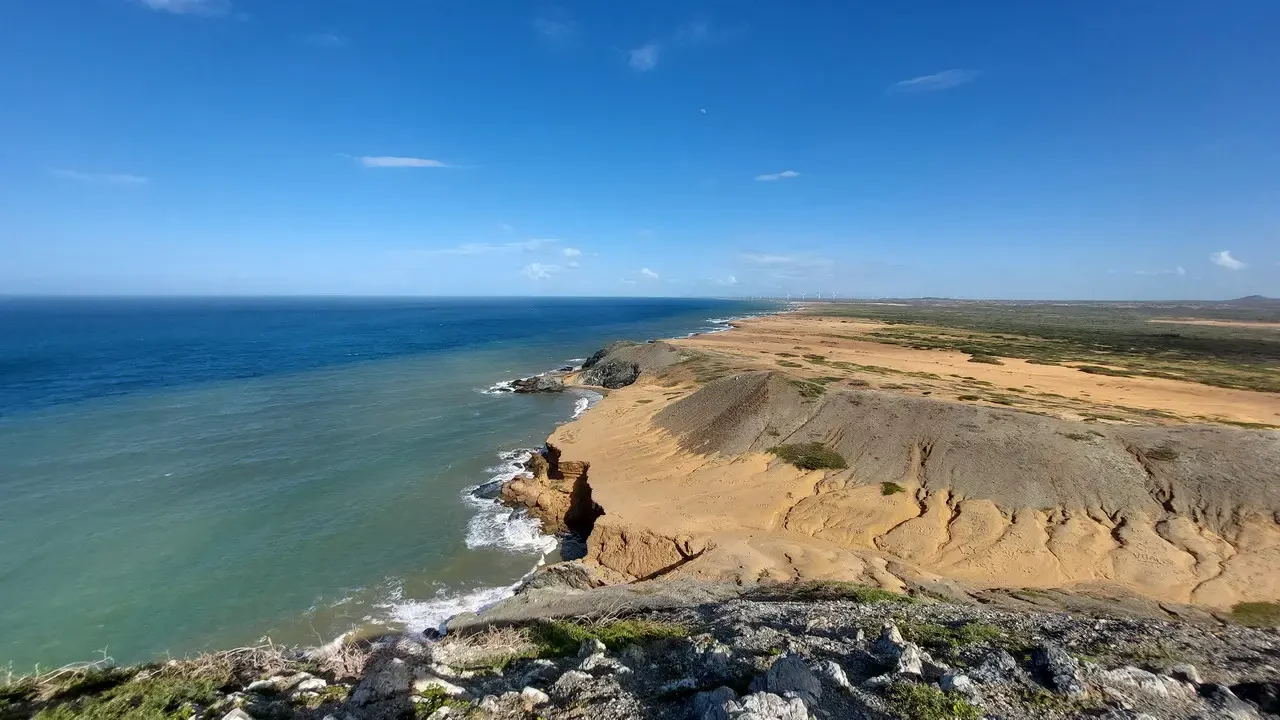
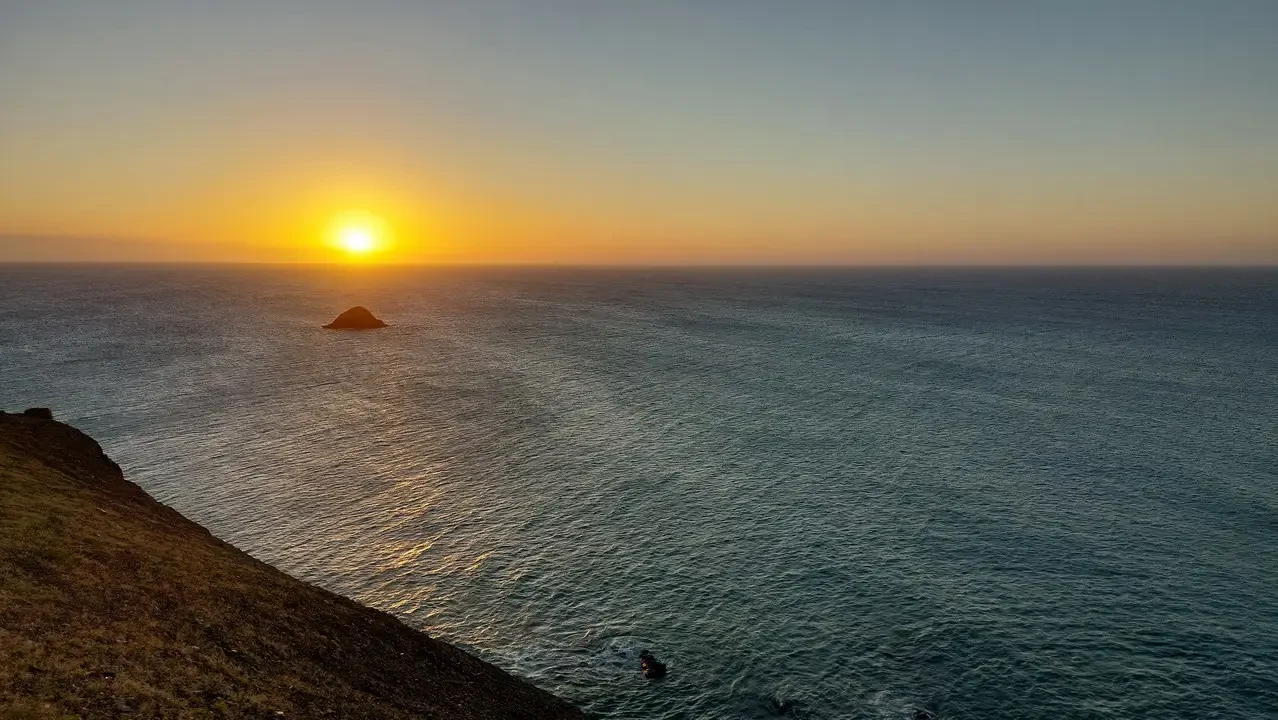
We still have the afternoon free and we will use it to visit the small hill called. Pilón de Azúcar with a view of the Caribbean Sea and to Playa Arcoiris. The Pilon is a easily climbable cliff that can be reached in about ten minutes, and from its top... The view is stunning. in every direction: the waves crash against the rocks o We are slowly walking along the beach. Covering it with white foam, the desert interior seems to be an endless extension of the beach itself. We stop for a few minutes, savoring the silence in the face of the vastness that stretches before us and behind us; it feels like we are in another world, and we are. We go down to touch the water – pleasantly warm – and stroll, enjoying an unusual tranquility. The hours pass quickly, and the sunset arrives early; we first go to see the Piedra Tortuga near Plaja Ojo de Agua, where we meet a pair of small iguanas We arrive just in time to reach the Cape de la Vela lighthouse shortly before sunset; as I have experienced many times before, it is wonderful to the stars were setting on the horizon It's a powerful and vast scene, with the sea and sky taking on reddish hues, before almost disappearing. a warm cookie that plunges into the ocean.
Near Cabo de la Vela, there is also a wind farm, as the wind is a constant resource throughout the year.
We arrive at our overnight accommodation, where electricity is generated by a generator that remains on until 10:00 PM; for showering, a bucket of room temperature water is provided at each station, which contains a bowl to pour the water over oneself; in this way, we discover how it's possible to wash even with just a few liters of water.
The fences, roofs, and walls (when present) here and in the villages are made using the woody heart of the cactus, a unique and resilient tree found in this area. The concave shape of the interior, like a cane, is used to create overlapping slats that replace tiles. For the fences, the entire cactus plant is used, with its spines acting as a deterrent against human and dog intrusion. There appear to be no other potential intruders.
Dinner at 6:30 PM with excellent fried fish, some quiet time, and then we went to sleep using a unique method that I hadn't tried before. of the beach. On the other side of the un unpaved road that divides the small village in two There is a covered area practically on the beach; here are these thick hammocks where we will be staying overnight. The locals don't sleep in beds but rather in arrangements like this, handmade and only slightly wider than our own so that you can wrap yourself up while sleeping. It seems their production is entirely manual and the cost ranges from 200 to 400€ (very reasonable prices if considered in the local context), but it's also true that they require months of work. For sure, once you get used to it, it's better to sleep like this than in a room: the lack of walls allows for good ventilation while in the morning you can unhook the two ends from the posts and put them somewhere, saving space and the inconvenience of a bedroom. The first experience requires a minimum of adaptability; after all, you shouldn't expect the same comfort as when sleeping in your own bed; there are still some dogs barking on the road, but then close your eyes and listen. the gentle sound of the waves while gently caressing the beach, it leads to a state of relaxation and heavenly images.