Day 12
Eje Cafetero
Tour of charming villages where coffee is king, aboard the legendary "Willys" bus.
Eje Cafetero
The so-called Coffee Belt (coffee axis) is a hilly region at high altitude where the soil, temperature and humidity favor the cultivation of this precious fruit. For two centuries, small farms and large estates have characterized the landscape and the life of the villages, therefore it is worth spending a day visiting these villages dedicated to coffee production.
Morning in Eje Cafetero
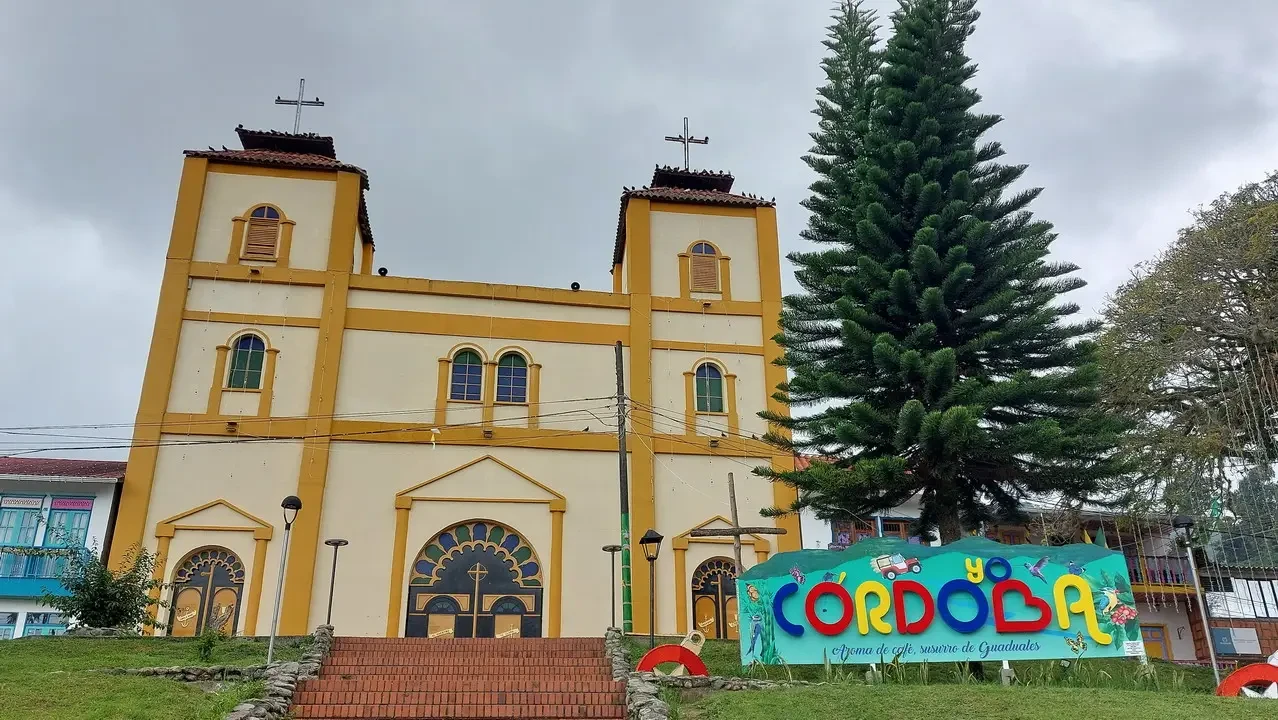
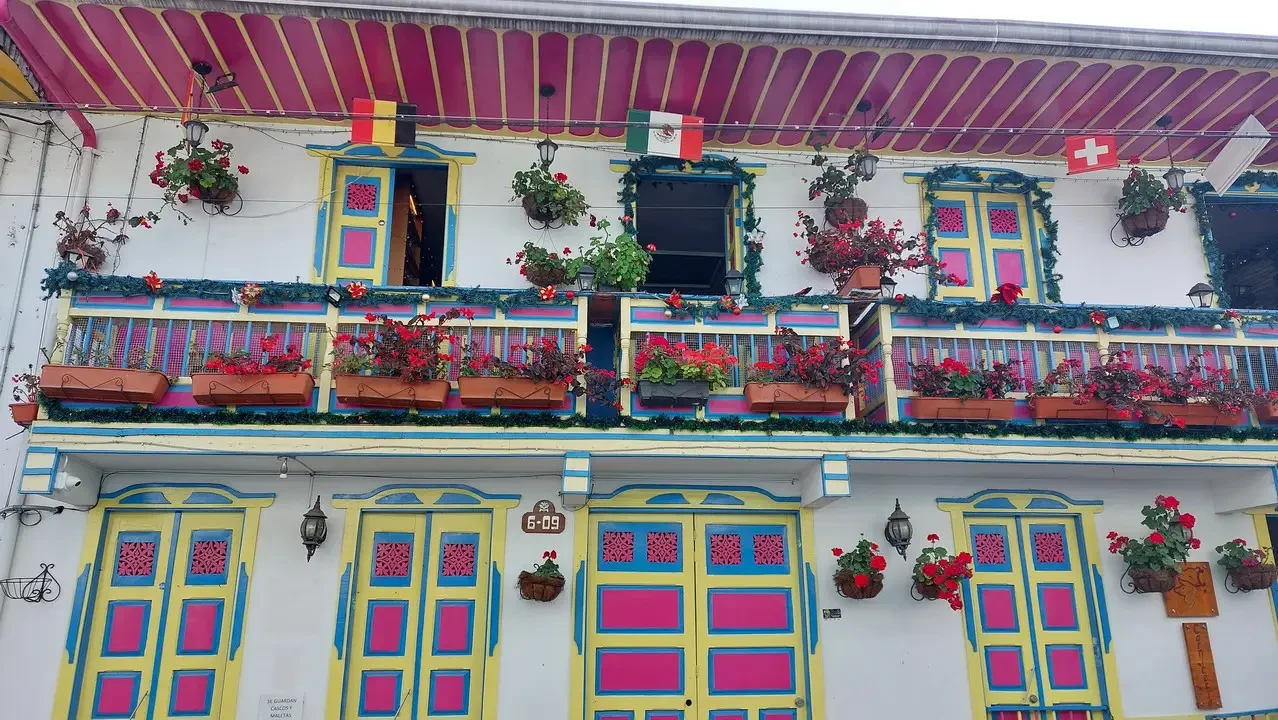
A light breakfast in the hostel's shared kitchen, and taking advantage of the early morning, we walk to the Mirador Alto de la Cruz: a wonderful spot with views of Salento, perfect for waking up and enjoying the high mountains on the Versantian side. The sky is clear, but it's important to remember that what we experience today will be crucial for tomorrow's fishing trip. Afterwards, we go to the kiosk in the square where the boats are moored. Willys We purchase the tour and are assigned a friendly driver with an off-road vehicle for the entire day, departing immediately at 7:45 am. Having already visited a hacienda just last year in El Salvador, we feel it's not necessary to see the coffee production process again, so we decide to focus more on the countries and their surroundings. Unfortunately, the day will not include sunrise; the clouds will accompany us without any rain, which will be sufficient for us to enjoy a peaceful and interesting tour, even in the absence of particular highlights. Most of the villages in the area are named after European cities or regions (Salento, Genoa, Palestine, Armenia, etc.), creating a sort of microcosm of the old world in this part of the new. And it's right at Barcelona What do we do for our first stop after passing Armenia, which with its 300,000 inhabitants is the second largest city in the Eje region? There isn't much to see; it's perfect for breaking up the journey with a hot chocolate and a look at everyday life: it’s simply the ideal place for anyone who doesn’t enjoy big cities. It has a relaxed but effective pace, everyone greets each other with a few words, minimal noise, and plenty of space. Sometimes, visiting the city's monuments can be replaced by visiting an urban landscape made up of the people who live there, with the same level of interest. After a few kilometers, near Rioverde, we turn left to head along charming streets towards Córdoba(another name for European place names), in an endless succession of coffee-planted hills. Here we stop and, at the top of the village, admire the plantations, discovering the coffee flower and his fruits attached to the bush It would be better if the sky was clear, but the clouds that drift over the vegetation higher up create a truly tropical atmosphere. We descend into a beautiful area with abundant flowers, discovering the coffee collection warehouse sourced from local producers, complete with stacked bags ready to be shipped. We continue our journey with a few short stops to admire the always familiar but simultaneously different scenery of dense vegetation, where forests and plantations alternate. Pijao It's another charming village, with a center that is identical to the others, and life unfolds in a square pattern branching out from the central square where the church and administrative buildings are located. It's a quiet town, or at least it seems to be, until we see a military patrol cross the square scattered; we are not aware of the reasons for their presence, but from what we understand, it is a routine measure to prevent armed group interventions that still exist somewhere. We feel absolutely safe, especially in this peripheral and predominantly agricultural region, but it should also be considered that even a single attack would generate enormous negative publicity for the country's tourism sector, and the situation remains very fragile. Along the streets, you can hear the sizzling of arepas, patacones, etc., being cooked on the spot in what is essentially a fast food establishment. Here too, one can appreciate the peaceful daily life of the locals, with few tourists around; we don't see any foreign visitors.
Traditions and spirituality
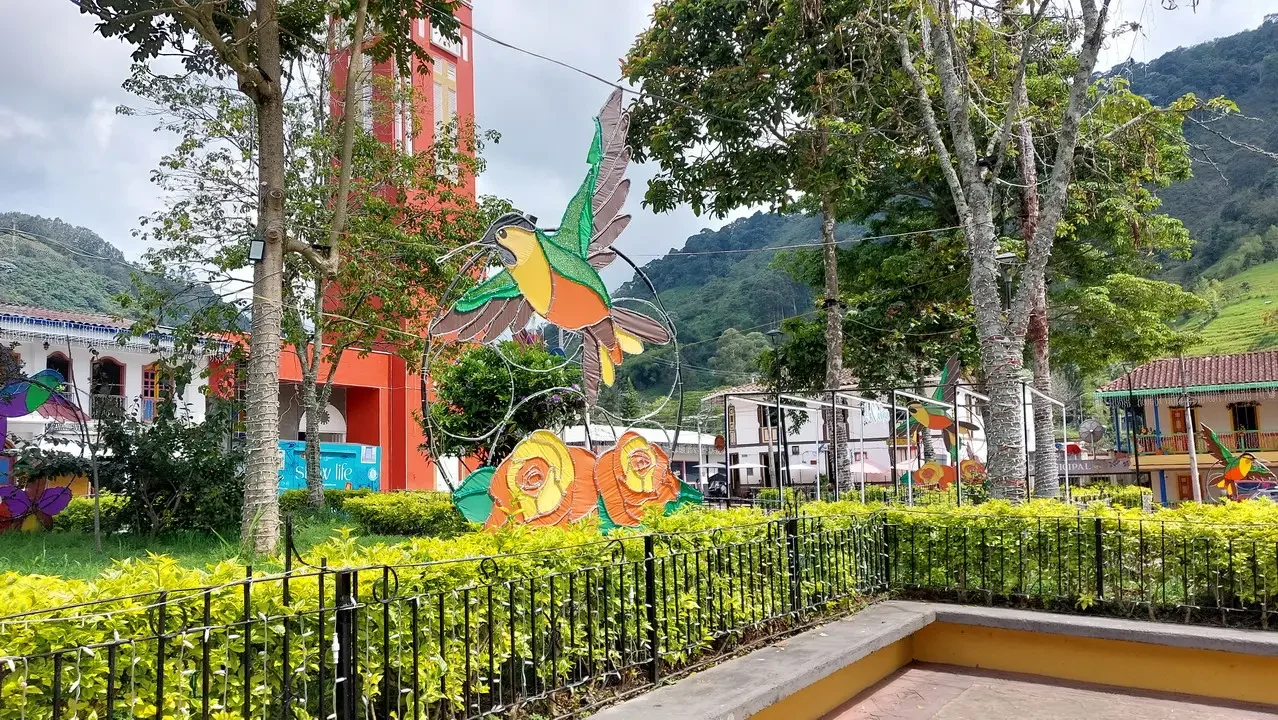
Here too, the Christmas decorations are everywhere and in the square they completely overshadow everything else with nativity scenes of human size (and even larger), Santa Claus, and anything you can imagine. The church is no exception either, and it's amazing to see the Christmas tree set up right next to the altar; back home, it's considered a beautiful decoration but of pagan origin, so it's not suitable for display in religious buildings. Everything here creates a spectacle, and joy is also expressed through colorful lights, even when they reproduce techno rhythms just a short distance from the crucifix. Of course, the nativity scenes have variety, finesse, and artistry that would make Neapolitans envious. A brief lunch with chicken empanadas and sweet arequipe (a sweet made with sugar and milk, a traditional Colombian treat) at a charming local; but it's also wonderful to find the owner waiting for us while chatting with a colleague; he invites us to have a "tinto," the local black coffee. While the coffee is delicious, it won't be an unforgettable experience, but everything else is: the bar is run by two friendly brothers who are already in their prime. the equipment The fruit used to make the drink must not be older than them; they are different. pool tables where visitors play and there are tables from the 1950s around which young people or some adults can sit and relax. All that's missing are the saloon doors, and we could be in a classic Western setting. Buenavista, as the name suggests, is located on a ridge offering views of two valleys. The clouds maintain their position, and while one side adds charm to the landscape, the other does not provide enough light for the lush vegetation. When it's 4 pm, we decide to head back, which takes about an hour and a half. Passing through Armenia is not a pleasant experience due to the heavy traffic; the city serves as a major transportation hub, with the Pan-American Highway passing through it on its way south towards Cali and the only existing port on the Pacific Ocean, Buenaventura. Almost everyone here is black, even though they speak Spanish, the culture and temperament are different; I would advise against visiting due to its status as a cocaine production point in the regions just south of Ecuador.
We will have covered a total distance of 200 km, visiting the heart of the "coffee region," where beans considered among the finest in the world are produced, but also one of the most features in terms of landscape i. There wasn't time to visit the Circasia area, where there are instead cocoa plantations.
Back in Salento, we treat ourselves to a seafood dinner at the restaurant recommended by the driver, a stroll among the many tourists (whose presence here we don't fully understand), and finally, some well-deserved rest.