

Day 8
Cartagena and Medellin
A quick flight from the Caribbean sun to the clouds above "The City of Eternal Spring"
The urban face of Cartagena
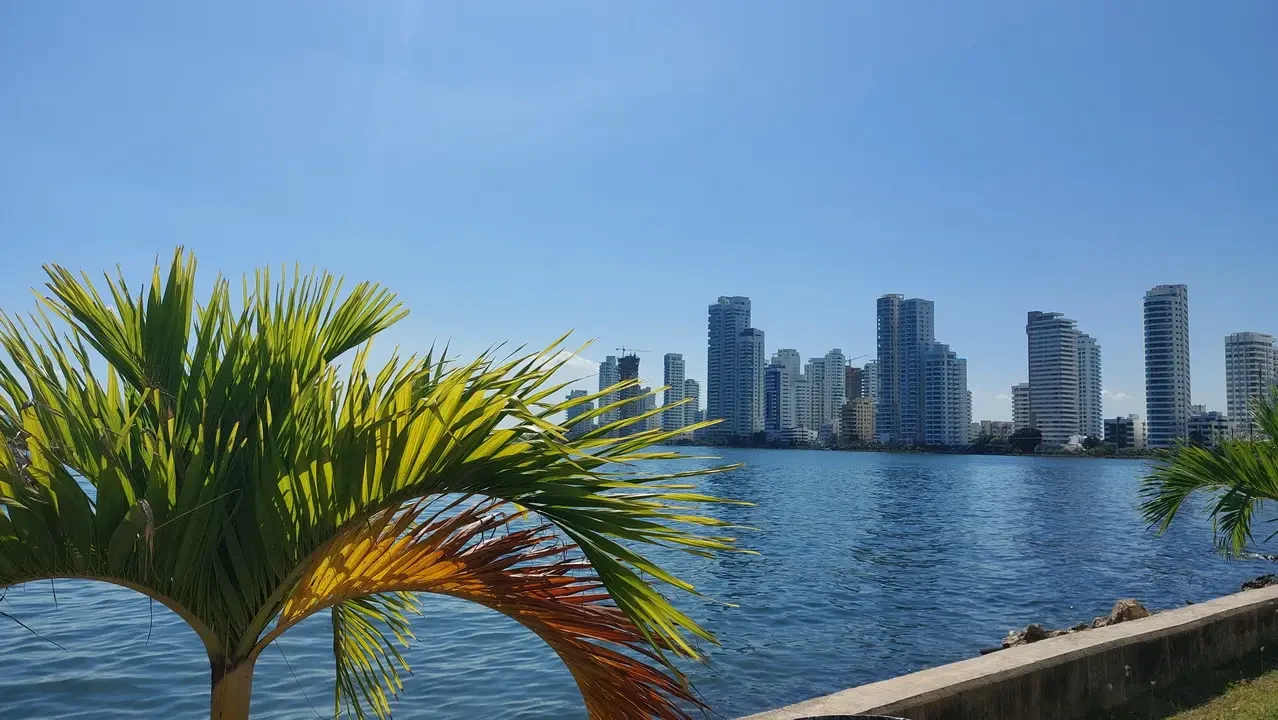
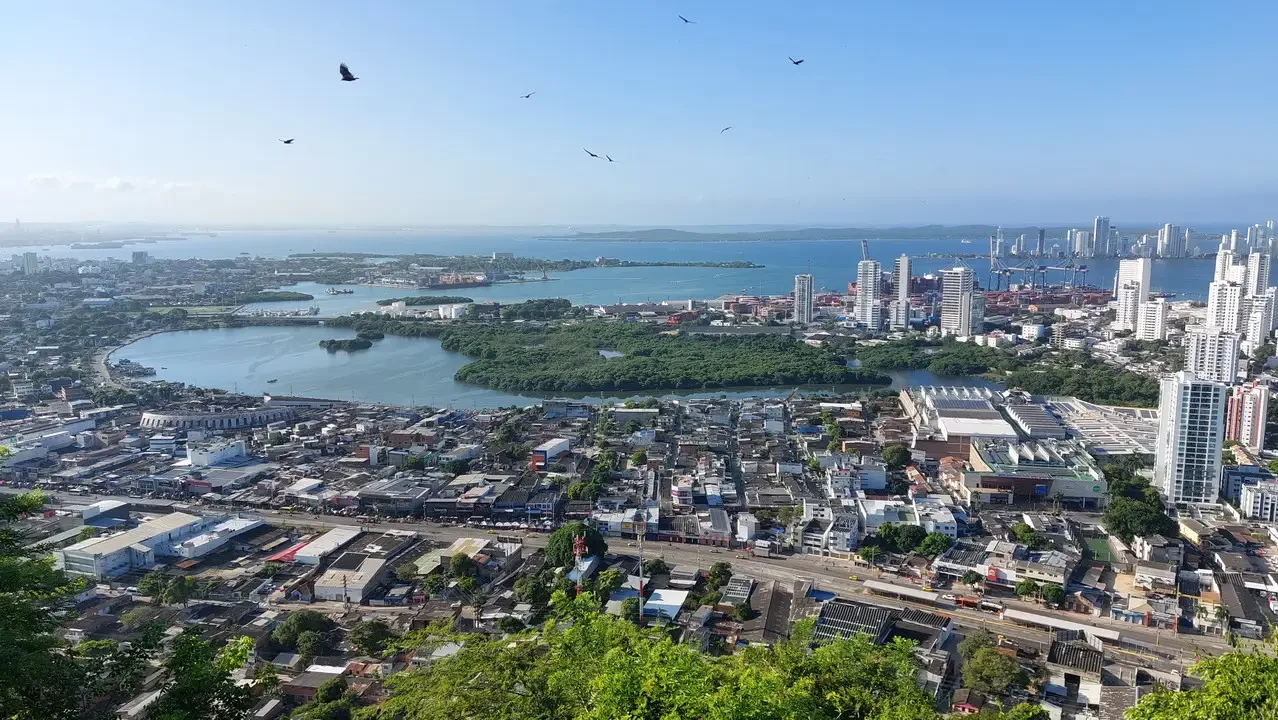
Cartagena was presented to us as a city solely focused on tourism, which is certainly true, but it should be said that there is definitely much to see. The management of visitors takes place with the appropriate sensitivity and one never gets the impression of being in a Hollywood setting. There are many attractions (including the sea), so one shouldn't come here looking for solitude, however, the center is clean and services function well. Tourism is largely local, and the growth of the middle class leads to an increasing number of Colombians visiting this jewel of a city. The days are hot, with 32°C during the day, but as soon as you walk in the shade of the buildings, the feeling improves considerably. It's Sunday, and those who had fun last night are sleeping peacefully, so we take the opportunity to go up to the Convento de Nuestra Señora de la Candelaria de la Popa, whose name comes from the shape of the hill that rises on a 150 mt high hill, which from a distance vaguely resembles the stern of a ship. We arrive shortly after opening at 8 am and there are still no one except a group of worshippers attending mass. We complete the entire tour starting from wonderful viewpoint from which you can see much of the city, from the bay with its skyline to the outer districts that I walked through yesterday while heading towards the island of Barù. In addition to housing a green space within the building, the courtyard It includes on the sides a museum where the history of the convent is told, largely coinciding with that of the city, although viewed from a religious perspective. On the opposite side, a balcony offers a view of the eastern part of the city, thus concluding the panoramic tour.
Arrival in Cartagena
At this point, we decide to tackle the Flea Market to get a glimpse of real life in this town, while being aware that it's not the safest place for a walk. We take precautions, and our Uber driver gives us some advice, but if we want to take some photos, we need to be careful. Of course, it's not hell, and its safety conditions will improve as the country develops, but the markets always present some uncertainties, and in Colombia it's best to keep a higher level of vigilance than anywhere else. In fact, the eastern bazaars visited in recent years make a better impression, both in terms of cleanliness and crowds. The holiday makes the place less crowded, which is probably fine; the vendors don't bother to keep their areas clean, so we need to be careful not only about our surroundings but also about where we put our feet. Beyond the security aspects, the market is fascinating with its colors, for people, for the products on display, especially meat, fish and fruit/vegetables, in some cases completely new to our eyes. We see mountain goats of sycamore trees, larger bananas that don't become sweet and are fried in oil to make the famous plantain slices. The area dedicated to fish It's located along a small stream; the vendors are scaling and opening them lengthwise so they can be cooked more easily; like meat, they are simply displayed in the sun, fortunately there aren't many insects flying around. In summary, this market can be defined as dirty and potentially dangerous, but interesting because it represents a glimpse of society that is not visible in tourist sites or on beaches frequented by tourists; the people who frequent it are not the most reassuring, but to be honest we never felt in danger. We exit unscathed and satisfied, crossing the street to get out of the "difficult" area and calling Uber for a new ride to Bocagrande, where our accommodation is located. Some city filming From another angle, a ceviche on the beach in Marbella, on the other side of the peninsula facing the sea, and we retrieve our luggage towards the Cartagena airport, which is only 15 minutes away. The route follows the seafront, we see large puddles on the road, and conclude that they are a consequence of the waves; the driver confirms that it is seawater and explains that this is a recurring problem, so the vehicles need to be reinforced with anti-rust protective paint at the bottom.
Flight to Cartagena
The airport is modern and efficient; the flight to Medellín is scheduled to depart on time. We take this opportunity to review our plans and mentally rehearse what we need to do. In our travel itinerary, we have left little room for visiting the second Colombian city, so we must make the most of our time. This isn't to say there's nothing to relax about, but here we need to carefully plan what to see and when, even though the tour is largely already planned. The Latam flight is as comfortable as always; the only problem is that we have left the warm Caribbean sun for a similarly pleasant, green, and cloudy environment, and as we descend, fine raindrops begin to collect on the aircraft's windows. rolling landscape The landscape that follows is still impressive, divided between cultivated land and forests.
CTG – MED 13:32 – 14:45 LA4293 – Flight duration 1 hour 13 minutes.
Upon arrival, a pleasant surprise awaited me with the musical group Hired by a famous aguardiente brand, this dry liqueur typical of Antioquia is made with alcohol derived from sugarcane and flavored with anise essence. The lively melodies bring a sense of calm to counter the grayness of the sky outside, where a taxi awaits to take us to the city. The stopover in Medellín is actually 25 km away; it was built 40 years ago to accommodate larger aircraft, and given the hilly terrain, it wasn't possible to identify a closer location. Considering the era and the city in which it was built, it's not unreasonable to think that its location was also convenient for those involved in criminal activities who wanted to keep them under strict control. A busy road is connected to the airport by an 8 km tunnel: on Sundays, the road is closed in the direction of the airport from 5 pm to 8 pm to allow tourists to return to the city. Four conversations with the driver confirm that Medellín has changed for the better and is shedding its old criminal (and even terrorist) legacy. There is still no absolute peace, but there are very few safe cities with a population of 2.5 million. Perhaps here, in addition to the outskirts, one should also be careful in the city center after a certain time. Organized drug trafficking no longer poses particular problems; petty crime, desperate people willing to do anything, and small-scale drug dealing still exist, but the risks of attacks have been averted. This has led to a large number of tourists and investors, a real boon for the local economy; we are told that the local government provides subsidies to young people so they can study, and in relation to the results of the entrance exams, which determine whether and towards what studies they are suited, public transport and sporting activities are subsidized. All this is done to combat ignorance and at the same time to get them out of poverty by offering them a professional outlet that the country desperately needs. We finally arrive at the hotel we booked; it's located in the El Poblado area (which is also quiet in the evenings) and has the advantage of making guests feel comfortable, as well as a decidedly attractive tropical atmosphere.
Medellín is the capital of the mountainous province of Antioquia and is nicknamed the "city of eternal spring" due to its mild climate, which hosts an annual flower fair. Many things have changed since the 1980s when it was Pablo Escobar's city; now there have been infrastructure investments such as metro, escalators, and cable cars to connect the degraded hillside suburbs, etc., and it can be confidently considered one of the most modern cities, not only in Colombia but throughout South America.
Sunset in Cartagena
Before it gets dark (sunset is expected around 6 pm), we plan to visit the city center, but after that time, caution is advised. Every now and then, a few drops of rain fall, which isn't particularly bothersome. Medellín stretches out in the valley, divided by a fast-flowing stream along which most of the metro line runs north-south; like in a huge stadium, other neighborhoods slope down on the adjacent hills, and the evening lights make the whole scene spectacular. Unlike what happens in Europe, here the wealthier areas are located at the bottom, while the slums continue to rise higher up with stairs and narrow streets. We will start from Metropolitan Cathedral and we descend towards the Church of La Candelaria, the Palace of Culture Uribe Uribe(more like a neo-Gothic cathedral) and the Botero square, where there are 23 sculptures by the artist himself, donated to his hometown. In the same square we see a group of Nacional de Medellín fans, who today are playing in the final of the Colombian Cup against América de Cali; after winning 3-1 at home, they shouldn't have any problems and it will be a quiet 0-0 away; it’s nice to see some action on the screens in the squares or in the bars as we go along, hearing the cheers of the fans waving white and green scarves. In the meantime, we close the umbrella and wander through the park/square among Botero's impressive statues. After passing by the Veracruz church, let's enter a shopping center The interior is simply stunning, to the point that you hardly notice even the shop windows. Let's go to the Park of Lights (turned off during this period) with its lights shining towards the sky. It's now 6 PM, the grey sky foreshadows the approaching night, but we still want to go to Plaza San Antonio to see the Injured bird by Botero; in reality, it's about two bronze sculptures. One was the target of an attack in 1995 when it was packed with dynamite and exploded during a party, killing 23 people. It wasn't removed or repaired; instead, Botero himself decided to place another identical one next to it to symbolize the city and country's rebirth, leaving both side by side as he described it as "a symbol of foolishness against one of resilience." To get there, you need to walk down a wide but poorly lit street. Suddenly, we realize that some questionable individuals are loitering nearby; returning would mean attracting their attention, so we decide to continue at a steady pace without looking back. Further on, there are still some homeless people, but we're now close to our well-lit and police-patrolled destination, although the officers seem distracted. For the return journey, we choose another route; it's not ideal, but it provides a sense of added security. The problem is that between 5:30 pm and 6:00 pm, almost all shops close, as do the numerous stalls in the middle of Avenida Carabobo and on its sides, turning the area into an unsafe zone. At this point, we head to a quieter neighborhood, Provençe, where there are several restaurants; the atmosphere is very pleasant, with gentle slopes surrounded by lush vegetation and limited traffic. Dinner will be one of the best culinary experiences of the entire trip: service, quality, and ambiance are top-notch. In just over a kilometer, we're at the hotel, amidst the festive atmosphere mixed with the excitement of Nacional's football victory. There's music and people dancing everywhere, in an undeniably joyful context, and we're assured that even if there was nothing to celebrate, they would have still had a good time. The pre-Christmas period is filled with celebrations, dances, eating, and drinking that last all night, made possible by the perpetually mild temperatures. Even though we're not actually 1.5 kilometers away, we're in the heart of the Andes mountain range.


