Day 2
From Bogotá to the Caribbean
A taste of the capital and immersion in the Caribbean context.
Bolívar Square
The previous day and the time difference would have made us sleep more, but thanks to a "restful" sleep during the journey and some neck pain, we had no trouble getting up early in the morning. The view from the sixth floor of the hotel is covered with clouds, but it still allows you to see the first light (sunrise is just after 5:30 AM), but we are hoping for good weather for the day. The area is a destination for workers who are preparing to start their shift; we can see a stream of people passing through security checks to enter the free zone. The trucks are packed together with their rounded containers, almost like enormous stagecoaches or railway wagons.
Traditions and spirituality
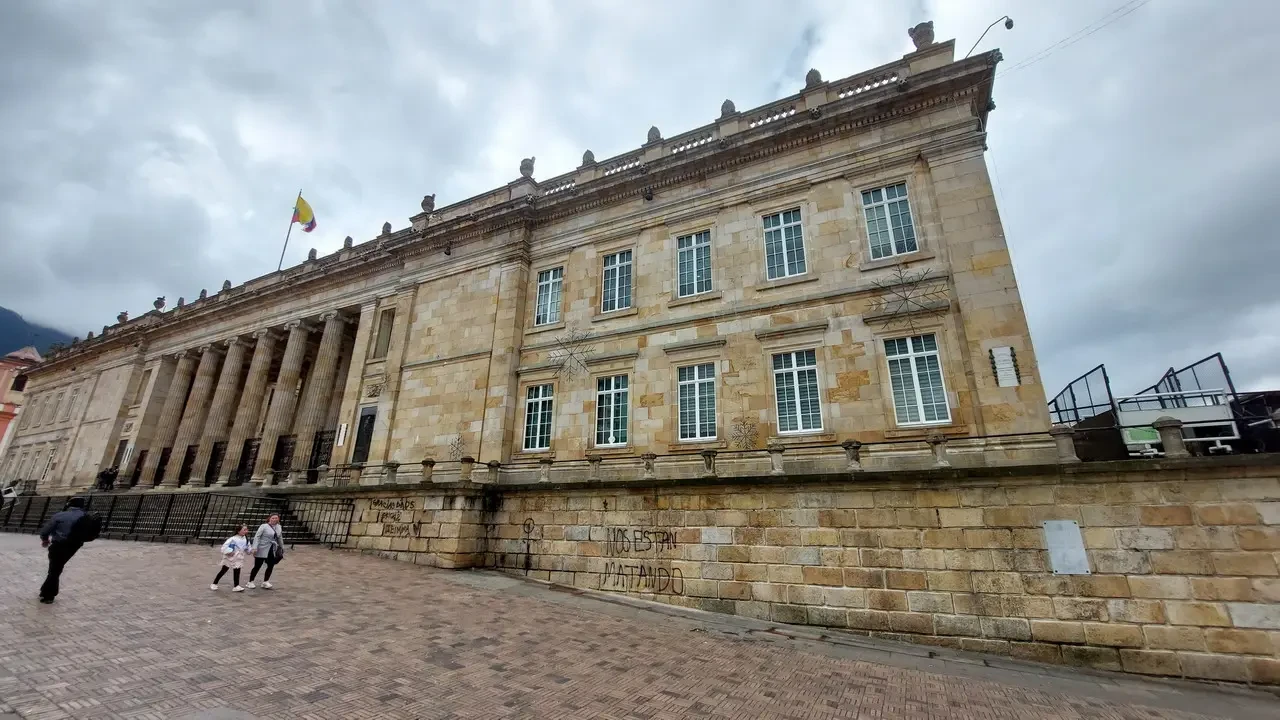
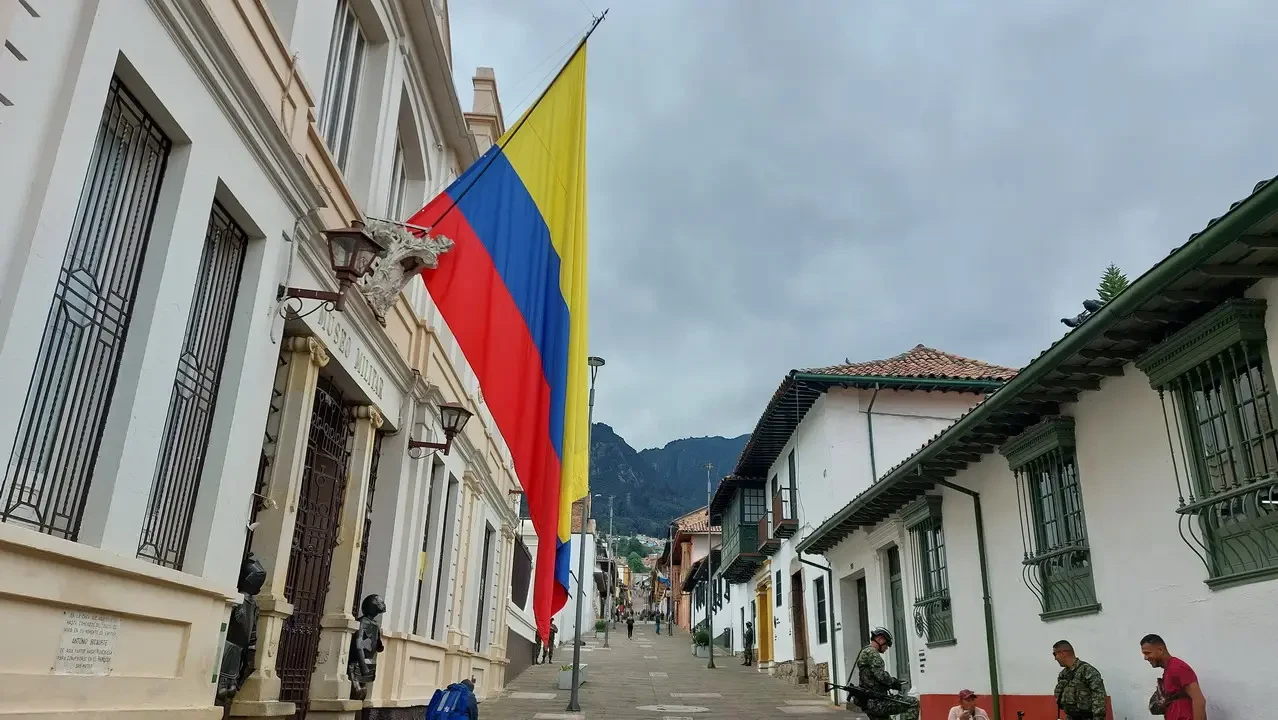
Breakfast at 6:30, and then we call for the first Uber to head towards the center of Bogotá. Bolívar Square, from which we will begin to explore the capital of Colombia. In reality, the first impression is not particularly exciting: broken steps on the cathedral, pigeons everywhere, homeless people sleeping in alcoves, and skeletons of Christmas decorations (which may be beautiful at night but during the day give an impression of disorder). For being the central square of the second country in South America, it doesn't seem particularly attractive; especially considering that on all four sides are the beautiful buildings of the most important institutions: the Capitole(Parliament), with the Presidential Palace Casa de Nariño nearby. Main Cathedral, the Justice Palace and the City Hall (City Hall), a true launchpad for mayors to become Presidents of the Republic. Most recently, but only due to its institutional importance and not because of its historical prestige, at one corner you find the Flower Pot House... from which the movements began that led to Colombia's independence. In short, the grand buildings of religious and temporal power, united by a dirty and dilapidated pavement. The clouds seem not to want to clear the sky, adding further character of sadness. We are at an altitude of 2,600 meters, and it takes just a few steps to get out of breath, also due to the fatigue of the journey.
The urban face of Plaza Bolívar
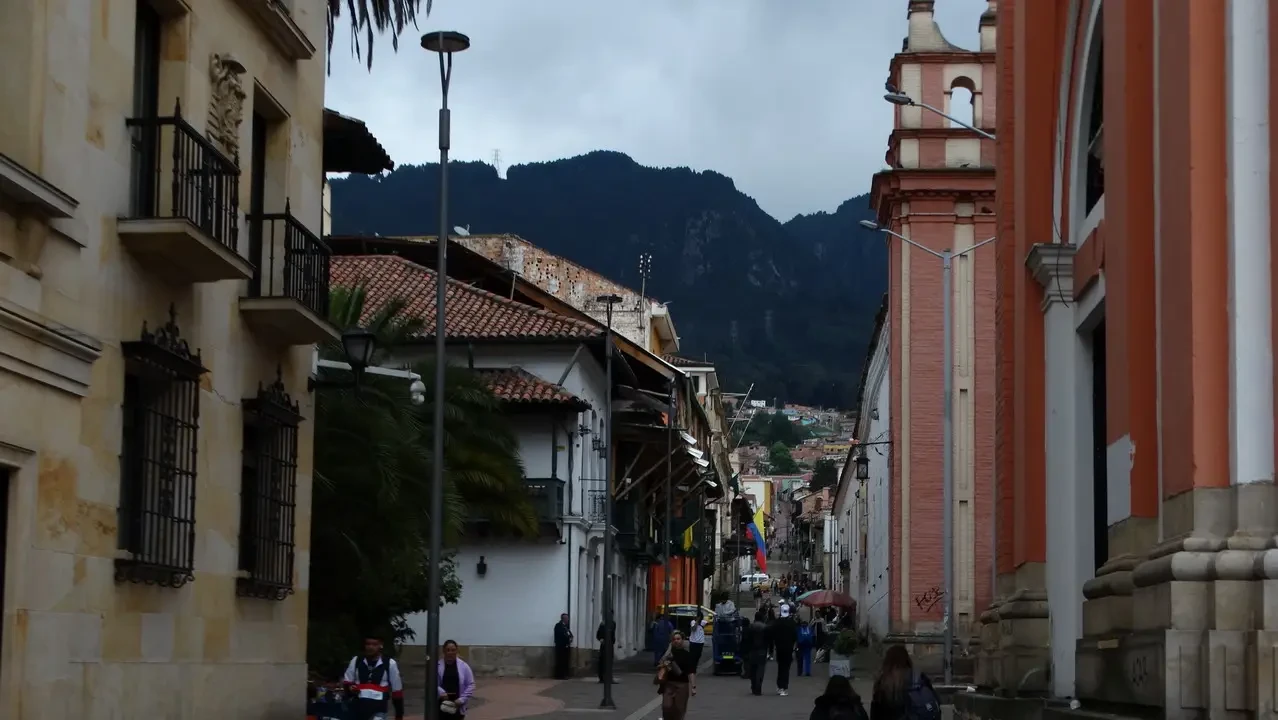
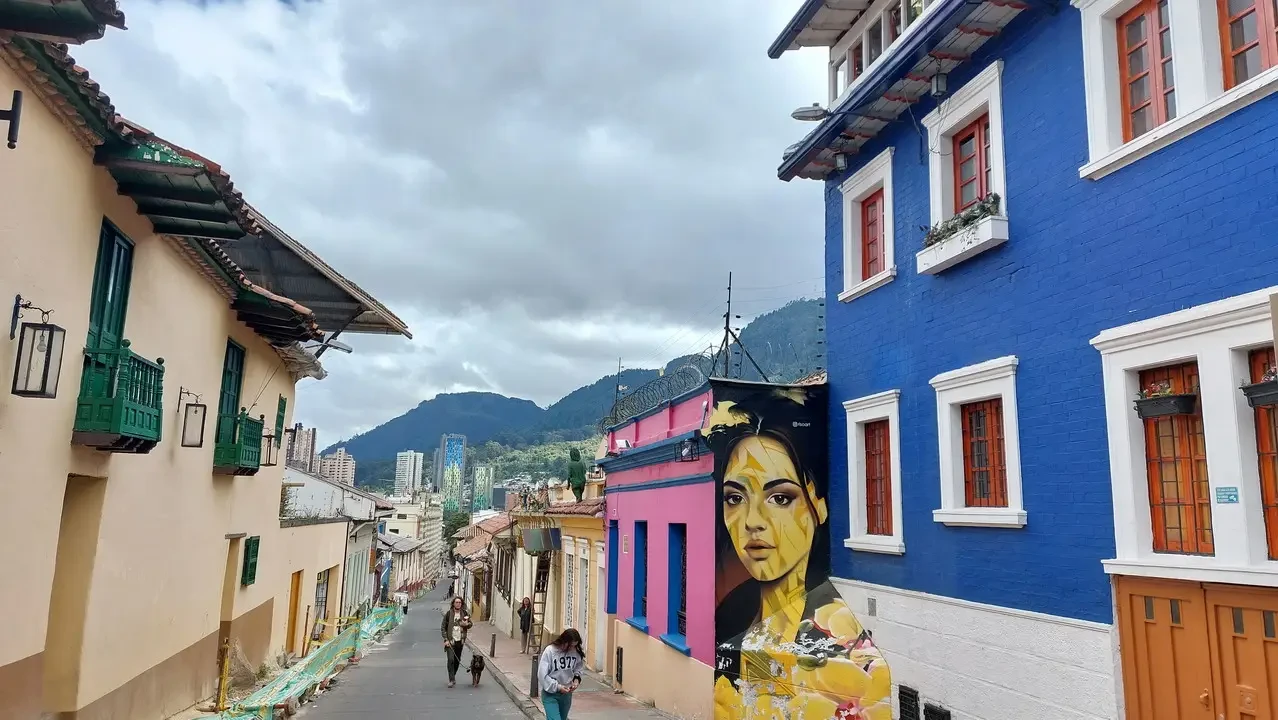
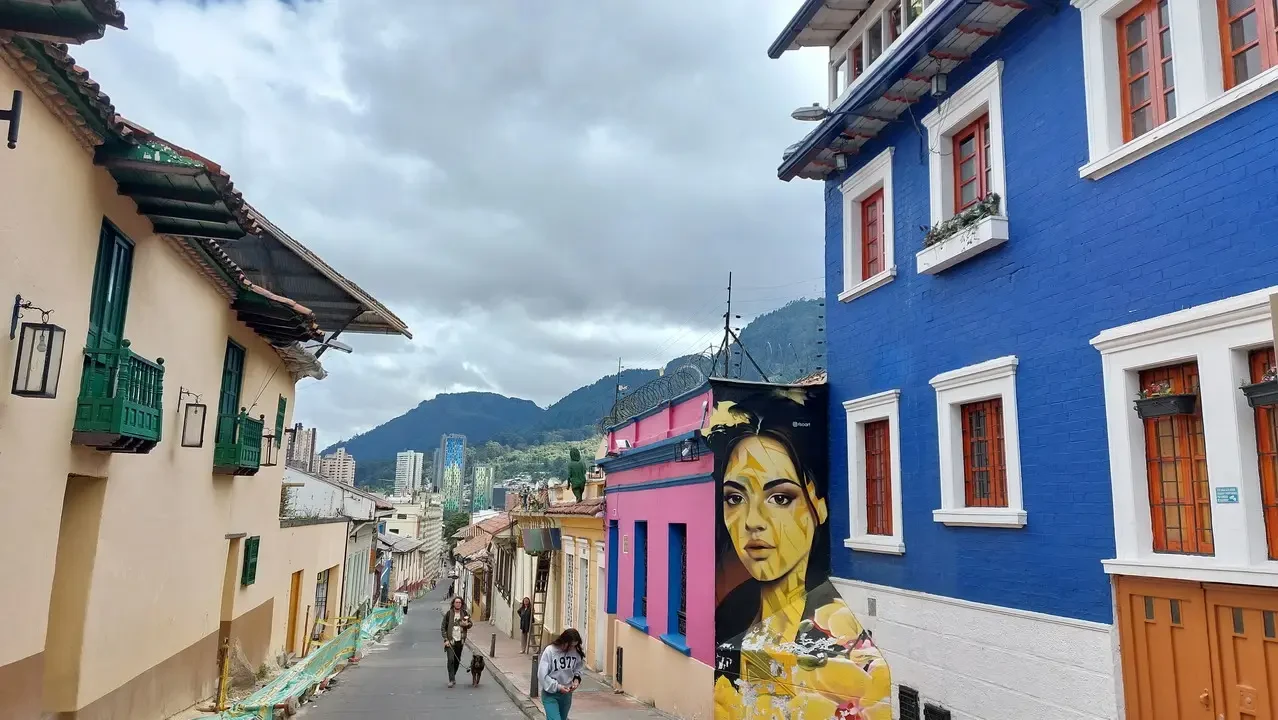
But a city should be observed not only for its main monuments; during the transfer to the center, we notice how red bricks are frequently used, both in the newer high-rise buildings and in the villas that eventually take on a typically British character. It is early Monday morning, and it's nice to see the center come alive with public employees as they arrive at work or the first young foreign visitors, like us, who are about to begin exploring the capital. We start wandering through the Candelaria Street, the neighborhood where Bogotá was founded around 1530 and where its history, including its cultural aspects, was written. We pass by the lively church of San Giovanni Bosco with attached Salesian school, alongside the pastel-colored colonial houses with beautiful wooden balconies, we see some llamas grazing peacefully on a flowerbed, some walls covered in graffiti (a true urban art form), what an artistic scene. Plazoleta Chorro de Quevedo and we also visited the Fernando Botero Museum Donated by the great Colombian painter and sculptor, it contains, in addition to his own works, 85 paintings by some of the greatest Impressionist masters. It is difficult to appreciate his work from the very first moment: the figures are exaggerated to the point of appearing almost clumsy, with small and tight human lips in relatively natural poses. It is not clear whether the artist, within a carefully crafted exaggeration, intended to showcase the voluptuousness of the body (including that of a cat) rather than sarcastically emphasizing the plump forms of many of his compatriots. In fact, many mixed-race women show large figures alongside limited stature; this is due to their physique, which in no case corresponds to a flabby body. However, the bodies of Caribbean men and women are different: they are taller and more slender, as they are often mixed with African races. The palace that houses the museum is also noteworthy, with its typical Spanish patio Interior with arches on all four sides.
The true center is a mix of history and business: tall buildings stand alongside the historic buildings where the story of Bogotá, Colombia, and much of what was once known as the Viceroyalty of Granada (including Venezuela, Peru, and Panama) was written, while its streets are lined with stalls selling all kinds of goods. Transmilenio (modern double-articulated red buses with very large capacity). Here, in the Plazoleta del Rosario near the emerald museum, we also see a large group of men standing and waiting for something; we ask one of them and he tells us that it is a. emerald merchant, like many of his colleagues nearby; not interested in the purchase, we observe for a moment the lively marketplace and move on. Just a short walk away is also the Gold Museum, which is currently closed as it's Monday, definitely the highlight of Bogota's cultural scene. We also see the Church of San Francisco, the Teatro Colon (the theater, so to speak, of an important meeting aimed at ending the armed conflict of the 1990s with the FARC).
Arrival at Plaza Bolívar
A short lunch with a slice of cake and mango juice restores energy, allowing us to head towards the university area and the Quinta da Bolivar... the former residence of the Liberator during his stay in Bogotá. Here you can also find the starting point for the hiking trail, the funicular and cable car to Cerro Monserrate, but today the weather is not cooperating, so after retrieving our luggage from the hotel, we head to the airport where (as much as one can say) the plane awaits us, which will take us to the Caribbean coast in about an hour at the small airport of Riohacha.
BOG – RCH 14:49 – 16:32 LA4242 – Flight duration 1 hour 33 minutes.
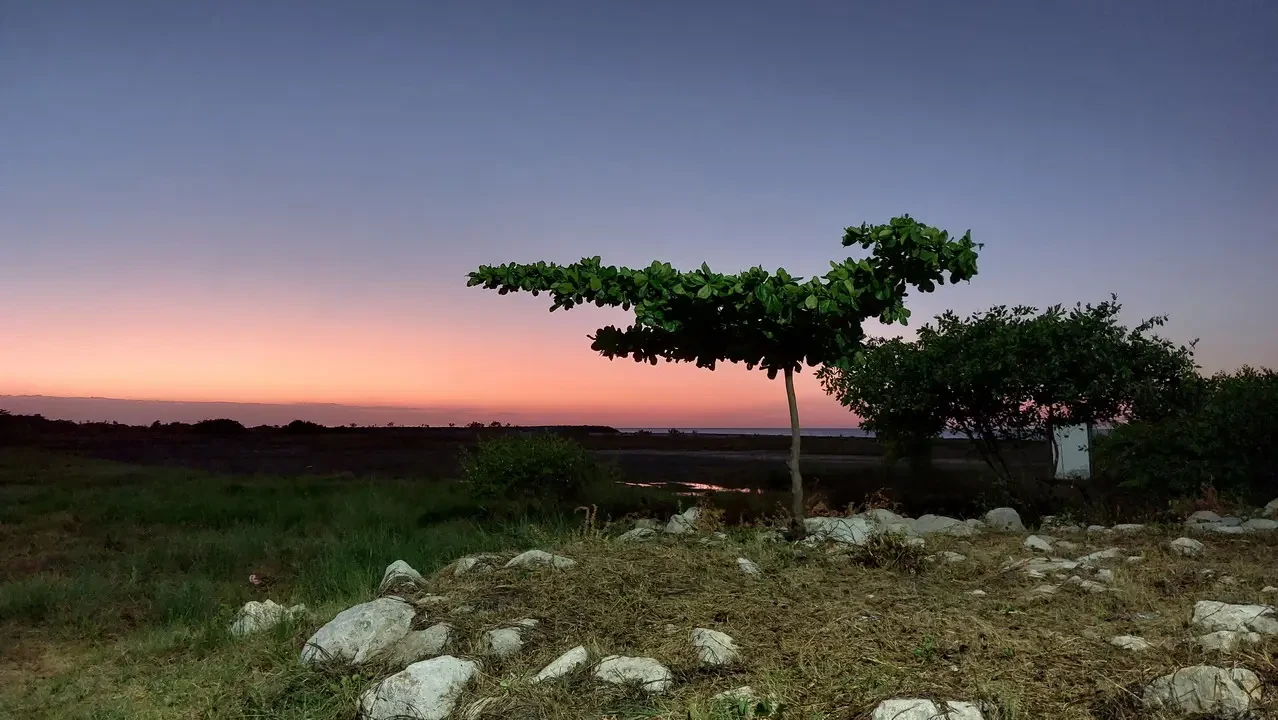
Here, the sun shines and the climate is warm. A taxi takes us to the hotel, which is located nearby but close to the beach. After checking in, we rush to... watch the sunset on promenade, the pier A wooden pedestrian path dating back to 1937 and measuring 1300 meters long, populated by groups of Wayuu women selling goods. In reality, there isn't much more to see besides the long beach shaded by palm trees where tall buildings overlook; but this wasn’t the reason for staying in Riohacha. The town serves as a closer base for tomorrow’s tour of the Upper Guajira region. From here, we begin a series of dinners (and sometimes lunches) all focused on seafood dishes, and when we leave, we certainly won't be addicted. Tonight, we will opt for "cazuela de mariscos" and a "criolla" (a rich soup with various types of seafood), accompanied by the first Colombian beer: Club Colombia is available in three varieties – blonde, red, and dark (the latter is preferred), but there are also other varieties such as Aguila, Poker, and Andina. We see only a few foreigners; there is mainly local tourism while we take an evening stroll, navigating among the vendors who occupy much of the path, persistently annoying or pedantic. As our first day, we can't complain and we shouldn't have trouble falling asleep.