Day 15
Villa de Leyva, Ráquira and Guatavita
Immersion in colonial history, ceramic craftsmanship, and pre-Columbian mythology.
Morning in Ráquira
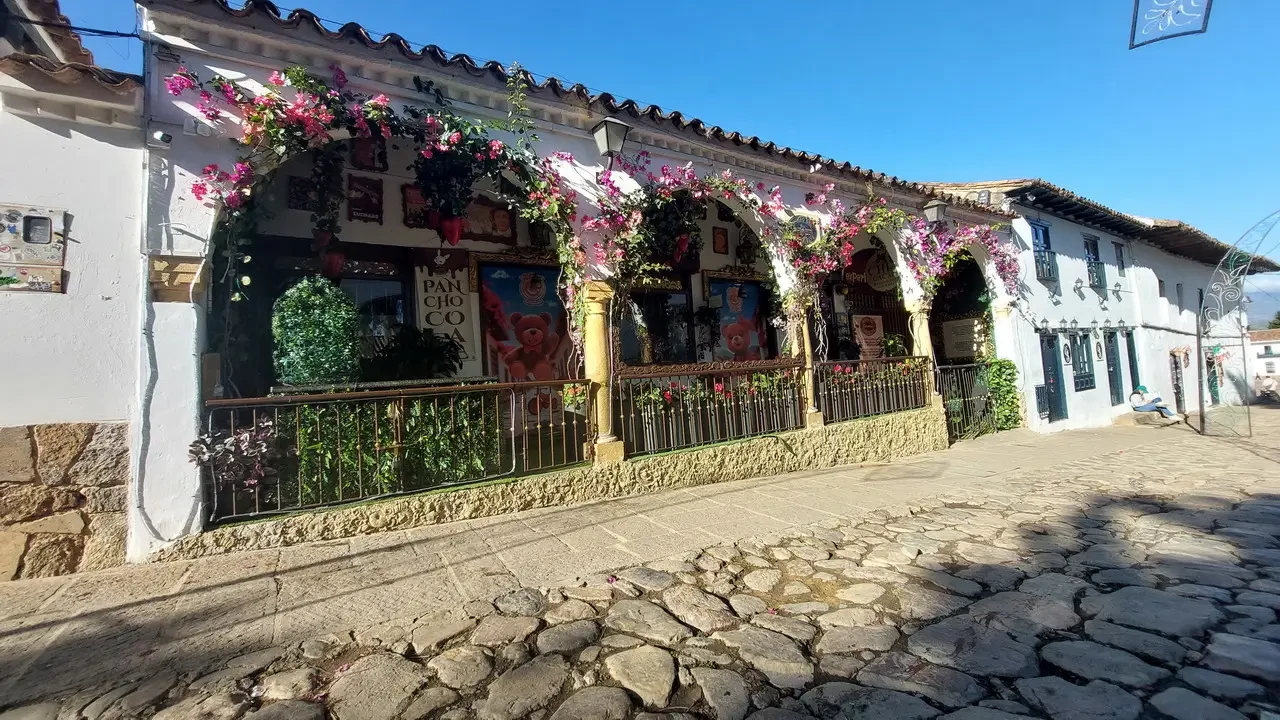
The morning looks promising. Before breakfast, we want to see Villa de Leyva in a peaceful way, without the tourist hustle and bustle of last night. The sun slowly but steadily takes over... large central square illuminating the characteristic cobbled street; with only a few other lovers of peace, plus the garbage collectors emptying the bins. The streets are empty. It feels like stepping back into the small village from when it served as a resting place for nobility and high-ranking military personnel. Some faithful people are heading to Sunday mass at the Carmelite convent; we follow them and witness the beginning of the celebration, where "Oh Tannenbaum" is sung in Spanish. Sometimes, with the heat and the lush green surroundings, we forget that it's Christmas.
One more set of photos from wonderful bougainvillea while they enjoy the first sunlight, resting. on the walls of the houses and we continue our walk to return to the hotel and make breakfast on the terrace From here, you can see the soft hills on one side and the gentle mountain slopes on the other.
The urban face of Ráquira
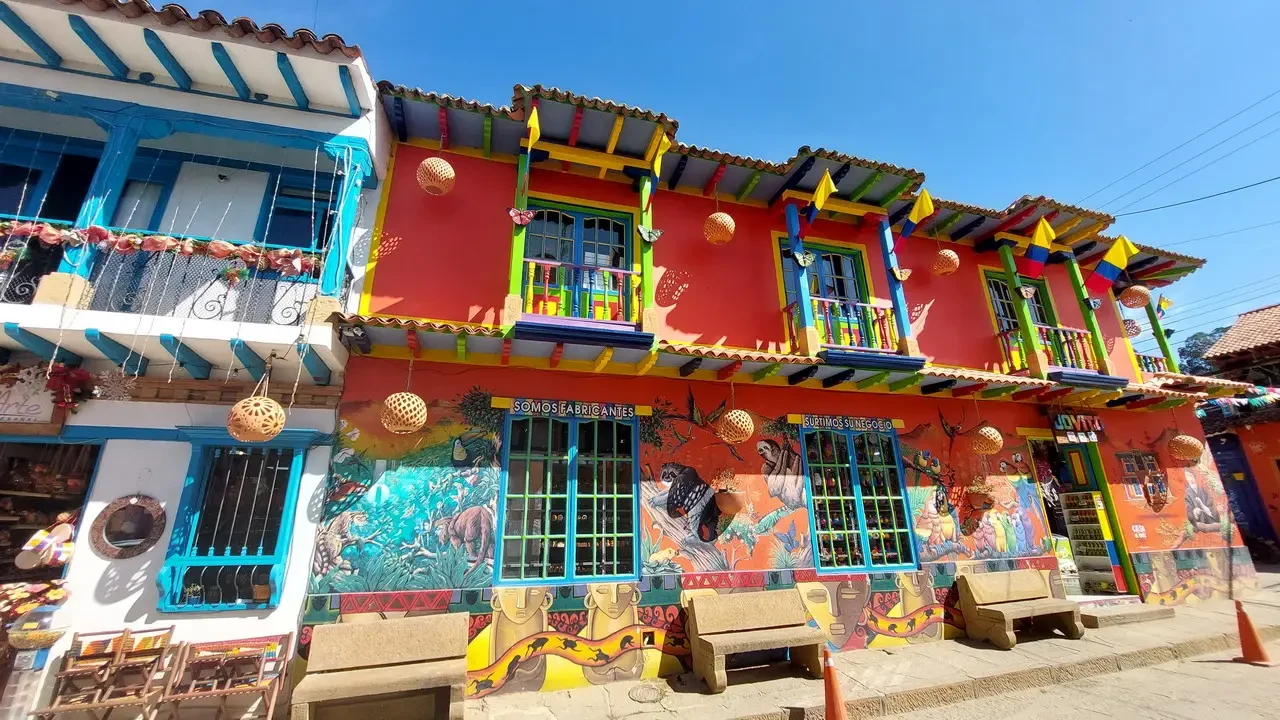
The town was founded in 1572 and is very well-preserved among the colonial towns, with squares and streets that evoke atmospheres of past times, during the golden age of Spanish colonialism. Overall, opinions remain divided between the pleasant holiday setting and the lack of unique features that would make a visit unforgettable; Mayor Square (the largest of all in Colombia) is charming, but the interest is limited to a paved area decorated with whitewashed houses. There are some museums, but the most beautiful aspect can be attributed to the landscapes that surround it. To see them better, we get into the car, drive along a rural road for about three-quarters of an hour in a south-west direction and arrive at Ráquira, perhaps even more interesting for the vibrant colors that outline it: it is the country known throughout Colombia – and perhaps beyond – for the ceramics and clay, which represent the most important attraction point by far. But it is its complex that makes it fascinating, from the murals to the colonial architecture of its houses. It's a public holiday, so people are relaxing, and we can visit it without much human traffic in its streets. The shops are all open and have every kind of merchandise on display, with ceramics standing out, of course. the mummies, the thick hammocks where we slept during the first few days in the Upper Guajira region. The eye never gets tired of seeing this kaleidoscope of colors present on every street, all the way to the main square where we find the church and town hall, with figures representing life in Ráquira at its center. After wandering through this charming village, we continue on our way to Villa de Leyva, paying attention to what surrounds us, regretting only that it is mid-morning. The intermediate towns of Bonanza and Sutamarchan are famous for longaniza, a type of sausage between salami and sausage; along the route, there are restaurants where a certain aroma begins to emerge, and the view of lamb on a stick (a slow-cooking method using wood fire that utilizes a cross – made of iron or wood – to support the lamb) brings back happy memories of a New Year's Eve spent several thousand kilometers south, always in the Andes, in Puerto Natales in Chilean Patagonia. While this sight is tempting, we have other commitments and would still like to see Laguna de Guatavita before the weather turns bad, knowing that we will eventually have to arrive in Bogotá and travel through it. Of course, the view and aroma are very enticing.
Along the road (in addition to gastronomic delights), we also see many cyclists, and it's worth remembering that in Ráquira there is... bicycle museum nearby, there is a theme park with what is described as the world's largest bicycle.
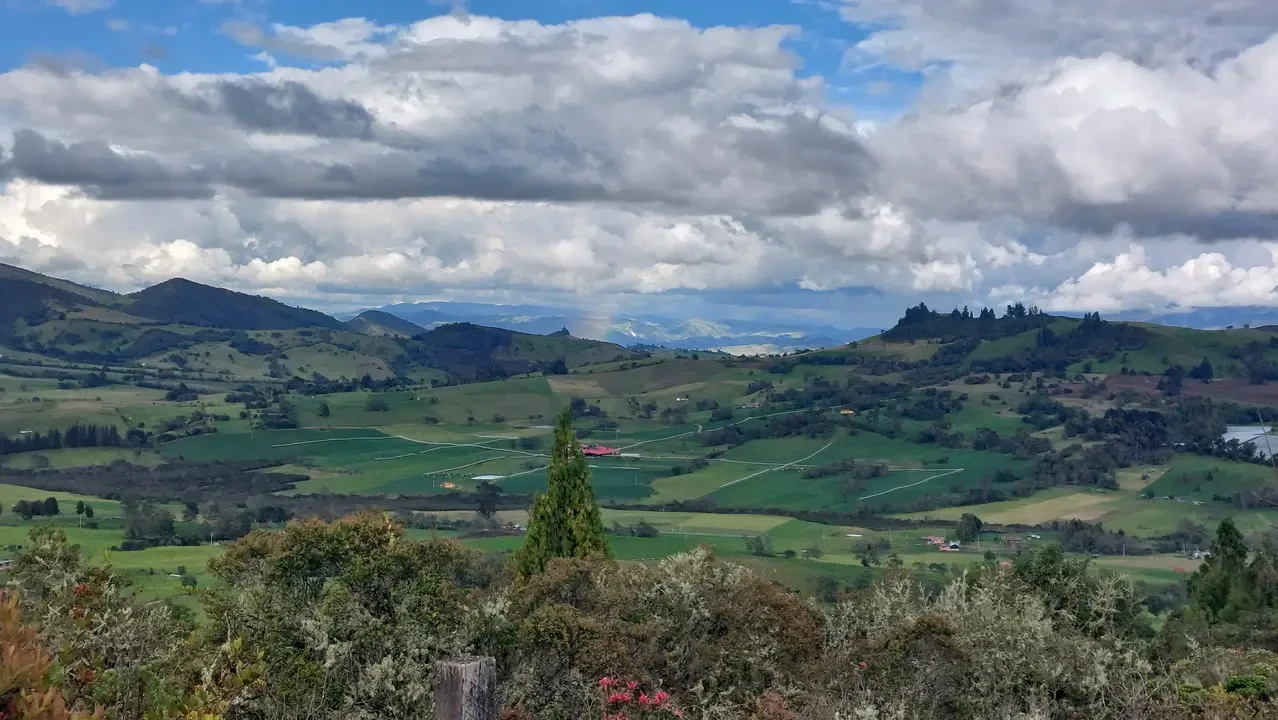
We continue along the road we traveled yesterday evening, heading back up to the plateau that leads to Tunja, where we will take the highway. The scenery seen during these morning hours reminds me of... tyrolean swings, with lush green meadows where gentle cows graze, while the clouds, despite their whiteness, tend to spread out further and further. Along the roadside, we see several stalls displaying peaches (duraznos), blueberries (arándanos), as well as other fruits or vegetables, freshly picked.
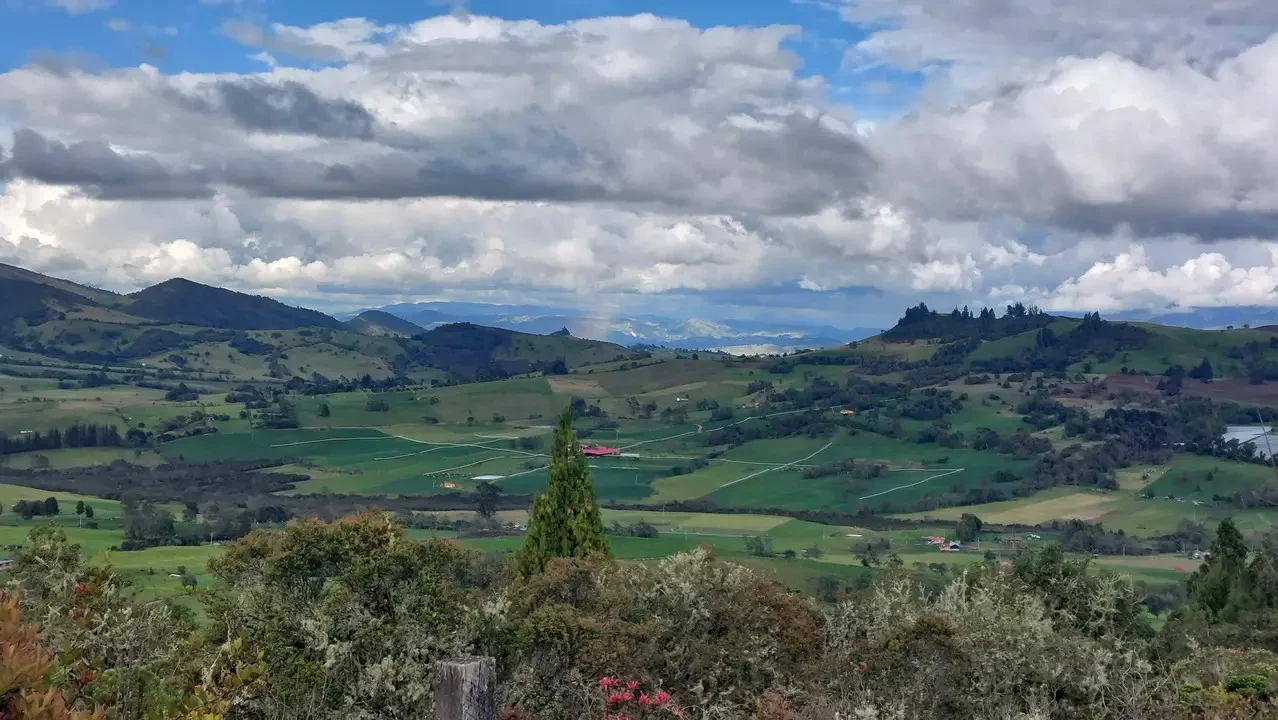
We decide to skip lunch in an attempt to reach Laguna del Cacique Guatavita before the bad weather, but the effort proves futile. When we exit the road leading south towards Bogota, it starts to rain. We challenge fate by purchasing the entrance ticket. We spend €6.50, which may seem like a lot given local standards, but as happened in Zipaquirá and elsewhere, when you realize that a passionate and knowledgeable guide is also included, the pesos are very well spent. We are a group of about twelve brave souls, and we begin our journey with umbrellas. while crossing the forest In which we are given an explanation of the properties of a wide range of medicinal plants, many of which can also become poisonous depending on the amount taken. There is the digital purpurea, which is very important for treating heart problems and all aspects related to bone healing, with which ointments are still made today: when the patient had a broken bone, it was immobilized for five days, this ointment was applied, and after some time, the bone would heal perfectly. Another interesting plant concerns the anti-epileptic treatment, which still uses the active principles of tegretol and other antiemetics, as well as precursors to penicillin. The houses were built with a door facing west and one facing east for the entry of sunlight; in the center there was a structure of four pillars, each of which symbolizes the four elements: earth, water, fire and air, which must work together in a syncretic form; therefore, this structure raised the center of the house, keeping it permanently. We thought we were in the forest, but we discovered that we were in a pharmacy; naturally, also.
After about ten minutes it stops raining We were also able to listen to the interesting information without having to worry about getting wet. The guide belongs to the native Muisca ethnic group, perhaps the most important in Colombia at the time of conquest, who lived between Bogota and this area. Their pride is evident when they tell us the story of the people from whom they originate. They also speak Muisca (which is also written) and tell us a series of interesting anecdotes mainly related to the period of conquest. When the Spanish arrived, intoxicated by the myth of Eldorado that seemed to be hidden in Lake Guatavita, they asked the residents to show them where it was: these people misled them and provided false information, which took four men four days to find despite being only twenty kilometers away. It was later discovered after the marriage between a Spanish nobleman and a local princess; he impregnated her, they married, she revealed the secret but he was sent elsewhere because the governors of Cundinamarca had claimed ownership of Guatavita. In the end, he did not return, and she was seen as a traitor by her people because she revealed the secret. The lake was particularly coveted as it was considered sacred by the Muisca and therefore celebrations were held there in which the Zipa (ruler) would get on a raft and, dressed in gold dust, officiate at the propitious rituals.
As we approach, the structure of the Muisca family is explained: essentially matriarchal, like in the Bogotà and Cundinamarca areas, while further north, in Boyaca and Santander, families had a patriarchal structure. The caciques formally commanded, but in reality, they always needed a wife to support them as an authoritative advisor in important decisions. They were the rulers of the territories under their control, while local governors had different names depending on the location, for example, the Zipa in Zipaquira, and were responsible for local administration. To become a cacique, one needed to acquire certain characteristics: at the age of nine, they were separated from their families – today we would say sent to boarding school – to learn the art of command, the administration of the territory, as well as religious aspects. It seems that the Muisca maintained relations with the major Aztec, Mayan and Inca empires, and it appears they were able to communicate despite speaking very different languages. Certainly, the form of civilization and development, including military, achieved by the Muisca, who were also the largest Colombian tribe, was never comparable to that of the peoples living in modern Mexico and Peru.
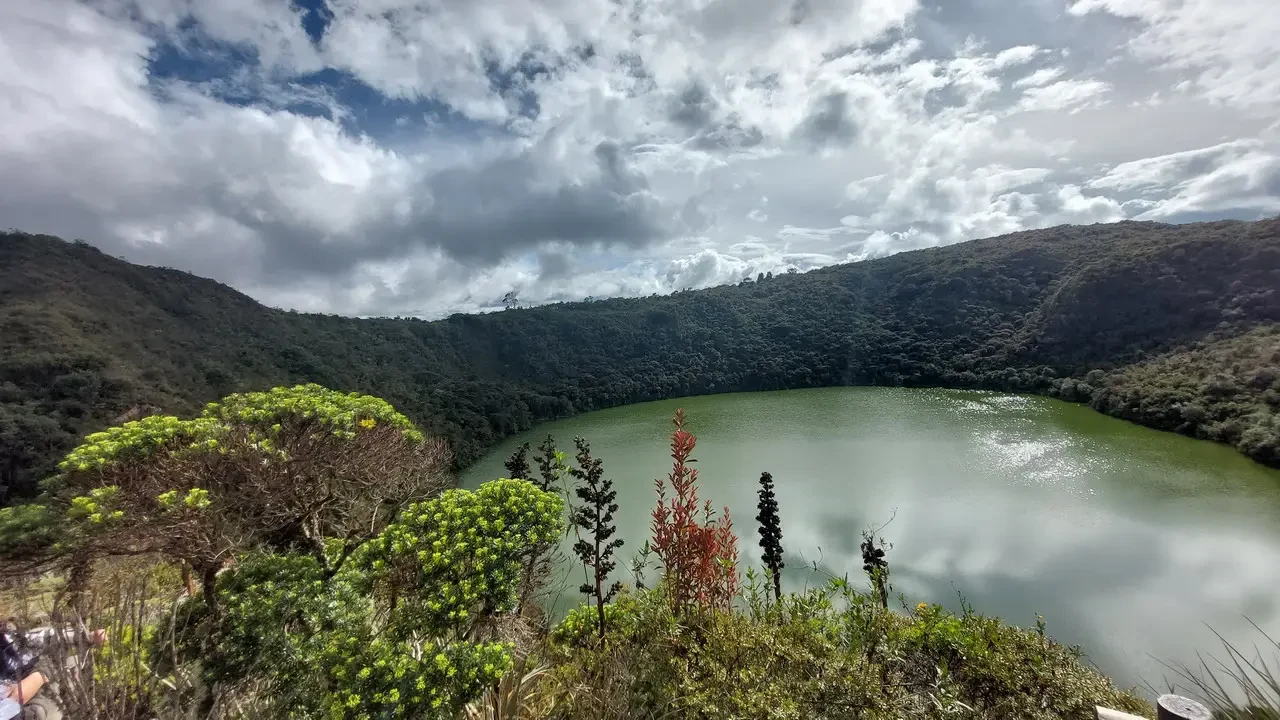
The lake probably became a place of worship due to its round shape and the surrounding hills. It has the shape of a crater, but it is not volcanic in origin as the Eastern Andes are absent. Instead, it is a subsidence, an uplift of the earth's surface where there was once the sea; with evaporation, a huge block of salt formed, which was brought to light by some event. At this point, the combined effect of sunlight and rainwater dissolved the salt mass, leaving behind the void that, when viewed from above, appears exactly like a large lake framed by high wooded banks.
Rooms where people exchanged goods for gold with other tribes, which explains the wealth of this people in a land without gold mines.
The conquerors searched for gold at the bottom using all possible methods, including attempting to drain it by creating an opening (still visible today) on one side, but they did not realize that 80% of the water present comes from underground, while only 20% is rainwater; there are no inlets, essentially it is a self-sustaining source. Despite the frantic searches lasting for centuries and costing fortunes, no interesting amounts of gold were found, except for some fragments.
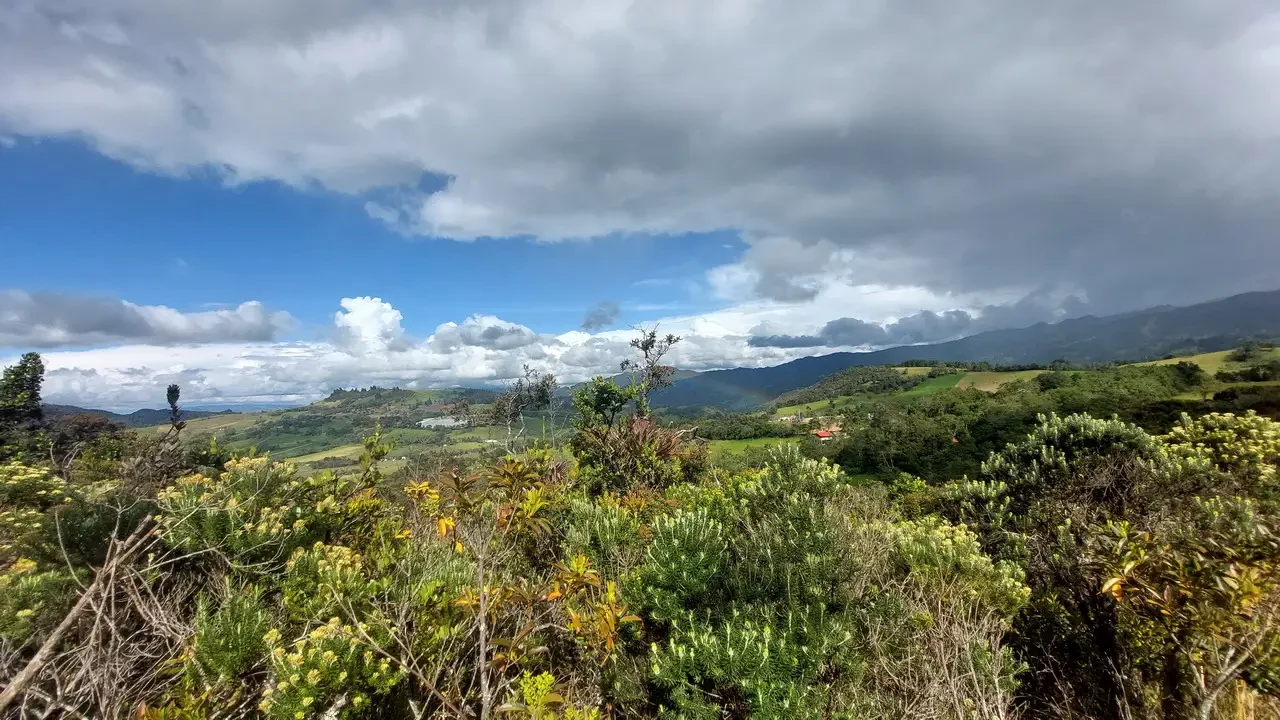
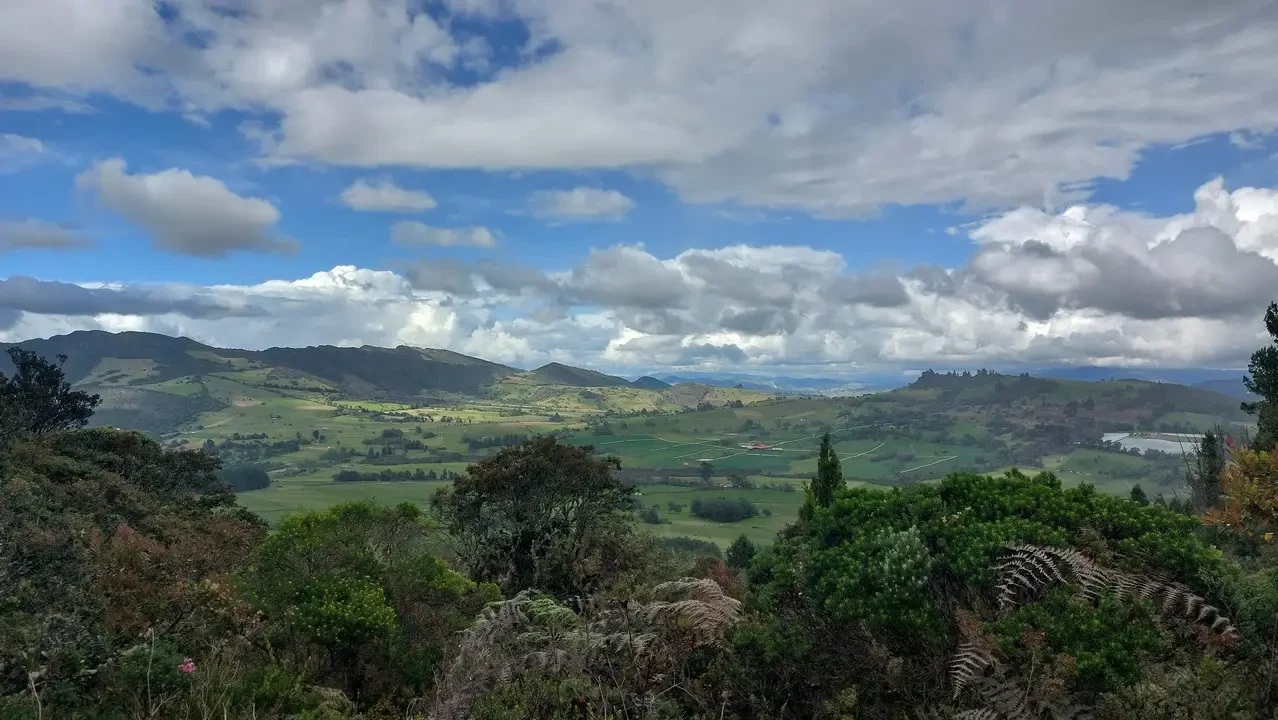
We will walk for two kilometers with frequent stops during which we will receive detailed explanations about the nature and history of the area, while also admiring the vegetation on the slopes that frame the lake. It is difficult to find two similar plants due to the incredible biodiversity of this corner of the world's flora; as we approach the edge of the crater on the opposite side. the rainbow appears between the clouds and the meadows. We are in a magical place, and even the sky seems to want to remind us of this. We arrive at the view of the Guatavita lagoon just as the sun was casting a few rays to illuminate a couple of shots; we are still admiring the view about ten minutes after the end of the explanation. the beauty before me We return from the Mirador, descending down another path (the route is one-way) for about 500 meters. We are at an altitude of 3,100 meters; it doesn't seem obvious at first, with the shimmering green of the meadows, but it quickly becomes apparent when you climb a steeper section.
At the end of the journey, a beat-up minibus awaits us to take us back to the parking lot, without a moment's suspense when it stops in the middle of a muddy dirt road and takes several minutes before departing again.
It seems that only in recent years have they started to value the natural and historical aspects of the lagoon, so much so that significant investments have been made through ticket sales to clean it up and restore it to its former glory. From an organizational point of view, there is nothing but admiration. On the other hand, the road to the parking lot is a mix of rough asphalt and dirt roads, so narrow that the return bus must reverse three times into a parking space to allow vehicles to descend. Finally, a local boy quickly climbs the hill and effectively becomes a traffic warden. We get back into our Kia and cautiously begin the descent under a light rain that no longer bothers us at this point. Remembering that we have skipped lunch and it is now 16:30, we find a restaurant before returning to the highway leading to Bogota (we are about 60 km away). Our appetite and the cool climate suggest a grill with seven different types of meat including beef, pork, chicken breast, sausage, blood sausage, tripe (beef intestine), and udder (cow's udder). The whole place is very rustic; it's not geared towards tourists, but more than sufficient for enjoying a genuine grill.
Local wildlife
As the sun begins to set, we are back on the highway heading home. We pass a group of cyclists training, hoping they have already reached their destination given the time; about fifteen athletes are cycling vigorously on the right-hand lane (of three) of the highway, and a motorcycle with flashing lights is escorting them.
The level of civility of the Bogotans (but in general, Colombians) is evident in the traffic: it's clearly chaotic, but the use of horns is almost non-existent; people respect right-of-way and travel in a way that is far from ordinary, given the number of vehicles on the road and the supposed Latin temperament. The same can be observed in restaurants: it's rare (even among young people) to hear people talking loudly or shouting. The only place where there is no attempt to save on decibels is with music; speakers blast enormous amounts of power onto passersby, both from homes and bars or restaurants. Today the weather was also as expected; just like in the Eje Cafetero, the morning is beautiful and it seems impossible that it could become cloudy, then it does, and even rain. Of course, this is also related to the territory: in Villa de Leyva, the weather is normally more stable than on the hills of Guatavita, as well as the fog tends to descend already by mid-morning in the coffee region. We have found ourselves facing sudden thunderstorms (strangely, we didn't see lightning) followed by a storm, but immediately afterwards, the sun appears.
Stop in Bogotá.
Let's enter Bogotá. with increasingly heavy traffic; from a certain point onwards, the Transmilenio appears on the left-hand side lane to confirm that we are now in the city. We fill up the tank, spending €20 for 450 km traveled, return the car, and around 8 pm, we call Uber to go to the hotel, always the same one in the free zone. The driver is listening to the final minutes of a football match and we discover that Nacional de Medellín is playing another final, this time for the title of national champion against Tolima, winning this time as well. We exchange a few words about football with the knowledgeable driver and arrive at our destination.