Day 6
Cartagena de Indias, the "Heroic"
City with a magical atmosphere that blends history, nature and the pleasure of living.
Morning in Cartagena de Indias
Today we had promised ourselves a peaceful wake-up call, but it didn't take long as the sunrise at 6 am cast its first rays shortly after; we prepared breakfast in the quiet apartment and planned our visit to... "The Heroic", referring to Cartagena de Indias Before leaving, the owner comes to give us some directions and we settle the bill. Then, we go to the nearby agency that he recommended to us for booking a tour of the Caribbean islands for tomorrow.
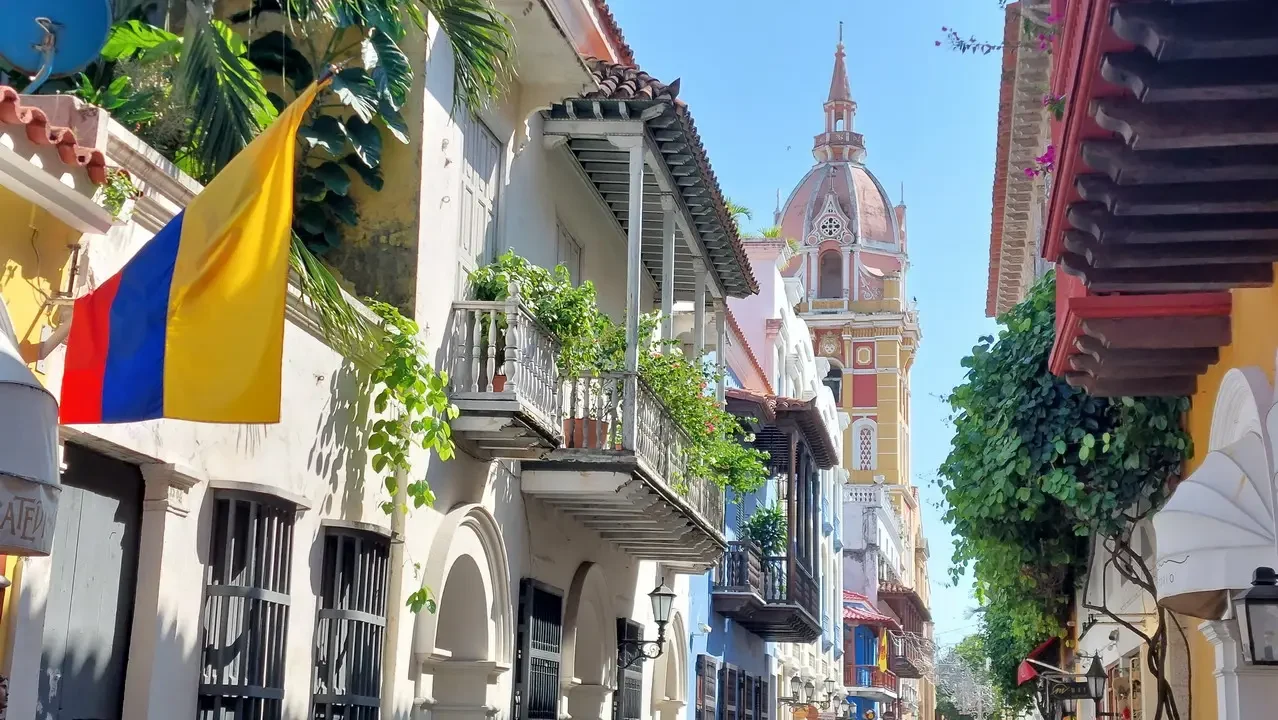
We discover a city that, despite the large number of tourists and the weekend before Christmas, manages to be attractive and able to tell many true stories. With significant dimensions (with a population of 1 million), it presents one extraordinary historical center, is a port city with 13 km of walls, part of which overlook the shores of the Caribbean Sea. Its colorful and charming streets make it the gateway to South America, and it boasts the presence of several... archipelagoes and islands The visit to the center is straightforward as it's located within the streets that intersect perpendicularly inside the fortifications, which today offer an excellent vantage point both towards the old town and the sea or other districts of Cartagena. The cannons on top remind us of the warlike past, used for defense against pirates and enemy empires (especially the English).
Traditions and spirituality
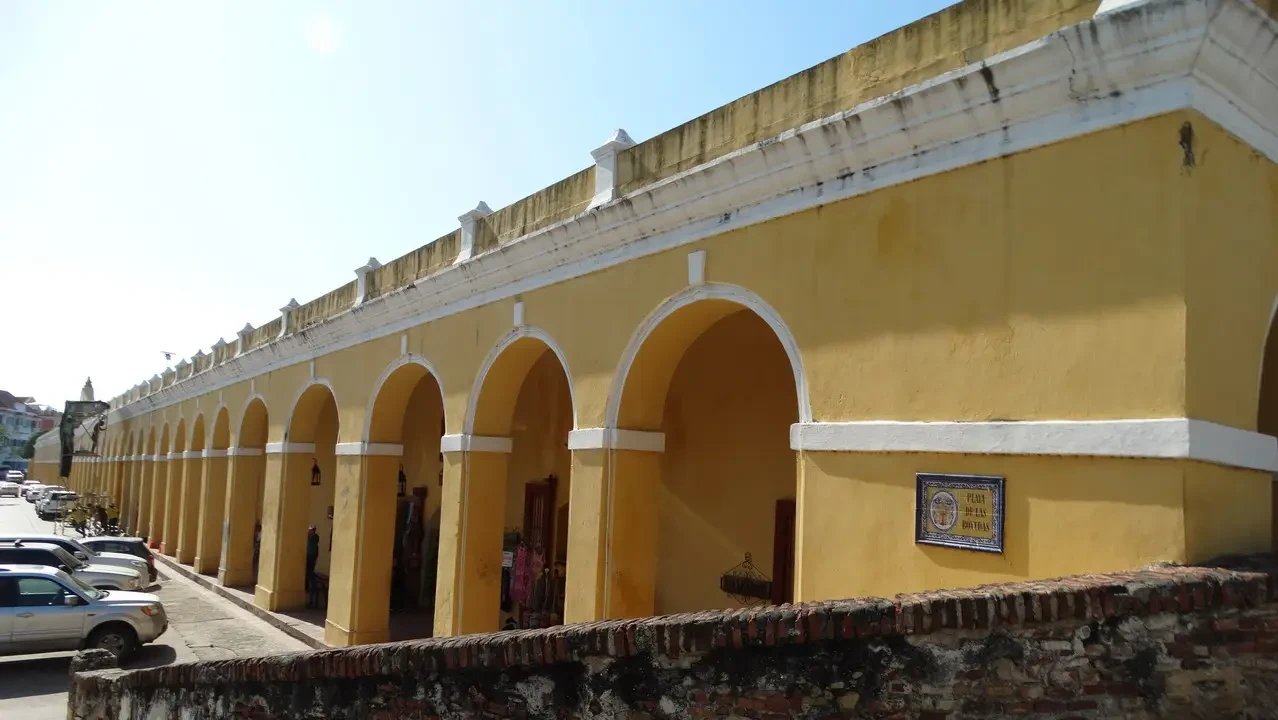
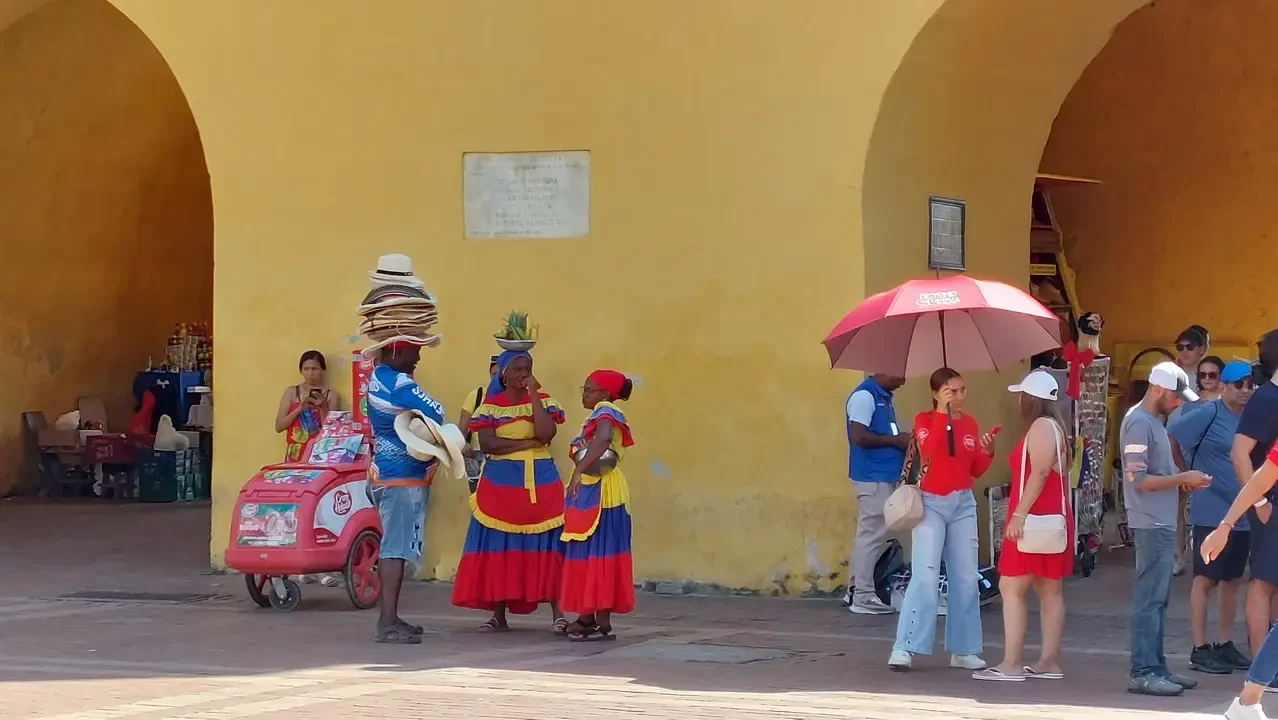
We get off with Uber at the Clock Tower (official entrance to the walled city) with the beautiful square where a prominent building stands without attempting to dominate it. Christopher Columbus statue. We carefully visited the Palace of the Inquisition... a place where terrible tortures were practiced when religion fought against its own principles; it's interesting to see, just a few blocks away, the image of Torquemada and that of San Pedro Claver, the first saint of South America, who was known as "the slave of slaves," a priest who dedicated himself to comforting those human beings arriving from Africa in the port of Cartagena. We continue our visit at the Gold Museum in Bolívar Square, ending at Bovedas... where, instead of the military warehouses, there is now a long row of souvenir shops. It's hot under the sun, but you can enjoy more pleasant conditions by walking in the shade. We return to Plaza de los Coches (the one with the Colombo monument), decorated for Christmas and with stalls selling sweets under the arcades, to then move on to... Fort of San Felipe de Barajas, the largest fortress built by the Spanish in South America and never fallen into enemy hands; it has many interesting aspects, made even greater after seeing the film that tells the story of the wars in which it was a protagonist, particularly the English assault, which almost succeeded in capturing it. The comment from the background voice is thought-provoking, emphasizing that if the British had won in 1741, they would have opened the doors to what was then called the Virreinato de la Nueva Granada, and perhaps today South America would speak English. Although without ambitions of conquest, climbing the ramps leading to the upper part of the building is made difficult by the sun beating down on the vertical surface, but the view more than compensates for the effort. The entire walled city nearby and the modern skyscrapers further away, with peninsulas leading to the Caribbean Sea, are below us in all their splendor.
Museums and memory in Cartagena de Indias
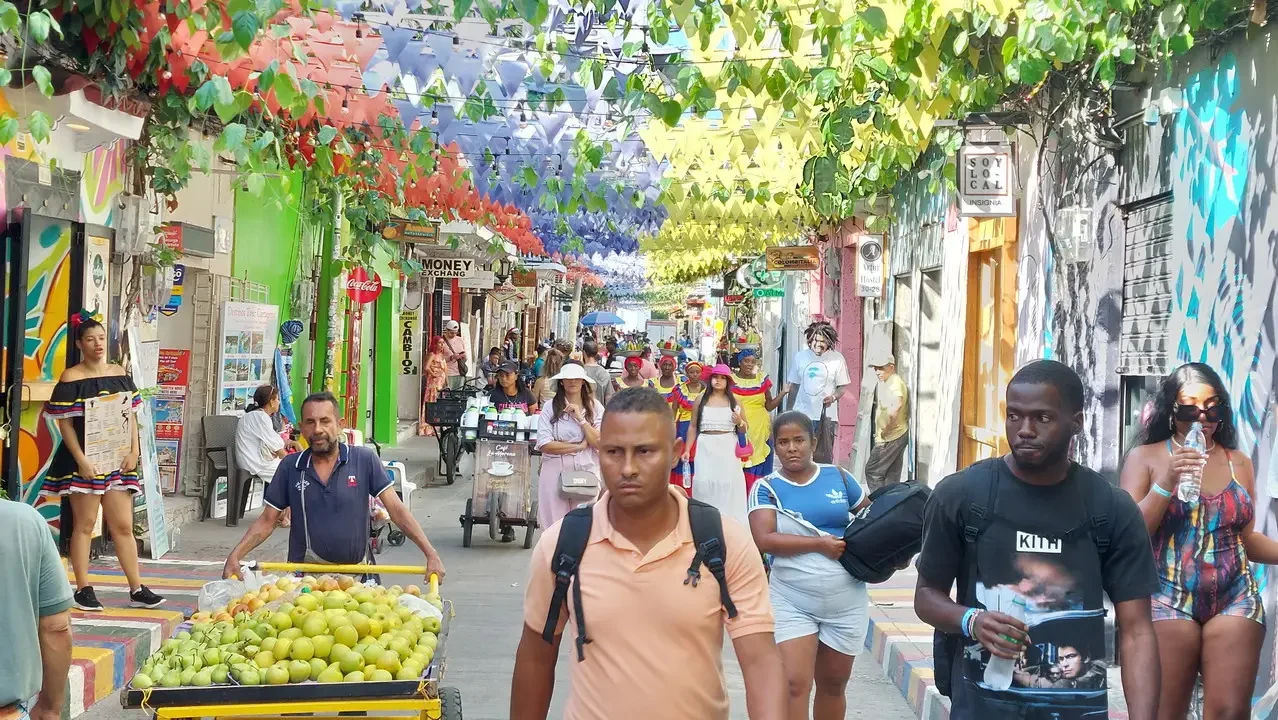
After spending energy during the visit, fate wants us to stumble upon a chocolate museum... almost right next to the ramp leading up to the castle. And it's a real pleasure to discover that you can try chocolate beer: tasting this drink, with its unique and refreshing flavor, makes half a liter of sampling an ideal experience for replenishing energy. The museum visit is interesting, but nothing compares to trying the beer. Refreshed, we set off on a new walk, this time on level ground, in Getsemani neighborhood; it was once not very famous and was inhabited by port workers, now it has become a charming maze of narrow colorful streets full of bars and places to spend a quiet evening. The street art with its numerous graffiti adds further color to the already diverse neighborhood. Not far away we also witness the exit of two newly married couples from the church; we learn that this is the period in which many weddings are celebrated, and for the most part they involve people coming from outside to get married in the wonderful setting offered by Cartagena. This also explains the a limited number of invited guests "on business", contrary to tradition which calls for much larger wedding celebrations in Latin America.
For dinner, we found a small restaurant in the historic center, but slightly off the main tourist routes; the city is coming to life for the pre-Christmas weekend and we prefer to avoid the crowds. At least until we have finished eating, then it's nice to immerse ourselves with the crowd and watch the… illuminated decorations and especially the attend frequent street performances offered by dance groups. It was so interesting that we went back to the Getsemani neighborhood for a drink and also to see just the performance of people passing us on the street. Dancers, musicians, but also ordinary people dressed in a lively yet elegant way perform everywhere, especially around the clock tower. In addition to the festive atmosphere, it is worth noting the incredible lighting and the equipment provided by Christmas decorations; this is a common feature throughout Colombia, but in Cartagena it reaches its peak; in the city center, every house and building is brightly lit, with walls completely covered in lights, and Christmas decorations are present on every square. When the last energy fades, we retreat to our accommodation for a few hours of rest.