

Day 16
Les Trois Baies
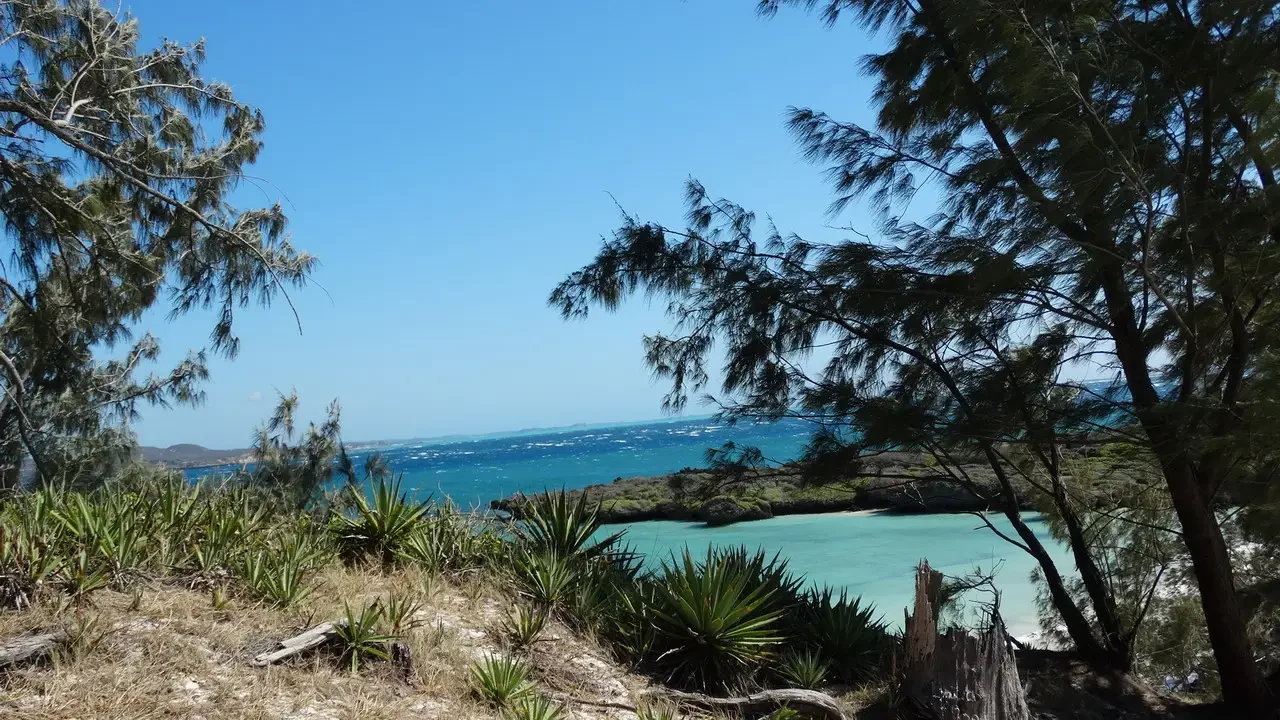
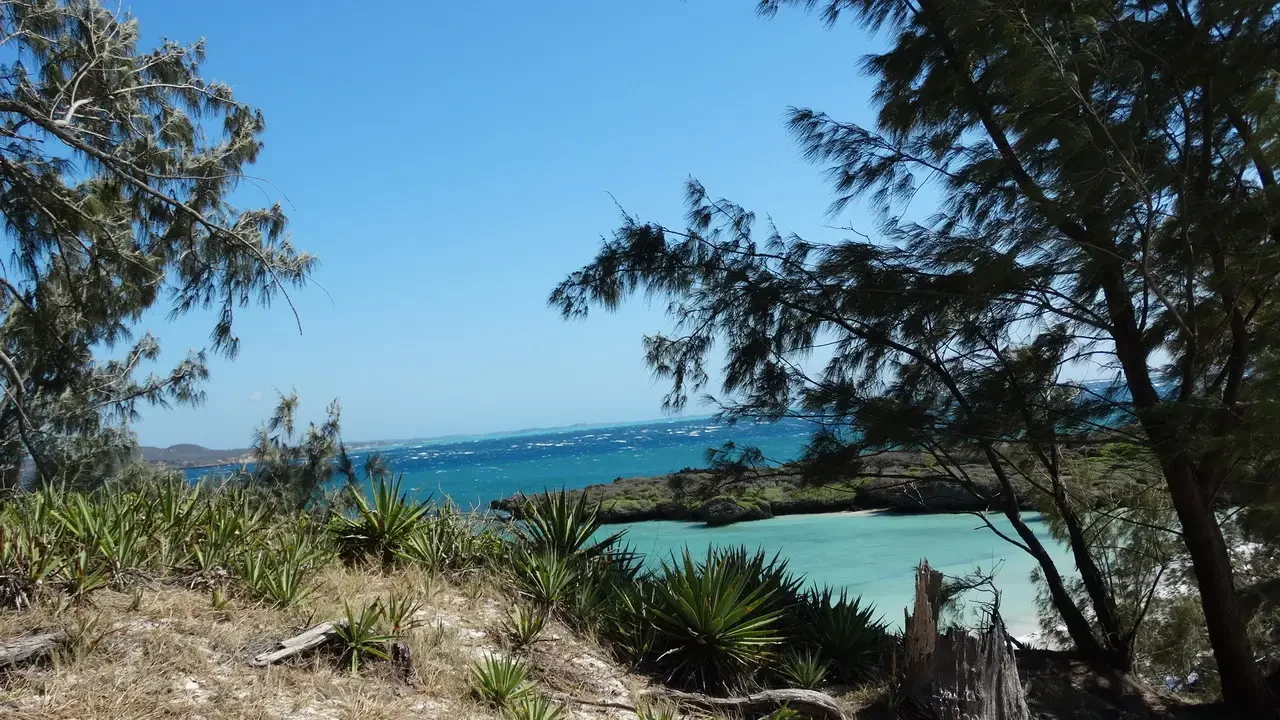
Les Trois Baies, with stunning views of the sea. Returning to Tana and then to Andasibe.
DIE
This kind of sea is a natural treasure. This is rarely encountered, so we take advantage of the half-day available for a visit to the 3 Bays of Diego, not far from Ramena. With the off-road vehicle, we quickly reach a dirt road that circles the promontory outlining the lower edge of the Diego Bay and find ourselves facing the immensity of the Ocean. Before us is only an endless expanse of water stretching towards the Arab countries to the north rather than Southeast Asia and India to the east. And it seems increasingly incredible how populations from that area were able to land in Madagascar two thousand years ago in such numbers as to constitute a community sufficient to still retain many of their physical characteristics in part of the population. In this area is the white villa of the former president of Madagascar, who was well aware of reconciling Maoist inspiration with an appreciation for beautiful landscapes. To access it, you need to pay an entrance fee to some uniformed guards, as it is a military zone. The location is certainly strategic if viewed from the perspective of the wars fought in the last century, and it is here that the British and French gave life to battles during World War II when France was under the control of Nazi Germany. On the hills you can still see long rusty cannons and guard posts, in stark contrast with the beautiful lower beaches This includes the Baie des Pigeons, Des Dunes, and Sakalava. Apart from the latter, where there are some resorts owned by foreign companies with tourists practicing kitesurfing, the other two are entirely ours, which adds further pleasant features.
A couple of small boats are moored safely on the beach, blending perfectly into the landscape. The inland vegetation is dry due to the season, but occasionally intricate branches of bushes sprout flowers with a wide range of colors, contrasting with the surrounding grayness. During December/January, there's an explosion of flowering, while the following month brings cyclones. We return by driving on the road we call this only because it has no plants, although in certain sections it becomes difficult to understand how the off-road vehicle is able to move so easily. We say goodbye to Ramena with a barracuda and a lobster that cost the same as a pizza back home, then head to the airport, where some families of chickens are walking undisturbed on the parking lot. This is very different from the military stops in our latitudes. The security checks don't have metal detectors; here and in Toliara we are searched using the old manual system. The flight is delayed, but no one among the staff or passengers seems to care, relying blindly on fate. Even this time it will be favorable: the plane arrives an hour late, disembarks passengers and luggage, and then leaves us behind.
Flight DIE – TNR 15:40 – 17:40
We will arrive in Tana about an hour later. Still acceptable, although we have a four-hour journey ahead of us. To reach our destination for this evening, we'll find our friend Hubi waiting for us, and with a new off-road vehicle, we will...
RN2 heading east, back towards the ocean. But this time we will stop in the green heart of Andasibe, where the rainforest reigns supreme. In reality, there are 170 km separating us from our destination, and dinner is quickly eaten at a small restaurant just outside the capital. What transforms the journey into an adventure are the countless potholes combined with heavy, chaotic traffic. We are on the main road connecting Tana to the main port of Toamasina, which is a constant flow of trucks loaded with heavy containers and taxis, many of which travel in opposite directions with white and yellow flags for visiting Pope, although it makes little sense to talk about going against traffic on roads where everyone zigzags in search of a less inconvenient passage. Overtaking requires uncommon skills, despite the solidarity among drivers who try to help each other; truck drivers point right to give the go-ahead for overtaking and left when it is not convenient. The darkness, the dust, and the headlights that cut through it, heavy vehicles struggling to cope with the rough terrain, all this creates a confusing and mystical atmosphere at the same time. Just being an observer is stressful; we dare not imagine what it means to drive along these winding mountain roads. Along the road runs a narrow-gauge railway, of clear colonial origin; but the locomotives are not repaired, there is no maintenance on the railway, everything seems to be left waiting for better times that will never arrive. The RN 2 could be less congested with containers arriving from Toamasina, but the trucks find themselves struggling and rattling along the road trying to avoid potholes, raising clouds of dust and fumes. This is an example of how things are in this beautiful and unfortunate country.
As it is now midnight, we reach our destination and the accommodation, where there is complete silence; even the security guard is asleep, and we will have some difficulty getting the gate opened. It's cold, and in the bungalow we will use all the blankets to sleep comfortably. During the night and early morning, we will be accompanied by the indri lemurs with their almost human-like calls, which are very particular, almost like a lament that spreads throughout the forest, which begins just a few dozen meters away.


