Day 12
The North – Amber Mountain
Flight to Diego Suarez and visit of Parc de la Montagne d’Ambre
Morning in Diego Suarez
Flight TNR – Depart at 7:00 AM – Arrive at 8:55 AM
The alarm this morning was worse than usual; after all, we hadn't come to Madagascar to sleep. If we had wanted to rest, it would have been easy to find more nearby and welcoming destinations. So at 4 am, the friendly receptionist brought out some cold dishes from the hotel fridge for our breakfast. We were alone in the famous Lapasoa restaurant, with dim lights at this late hour. We finished our meal and went to the airport for the flight that would take us to Diego Suarez in two hours, flying over a landscape mostly hilly, which gradually becomes greener as it approaches the coast. The morning is grey; the city is still asleep under a mist that surrounds it, although we can see the first merchants starting to move around the stalls of the local markets. It's surprising to see so many people jogging at this hour, especially near the American embassy, which is so large that its purpose doesn't seem justified given the relatively small importance of the country for Americans, both strategically and commercially; it is surrounded by all kinds of surveillance. This allows us to run safely without any risk, as criminals avoid this area. In the direction of the airport, we can see a congress center, almost finished but clearly closed: several years ago, it was intended to host the Conference of African Countries, which was then cancelled due to the serious political uncertainty within the country. Currently, we don't know if it will be completed and what its purpose might be; its future seems destined to become that which we call an "eco-disaster." The president at the time seemed out of touch with reality: he intended to spend $60 million to buy a presidential plane and use it to travel around the world asking for money for the devastated country; in a different way, but with the same principle as children asking for sweets.
We arrive for domestic flights; a new terminal is being built nearby for international flights, while the domestic flights will take over from the current international ones. In reality, air traffic in Antananarivo is still quite low, but the country's development inevitably passes through its main gateway. For now, the works are stalled and it is unknown when they will resume. Yesterday we saw several car and truck dealerships in the city, rare or almost non-existent elsewhere. They mainly deal in used vehicles from developed countries, as well as new ones. New vehicles are not seen outside of Tana. There are no buses in Madagascar: the urban buses have a red stripe, but they are old vans used for public transport. Traditional buses could not navigate the narrow and busy streets of the city center. Some experiments were carried out a few years ago, but the results were disastrous, further congesting already chaotic traffic. The intercity buses are known as "taxi brousse" and Mercedes Sprinters are used on these routes. They only depart when they are full, and in that case overcrowding is guaranteed.
During security checks, we notice that items like wooden souvenirs or other locally produced goods must be placed in checked baggage. On a screen, advertisements are shown sequentially to raise public awareness about preventing and detecting the symptoms of plague, while tired tourists admire photos from previous days on their smartphones: life and death come close together on significantly different screens, not only in size.
The flight to Diego Suarez It will be peaceful, except for the inevitable bumps during descent, as we'll be in an area regularly affected by strong winds in winter months. This is also due to the fact that summer brings cyclones directly dominating the weather. The old Air Madagascar ATR72 manages to land safely and we touch down a bit shaken; the first impression is quite particular as the climate is breezy despite the high humidity. But luckily, the sky is clear, unlike what we could see from above during the flight. A good omen for us, with 26°C temperature. We immediately meet Taki, our driver/guide for these five days in the extreme north. We head off right away to... Amber Mountain National Park, a volcanic and mountainous area, completely different from the surrounding region and which significantly influences its climate. In fact, rainfall is very frequent here, with a corresponding impact on vegetation and the economy. Conversely, where the indirect benefit provided by rivers carrying water and life is no longer felt, dry areas and impoverished populations begin to appear.
Sacred Lake
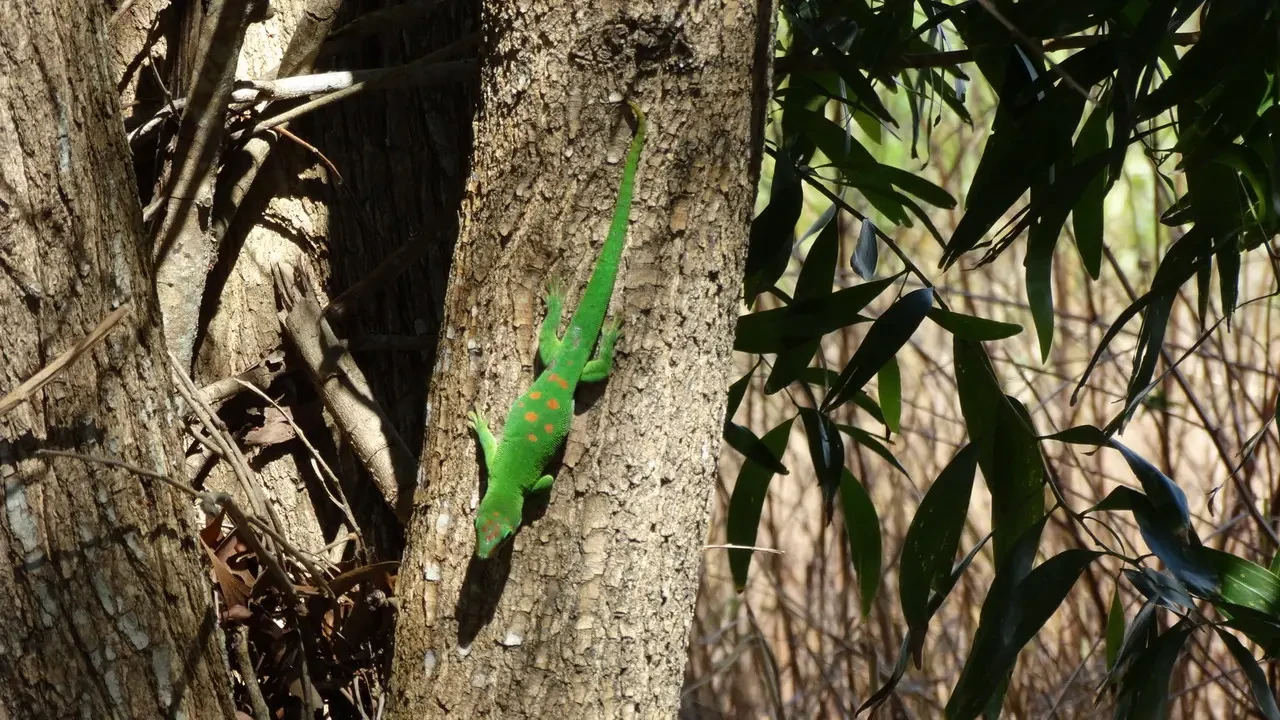
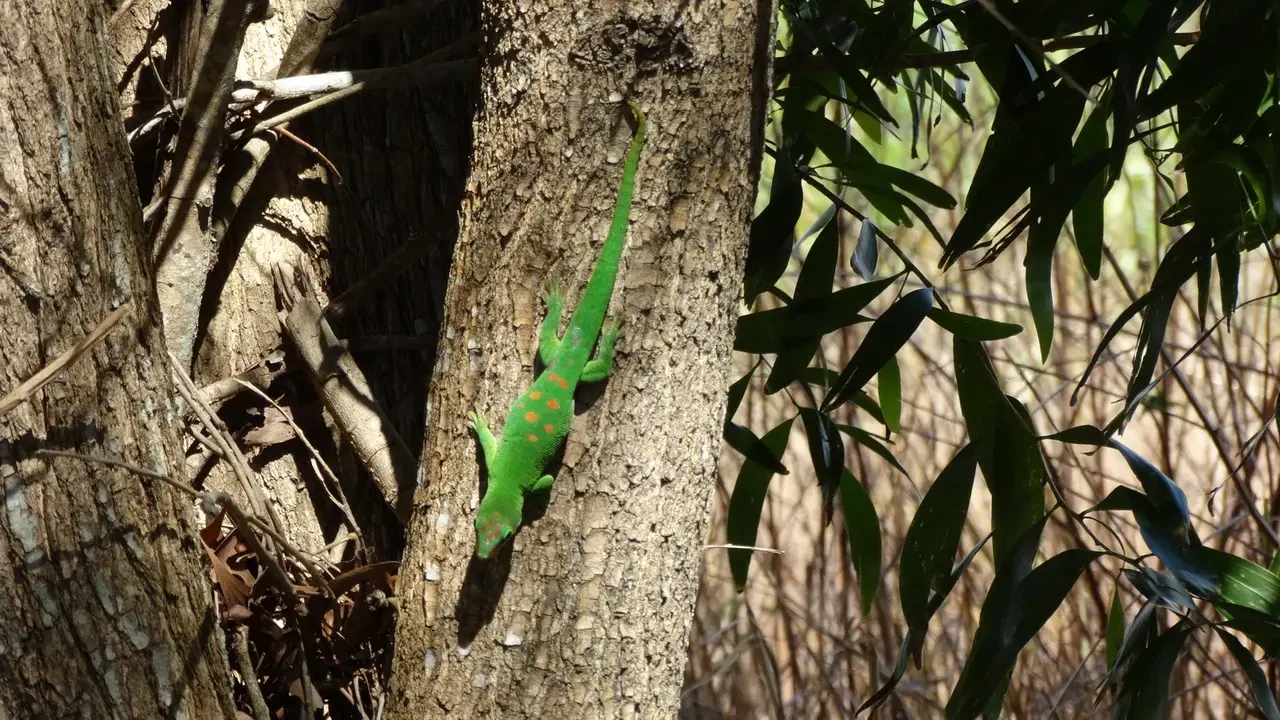
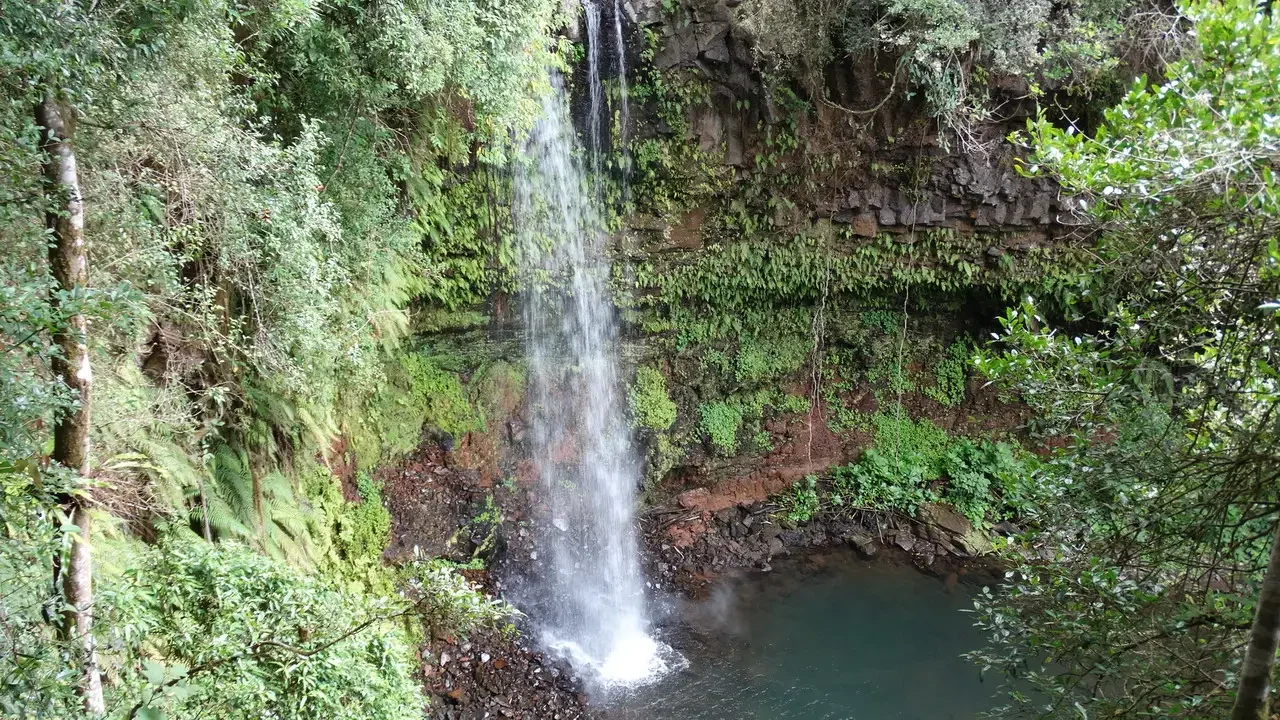
All the fruit and vegetables consumed in Diego and along the coast come from these areas; it is not uncommon to find isolated markets and stalls where you can... they sell food grown locally. To make up for it, since lunchtime is approaching quickly, we buy a basket with 8 small but delicious bananas at the price of 1000 Ar. (approx. €0.25). Diego also gets his water from Ambre. Given that this is a hill overlooking the bay, it's inevitable that there are military buildings here, which the French used to control movement in the adjacent inlet. Because it’s also a relatively cool and less humid area compared to the coast, General Joffre built a rest and recovery center for many soldiers who were frequently affected by tropical diseases at the beginning of the last century. The forest we're in is a type of humid tropical rainforest, where it rains most of the year, with rainfall averaging around 3,500 mm; the average height is about 900 meters, while Mount Ambre reaches about 1,450 meters. We also need to hire a guide (it's essential in any Malagasy park, for both foreign and local visitors), and we set off with her – she’s a woman – on the tour that will take us to see many… chameleons among which the smallest one on Earth, the Brookesia... which can fit on the tip of your finger. It's difficult to distinguish between the larger species, as they do have different colors, but just like they change their skin color to blend in with their surroundings, in a way that is truly camouflaged, confusion reigns supreme. This color change occurs through sensors that they are equipped with, which perceive the surrounding colors and can independently change them using a hormonal system. This allows them to perfectly camouflage themselves on the branches and not be seen by predators or prey. The latter are caught through a rapid movement of their tongue, which has a sticky saliva that immobilizes insects or other small animals found in the vegetation immediately. We go to see Petit Lac, of volcanic origin, made green by the surrounding vegetation, whose depth measures approximately 5 meters during this period of relatively light rainfall, but can rise further by another 3 meters during the typically humid season. There are three types of fish here, none of which are endemic. Today the sun comes and goes, sometimes hidden by wispy clouds. We move around using a series of stairs carved into the hilly terrain to go see the Sacred Lake, definitely smaller but important as the site of propitiatory rituals. On one side, you can see the remains of offerings (small coins, rice, and honey); in this way, the animists try to obtain favors through the intervention of natural elements and ensure a good future. A waterfall flows here, which is not very impressive in terms of water volume. What makes the place special is the circle of rocks covered with vegetation that overlooks the site and the drizzle of water that falls everywhere. Definitely not the best place to relieve pain, but full of atmosphere.
We pass by chameleon and other small reptiles that are invisible to our eyes; only the expert eye of the local guide can distinguish them from the vegetation and frame them so we can see them in their natural environment. We also see a weasel wander around some areas. It has an extremely shiny coat and appears to be the only mammal that hunts snakes, which it feeds on. Amidst strange plants and a eucalyptus trees The bark resembles that of a cork tree, we reach another waterfall with its adjoining lake. Antakarana(which takes its name from the local tribe). It can be seen from above, forming a cylinder in which water flows. The basalt columns are also impressive, testifying to the volcanic origin of the area, and form a hanging wall. Along the return route, you pass through the Voie de mille Arbres, a paradoxical avenue of trees in the middle of the forest. It was planted by the French to observe the reaction of local forest plants: among them stand out the Chilean Araucaria and two species of eucalyptus from Australia, one with a bark similar to cork, very soft, and the typical one with a peeling bark, as well as various pine species. We begin by passing alongside some specimens of canna indica, whose seeds are used to be inserted into maracas and thus become part of a musical instrument.

Arrival in Diego Suarez
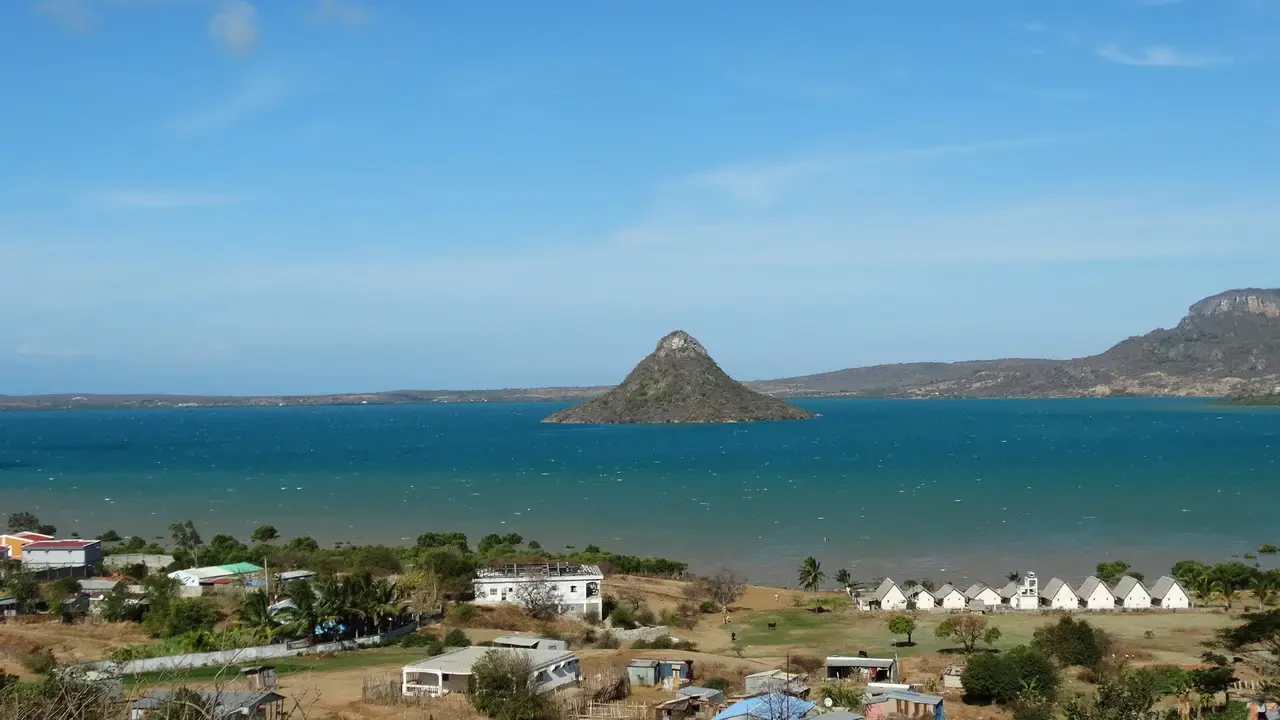
It's now 1:30 PM, we say goodbye to the guide and head towards the city center. Along the way, we find a small stadium where… chicken fight, encouraged by an excited and eager crowd seated on two rows of benches covered with a tent. It's certainly not a pleasant sight to watch the two birds fighting, overseen by an umpire and cheered on by their respective owners and a crowd of 100/150 people who have bet on them. As in the ring, there are rounds of 5 minutes each, after which the owner offers them water and adjusts their feathers. If one wins over the other, the match is stopped; we were assured that the birds are not killed because they represent a valuable asset as trained fighters. We take some photos and leave this spectacle behind. Diego Suarez It is a city populated by an average of 185,000 residents, richer than the rest of the country. Perhaps it's the only city – for better or worse – that truly possesses a history. All sorts have passed through here, from pirates to Arabs, English, Dutch, and finally French people. It has also been a destination for immigration from continental Africa and the Comorian islands, as well as Indians and Pakistanis. The city is decidedly militarized, and even more so in the past when it served as a base for the French army. Its location perfectly suits the needs of defense, being located within a series of coves sheltered from the turbulent Indian Ocean. Furthermore, the north has traditionally been the most strategically important region for trade with Arab countries, India, and East Asia. During World War II, the French reinforced the fortifications, and after falling under German occupation, in fear that the Vichy government would take advantage to facilitate Japanese penetration into southern Europe, the British fought a battle, the remnants of which are still visible today. The city's layout has a typical military style, and so do the houses. Unfortunately, they are in the state they were abandoned about 60 years ago, without maintenance, and those who currently live there don't even bother to make repairs or paint them, let alone improve their exteriors. The Hotel de la Marine, with its stunning view of the bay, is a ruin that bears witness to the cyclone that destroyed it in 1984 and the neglect of those who could have recovered it. There is still a well-maintained French cemetery, which is maintained by the metropolitan government of France, unlike the adjacent Malagasy cemetery, full of weeds where concrete tombs sprout. Everything is located just outside the city center. This melting pot of races makes religions particularly fragmented, so that only in the Muslim community are there mosques used by Pakistanis, Comorians, etc.; in reality, everyone uses them interchangeably; however, they remain a symbol of an identity linked to their place of origin. Mixed-religion marriages seem very common, in a social environment that could serve as an example everywhere. Human-powered pousse-pousse are prohibited because the majority Muslim population living in the city sees them as exploitation and a denial of human dignity. In Joffreville, everything is also in a state of disrepair. They tell us that much of the property has been bought by Indians, who keep it empty without worrying about renovating it. In fact, even those occupied are very dilapidated. The military hospital actually serves everyone, or rather, those who can afford to pay; as for Malagasy healthcare, it exists but is essentially paid, otherwise services are scarce or non-existent. Given that the population barely manages to subsist, it's easy to understand how limited access to healthcare may be. Despite being Saturday and therefore market day, Diego appears quiet, with little traffic on its streets. Ramena The view opens onto the bay, with stunning vistas and elegant villas, owned by local people involved in politics or Europeans, especially French, who have stayed here with a small fortune to enjoy their retirement. There are also cases of Parisian residents who came to live in the tropics with a good pension but with a cost of living typical of Madagascar. The sea in this area is a beautiful blue, separated by a narrow beach with mangrove forests immersed at least one meter into the water. In the middle of the bay, a cone with perfect lines rises from the water; it's the island, aptly named the Pain de Sucre It was so perfect that it seemed like an emanation of some higher power, and therefore considered sacred, to the point that foreigners cannot access it.
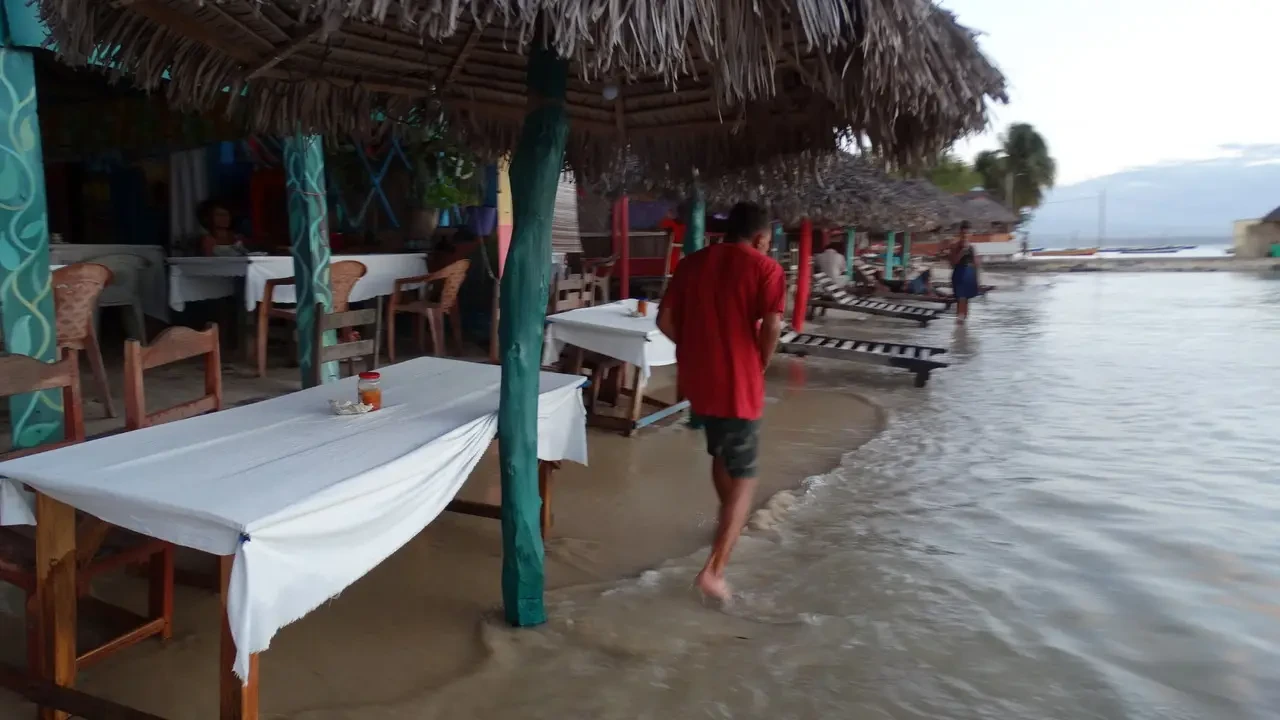
Upon arriving in Ramena, we find ourselves in an unexpected situation, likely due to a mistaken assumption. We had imagined a thriving tourist area, intended for beachgoers and residents of Diego seeking relaxation. Therefore, in our minds, it should have resembled one of the charming villages along the Italian coast. Nothing like that: after taking possession of the bungalow, we set off towards the beach in an attempt to repeat the beach/village circuit we had completed two days earlier in Ifaty. Instead, we are immediately blocked by the high tide, which prevents us from crossing a depression where we prefer not to venture. We return to the camp and take the road that runs inside parallel to the beach, reaching the town on the other side. It is essentially a fishing village, at this time. almost completely flooded by the tide. For tourists, there are only the local restaurants (called "gargottes") which mainly serve local tourism. The atmosphere is unique, with children playing and mothers bringing their... laundry baskets on their heads with an arrangement that seems to make them fall over just by looking at them, men busy untangling the nets in preparation for departure towards the sea. This is real life. The fact that it's a weekend evening leads to some noise from young people and teenagers dressed in revealing clothes, ready for a night out with friends: this too is part of everyday life. There are only a few vazha, staying at a single hotel on the coast. sunset with boats moored It's not just a postcard; it's an emotion to savor until the sunlight stops illuminating the sea surface.
The Lakana camp (meaning "small boat") offers well-maintained bungalows with a nice pool, more suitable for taking photos than swimming due to the cool water. It is extremely breezy at dawn and dusk, but you can relax knowing that there are no storms approaching. During other times, the atmosphere is peaceful, the staff friendly, and the food of good quality.