Day 4
Transfer to Antsirabe
The long route from the Mozambique Channel to the central highlands.
THB
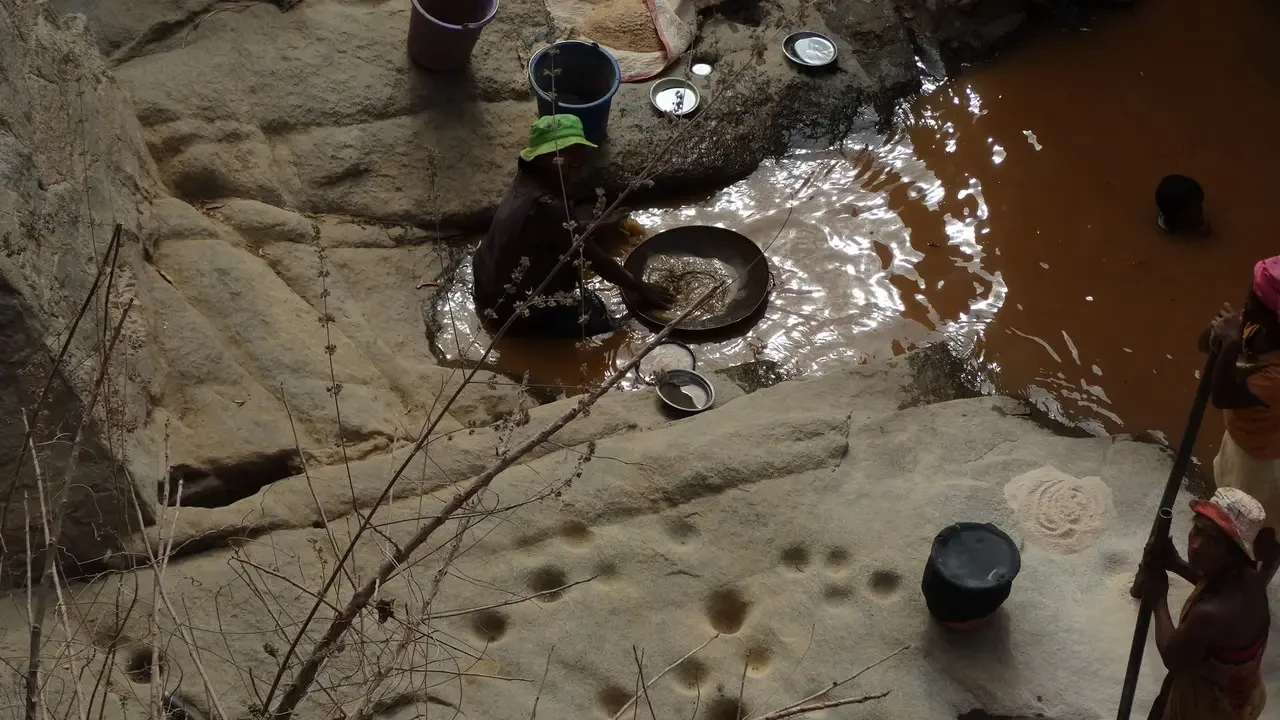
Today will be a travel day from Morondava to Antsirabe, 500 km of road, equivalent to nine hours of travel under often uncomfortable conditions, although considered in good condition when compared to other National Routes. It is paved, but there are many potholes that act as speed limiters; along the route we encounter several rivers with a good flow, despite the dry season: they descend from the highlands and slowly flow towards the Mozambique Channel. This water is of vital importance for the nearby villages, and it would be even more so if pumps were available to allow irrigation. With manual pumping, you can at most make a few dozen meters fertile on both banks. Among the most important rivers, we should mention the Tsiribihina and the Manambolo, along which there are abundant plants of papyrus; along these rivers you can reach the Tsingy de Bemaraha. In reality, sugarcane is also cultivated here, which is used to a lesser extent to produce sweetening sugar, but mostly for the local rum. Near the frequent rivers met with them in the area gold prospectors They sift through the sand looking for small pieces of gold-bearing ore. A short stop to sample some "broc," a very tasty cow's cheese.
We stop for lunch at Wonderful trip!, a furnace at the foot of the slopes leading to cooler areas. The temperature is around 40° and it seems impossible to withstand the sun.
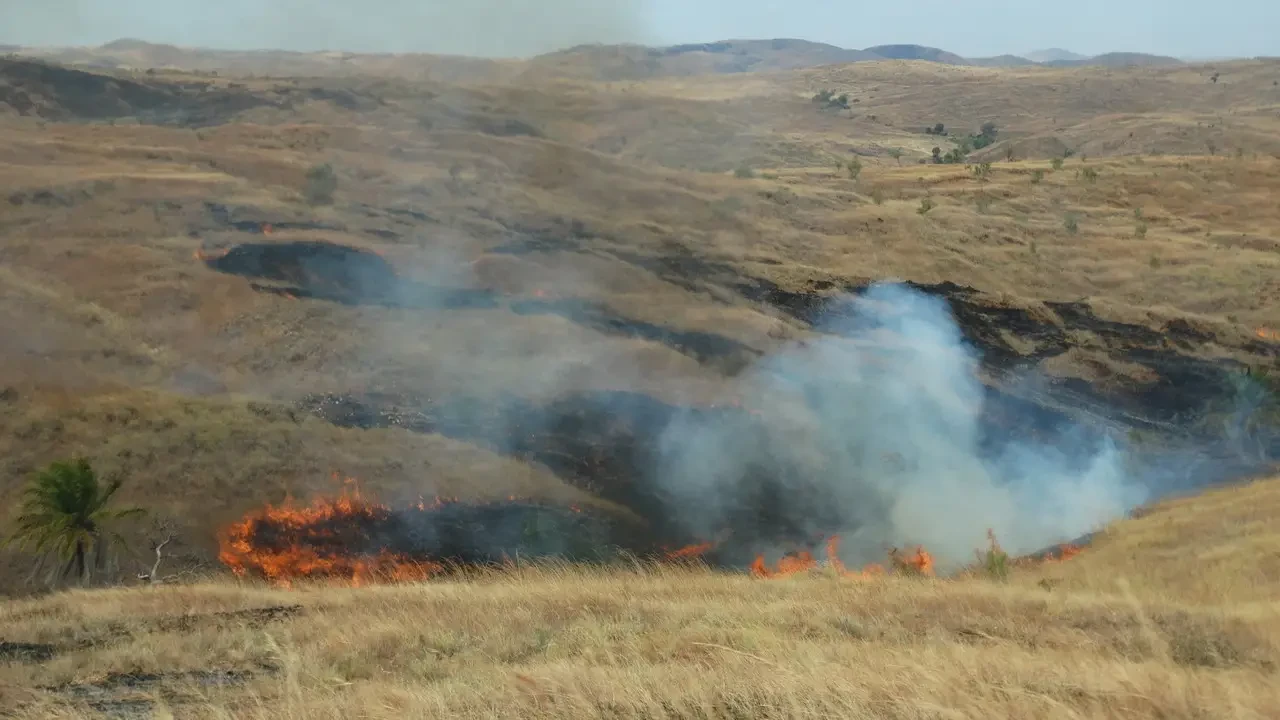
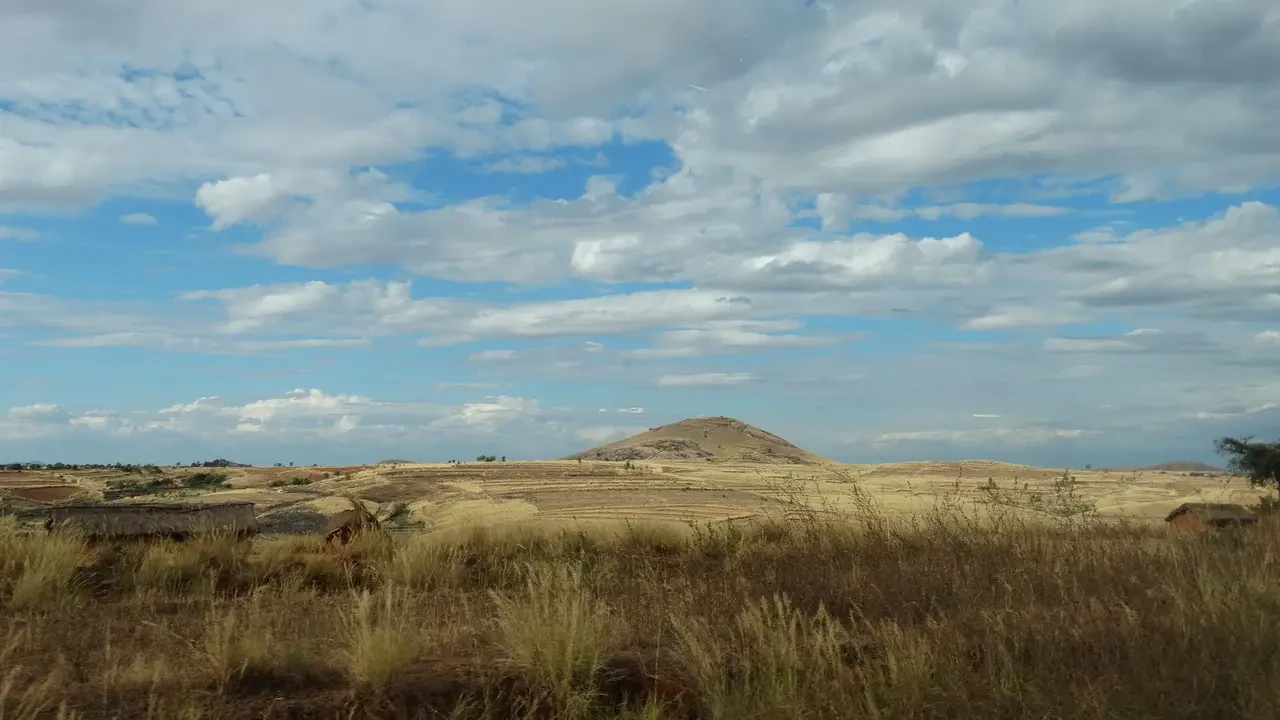
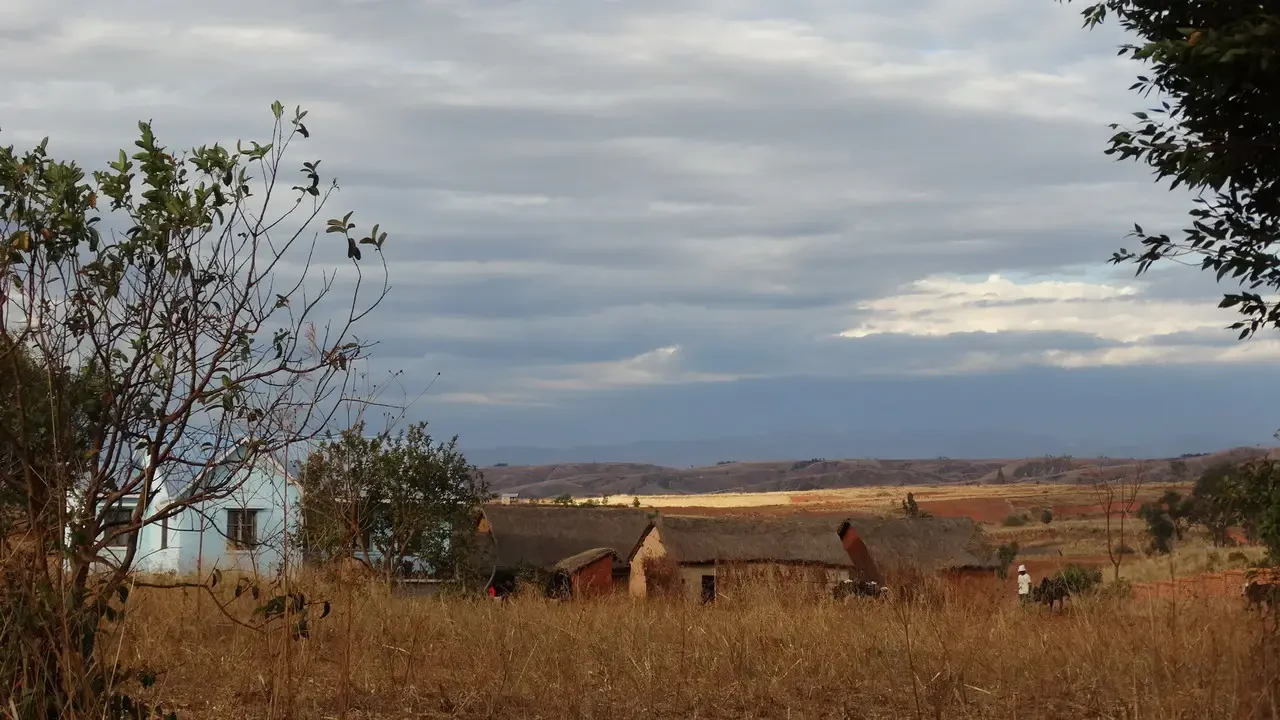
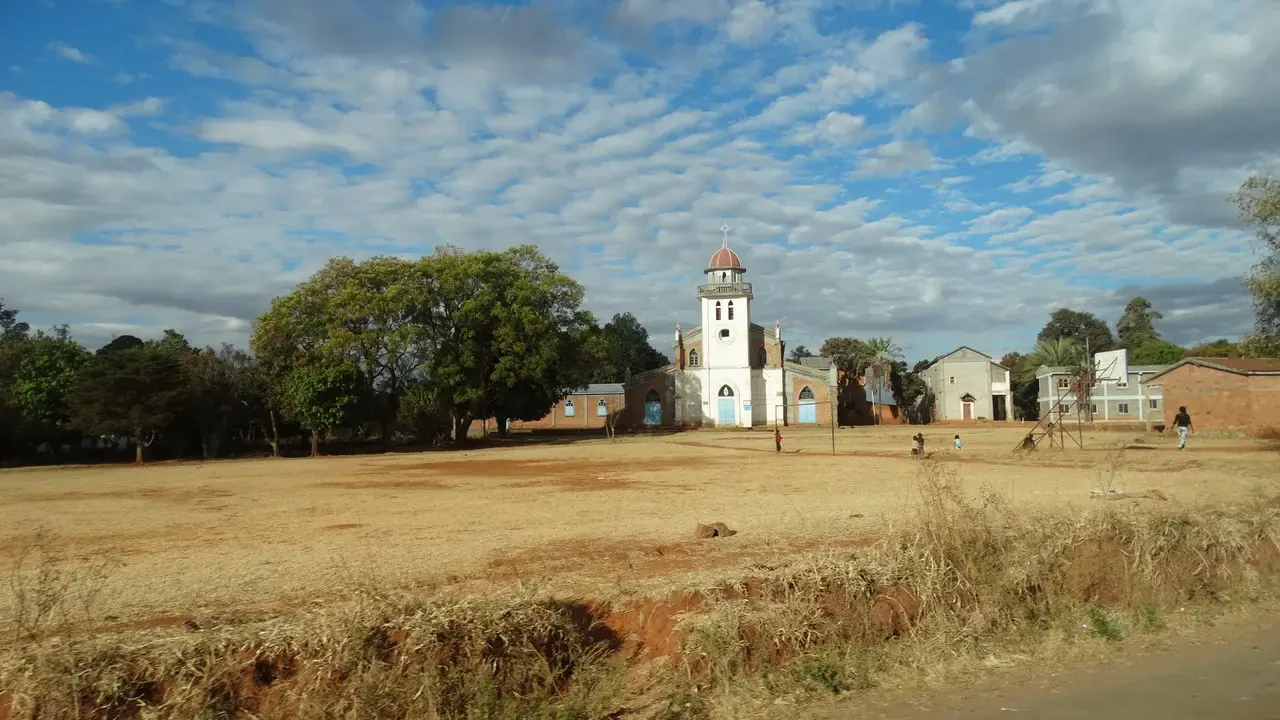
As we ascend, the landscape transforms into something magical, with soft hills around 1000 meters above sea level, where villages are located or isolated cottages Two-story traditional houses of the Betsileo tribe. Occasionally, fires caused by shepherds appear to help regrow the grass that will serve as food for the zebus; it would be too easy to act as biased judges regarding what we see. At the bottom of the valleys, farmers have created terraces where they plant rice: usually a stream runs through them, which is essential for a good harvest. The initially clear and sunny sky eventually becomes overcast, allowing wise rays of sunlight to illuminate certain details of the landscape, especially the yellow color of dried grass. At least where there is no black from the fires, sometimes extending as far as the eye can see. A scene often occurs on the roads of Madagascar: the frequent potholes offer children the opportunity to fill them with earth, thus preventing vehicles from having to almost stop to avoid them. For this reason, the small improvised road workers extend their hands in the hope of a small tip, and they breathe in the dust raised by vehicles as well as their miasms.
The road continues along wide, hilly ridges. We stop to take a photo and capture the beautiful scenery, when we turn around and see the familiar cloud of children It envelops us, but this time we hear a gunshot strike our eyes and immediately afterwards, the little bit of heart that habit has left us. A young girl who would live carefree at our latitudes, typing on her smartphone, approaches to ask something: what distinguishes her is a face disfigured by something, perhaps illness or an accident; in one eye, all we see is dry mucus coming from the orbital cavity, and we don't know how she can possibly use her mouth to eat. She certainly won't be smiling, while we feel uncomfortable about who we are and how we are.
Combined with good soil fertility and water availability, this creates conditions for better cultivation, which in turn leads to a lifestyle more in line with the basic needs that everyone should be able to enjoy. We notice this particularly as we get closer to Antsirabe. In fact, almost all of the fruits and vegetables consumed in Tana originate from this region, which is not far from the capital. 80% of the people living around Antsirabe are engaged in agriculture, and we will realize this tomorrow morning when we visit the weekly Soboty market, located in a more peripheral area. Talking about rich and poor here could be misleading: there are no rich or poor people here; the difference lies in whether or not they can meet their basic needs. Tobacco, cotton, jojoba (similar to olives), and all kinds of vegetables are produced in this area, while in the city is located the THB, Three Horses Beer, the most important Malagasy brand, which is also of good quality.
When darkness has already fallen, we arrive at Antsirabe at an altitude of 1500 meters above sea level: outside it's 23°C, but the locals wear long-sleeved clothing, which is similar to how a habit of being used to heat makes you more susceptible to cold. Without public lighting, figures walk along streets where potholes are the norm rather than an exception. Everything exudes a simple and unkempt humanity. We reach the hotel, which turns out to be a positive discovery, in a colonial style with charming old signs on the walls surrounding staircases and balconies made of wood. The kitchen is also good, and we give in to temptation with a lamb tartare, knowing that eating raw meat in a country like this can turn into a dangerous act of trust. Our trust will not be betrayed! The meat, prepared and presented impeccably, will be one of the most appreciated dishes of the entire trip. In any case, we take a walk to see what surrounds us and enter a simple restaurant where we taste rhum arrangé: it's a liqueur made with local sugarcane, to which fruit (vanilla, litchi, banana, ginger, etc.) is added.
The name Antsirabe has the prefix "An" which means noble, and the suffix "Be" which means great.