Day 6
Ranomafana National Park
The lush green of the Ranomafana National Park and spotting the first lemurs – Visit to Fianaranstoa
Morning at Ranomafana National Park
As I woke up, the rain continued relentlessly, but as soon as breakfast was finished, my eyes turned towards the sky, almost pleading for a break, and then it appeared, seemingly out of nowhere. The sight of some blue in amongst those white clouds brought a sense of optimism. In just a few minutes, we were ready to embark on our new adventure within the rainforest, but without the rain falling. At 7:30 am, the sky was almost entirely behind us, and with the guide, we headed to the entrance of Ranomafana National Park, located nearby. The park, established in 1991, is largely composed of secondary forest. To achieve some local economic benefit, the guides usually have a young person (in this case, a girl) who roams around to spot lemurs or other animals and warn us. It's great to see and especially photograph the lemurs It's not as simple as it seems: they live high up in the trees, and if you don't make noise while moving around, you need to stop and look for them, because walking and looking upwards can be difficult activities to combine. To then capture them, you need to zoom significantly, but there is a risk that some branches on the trajectory will prevent a good image focus. When this happens, here's the little animal turning sideways, leaving its back and long tail visible. But sometimes they allow themselves to be photographed well, and in these cases, the images reveal their charm.
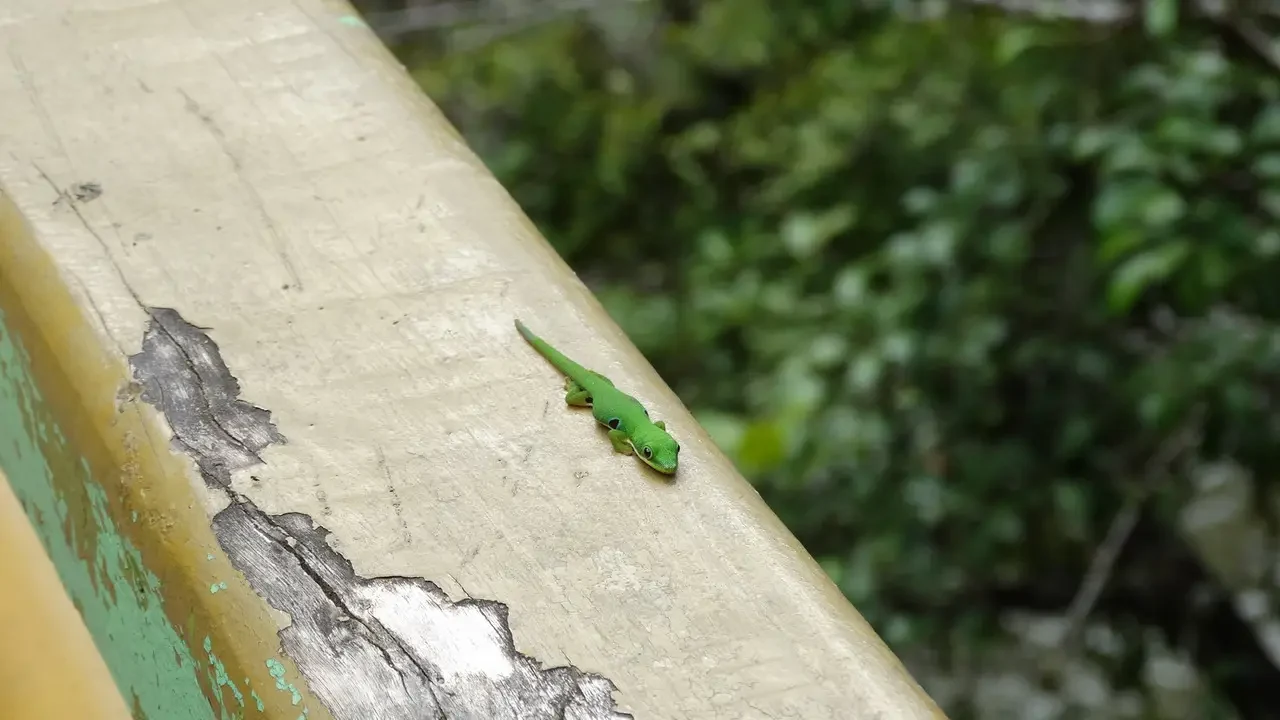
Since it has just started raining, we can't expect the leaves to be dry, but this isn't a problem at all; we just need to be careful of the muddy paths, even though the ground is not excessively slippery. After about an hour and a half, we reach a high point where there are stones planted in the ground, some as tall as a meter. small dolmens... In the past, this place was visited by local residents who had erected a ceremonial site here to commemorate their ancestors. Each stone depicts one of them, although there are no tombs here. People would gather to invoke their spirits so that they could intercede with the gods. These were people who had died at an advanced age and were therefore experienced, allowing them to use this experience during the invocation process. For this reason, children or young people are not venerated for propitious purposes. Currently, the park allows ceremonial rituals, but in a restrained manner and especially limits access to only a few people at a time to prevent damage to the environment. We are in the secondary forest, which is approximately eighty years old; thanks to frequent rainfall, it grows very quickly, but closer inspection reveals the absence of trees with particularly thick trunks. A leech tries to attach itself to us; we see it immediately settle on the back of our hand and avoid the unpleasant contact. We encounter beautiful orchid plants that are not yet in bloom, but will be from November onwards. However, the parasitic plants with long leaves that grow on the trunks of large trees are interesting. Here they call them "win-win" plants, meaning that they exchange their forms of sustenance with those on which they are attached. They attach themselves to others without killing them, and even bring benefits; while the parasitic ones kill the tree on which they cling, for example, strangler figs. Because this is a very humid area, there are abundant ferns and mosses with intense green color everywhere. We see the traveler's palm for the first time, also known as the "palm of the traveler," which is known to be a good source of drinking water and has leaves that point east or west. Unless it has been planted in captivity, this can obviously change its direction. We pass through an area rich in bamboo with its characteristic green and black color. It is important to pay attention to the black part, as it is toxic and deadly if ingested, while touching it causes severe itching. There is a whole bamboo tree around us; therefore, we try to only touch the green part when we need to find a foothold. The snakes are hibernating, but we see several chameleons and frogs, all perfectly camouflaged. When they are on bark, the first ones look like dry branches and are practically indistinguishable.
The trees grow upwards in a constant competition for light, and it is on their tips that the lemurs jump acrobatically. One species, the Golden Bamboo Lemur, typically eats bamboo (surprisingly, it's not toxic to them), and they are monogamous. We can also see the Red Fronted Lemurs (they eat fruit), the Brown Lemurs (polygamous), the White Beard Lemurs (they live in primary forests), and the sifakas (who don't drink water). The larger lemurs live for about 30 years, while smaller ones can live up to 8/10. The causes of death are predators or heart attacks when the animals reach old age. However, they occasionally need to detox from bamboo by eating herbs or fungi in order to aid digestion. From a certain perspective, they resemble koalas in Australia that eat eucalyptus. The paths are well-marked, but given the maze and lack of references outside the trees, it would be very easy to get lost without a guide.
Ranomafana National Park and Haute Ville
It's almost noon when we go for lunch in the village of Ranomafana at the Manja restaurant, where we enjoy grilled chicken and a tomato salad. We then depart.
near Fianarantsoa, but just outside the park we still see
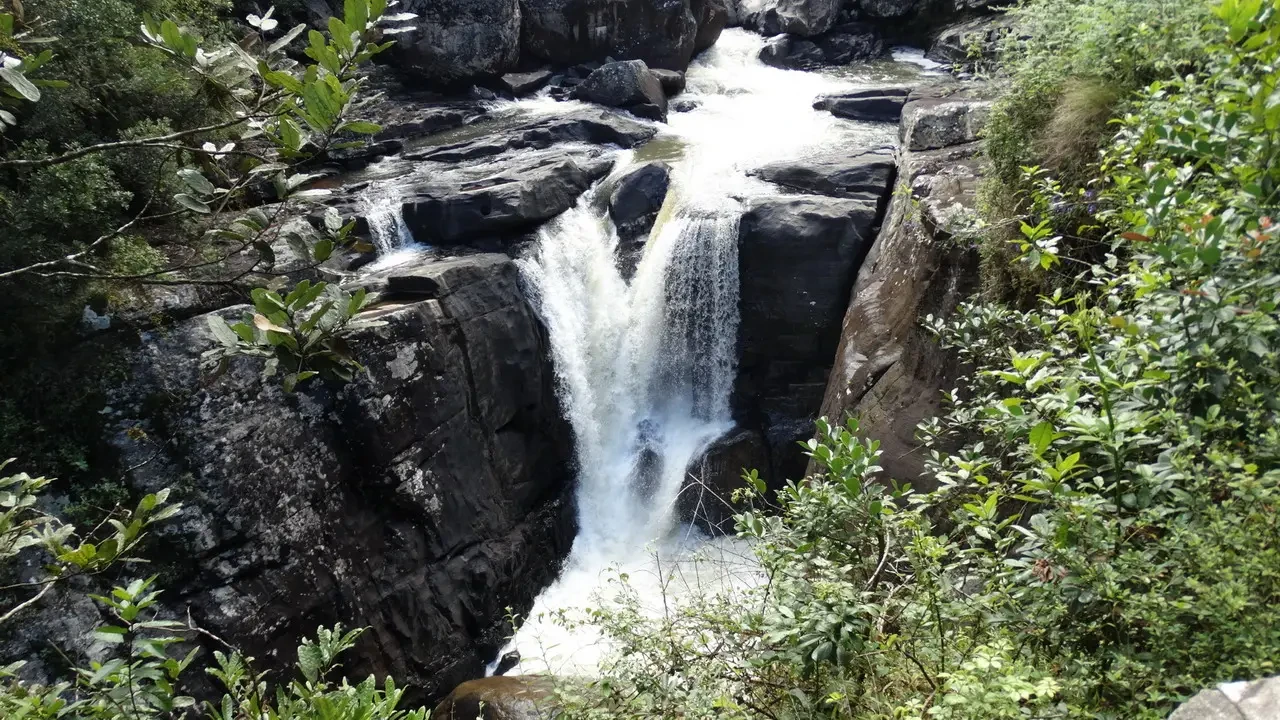
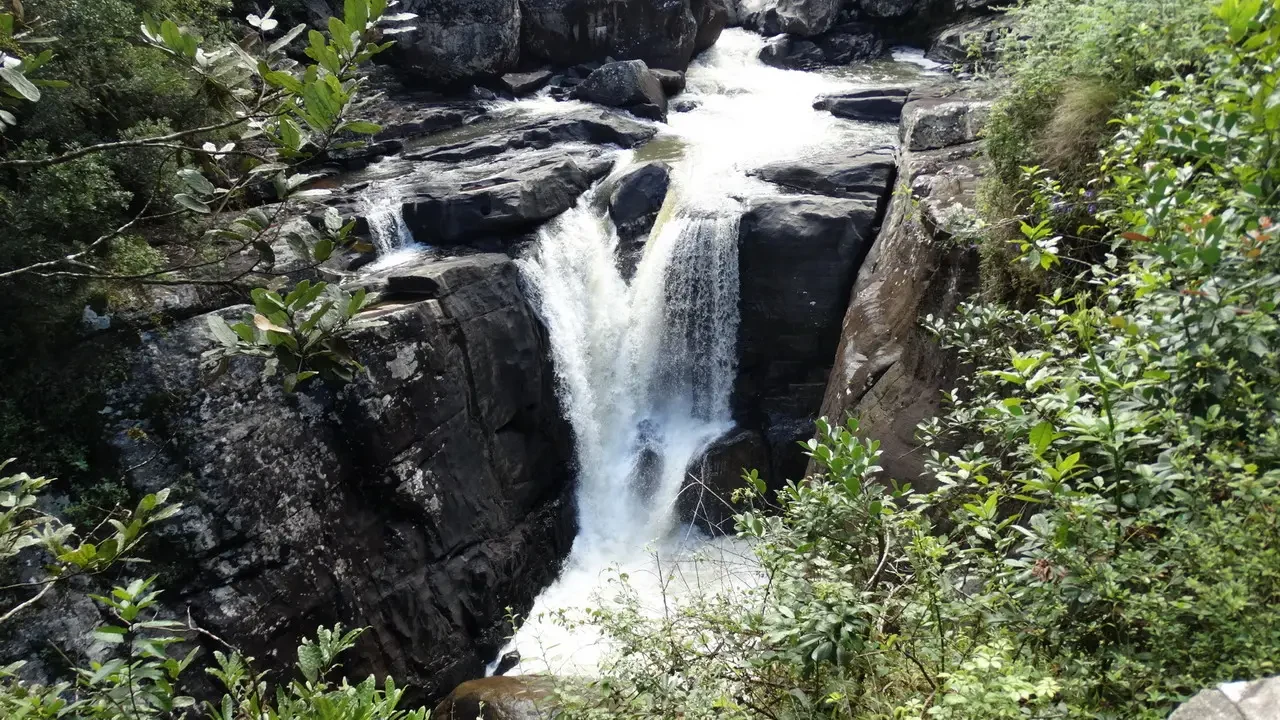
Andriamamovoka waterfall, the second highest in the country. We ascend into the valley that we walked through yesterday evening when it was already dark, where a steep stream flows, and we realize how precarious it is, except for the part where the plateau allows the stream to flow slowly, allowing children to play safely without the danger of rapids. Along the road, we often see smoke from charcoal pits, while as the kilometers pass, crops take over the green of the forest. We head towards the most interior area, which is now completely deforested and urbanized for agriculture. We can see a modest settlement with houses in the classic Betsileo style, on two levels: the ground floor is used for animals, while the upper level is for living. We also see many ovens for… brick making, where the workers extract the mud to put it into molds placed nearby, they leave it to dry for 4/5 days, remove the bricks and stack them neatly, and light a fire from below, managing to cook almost all of them over the course of 3 or 4 days. Those that are on the outside and take longer to cook will be moved further inside for the next batch.
We finally reach Fiadan. Fianarantsoa, a city of 250,000 inhabitants). At the lower end, the station stands out, which is worth visiting for at least a couple of reasons: firstly, it's a beautiful building in a colonial style with almost oriental architecture, and secondly, it's the starting point for the legendary train that goes to Manakara on the Indian Ocean. A convoy that would be regular, but departs when it can and arrives at its destination when it doesn't break down. This route has become popular among travelers who want to experience an adventure that, if traveled round trip, can take almost a week to cover 200 km per leg. It is enormous in size, considering that even during the best periods, railway traffic essentially focused on a single line. Before entering the city, we pass by the railway and it's a tangle of weeds where children play; they tell us that trains pass through here, but it's difficult to say how many and when.
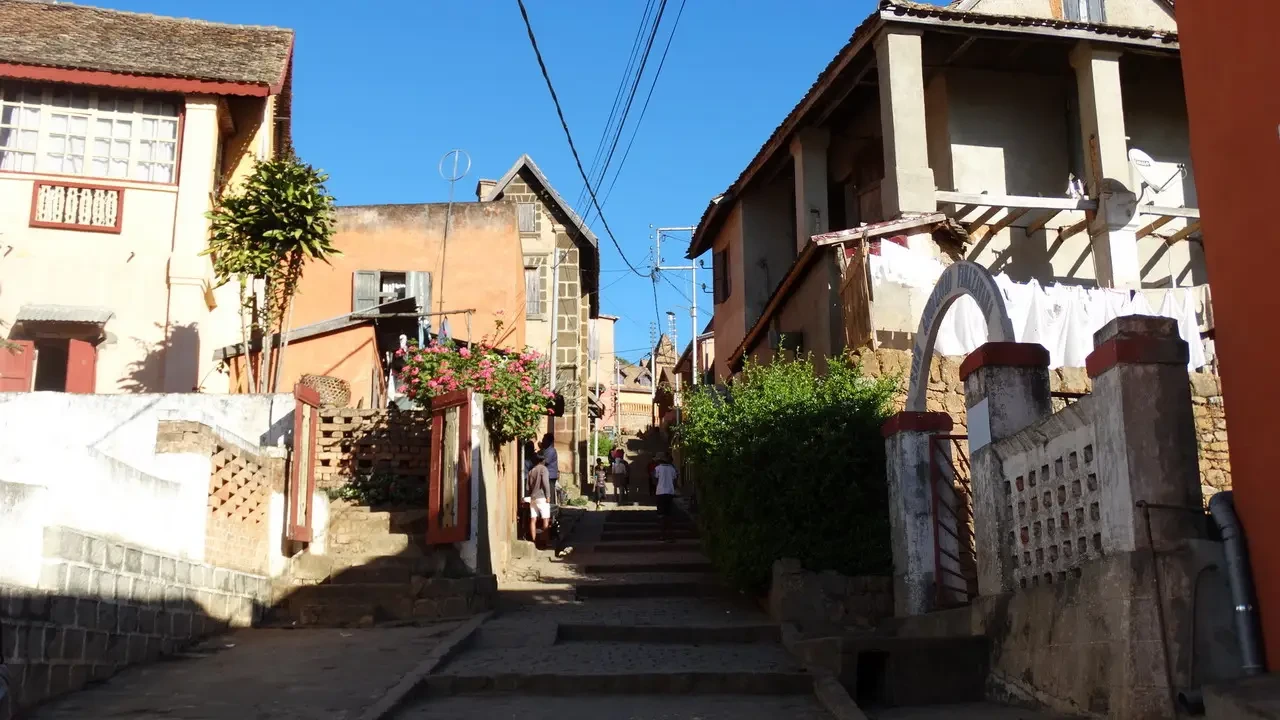
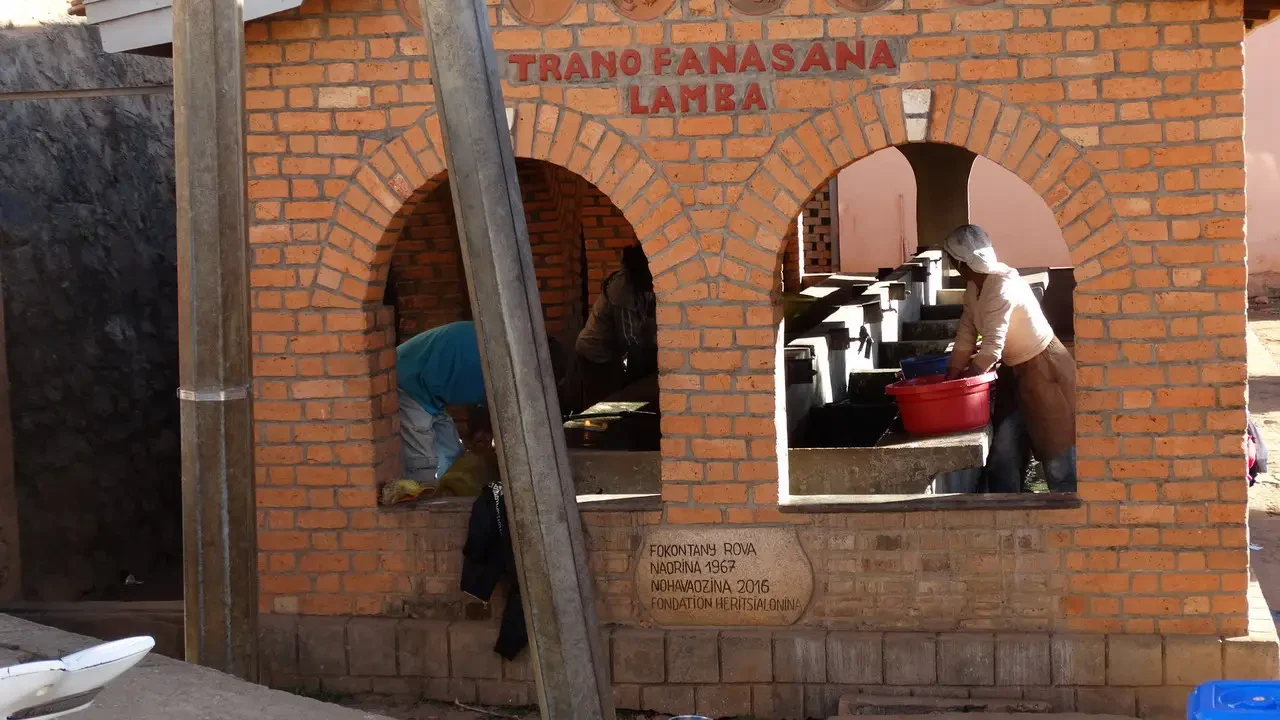
We visited the Upper Town, renovated thanks to the contributions of an association, which has promoted the restoration of the six churches that focus on this characteristic headland, there are several accommodations and the Rova, which is the Noble Palace. Fianar, in a division of responsibilities between Catholic and Protestant missionaries, ended up with the latter as the followers of Luther had already firmly established themselves preaching and attracting followers in the capital city of Tana. A strong missionary presence also indicates a higher cultural level compared to other cities, to the point that its very name means "where knowledge is learned." The presence of the Church is very noticeable and has brought with it a series of improvements, which on the other side resulted in a loss of identity for the local people. There is also a very advanced hospital according to the standards of the country, managed by a company linked to the missionaries. The view from here is beautiful. stone sinks where women are busy washing clothes, bringing to mind our grandmothers when they would go to what today we could call the meeting place for housewives, where news or gossip passed from mouth to mouth without the need for social media. At the highest point of the Haute Ville, you can enjoy a spectacular view Heading towards the low city on one side and the fields with charcoal pits on the opposite slope. Along the steep streets of this center, old Citroen vans slowly climb, which in Europe were previously owned by French shepherds until 30 years ago. Improvisational mechanics try to repair vans on the roadside (Citroens as well), from under which only their feet are visible and they are suspended on rocks. The fact that this is a city with intense religious inspiration is evident from the statue of the Virgin Mary on a hill and a large image of Don Bosco at the entrance to the city. We eventually get involved in a very charming scene: three young girls, whom we will discover to be 10, 12 and 14 years old, approach us with a very friendly demeanor and ask us our names, offer us some flowers from those that are prominently displayed in the garden, and begin to chat with us in French, English, and even Italian. Surprised by their linguistic versatility, we discover that they attend the Salesian school and study in order to work in the tourism sector one day. We are impressed by the friendly manner of these three junior guides and take a tour of the center with them, under their guidance. We say goodbye by buying some prints that they claim they created themselves. They state that our purchase will allow them to buy notebooks for the upcoming school year. It is interesting to note how Malagasy people have a natural inclination towards the Italian language; both these young girls and other people we have met in recent days speak it with correct pronunciation and without any errors.
Flight to Ranomafana National Park
We head back towards the lower part of the charming Fianar, where we find markets that stretch along a stream with more sewage than water – a murky liquid into which the dirt of a poor neighborhood flows. And they tell us that things are still going on in the city; it's even worse outside. This is enough to give you an idea of how people live here, if it can sustain them. A multitude of children run around among the piles of garbage, where adults search for something, amidst the nothingness that others have discarded. The garbage is collected in concrete bins on the side of the road. No one needs to be convinced to sort waste; this is taken care of by poverty.
In town, the electricity supply isn't enough for everyone, so the neighborhoods experience power outages for a couple of hours on a rotating basis. The same applies to water.
Let's go and find our accommodation for tonight, which we have chosen to be "chez l'habitant", meaning at the home of a private individual who offers a B&B service with meals prepared on site. It is not easy to find, so our driver arranges a meeting with him at a gas station. Once we meet him, he takes us a couple of kilometers to the nearest accessible location by public transport, and from there we walk with our luggage for three hundred meters through the narrow streets of this very popular area. The passage will be no more than one and a half meters wide and shared with a ditch where rainwater and, in absence, sewage flows. Of course, the refined Western noses may not appreciate such a view accompanied by unmistakable odors, but we continue with confidence that something positive awaits us. Amidst a maze of dilapidated houses, there is just one newly renovated house, and this is where we will spend the night. The environment was reassuring enough that we would have hesitated to sleep in any other dwelling. We wanted to experience real life, and we wouldn't have backed down, especially not in the face of the smiles we encountered as we progressed. The owner is also a tour guide who has recently renovated his parents' house with the profits from his work and has decided to open up a sort of B&B. It is our turn to inaugurate it, since we are the first guests after the completion of the works. The room is simple but well-equipped, there is even a nice balcony with wooden decorations and a great view of the neighborhood and its daily life. There are still some finishing touches to be done, but the accommodation is welcoming, already decorated and, above all, with carved doors that will leave you speechless. Let's delve into this: he explains to us that during his work as a guide, he has met artisans in remote villages during hiking trips. He hired one of them, who took six days to create each door; by quickly calculating the number of internal and external doors in the house, we can estimate that he worked for over three months. Of course, the carvings have precise meanings: the sun symbolizes wealth or poverty, but it rises for everyone, the interior part represents family and connection, around there is a frame on each panel and on the perimeter of the door, symbolizing a boundary, a defense against strangers. We have dinner in the beautiful living room, chatting all evening and exchanging experiences about our two very different worlds, both imperfect. All while drinking a good bottle of Malagasy wine, from the vineyards not far from Fianar, sweet and full-bodied with 15° degrees, it flows smoothly, caressing the taste buds. For dinner we enjoy chicken cooked in a pan with four types of green leaves such as spinach, served with rice, a revisited romazava where the tomato sauce is replaced by fresh tomatoes mashed with onions and herbs, served separately. The chicken is cooked in a pan with four different types of green leaves, as a side dish there is a salad of tomatoes and bananas.
A wonderful experience and another lesson on how not to be misled by prejudices driven by our own perspective.