Day 7
Anja Reserve
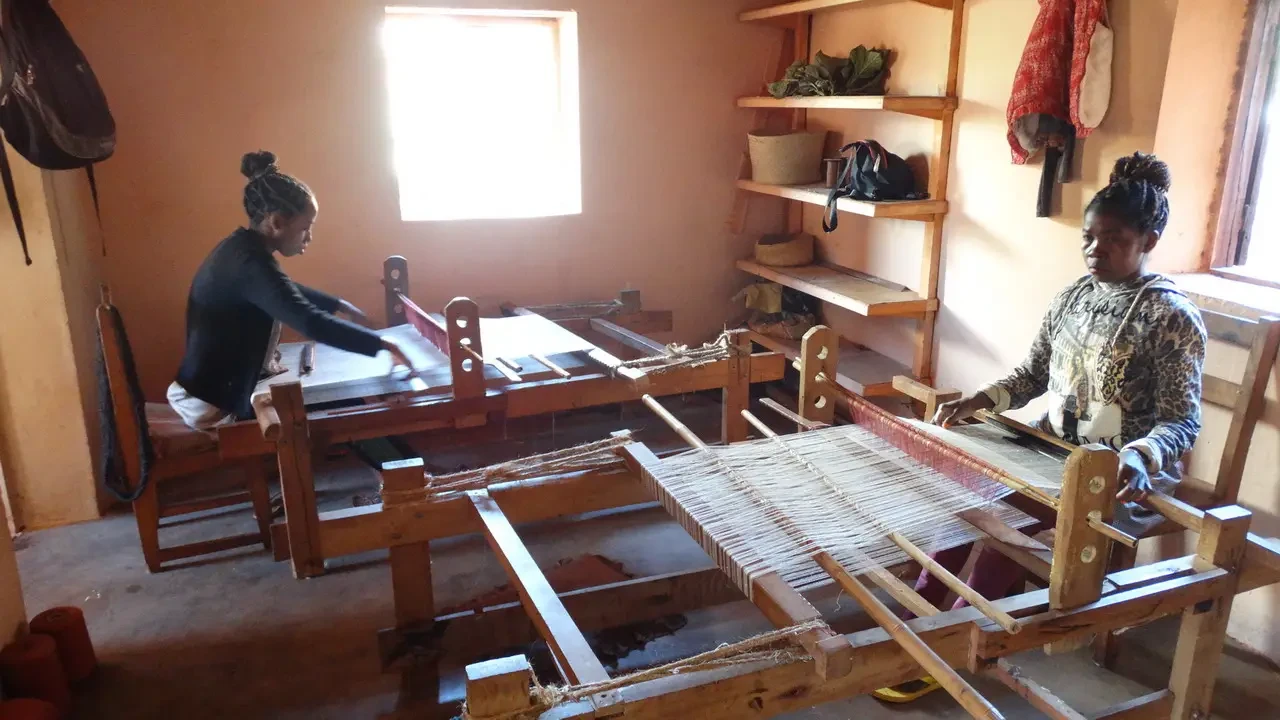
The masters of silk and paper in Ambalavao – The Anja Reserve, located nearby.
Morning at Anja Reserve
The neighborhood is definitely lively and noisy, to the point that the following morning will be marked by the incessant crowing of roosters and the chatter of children reminding us it's time to get out of bed. We open the shutters and on the other side of the alley, a cat is curled up in the window, enjoying the first rays of sunlight; here too, cats are symbols of cunning. A hearty breakfast where the "kuva" (banana, pistachios, and rice flour wrapped and cooked in banana leaves) stands out. We leave at 8:30 and continue by riding our soft hills which follow south of Fianar, to arrive in a relatively flat area at Ambalavao, particularly suitable for growing all kinds of crops: the fertile soil and the rivers that cross it are a real boon for the local economy. Along the road, artisans build ropes using the fibers from agave plants, selling them in makeshift shops.
Let's go and visit a workshop where the set is worked ona natural. There are two types of cocoons: the natural ones derived from Tapra (pine tree) and those raised in captivity (more regular): they are dried for about a week, then cleaned and packed one inside another in six or seven layers to form a full cocoon, which are then placed in another container where they are boil them for three days, then again drying for another three/four days. Coarse clumps are formed and with these one can... They connect the wires. Finally, there's the coloring, which comes from natural components. The purple comes from eggplant skin, the yellow from bananas, the gold from turmeric, a mushroom for brown, red from bark, green from certain types of leaves, and to fix the colors they use an extract from banana leaves boiled in water. Everything is dried and ready to use.
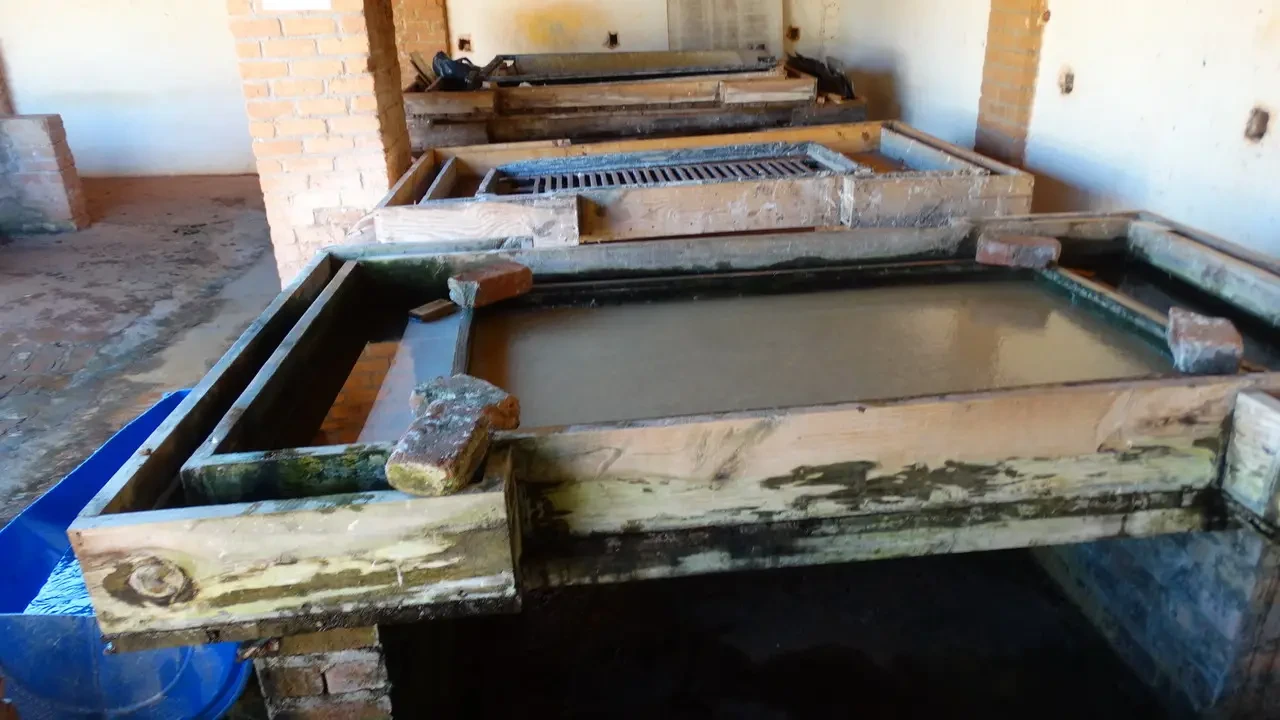
Next, we see another workshop where paper "Antimoro" is produced, or rather, decorative cardboard decorated with dried flowers. At first glance, it seems that the originality of this production doesn't have to fear competition from email. They take the fibers from a plant, the "avoha", and soak them, after which these are... handwritten notes with two wooden hammers, each weighing approximately 400 grams. The resulting dough is then spread out on a frame Covered in water for about thirty minutes. This allows us to take advantage of its leveling action, which smooths the surface completely, making it ready to be placed on a table and decorated. resting on petals of flowers recently harvested. A layer of sticky water is then applied to these, followed by drying on large, inclined tables at an angle of 40°.
Nearby, you can find the Anja Community Reserve, managed independently by the local community, which should collect the proceeds. The guide takes us on a tour lasting a couple of hours where we discover and learn some interesting details.

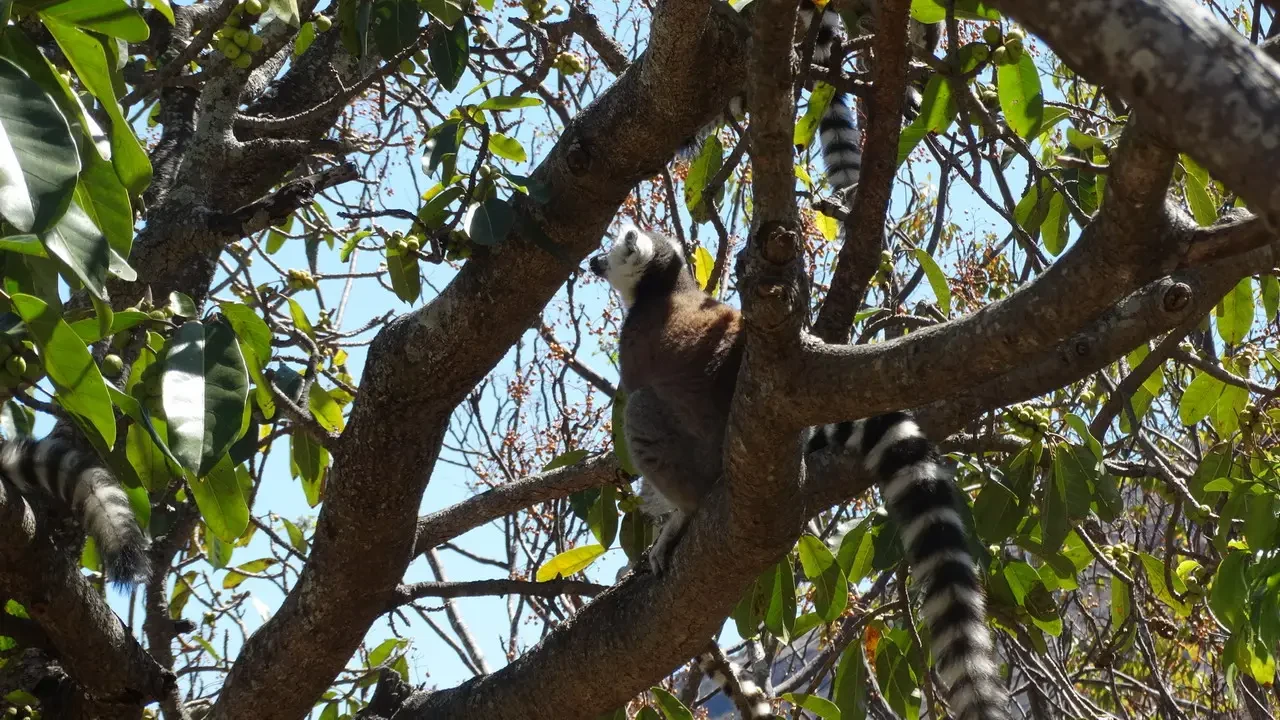
Ring-tailed Lemurs and Ring-tailed
For example, we learn that the Ring-tailed Lemurs I engage in mating while forming a stable pair later on. They still live together in a matriarchal group and feed on leaves or fruits from a tree (the manja) depending on the season and the guava, a small fruit derived from a bush that both humans and lemurs are very fond of. The Ring-tailed It is the only lemur present in the area, and since there are no ditches, its only natural enemies are birds of prey that come to take the young. We see a very poisonous plant; ingesting its sap leads to a sure death within a few minutes. We pass through a rocky area, rich in 150 caves that once accommodated around 600 people, especially during the tribal wars of two centuries ago, when these caves provided shelter for fleeing populations. We are still in the land of the Betsileo, but it was also contested by the Bara and Merina peoples. We can also see several chameleons perfectly camouflaged in the gray of the bushes or the green of the foliage, while the chicks are a vibrant pink color from a farm. The owner assures us that by dyeing them, we can prevent the birds from being recognized by predators and thus save them. All around, both in the villages and at the entrance to the park, there is a lively succession of floral colors, from bougainvillea to enormous Christmas stars, to large Sansevierias that we are used to seeing only in pots. For lunch, we try chicken with coconut, pineapple, and flambéed bananas.

We continue on the road to Tsaranoro Valley.
When we deviate towards the valley towards the Andringitra park, the the road becomes unpaved and the speed is significantly reduced due to the very poor road conditions. In this area and heading south, I... children They appear in groups and surround the visitors, asking for money, gifts, sweets or anything they possess, including the clothes they are wearing, in what seems more like a complaining performance than a real need. Along the way, walking at a normal pace, we pass people on foot who curiously carry pieces of sheep just slaughtered: some with the head, others with a leg, and so on; we will discover that they are guests at a wedding and somehow take home what we would call the "wedding favors". We reach the Tsara Camp, well-equipped under a wall whose comparison to El Captain in Yosemite immediately comes to mind. A walk along a small lake artificial waterfall where you can throw stones. When the sunset illuminates the dry grass and water, with the granite mountains in the background, it feels like paradise has come to visit us. Mango trees dot the yellowish, fiery expanse with their green leaves. Dinner at Camp includes pumpkin soup and a lamb bourguignon, a very local dish. Similarly local will be the vanilla rum arrangement. At this point, all that's left is to go and find a seat on the bed under the mosquito net, in one of the comfortable bungalows with ethnic-style furniture, with a shower under the stars. On the bed are laid out sponge towels rolled up to form a swan, decorated with fresh flower petals.