Day 9
Isalo National Park
Isalo National Park: The majesty of nature, between arid landscapes and canyons rich in water.
Morning at Isalo National Park
A walk around the camp shortly after 6 am allows us to admire a spectacular sunrise; on the road, two zebus are pulling a cart towards the village at the beginning of a day of hard work. Breakfast at 7:30 is rich in local flavors: the honey is dense and aromatic, with a less sweet taste than ours. In Ranohira, we meet our guide (without whom it's very easy to get lost in the maze of paths), who will accompany us throughout the day on an exploration of the Isalo National Park, which is likely the most interesting park in the entire country. The guide is from Antsirabe, and therefore does not belong to the Bara tribe; they disdain the profession as they are already fully occupied with agriculture and animal husbandry. This offers the possibility of internal migration. He tells us that 50% of the revenue collected from the entrance ticket goes to local communities, even though at first glance it doesn't seem like it, given that everything is in a state between neglected and dilapidated. The first section takes us to see an area of tombs in the endless natural caves carved into the limestone rock; here too, they can be temporary or permanent. In the latter case, they are found in particularly difficult areas, requiring actual climbing to access them. If they are temporary (people who have died far from their village), relatives come after five years to retrieve their remains. It seems that the tombs cannot accommodate two people; if they remain empty, they are not used for new burials because there are many others available. It is striking to see the coffin belonged to a young girl who died about 60 years ago: it is shown to explain the symbolism of the decorations: the metal with coins hammered on top is for ornamental purposes but also to show the family's wealth, the red color indicates that she died in an accident, black represents the family's grief, blue means she went directly to heaven, mirrors because she was a young girl, and finally the house and zebù (donkeys) to further demonstrate its rich origins. After all, the Bara people are generally wealthier than other Malagasy tribes: they are excellent farmers and skilled in agriculture.
Today we are also discussing the local trend of stealing goats, and it is confirmed that if the thief is caught, he will likely not survive. After all, we are in a no-man's land: the police forces are corrupt and have no desire to conduct investigations whose outcome would almost certainly be negative. Most murders remain unsolved. The seemingly dry bushes mislead us; above them there is perfectly camouflaged insects, exactly the same shade of gray, they look like branches themselves. It almost feels like a game to try and identify them. We reach the oasis... a little paradise where a stream creates a small lake with palm trees, an ideal place to enjoy some coolness.
Isalo National Park
But it's now time to set off again on the arid plateau, where we encounter the Pachypodium or " elephant feet", low-lying and bushy plants that resemble the foot of a giant animal, capable of retaining large amounts of water, with bright yellow flowers at their top. We also see the Isalo plant, which provides a sticky sap used to close fontanelles and strengthen the skull bones. The children will have reinforced heads for carrying heavy loads. In this arid area where a casual observer might only see scrub vegetation, there are parasitic plants with leaves used to alleviate hangovers: in Ranohira, there's a man who sells rum in the evening and then visits the same customers in the morning to offer them this form of antidote as a tea. The same shamans create potions that help cure various diseases, linked to rituals related to animistic beliefs. We enter a rocky area, where even here, limestone has created shapes that we recognize in the boot, the crocodile, and anything else our imagination, fueled by last night's rum, can conjure up. We then come across a small scorpion underneath a rock. It couldn't cause serious damage, but its bite would inject venom into the body and some consequences could be expected. The long ridge that opens with a stone drop onto the flat below, where Ranohira is visible in the background, provides some ventilation; spending time admiring the view has benefits for both the body and mind. At this point, amidst reddish rocks, we begin our descent towards Noumaza, where there's a small field restaurant, very well organized. But we don't stop yet: while the other visitors are eating, we make one last effort to reach the
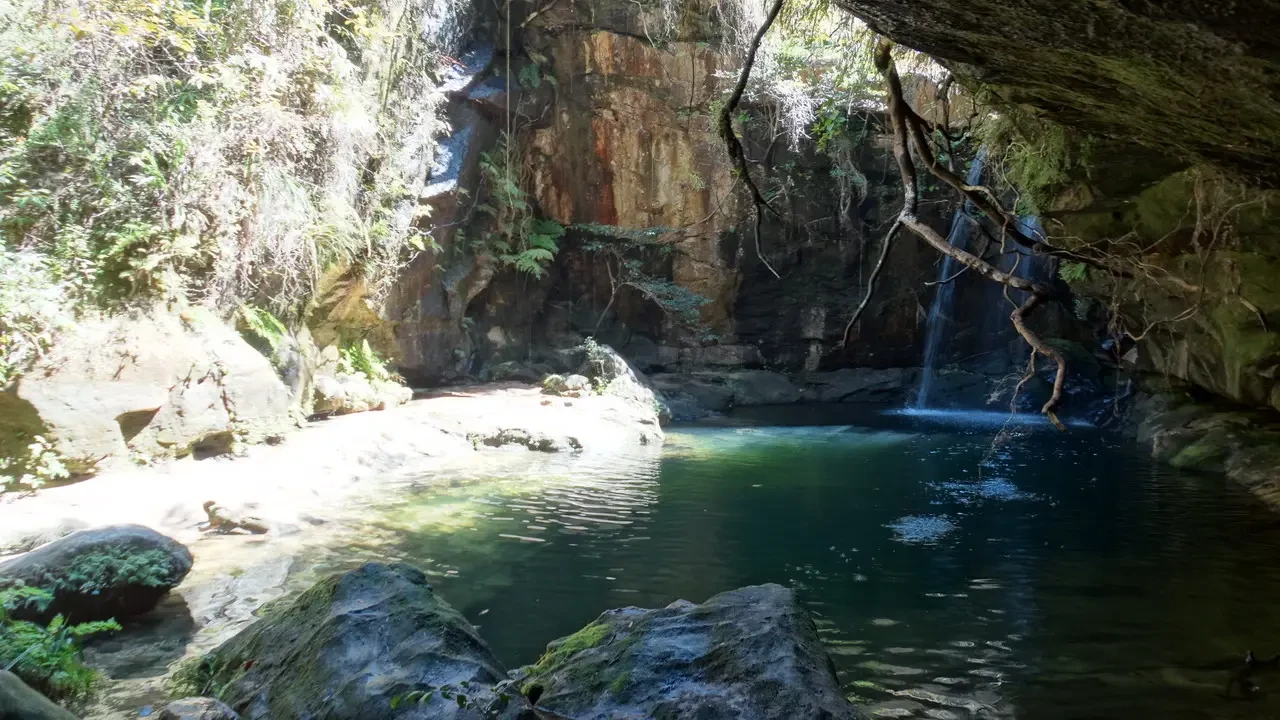
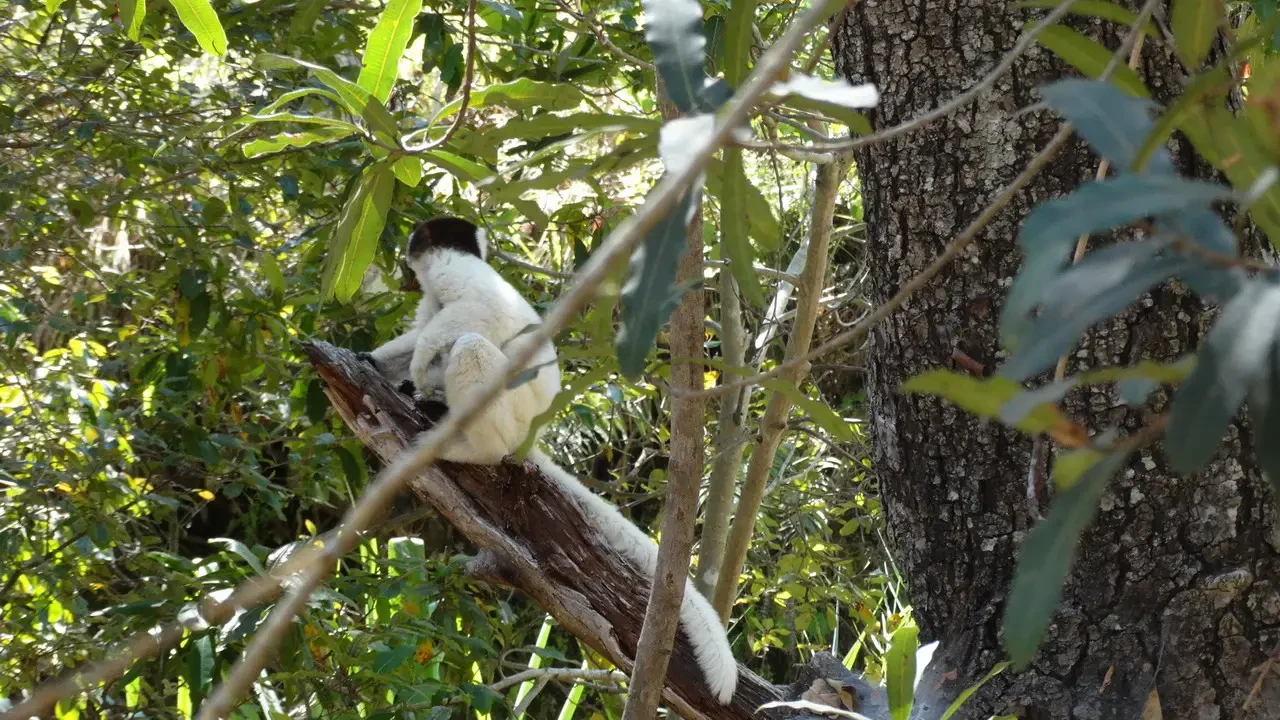
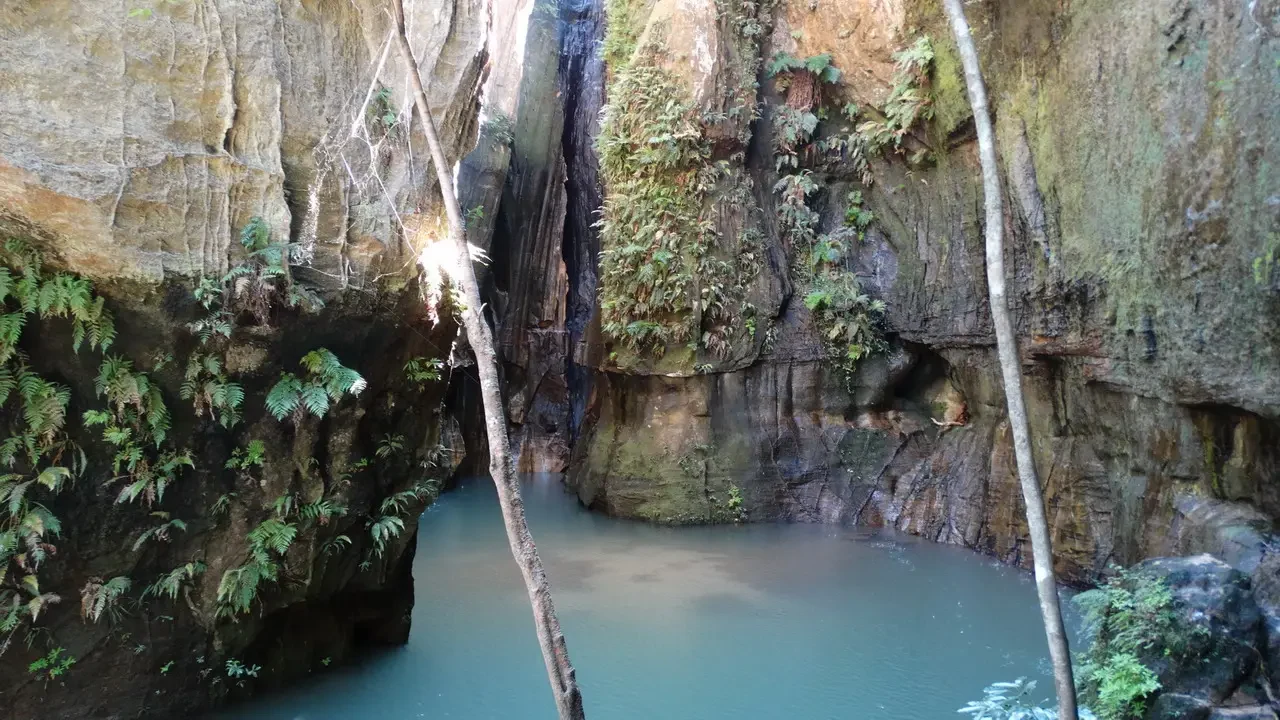
Blue and Black Pool were walking at the bottom of a deep canyon. One of them natural swimming pools Descends to seven meters deep, with beautiful light effects entering from above, creating suggestive images. Another jump, up a side valley, brings us to admire the Lotus Falls, which takes its name from a fly. It seems that there are eels in the lake, but they are prohibited to catch, as well as lemurs. In reality, the locals don't mind eating them, and poaching is quite common. At the camp of Noumaza, we see a white lemur whose story is touching: his partner and the rest of the family were killed by fossa. It must not have been particularly difficult since this species cannot see at night while, due to its coloration, it is well visible in the dark, whereas predators are able to quickly climb onto trees. Now he is single and has joined a group of Ring-tailed lemurs, but he leads a separate life because the other animals see him as an outsider from their species. We return to the camp for lunch at 1:30 pm, when the others have already left and we can be alone with the lemurs. We enjoy a good picnic-style lunch and delicious zebra skewers.
We return to Ranohira (which means "water source"), where there is a small hospital and it serves as the administrative center for the entire area. We decide to walk along the road leading to the Camp, walking for five kilometers. daily life in Madagascar. This way we can see and understand how life unfolds, among quiet people with whom we exchange greetings when we meet. In total, we will have walked for 20 km, so we think we can treat ourselves to a beer by the pool, in an unusual setting for us. Thanks to the sunset, we spend a moment of true peace and quiet We learn that there is also a marathon held in the park in July, which attracts many French and Kenyan participants. It's a real shame for them, as such a landscape deserves to be enjoyed at a leisurely pace.
The day seems to be ending peacefully with dinner at Ranohira with Hubi. Being in the land of zebù, we order steak and entrecôte with green peppercorns, which we order rare and arrive practically raw. We don't mind this at all, although a slight apprehension arises when eating almost raw meat, but the restaurant is good, but the overall setting doesn't offer particular guarantees. To finish, flambéed banana and rum with lychee. It seems there's only more to sleep on, when returning we stumble upon a fire right next to our Camp It's just dry grass, but the flames are rising high; however, there is no risk, it's simply farmers trying to make the land fertile. To avoid any danger, the staff extinguishes the fire before it gets too close, even though we are now only a few dozen meters from the bungalows, around which a suitable firebreak has been created.