

Day 8
Lake Titicaca II
From Amantanì to Taquile, the two emerging pearls from Lake Titicaca.
Taquile between terraces, textiles and paths by the lake
At night, the temperature drops close to zero, but the thick blankets allow for a good night's sleep. At least until the sun comes up, which is actually always too early for us, around 5 am. Perhaps introducing daylight saving time in Peru, or even moving the clocks back an hour throughout the year, would be beneficial for this country. Washing our faces with water from a large container takes only a few minutes, and we are ready for breakfast at 6:30: fried bread and eggs, accompanied by tea. This is an energy-boosting meal that will allow us to face the day with the necessary enthusiasm.
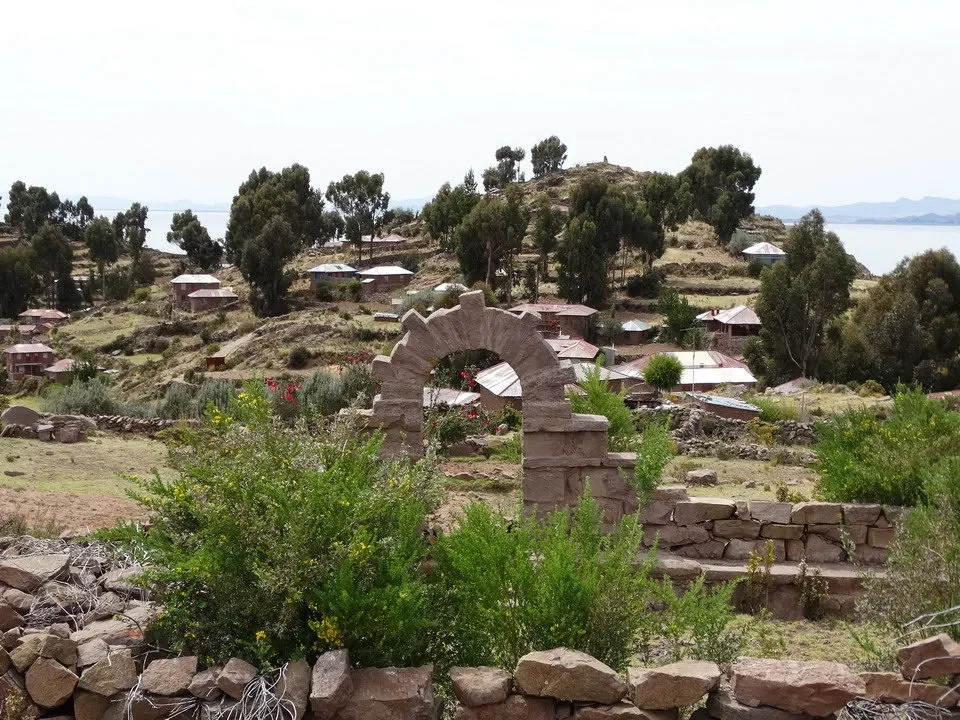
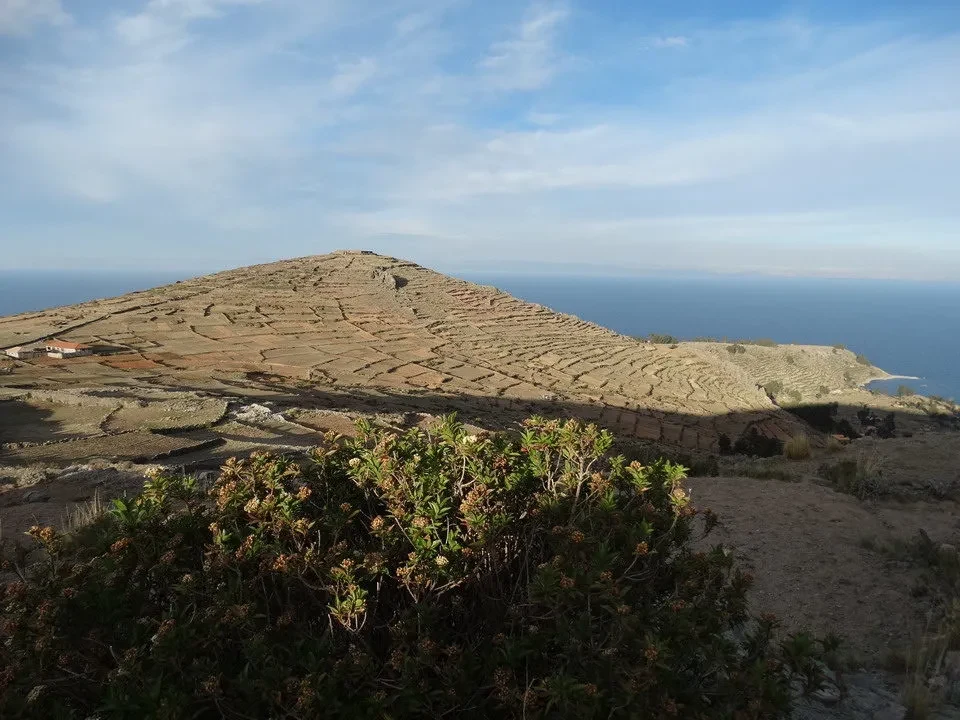
An hour later, our ladies accompany us to the embarkation point, from where we depart at 7:30 after taking farewell photos. Today, a thin layer of clouds makes part of the sky opalescent. The boats head towards Taquile, which is only a few kilometers away but will require an hour of sailing with our calm vessels. Puno is now 35 km from Taquile. We disembark and immediately we are faced with 540 steps that lead to the top where there is an arch, symbolizing the highest point of the trail We decide not to pay and head towards the highest point of the island, following a path bordered by stone fences to separate fields and grazing areas, reaching an altitude of around 4050 meters.
The crops are the same, with no fruit or vegetables. The island is less clean than Amantani but is more beautiful, with vibrant green vegetation. many flowers to decorate it and tall eucalyptus trees to provide some shade. Alternatively, one sees areas that have been abandoned, presumably due to the poor fertility and the presence of more profitable alternatives; people prefer to dedicate themselves to the growing tourism or emigrate, rather than reclaiming land from which they know they can extract little. The climate changes in recent years add further reasons for leaving. In Amantani, on the other hand, every terrace is neatly cultivated, a clear sign of greater poverty as well as higher population density.
Here live approximately 4000 people, many of whom are here for work, and the actual residents number around 1500, but many return for the local patron saint's festival, Saint Sebastian, which takes place on January 19th, lasts several days, and is the most important gathering of the year. A procession takes place starting from the parish church and heading towards Pachamama and Pachatata; at some point it splits into two lines, with the faithful reaching both sacred peaks. In Taquile, there are 2000 residents, divided into six communities, each with a mayor who unites and represents them externally. Despite not being located in the middle of the ocean, the islands have maintained traditions that go back in time, making them a distinctive enclave. For example, the hats worn by the Taquileños vary depending on their marital status. There is one for single people, which is worn differently depending on whether the person is free, engaged, married, or mayor, and so on.
Children under four years old do not wear hats, but use the single-person hat instead. Before getting married, couples live together for two years, and then, if they agree, they get married. If children are born during this time, they remain with the wealthier partner. If families cannot reach an agreement, the local authorities determine who should care for the child. Once the marriage is contracted, the celebrations are supported by the groom's father and last for a week. Being single is viewed negatively, so residents are implicitly encouraged to marry and start a family. After this, divorce is not allowed, which is also permitted in the rest of Peru. The belt worn by men represents the wedding gift from the bride to her husband, symbolizing their alliance. It is made by her and combined with a braid of her own hair. There is also a strong sense of community on this island, especially in the division of roles, responsibilities, or crops. They speak the Quechua language, which is also written.
Return to Puno, Coca Museum and last night on Lake Titicaca.
While we disembark from our reconnaissance tour, we see the village cemetery located right next to the football field, almost symbolizing the dichotomy between life and death, between joy and sadness. We find ourselves in the main square, where another arch with three steps on each side stands out, signifying that there are three communities on one side of the island and an equal number on the other. Stone carvings of faces wearing typical Andean hats are carved into each step. At this point, we take a path leading downhill with a wonderful view of the lake; essentially, what we would call the lakeside promenade, but here it serves as a connection between the village and the harbor. We stop just above the docking area for a final magical moment. Seated outside in the sunshine, surrounded by vibrant flowers and a paradise-like view, we are served pieces of grilled trout. Just before, we are shown how wild grass, if properly squeezed, can become an excellent natural soap.
At this point, we must consider the visit concluded as we have three hours of sailing ahead before arriving at the port of Puno. The return journey is peaceful and also provides an opportunity to reflect on what we have seen and experienced so far, as well as plan for the near future, especially in relation to our visit to Puno, since we still have a couple of hours available. In fact, upon disembarking and after the minibus has returned us to our Posada Kusillos, we immediately set off to visit the city, which, while not worth the trip on its own, is certainly deserving of a closer look at several points. We start from the cathedral, where a wedding had just taken place, and the sound of the Titanic playing in the background doesn't seem like the best omen for the newly married couple. We wait with curiosity for the newlyweds to emerge, he is dressed in a military uniform, and there are many colleagues in the same uniform waiting outside to see and hear a local group singing South American-style music. It’s a charming scene of the newlyweds dancing on the steps, which might seem provincial to us, but it has a decidedly genuine atmosphere.
A look at the vibrant yellow-blue colors of the Casa del Corregidor and a walk along the main street closed to traffic on Jr. Lima for a quick glimpse of the Temple of San Juan, exchanging currency, and also obtaining some Bolivianos since we are going to La Paz tomorrow, and searching for the Coca Museum. We discover that we were only moved to a new location last year and head to the correct address: here we get acquainted with this plant and everything around it, both positively and negatively. The positive aspect is represented by how locals have always used it, as an energetic and curative remedy for altitude sickness, and in a positive way, exploiting its properties. The negative aspect is the use made of it by Western countries, chemically extracting that one percent of hallucinogenic substances to turn them into cocaine and consequently, a lethal tool for those who do not find valid alternatives in life. The museum tends to emphasize the qualities of the plant and refute its criminalization, which it tends to be subjected to if seen solely as an extreme substance. It is important to say that throughout Peru and Bolivia, you can find candies and cookies. coca leaves for sale, as well as almost all hotels offer mate de coca in packets, or more frequently directly the leaves that settle at the bottom of the cup before adding hot water. Without anyone becoming dependent on it, or even hallucinating. Tonight we will also try a delicious dulce de coca: this, due to its characteristics of goodness, could lead us to addiction and wanting more.

In fact, we feel that we can share the museum's vision: we have chewed on coca leaves and are grateful for not having suffered altitude sickness beyond a few mild headaches. It is a real shame that these candies cannot be brought to Italy as souvenirs, as their only side effect in case of abuse would lead to a visit to the dentist. In Puno, you immediately notice how the population has features from a different ethnic group. Many are Aymara, on average taller than the Quechua and less stocky. Striking are the dark, straight, raven-black hair, as if they had natural hair dye in their heads. It is time for dinner at Mojsa, a restaurant where you can enjoy good alpaca and lomo saltado, as well as the already mentioned dulce de coca. It's time to retire, while in Puno a cold breeze blows that our stomachs will definitely not appreciate.


