Day 2
Paracas
Paracas and the National Reserve
From Lima to Paracas along the Pan-American Highway
At exactly 5:00, the driver arrives to pick us up and we arrive early at the Cruz del Sur terminal in a deserted capital, one of the best transport operators, to go to Paracas. Still inexperienced, we are very cautious with everyone around us, as if each person might try to steal our belongings. Of course, bus terminals are not particularly recommended places, but over time we will discover that it is possible to stay relatively safe; the place is well organized, with four gates, where you can leave your luggage about an hour before departure. A few weeks ago, we booked the first two seats on the upper deck of the bus online to ensure a view of the coast overlooking the Pacific Ocean. The landscape remains gray. and as we move further away from Lima, the fog disappears but is replaced by high clouds.
It's interesting to note a series of empty, almost abandoned, seaside resorts on this festive summer holiday; we will be told that the locals tend to travel for holidays or long weekends, while they usually spend their weekends in the city. In contrast, the chicken farms located right near the coast are very crowded, with some even having egg-collecting areas. As we cover more kilometers, we begin to see the typical landscape of the region: desert-like but occasionally punctuated by a green strip, indicating that a river flows nearby and that life thrives around it. Where the watercourses are more significant, you can find tomato, artichoke, and other difficult-to-identify vegetables being cultivated. The arid areas consist of dunes, whose sandy surface hides clusters of stones of various sizes. As we approach our destination, we see large vineyards, from which the best Peruvian wines are produced, as well as the famous pisco, a typical Peruvian and Chilean brandy.
The buses are limited to a maximum speed of 90 km/h, and their poor reputation must have prompted the authorities to strengthen safety regulations: each vehicle has a display that indicates the current speed, encouraging passengers to point out any driver's excesses. Drivers can only work for a maximum of five hours during the day and four hours at night, after which they alternate shifts. Frequent checkpoints or organized rest areas are also found along the roads to check the vehicles. We also encounter numerous small shelters, similar to dog kennels, located near the accident sites.
We pass through the small town of Pisco, which is too close to industrial facilities, and despite a few minutes of waiting caused by roadworks on the Panamericana Sur, we arrive in Paracas at 11 am, a beautiful coastal town located 250 km south of the capital. A violent earthquake and subsequent tsunami destroyed it ten years ago, and the scars are still visible, with entire families still living in makeshift shelters; it is sometimes difficult to distinguish the houses under construction from those deliberately left unfinished. It seems that this is planned, and we will discover that it is a common practice throughout the country, as it appears that some taxes are only applied if the house has a roof. As a result, there are many houses with exposed brick and structures made of reinforced concrete pillars, which float in the air, anticipating the possible addition of another floor.
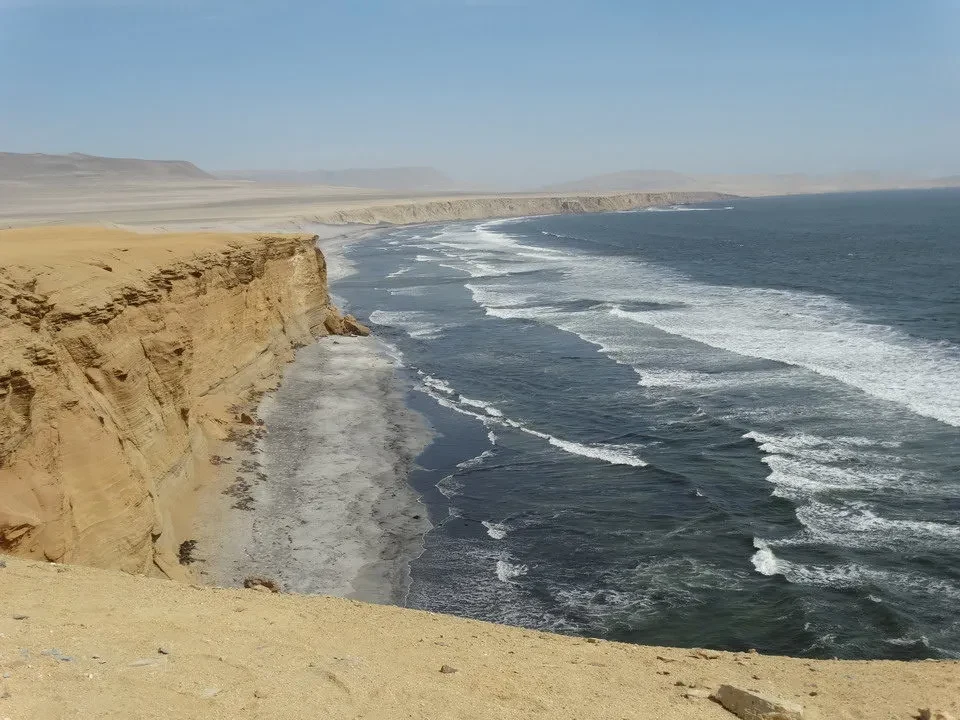
Booking in Paracas and sunset over the Pacific Ocean
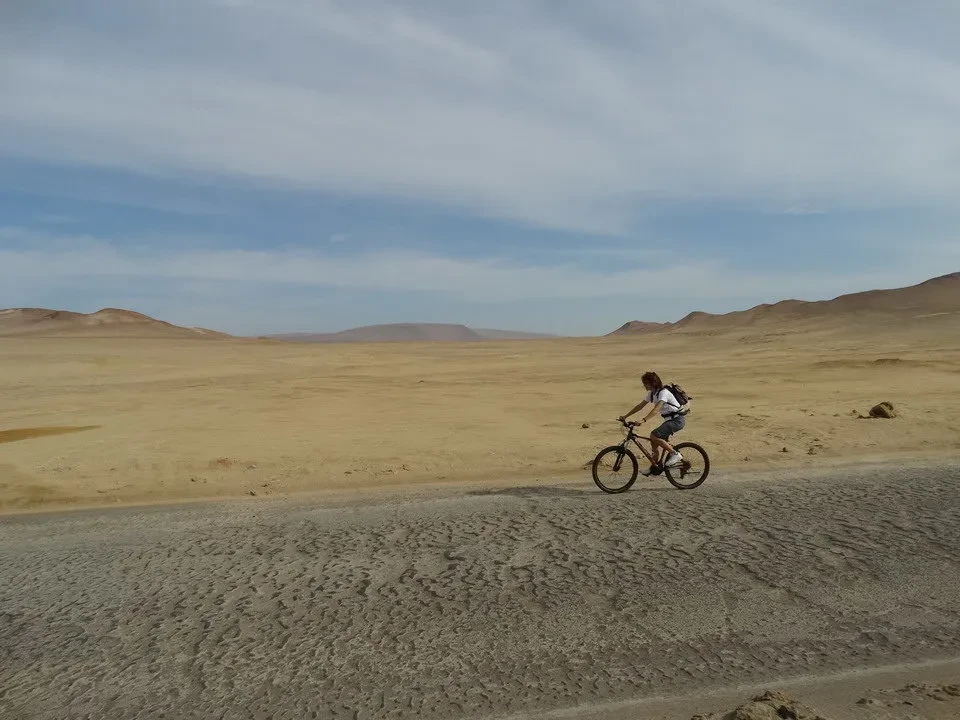
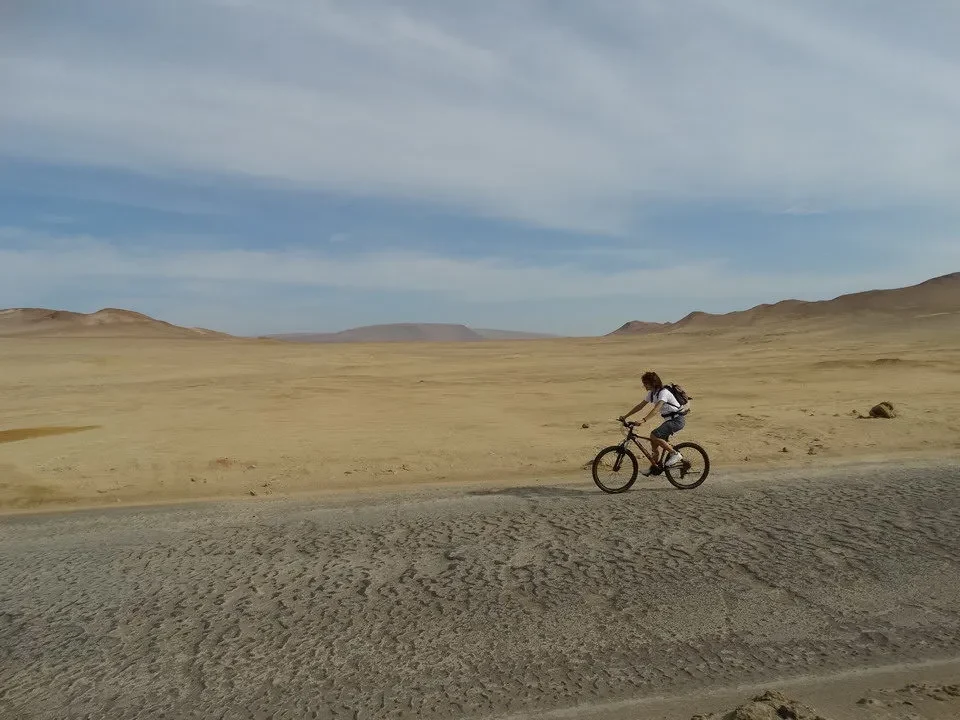
The weather has turned pleasant and stable; it's not too hot, and everything invites us to... rent some mountain bikes after taking possession of the room, I booked the boat trip for tomorrow to the Islas Ballestas and ate a sole ceviche with pisco sour, a mix of pisco, lime, sugar, and egg white. Using bicycles, which we can question their suitability, we ride along the unpaved roads of the Paracas National Reserve, an area among the driest in the world, which will take us to see the sandy beaches. Smooth coastlines on the Pacific The cathedral is particularly beautiful; it's a stunning rock formation that once formed a natural arch, which collapsed during the earthquake in 2007 due to the force of the quake.
We continue towards Lagunillas, visiting the interesting Interpretation Center and returning just before sunset, covering a total of at least 25 kilometers. We enjoy this moment from the beach of Paracas, in a a symphony of warm colors... along the waterfront, covered in a shimmering and fragrant layer of green algae. There are a limited number of foreign tourists in town, and the local restaurants seem to be suffering. Along the promenade, we see one of the typical "naked" dogs, meaning those without fur, which were already present during pre-Columbian times, but have since been replaced by European breeds, mainly because they are more aesthetically pleasing. For dinner, you can't miss the fish; this will be one of the few occasions where we are facing the ocean. We enjoy a dish of sea bass with scallops and sole with shrimp and lobster sauce, all surrounded by the famous Peruvian potatoes and cooked vegetables. Like in the rest of the country, the cuisine is very spicy, thanks to the widespread use of chili peppers, the famous rocoto. We try Cusquena beer for the first time, which we immediately appreciate, especially in its dark version.