

Day 12
Machu Picchu I
Towards the Great Goal, passing through Hidroelectrica
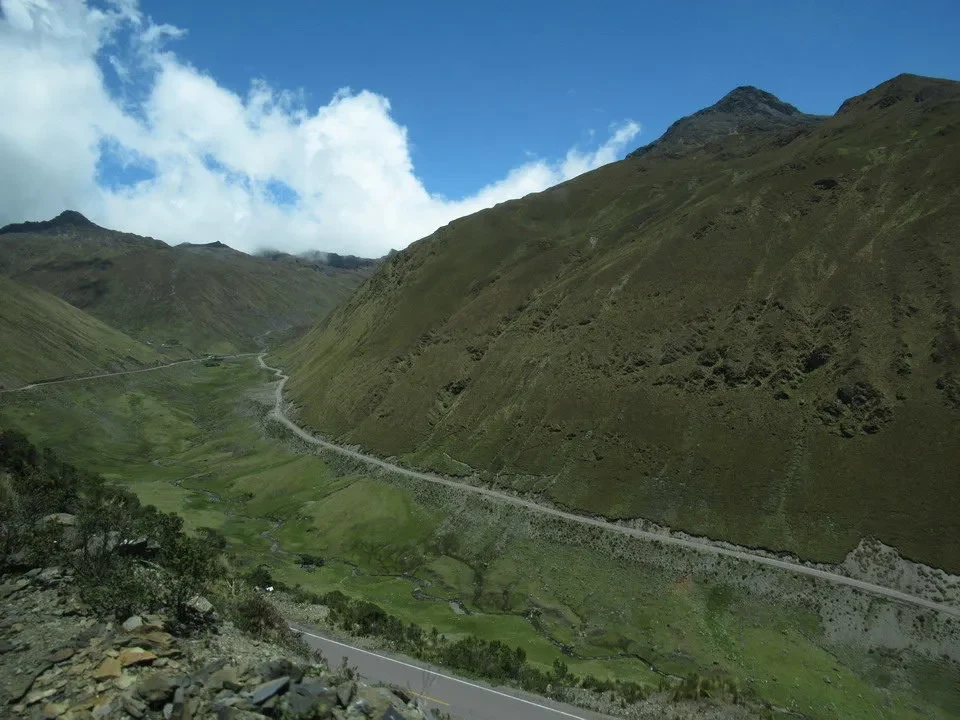
From Cusco to Abra Malaga, descending towards the high jungle.
At 7:30, we are picked up from the hotel by a minibus to depart at 8 for a two-day trip planned for visiting Machu Picchu. Leaving the city behind, as we ascend to the highlands, we immediately see... wide and green valleys we ascend to an altitude of 4300 meters at the Abra Malaga pass. The weather is beautiful, but once we cross the pass, we encounter the classic Andean mists, also known as fog, which gradually dissipate as we descend to 1300 meters. Every now and then, a stop at the shops along the road allows us to drink something, stretch our legs, and breathe fresh air, since the air conditioning cannot be used to avoid overheating the engine on the steep Andean roads. Opening the windows is definitely an option, otherwise we would only inhale dust, especially after Santa Maria where the road becomes unpaved.
Along the Urubamba River to Hydroelectric
Here it begins. the real adventure in an environment typical of documentaries about the Andes. A vertical wall above and a steep gorge below, at the bottom of which flows the Urubamba river, Vilcamayo or Vilcanota in Quechua, meaning Sacred River. And they say that it is dry: seeing it after the rains must be an amazing experience. In between is the road to Santa Teresa, narrow, faithfully following the curves of the mountain. The village we encounter after half an hour of bumpy ride is certainly not beautiful, but it is surprising to see it so large in such a remote place. It's astonishing how a human settlement can exist in such a wild context, but the economic miracle of this Inca site is its answer. It was washed away by a flood in 1997, along with 23 km of railway; the town was moved higher and a few years later it was all functioning again.
In reality, Machu Picchu, the Great or Old Mountain, has an unusual history. Its existence is due to the fact that the Spanish did not identify it. At the time of conquest, no one was aware that there was a citadel built on a saddle between two mountains in the jungle. Later, the local inhabitants, who were aware of the location, literally failed to realize that the site could have historical and archaeological significance. It was at the beginning of the last century that an American expedition brought it to light, taking care of cutting down the trees that surrounded it and starting studies. But from there to reaching tourist exploitation will still take almost another century. Its inconvenient location and a reputation that took time to develop kept it away from major circuits, so we spoke with people who used the terraces for playing football as children. Then it was rediscovered in the context of business tourism, and since then, its rise has been unstoppable, up to today's excesses, where it is necessary to regulate access to the public.
Everything revolved around money, so anyone who wants to visit Machu Picchu using traditional means should budget approximately $500. More specifically, the train operated by a Chilean company from Cusco to Aguas Calientes costs $133, and the same amount for the return journey; the bus from the town to the entrance costs another $12 and the same for the return; the entrance ticket amounts to 152 soles, which is approximately €40, then you have to add the guide inside the site, food and accommodation in Aguas Calientes, which are anything but cheap. Even starting from Hidroelectrica as we did, it's not cheap if you take the train, $33 only for the journey to Aguas Calientes, five soles for Peruvians, and the bus the next day. But we are hikers and we know how to manage our resources, in addition to loving immersion in nature and history. We managed with $110 including transport from Cusco, entrance fee, guide, overnight stay and dinner.
Along the tracks towards Aguas Calientes
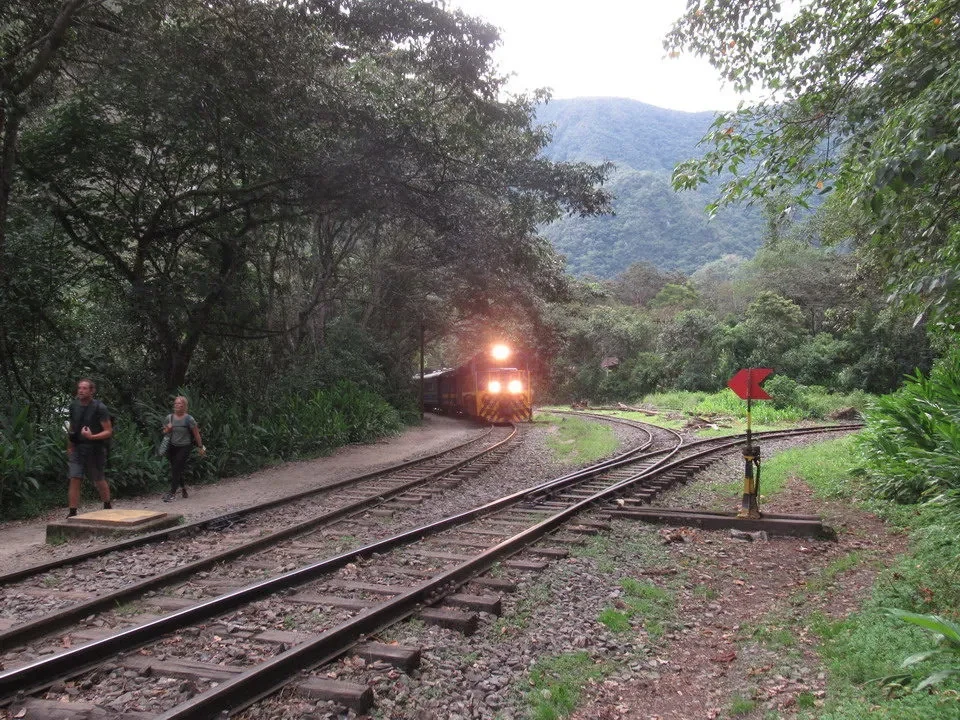
After Santa Teresa, the minibus heads towards Hidroelectrica, arriving in about twenty minutes. There is only one small restaurant here that serves a rather basic buffet lunch, after which we are ready to leave, as we have not come all this way for leisure. Following the train station, we start climbing, cutting through the curves of the railway road, before continuing along it. long walk on foot A 12 km long stretch leading to Aguas Calientes. The section is gently uphill but the challenges mainly come from where you place your feet: on irregular or side rails, where loose stones can cause dangerous misalignments? We will take a mix approach, paying close attention to where we put our feet; we cannot afford any mistakes, as this could ruin the entire trip.
The sky has very few white clouds, but it's so clear that we would already book for the following day. We are also with many young people from all over the world, and a pleasant atmosphere quickly develops, with jokes and conversations starting as soon as we left Cusco by bus. Every now and then I took a train. but there are absolutely no risks: the train's noise echoes within the forest, and the drivers certainly don't hesitate to use the acoustic warning signals. Furthermore, when the train approaches, the ground also trembles. Always walking along the Urubamba River, by 6 pm, we arrive in the town of Aguas Calientes, which opens up outside the vegetation at the bottom of the valley like a small Las Vegas in an Andean version. Neon lights and signs everywhere, people coming and going; it's surprising, but not really that much. We are facing Machu Picchu and many tourists busy buying souvenirs probably don't even realize the energy this place carries. A very nice dinner, a short walk to get to know this fascinating environment and then straight to bed, as tomorrow is Sunday.


