Day 13
Machu Picchu II
The majesty of Machu Picchu on a sunny day
Ascent at dawn towards Machu Picchu
The day begins shortly after 4 am. Within half an hour, we set off to reach the gates leading to the path. When we want to have the complete experience, we mean climbing on foot, overcoming a difference of over 450 meters, along a path within the vegetation and with humidity that is already breathtaking at this time. Remembering that we are passionate about mountains and that the trail perfectly replicates those of our Alps, we adjust our pace so that we can breathe well despite the humidity. The altitude is not a problem: Machu Picchu is only 2400 meters high. We arrive in just over an hour and realize that we are experiencing a magical moment; we are in the sacred place of Inca culture and we don't even bother taking selfies, because we are sweating profusely.
Let's meet our guide who will explain the site to us, and then the rest of the group arrives by shuttle bus. It's just after 6 am, and the tour is about to begin: The sky is covered with clouds. which appear to be just high fogs. We enter: the ancient city immediately opens up before us, although it disappears after a few minutes behind a dense fog. Before us, only grey and some meters of visible lawn on the ground. But there is no need to worry: the guide, who knows the place like a tamer of wild animals, assures us that these fogs represent the prelude to good weather. And for this reason, we are advised to immediately go to the most panoramic point from which we should have a complete view of the city.
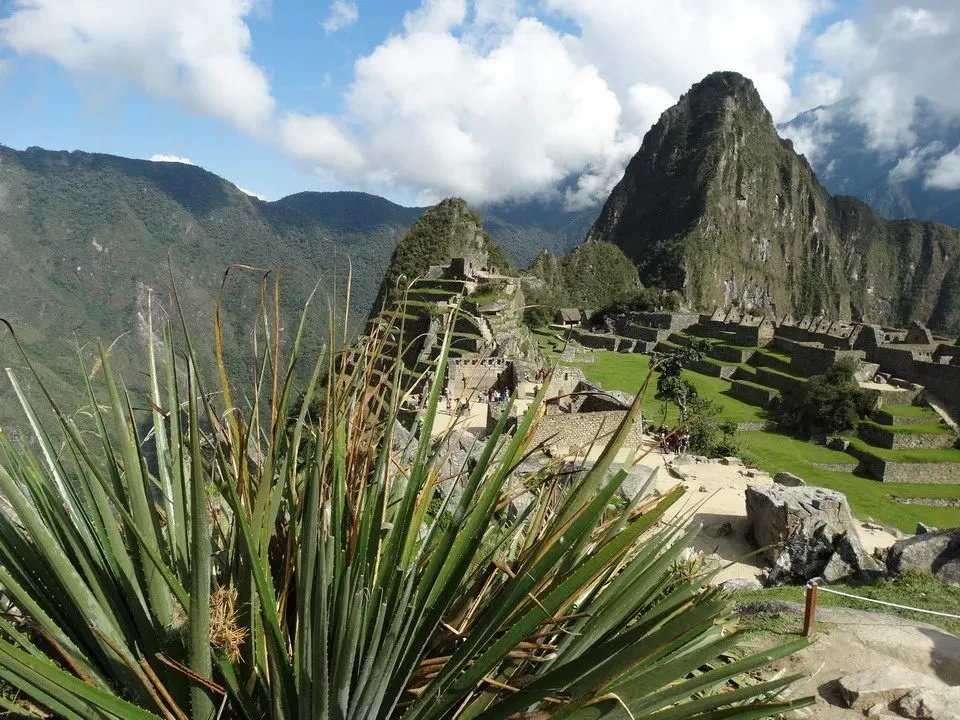
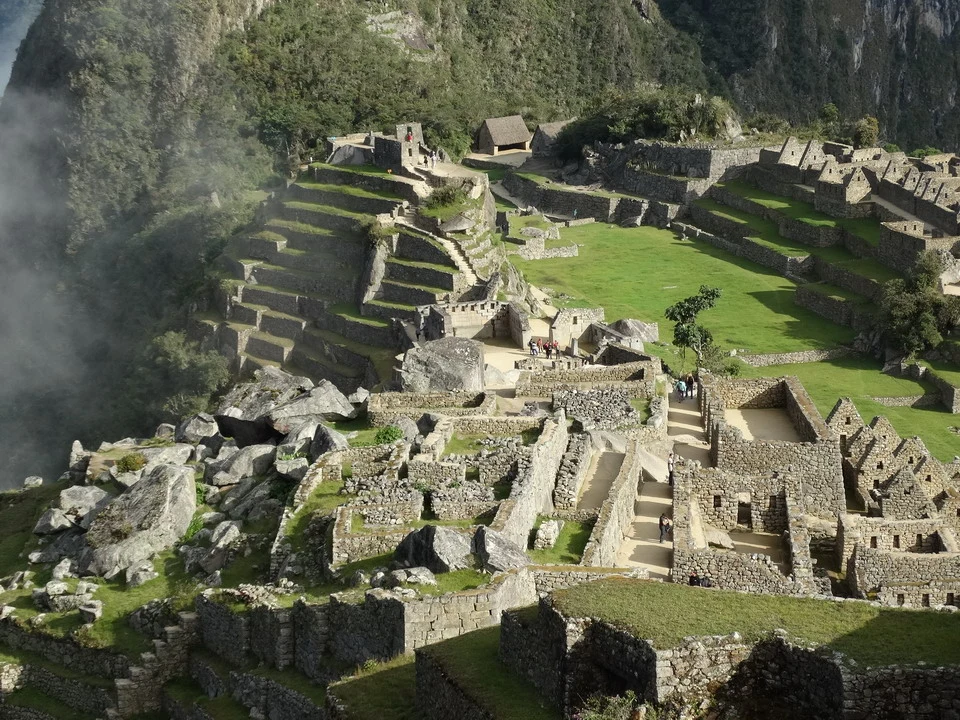
While our guide is explaining the history of the site, and the explanation is indeed interesting, we all suddenly turn to look at the fog that disappears: The sunlight reflects brightly. and its arrows illuminate Machu Picchu, it's really worth mentioning, in all its splendor. Inti, the Sun God, has been particularly generous with us: despite the rainy season having already begun, he delighted us for two days during which the star illuminates the result of the Inca architects' skill. The green frame completes the work; the peaks stand tall with some residual mist, so as to make everything even more mystical.
This is the energy that emanates from Machu Picchu, a city designed and designated for astrological observation and study, in an era when priests and astronomers were one and the same. And we still know very little about this hilltop, where the noble ruins lie, what it truly meant, because they were built right here, far from the cities. Perhaps the Incas possessed knowledge that is still beyond our understanding today. They did not have the wheel or iron, but in the development of thought and its energies, they were certainly ahead of us. They also did not have a writing system other than the enigmatic kipus, knotted cords used to express meaning, a system even older than hieroglyphs or ideograms, but this does not mean that evolved ideas did not function in their minds, which our rationality has prevented us from understanding. How much has been lost, or perhaps never created for posterity.
Inside the sacred city of Machu Picchu
Where the guide's exhaustive explanations end, let's try to remember what we read in Prescott's "Conquest of Peru," and then we can also use our imagination to see the streets of this unfinished city come alive. Everywhere you find stone blocks that are not in their final position; probably the Spanish conquest froze everything at a certain point, stopping the evolution and history of a civilization that deserved to continue until today to teach us so much.
The guide is excellent; she explains with passion the daily life of the Incas, how and why the city was built. It feels almost as though we have a time machine, and for a moment we can return to when Machu Picchu was bustling, perceive the spirit of knowledge that is evident in its remains, when scientists observed the clear summer sky and perhaps discovered something that still eludes us today, after their disappearance. Certainly, the state organization contemplated positive aspects that go beyond our fragile democracies, uniting the rights and duties of each individual.
A special mention deserves the human and animal sacrifices. It is known that ancient societies were accustomed to killing in order to appease gods and spirits, and South America was no exception, especially among the Aztecs and Mayans. The Incas, on the other hand, showed greater sensitivity, if we consider their time period. Animal sacrifices were only made in cases of necessity, for example, to ask for rain during long periods of drought. A llama would be sacrificed, and if it persisted, another one would be killed. If the situation worsened further, a human being would have to intervene. Despite the brutality of the act, they tried to minimize the suffering by causing the most painless possible death. As usual in these cases, a young girl was chosen, a symbol of purity, selected from among those destined for sacrifice, i.e., those who knew from birth that they were meant to be sacrificed and were therefore raised accordingly. All this makes people shudder today, but if we think about the violence perpetrated by the conquistadors in the name of God, it seems insignificant.
But apart from these acts of violence that the Incas considered necessary gestures, the civilization had rules that, if applied, would also be very useful in our times. In particular, they were required to follow three fundamental rules: not to steal, not to lie, and not to be lazy. It seems that beyond the noble declaration, these rules were truly followed and respected if, as we can see, the cities did not have internal control or security systems but only for protection against external intrusions. The Incas practiced a conquest system that was very different from what we are used to thinking about. When they intended to conquer another nation or tribe, they would initiate contact with the aim of reaching agreements that would allow for peaceful annexation. There were certain non-negotiable conditions, such as adherence to their religion, the learning of the Quechua language by the leaders, submission to the Inca, and other points considered fundamental.
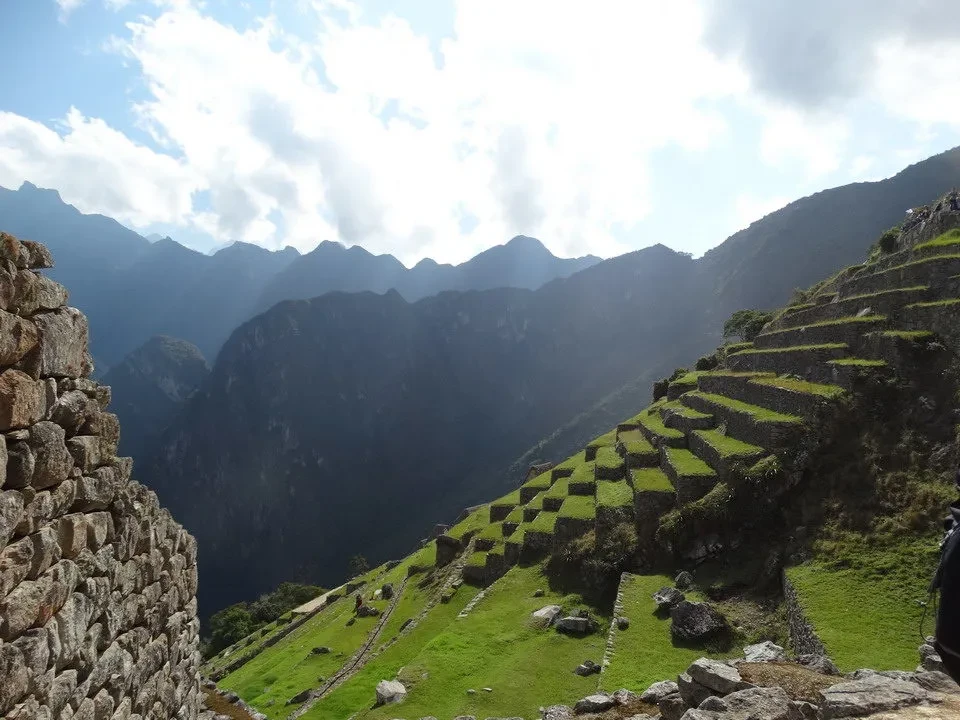
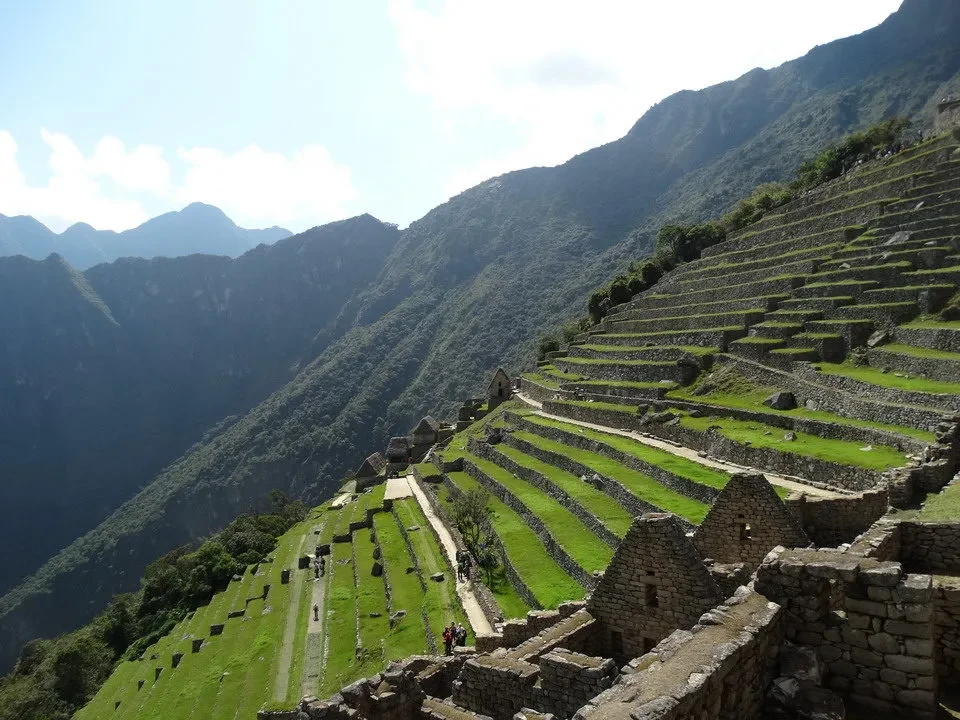
The city is divided into three parts that can be easily distinguished from above. the left side was an area for service workers and farmers. the right side It is dedicated to places of worship, noble and observation residences, while the upper part was used for cultivation, being rich in balconies... and provided for the sustenance of the inhabitants. These were constructed in layers with earth and clay to allow good drainage and the discharge of heavy summer rains outwards, preventing the retaining stones from slipping. The places of worship or power can still be clearly recognized today from the stones used in their construction.
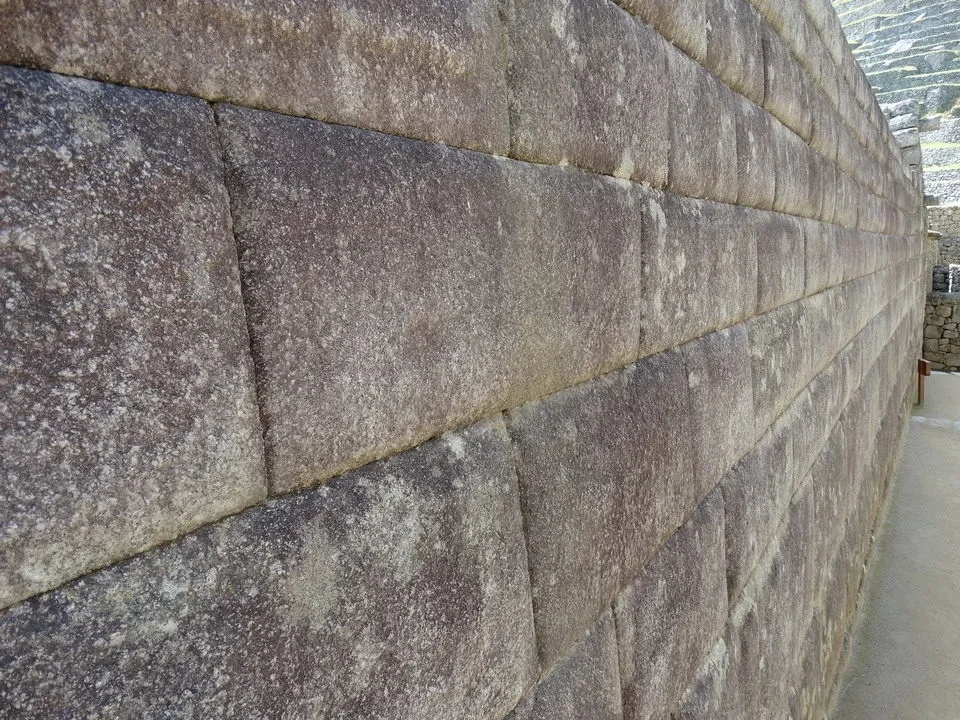
Although the reason for building the site in this location is not yet known, it is at least strange that it aligns cosmically between the Wayna Picchu mountains in front and Machu Picchu behind, with perfect alignments during the solstices. And we know how important these were considered by ancient peoples. Interestingly, when a photograph of Wayna Picchu is tilted 90 degrees, the profile of a face can be seen, with a very prominent nose and chin. The geographical reasons for the location certainly influenced the choice, but the reason for its construction remains obscure. Given that the saddle on which it stands has a granite base and that the stones used could easily have been obtained locally, when they were intended for constructions of this type, they were carefully smoothed to overlap so that not even a piece of paper could pass between them. It is impressive how the blocks fit together or stand side by side with such care, and yet we are still unable to understand what technique was used to obtain them.
The stones formed a convex shape towards the center and had rounded edges so that the rain would slide outwards rather than into the almost invisible channels. The walls were inclined inwards, as were the windows, which were trapezoidal for seismic reasons. The construction system with perfectly adhering stones is called Inca Imperial, while in other cases it is simply called Inca. The fact that what remains standing after the conquest is a clear confirmation of the effectiveness of the designs. When the walls did not require such precise construction, they were built with unhewn stones and joined together with mortar made from mud, clay, human hair, animal fur, and a glue derived from agave liquid. There were many roads leading to the site; the most famous is the so-called Inca Trail, which starts in Cusco and passes through Ollantaytambo before reaching Machu Picchu near the watchman's house.
After the thorough explanations, we explore the city to admire it closely and are constantly more amazed by how they were able to... smooth the stones perfectly adhered to each other. We can now see the Temple of the Sun, the Holy Rock and the Condor Group, to state only the most obvious points. The designated route doesn't cause any particular inconvenience; after all, it is understandable in order to avoid congestion, given the large number of visitors. After four hours, we begin our descent along the path back to the bridge where the starting point is located and continue on foot. the route along the railway approximately 12 km.
The early alarm, the climb in extremely humid conditions, and the visit took its toll on our bodies, which were eager to lie down on the grass near where the minibuses would pick us up. On time at 3:00 PM, we left Hidroelectrica and retraced our steps through the deep canyon carved by the Urubamba River, which was impressive in several places. We won't remember our return journey for its comfort, but at this point it doesn't matter; we suffered until 9:00 PM when we safely returned to Cusco. We saw Machu Picchu, and we saw it in all its splendor, and we saw it as we wanted. That is, with a group of young people with whom we had a good connection, and with the spirit of a traveler, not a tourist. Confident that this arduous excursion had paid due respect to Inca civilization in places where its spiritual and natural sanctity had reached its peak.
Exhausted, we enter the first restaurant in Cusco that inspires us and discover one frequented by locals, where we enjoy a delicious ceviche with the now familiar chicha morada to accompany it. In reality, the sweetness of the corn-based drink contrasts slightly with the acidity of the lemon on the raw fish, but we are in Peru and gladly adapt. In Peru, 83% of the population speaks Spanish and 13% Quechua, while the remaining part is divided among the languages spoken by the people of the Amazon rainforest and Lake Titicaca.