Day 3
Isla Ballestas and Huacachina
From the Ballestas Islands in the Pacific Ocean to the Huacachina desert in just a few hours.
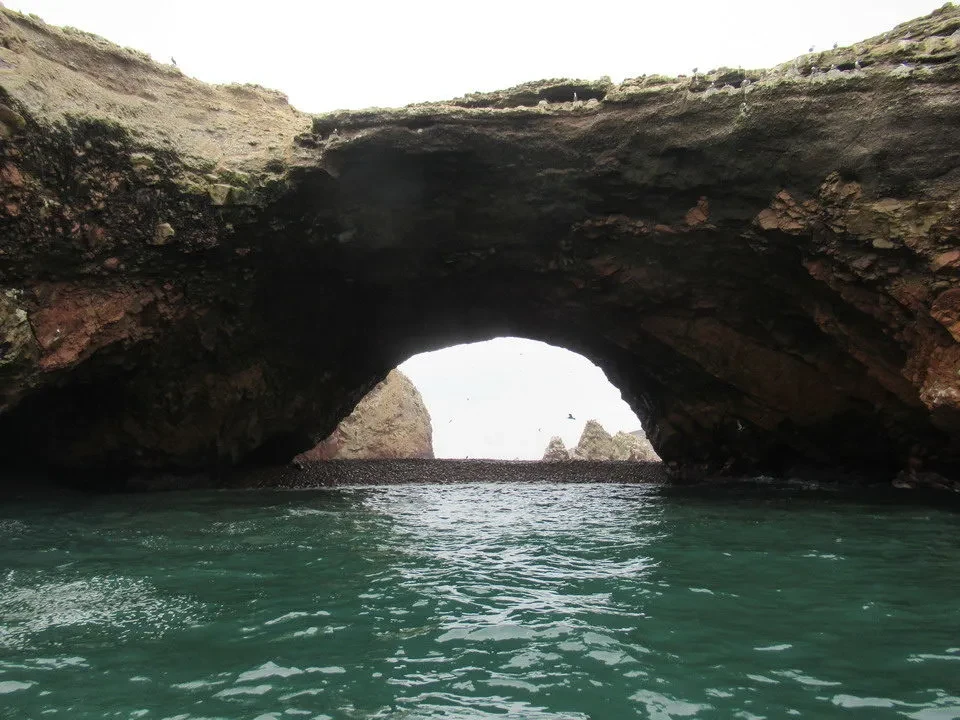
Isla de las Ballestas, with penguins, guano, and marine lions.
The hotel we are staying in has the classic earthquake-resistant features, which are very appropriate for this beautiful but unfortunate region. We notice that in public areas, it is mandatory to have a sign indicating the safest location in case of an earthquake, usually located under a beam or archway, as well as the maximum number of people authorized to stay in the area, in order to ensure its rapid evacuation in case of emergency. All around, there is a desolate landscape of houses under construction that never exceed the first floor. Along the coast, other signs on a green background indicate the tsunami evacuation route, reminding us that the danger comes not only from the land but also from the sea. At 8 am, we are ready to board at the port for our Isla Ballestas for a two-hour excursion.
Some minor issues delay our departure by about half an hour, leaving us with the worry of missing the next bus to Ica, which was already booked. The islands are part of a submerged ridge, which has emerged in parts, so they are still rich in fossils. We head towards the Candlestick, a geoglyph about which we know very little, as evidenced by the altered photos compared to what you see in person. The climate is not particularly hot, despite being at the beginning of summer with only 13 degrees south latitude; there are even some clouds covering these jagged islands located close to the coast, and the temperature, they tell us, remains constant at around 14 degrees. From the very beginning, we find ourselves in a riot of birdlife that I have never seen before: among them, cormorans, pelicans, and the very friendly… Humboldt penguins; these live for about 15 years, while cormorants can reach 25.
Among the mammals, there are seals and some others. sea lions; most of them are away and will arrive on the islands within a few weeks for the babies' arrival. One of the sightings is completely covered in black It seems that a multitude of birds have gathered here, and it's easy to imagine how this large population produces tons of guano, which is strictly regulated. This is collected every eight years with an operation lasting a couple of months, and a harbor has been built to allow the ships to dock. In the past, there were even wars with neighboring countries for this valuable fertilizer. The noise of the feathered flock is persistent, while the intense air traffic of birds overhead inspires some legitimate fear of being fertilized. We are following the steep cliffs where seals rest, lying comfortably on the rocks.
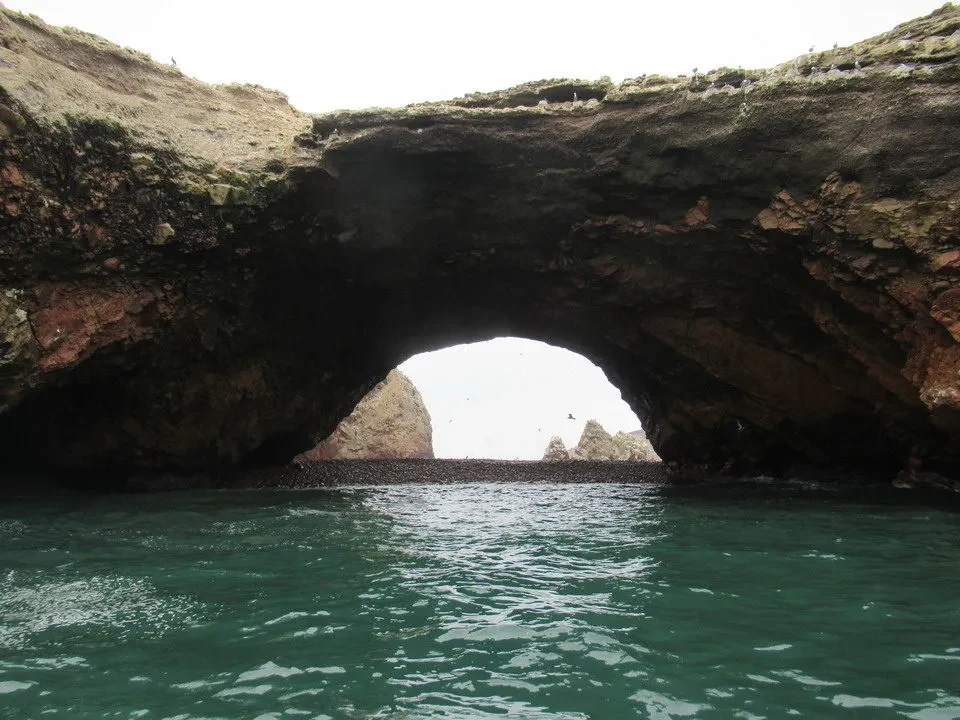
The trip turned out to be fascinating, bringing us face-to-face with an amazing variety of birds, especially due to the sheer number. It remains a mystery why so many birds chose this particular location, but it's a question that will remain open for discussion regarding nature. As for us, we had a small problem: our boat was unable to depart. What worried us most wasn’t being stranded just a few kilometers from the coast, but the risk of missing our bus connection to Ica. Another boat approaches and after a few minutes of attempts, we finally manage to set off at full speed towards Paracas. From there, we quickly move to retrieve our luggage and take a taxi that gets us to the terminal in just five minutes. Over the next few days, we will be able to appreciate how the Peruvian organization is commendable despite any inconveniences that may arise. Delays and setbacks are inevitable due to traffic and a situation far from perfect, but people always demonstrate their helpfulness in finding solutions to the problems that arise.
Huacachina, Ica and the oasis turned into an attraction.
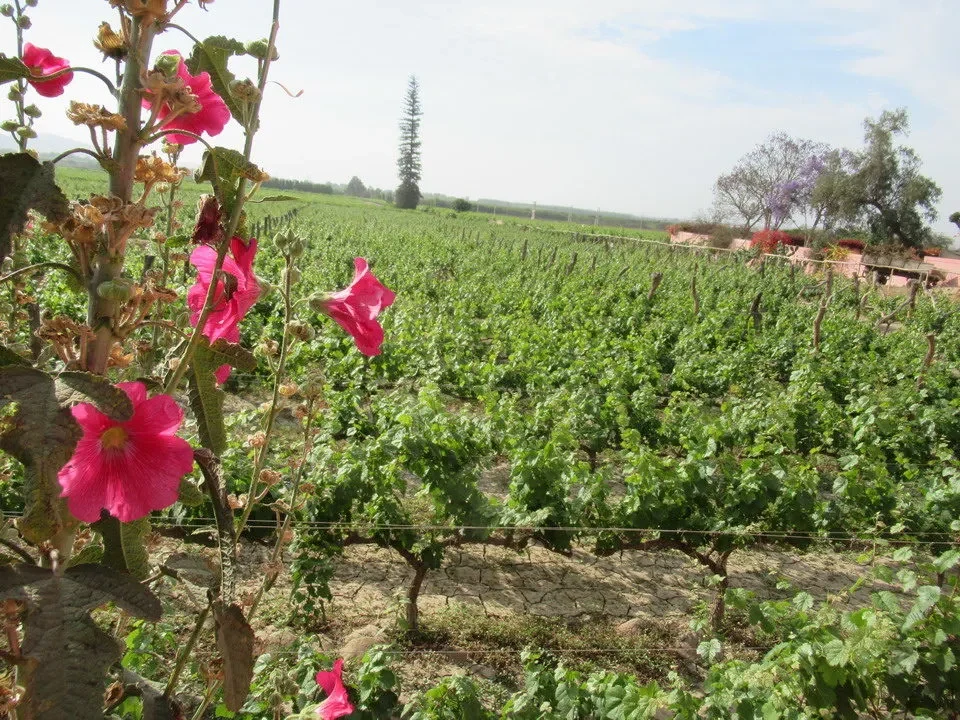
Today we also chose the bus company Cruz del Sur, booking the first row on the second floor, from which we enjoy the scenery that alternates between desert areas and cultivated land, with potatoes, asparagus, and artichokes, all the way to the green vineyards of Ica. From there, a taxi takes us to Huacachina, a lush oasis nestled in the scorching desert. Unfortunately, the area has been overrun by tourism, and very little of its original splendor remains. The wonderful crescent-shaped lake, surrounded by palm trees, is now crowded with street vendors, shops of all kinds, and tourists wandering around; while dune buggies are parked on the dunes, some are speeding in the scorching sun, while most are waiting for sunset, which will bring cooler temperatures and eager tourists hoping to experience a desert sandboarding tour.
In this Peruvian-style Disneyland, we try to reach a viewpoint from which to take some photos. By carefully putting on our sandals to avoid getting sand in our shoes, we find ourselves sliding on a surface that is almost too hot for our feet. With some effort, we manage to reach the pre-determined observation point, capturing the landscape and then going for lunch with a fruit salad and ice cream. In the beverage shops, we also find Inca Cola, a drink the color of lemonade with a strange taste, almost like chewing gum. It's Sunday, so families on day trips are in charge, with groups of noisy children splashing around in the lake. We think we have seen everything that could be interesting about Huacachina and take a mototaxi, a tuk-tuk, to return to Ica. The Plaza de Armas square doesn't offer much to see. cathedral It is closed with bell towers supported by wooden structures, a consequence of the devastating earthquake. The church of San Francisco is remarkable instead.
Tacama, Cachiche and overnight bus to Arequipa
In all the cities we have visited so far, the damage caused by the 2007 earthquake is clearly visible: unfinished houses, piles of rubble that haven't been removed, and a temporary-looking urban environment. We are told that the funds for reconstruction arrive in small installments, while the local population is mostly poor and unable to cope on its own. Another problem seems to be water, which is becoming increasingly scarce for irrigating crops necessary for survival. The best time of year is in March, during the grape harvest season, when a fifteen-day festival takes place as much of the economy revolves around wine production. With another taxi, we are taken to... Bodega Tacama, from which a guided tour departs to the interesting wine cellar... which helps us understand how the best Peruvian wines are produced, specifically from this region: red, white, sparkling wine, and the famous pisco. This last one is an eau-de-vie made with grape must instead of pomace, as happens with our brandies.
Thanks to the high temperatures, the wines are quite alcoholic, but they are usually mixed to improve their taste and roundness. In any case, these are wines intended for consumption within one and a half years, except those that undergo barrel aging. The black grapes are pressed twice in order to enhance their flavor, while the white grapes are not re-pressed. The skins from the latter are then used as fertilizer. The company was originally owned by religious people, before being sold at the beginning of the 19th century to a family, and is currently in the hands of a private Peruvian individual. Next to the winery is a beautiful restaurant, where diners have just finished their drinks and are preparing to stroll through the adjacent garden, beautifully decorated with flowers and ancient tools used in vineyards and wineries. The whole place is very interesting, only disturbed by an army of annoying flies, which are attracted to the area by the sweet aroma of the wine and take advantage of the tourists present.
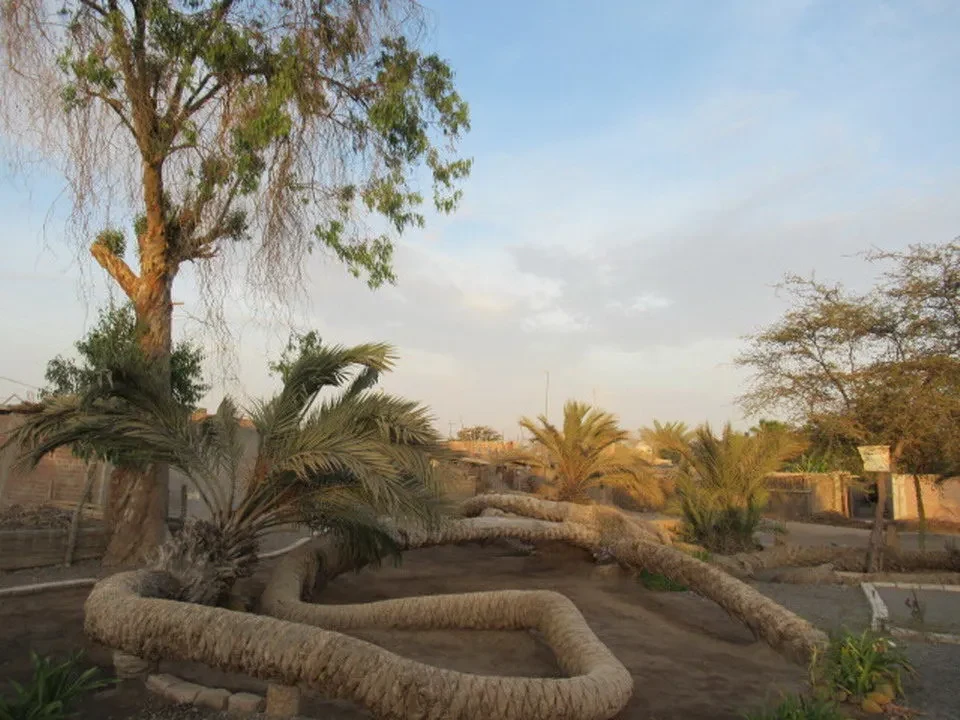
Since we still have about an hour left, let's make the most of it by visiting the Witch Tree in Cachiche, where they say predictions are made, in a magical and enchanting environment. And not far away is the " Palm tree with 7 heads"A palm tree that instead of growing vertically has branched horizontally, eventually having seven trunks or branches, some of which are cut off. It turns out that if one of these grows, after eight or nine years it brings bad luck; the last time was in 1998 when there was a river flood. It may seem like a paradox, as Ica is located in almost desert-like area, but the Rio Ica flows from the nearby Andean mountains and can sometimes be dangerous; during that occasion, much of the city was flooded. We enter the Church of San Francisco again, now illuminated while a mass is being celebrated. Now it's really time to go to the terminal, where at 7:30 PM the night bus to Arequipa departs, with comfortable reclining seats up to 160 degrees. Dinner will be served on board, as well as breakfast the following morning.
Along the streets of all of Peru, you constantly encounter walls decorated with political slogans, but mostly invitations to vote for this or that candidate. Despite being somewhat worn, they often bear the date of recent elections. This is a constant that will accompany us throughout our journey, changing the names depending on the area, as it essentially concerns mayoral candidates or regional elections. The same can be said about political debates: both the radio stations of taxi drivers and the TVs in bars are tuned to programs broadcasting talk shows with representatives from parties, demonstrating a completely dormant political interest in our area. It is also worth noting that on Sunday, when we return, Peru will go to the polls for referendums asking citizens to express their opinions on certain constitutional amendments, the most significant of which proposes the non-reelection of congressmen in Lima. Apart from this very heated moment, there is still a palpable interest among citizens in public affairs, with the difference that they continue to engage in debates where politicians use familiar arguments such as honesty, justice, and equality, similar to those found everywhere in the world, especially in Latin America. The perceived level of corruption here is also very high, but there is no yet the sense of distrust that permeates our society; perhaps we are still in a phase where one believes that the next politician could be the right one. It is therefore not surprising to read the promise of a politician who assures "water for everyone," as if he had the necessary keys to open the valve that allows the precious liquid to flow into the desert or to intervene and obtain rainfall.