

Day 10
Bolivia – La Paz
The Bolivian capital, modern apartments and ancient poverty.
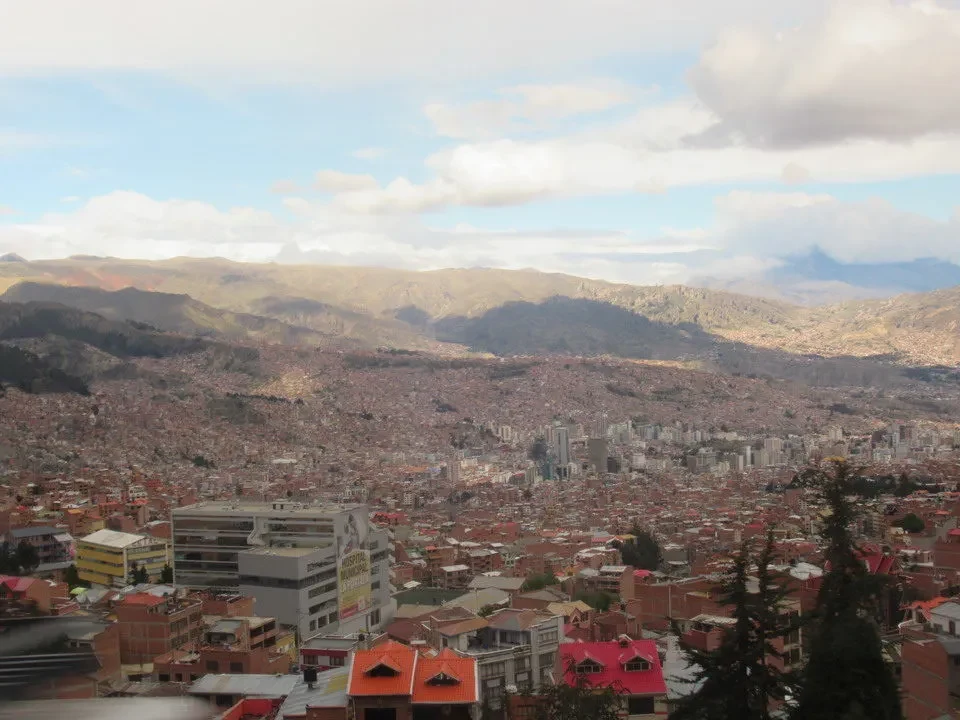
La Paz from above: cable cars and cemeteries on the hill
Following our hopes, we sleep soundly until 6:30 am, when we head to the hotel's breakfast buffet for a delicious start to the day. Some of coca leaves the utensils at the bottom of the cup, when poured with hot water, create a great drink that will provide energy for the whole day. We also chewed some to add extra strength. This morning, we plan to take a short flight over the skies of La Paz, something only possible in this city, thanks to the cable car system that runs from one side to the other of the metropolis. Near our accommodation, besides the main attractions, are also the termini of the red and orange lines of the aerial tramway, located where the old train station used to be, now well renovated to recreate the atmosphere of yesteryear.
The city is waking up on this festive day, even though the stalls along the streets never rest. After all, for these people, commercial activity is synonymous with their lives; in some cases, the shop is also where they sleep. Let's take the red line that takes us to its western peak, passing over the vast urban cemetery, heading towards El Alto. At its apex, they are setting up the local market; we stroll among vendors selling used car parts and stalls with the aromas of spiced stews or fried fish, dishes that many visitors are enjoying for breakfast. Once back on the red line, we move to the adjacent orange line, which instead climbs the eastern slope. From here too, there are stunning views of the city, with the dominant color being red for the exposed brick; as in this case, you pass through a graveyard Perched on the hillside, but this is where the native Aymara people are buried. The ticket is reasonably priced, and inside the stops and cabins, everything is in perfect order.
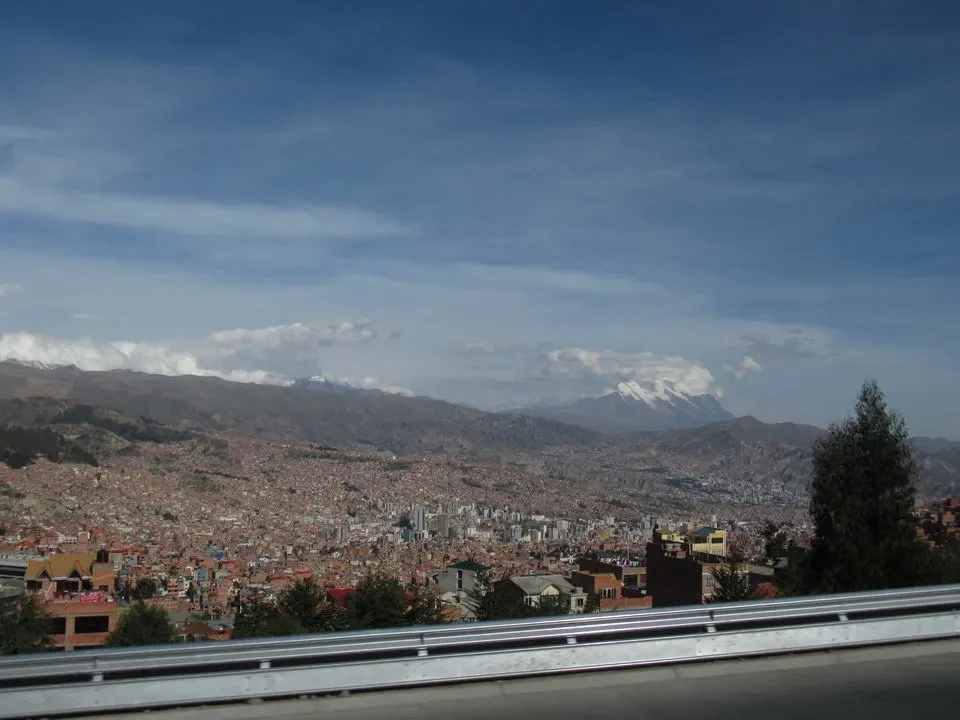
Civic center, markets and churches of the Bolivian capital
Once we've returned, we start the walk to see the most significant places in the center, such as the nearby Lanza market, which is currently sparsely populated due to the holiday and features colorful flower stalls. We enter the Iglesia de la Recoleta, where we notice a niche containing the statue of our compatriot, Saint John Bosco. We cross the bridge over Prado Avenue, the avenue located at the lowest point marking the boundary between the two sides, and shortly reach the cathedral, where it is notable the row of saints in their respective niches and various statues of Mary representing the Immaculate Conception, Assumption, Pious, etc.; different representations also include Jesus Christ. On another side of the square stands the presidential palace. Nearby, some soldiers are setting up chairs for a parade that will take place later.
We descend to cross the Prado again and head to the church of San Francisco, where mass is being celebrated. It's interesting to notice the final part: when the priest recites "go with peace," the faithful, instead of heading towards the exit, move quickly towards the altar as if they were eager to be in the front row. So many people gather waiting for something: at first, we are stunned not understanding what is happening and what they are expecting with such anticipation. We understand when we see the priest return to bless them, throwing abundant holy water on them. They don't use a common sprinkler but a real scoop from which they draw generously from a container that seems more like a bucket, although it appears disrespectful. Once blessed in this way, the faithful prepare to leave the church. Here too, there are countless niches with saints and madonnas.
We visit a less touristy part of the market where we can see what the locals of La Paz buy. Since dinner tonight is not planned as we will arrive late in Puno, we treat ourselves to an exquisite llama dish at one of the few traditional restaurants in the center. It's surprising how there are so few alternatives in the area; even the ones that exist offer Italian or questionable international cuisine.
Sunday parade, return to Puno and farewell to Bolivia
Let's take another walk around the "Witches' Quarter," where you can find all sorts of potions for any health problem. We are intrigued by the dynamics that lead people to buy these products. When we think we have seen enough, we are drawn in by the sound of a band and go to investigate what is happening two blocks further down. There is a long joyful procession With endless music, bands of musicians alternate with dancers and dancers divided into groups wearing modern and folkloric costumes: it's a real spectacle, especially from a choreography point of view. You can breathe the classic provincial atmosphere of Italy after World War II, with the simplicity of the parade, the music, and the clothes. When everyone has passed by and we have taken our photos, we return to the hotel. We hear the sound of a band again. It's the leader of the group who is walking around and arriving right in our direction. We see them again with pleasure and retrieve our backpacks, call a taxi, and go to the bus terminal to return to Peru'.
Having purchased the tickets yesterday, we should theoretically just present them to hand over our luggage, but the agency appears to be closed. We ask around and are bounced between different counters. We see a bus departing for Puno and inquire, discovering that another agency will handle transportation today, and everything resolves itself perfectly. Shortly after, our agency opens, confirming the redirection. The return journey is not one of the most pleasant: first, we find ourselves stuck in Sunday traffic on El Alto, leaving the capital, then at customs they make us unload all our luggage for checks. Finding nothing, we depart without any problems, but time passes. The positive note is another spectacular sunset over Lake Titicaca. After a few days with it, the lake says goodbye to us perfectly and with sunsets that we will never forget.
We leave Bolivia and its capital, where most people live with very little, and street vendors constantly try to earn enough to survive in a palpable state of poverty. There have been positive steps forward, and much more needs to be done, although the material and cultural growth of the country is evident. Finally, a note about the shoe shiners, young men who polish shoes on the sidewalks under scarves to avoid being recognized. The shame of doing a humble job forces them to try to become invisible, but in our eyes they deserve a monument for their courage in doing honest work and their desire to earn even a small income to pay for their studies. The future of Bolivia begins here.


