Day 4
Arequipa
The white city of Arequipa, so much history amidst the volcanoes.
Arequipa, the white city at the foot of the Misti.
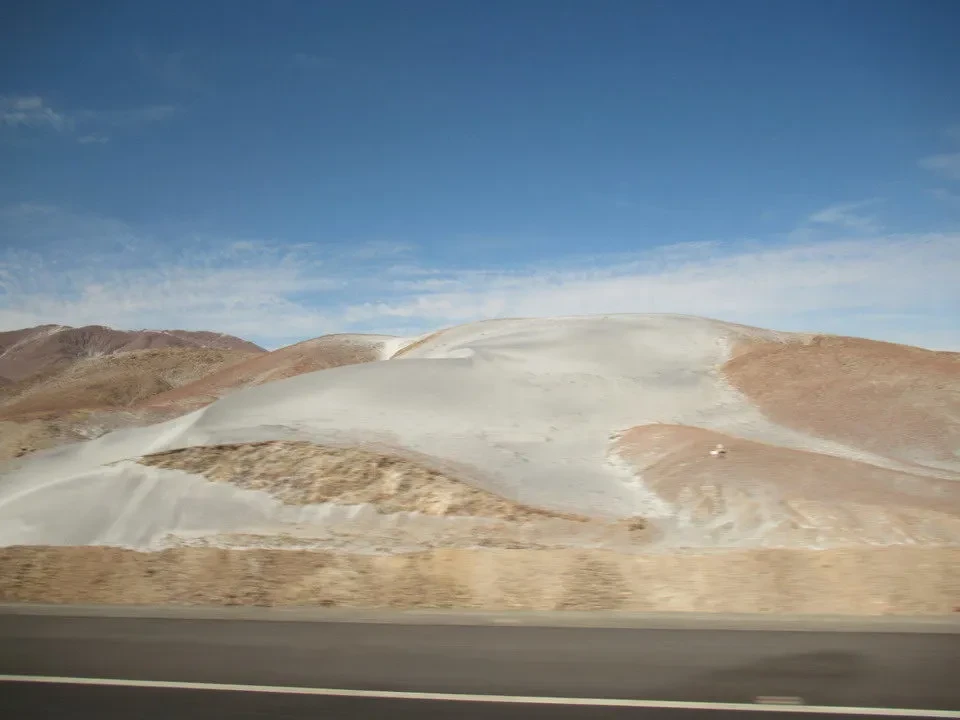
The night spent lying on the reclining seats of the bus covering the 720 km from Ica to Arequipa was not as restful as in my own bed, but it was enough to rest and arrive in a condition suitable for starting a new day in our destination. The sunrise at 5:30 prevented me from continuing to sleep, so I had time to admire the dry landscape that flows before us inland, towards the second city of Peru', known as the " white city Thanks to the coloring of the volcanic sillar stone, which makes up most of the house walls, the road winds along a steep slope where trucks and buses struggle. When we arrive in Arequipa, located at 2300 meters above sea level, separated by a rather fast-flowing river that descends from the surrounding peaks, the sky is filled with clouds.
We check into our room at a hotel with good value for money and get ready to explore the interesting historical center, starting from... cathedral We participate in the guided tour that takes us to see its upper part as well, reaching the roof from which we enjoy a wonderful view, especially of Misti, a volcano whose height reaches almost 6000 meters and is only 17 km away. We are amazed to see it without snow, but they assure us that during the upcoming rainy season, the upper part will be covered in snow. Sometimes this also happens during the dry season when the rare precipitation, which are actually scarce throughout the year, create a thin layer that lasts longer thanks to the tropical winter.
Market, Santa Catalina and neighborhoods of Arequipa
Here too, the buildings rarely rise above the first floor due to the ground's seismic activity: the last earthquake occurred about ten years ago and damaged part of the cathedral. In any case, it should be remembered that Arequipa is surrounded by volcanoes, which alone represent a sign of soil instability. We continue to the church of the Compania de Jesus, that of the Jesuits, who were expelled from the country several centuries ago and welcomed at the beginning of the last century. Both inside and outside, the building presents a series of decorations that contrast with the pristine austerity of the nearby cathedral. Inside we see a statue of Jesus Christ carrying the cross. dressed in a robe As in other places, the Christ is always depicted wearing clothes; even when on the cross, he wears a sort of kilt. In some sculptures, the faces are very dark-skinned, and some people want to make us believe that they have survived a fire, but it seems more likely that there is a form of syncretism, where a dark-skinned saint or Christ is closer to an indigenous population with brown skin.
The city has a square layout, almost as if it were designed by Roman urban planners, and is therefore easy to navigate without getting lost. Let's go to the San Camilo market, charming, where fish of all kinds are displayed with great skill and artistry, along with freshly cut or ground meat, a wide selection of offal such as tripe, spleen, and heart, vegetables packaged fresh and ready to eat, various types of potatoes in different shapes and sizes, corn, particularly the white variety with large grains and the black variety used for making chicha morada, seeds and cereals including many varieties of quinoa and rice, fruit from the Amazon rainforest, papaya, mango, avocado, banana, passion fruit, pineapple, lime, apples, and a wonderful selection of local cheeses. The potatoes are especially abundant because we are in the area where the tuber originated, which has since spread throughout the world.
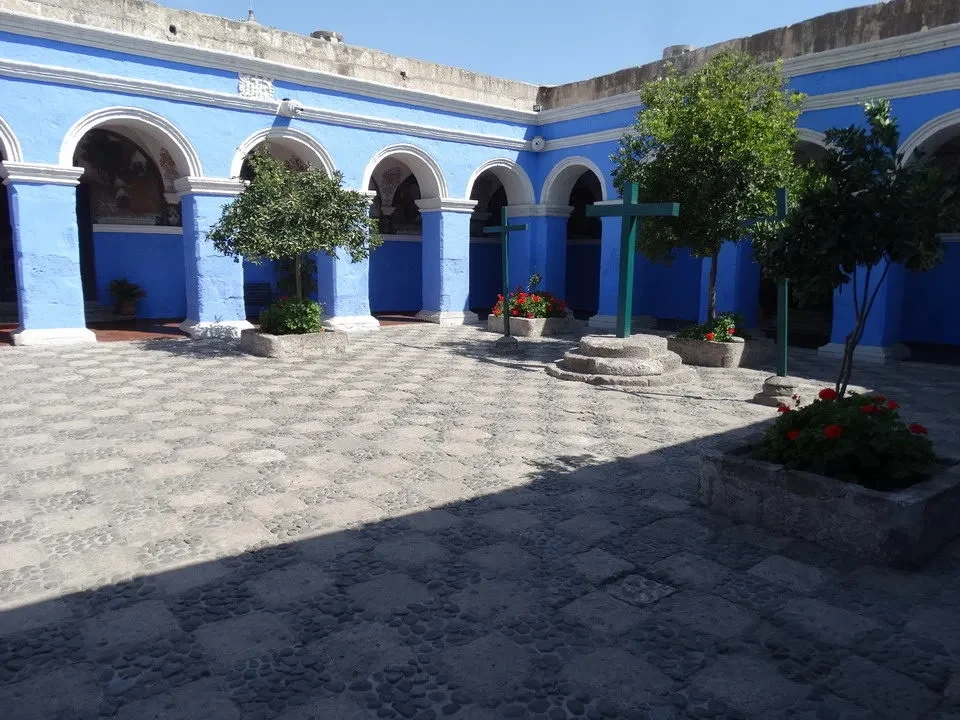
A quick look at the Ricketts House, which is currently the location of a bank, and it's time for lunch: we enjoy our first alpaca dish grilled. Before continuing the tour, we head to Tour Routas del Sur, with whom we booked the Colca trek in the past weeks and received few confirmations. I am reassured that our booking went through smoothly, and since the San Francisco church is still closed, we take the opportunity to visit the Monastery of Santa Catalina, a true gem that covers a large area of the city center. The place houses a convent of nuns for about 500 years, now partially used as a museum; it gains significance thanks to its narrow streets, almost like a town within a town. Everything is enhanced by the visitor's eye. red highlights and pale blue, further enhanced by the sun that beats almost vertically. The environment is also made more charming by the presence of a multitude of red geranium pots, in full bloom and well-maintained.
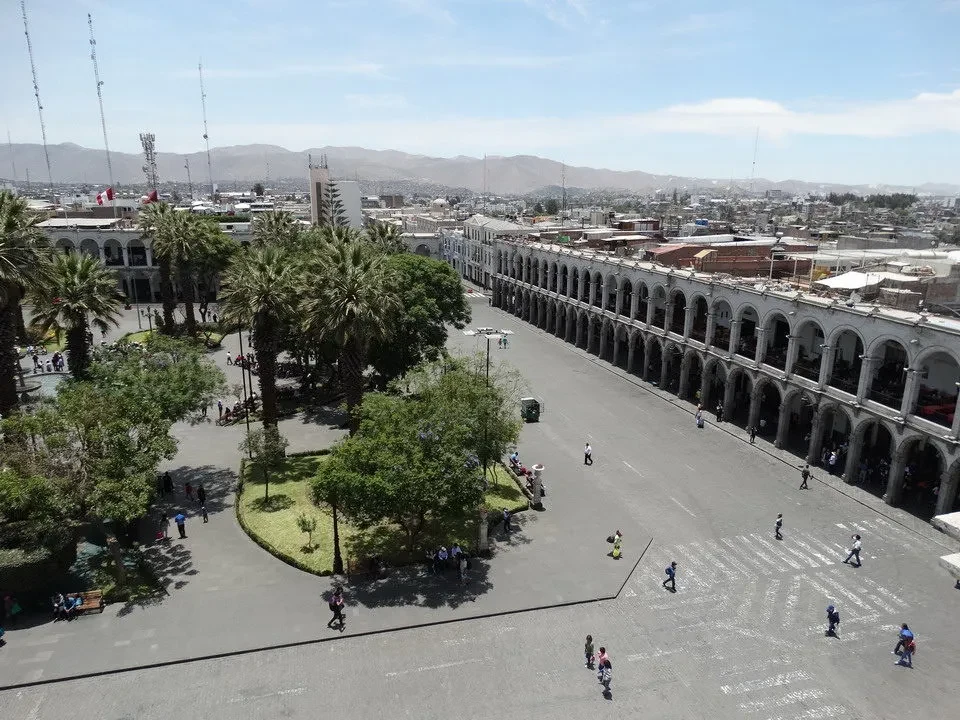
Let's take a walk across the stream to the Yanahuara neighborhood, where there is an observation point offering a wonderful view of the city with Mount Misti in the background. We return on foot through chaotic traffic to visit the Church of San Francisco, which has finally been opened, just as mass is being celebrated inside. After visiting so many churches, it's time for a meal: we choose a central restaurant that recently opened and offers a revisited Peruvian cuisine with a touch of creativity. We try a delicious platter of alpaca, ham with various sauces. tartar and grilled on an open fire. As for fish, you can't miss the local prawns and river shrimp, which are only available during certain seasons. A relaxing stroll to digest the meal is also a great idea, perhaps along the... Arm Square to see the cathedral and illuminated porticos. Some workers are setting up a Christmas tree, and it seems almost out of place to see it in such a bright and warm setting. It's only 9 pm, but it's already time to go to bed; the alarm will ring terribly early tonight.
Syncretism and devotion in the white city
In the churches, you often find depictions of Mary and saints with long bars placed at their feet, which are used to carry them in procession during various festivals. The way people understand faith is quite traditional when viewed through our European eyes. The places of worship are full of niches where all sorts of saints, including Mary, the Virgin Mary, the Immaculate Conception, and the Sorrowful Mother, can be found. People visit these locations to pray or ask for blessings, with a form of devotion that we only find among some elderly people living in remote areas. Depending on the grace you seek or the name you want, you will go to pray to one saint rather than another. The same names are often given to children based on their birth month; for example, someone born in June is likely to be named Antonio, in August Assunta or Immacolata, and so on.