Day 4
Thar Desert
Visit to the fort of Jaisalmer. The Thar desert with its dunes and sunsets.
The urban face of Laxmi Narayan Temple
Indian nights are usually marked by noise, whatever the reason. Although the hotel is located in a quiet area, there was a party in the neighborhood last night, and sometimes people don't pay attention to the volume. It is common to encounter weddings and the subsequent parties that accompany them, which can be quite noisy.
Breakfast on the terrace, simple but sufficient for our tastes: fried bread that resembled large lies, dahl with rice and sweet rice with raisins. At 9 am we meet the local guide whom we have already met yesterday afternoon: he tells us that he belongs to the Brahmin caste; his father was a religious guide while he preferred to pursue other activities. Nevertheless, if he had children who wanted to follow the religious path, they could easily become Brahmins despite him not having done so. This clearly shows that Hindu priests can certainly marry. Obviously, it favors the caste system (the Brahmin caste is the highest); as we walk down the street, everyone knows him and greets him with a friendly tone before any religious reverence. He is a person who knows how to get along; he has a good cultural background compared to the average and must possess a personality that gets along well with everyone, both for spiritual and practical reasons. The way he moves through the alleys makes him seem like a spiritual father figure; he has words for everyone, offers advice, and is comfortable in any situation.
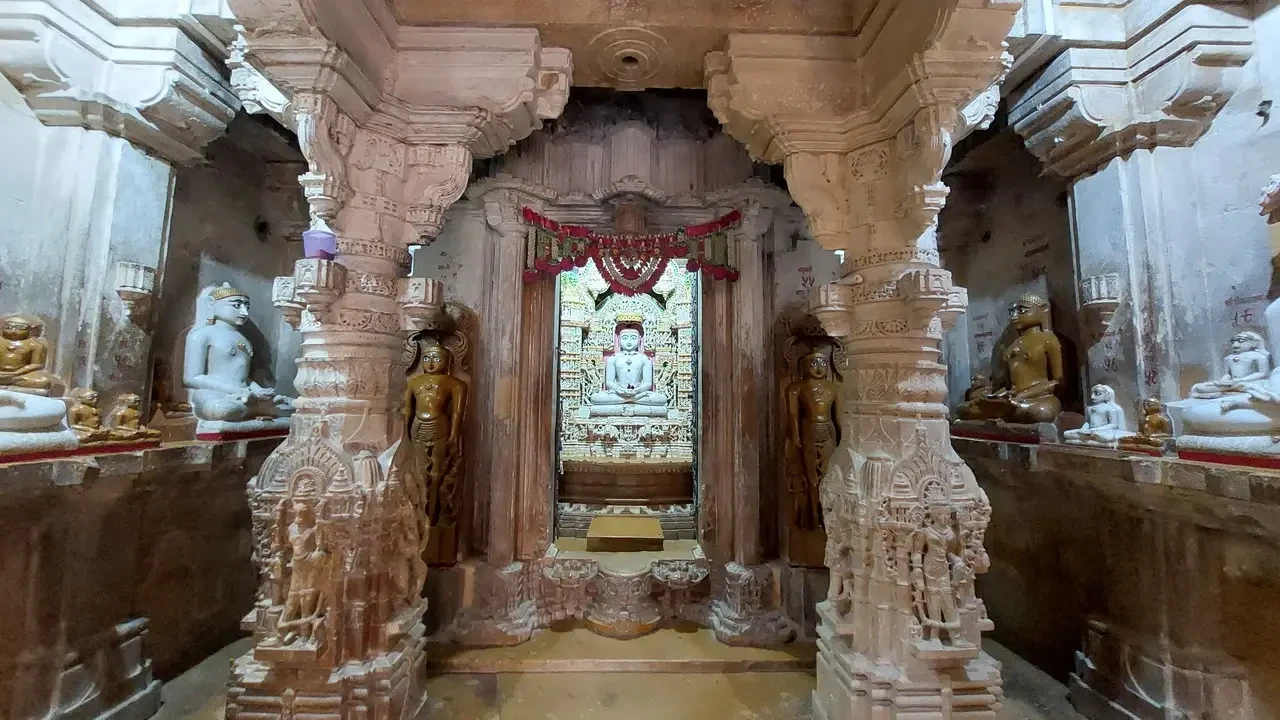
Bhansali Gotriya went on a trip with Shiva, Parvati and Ganesh.
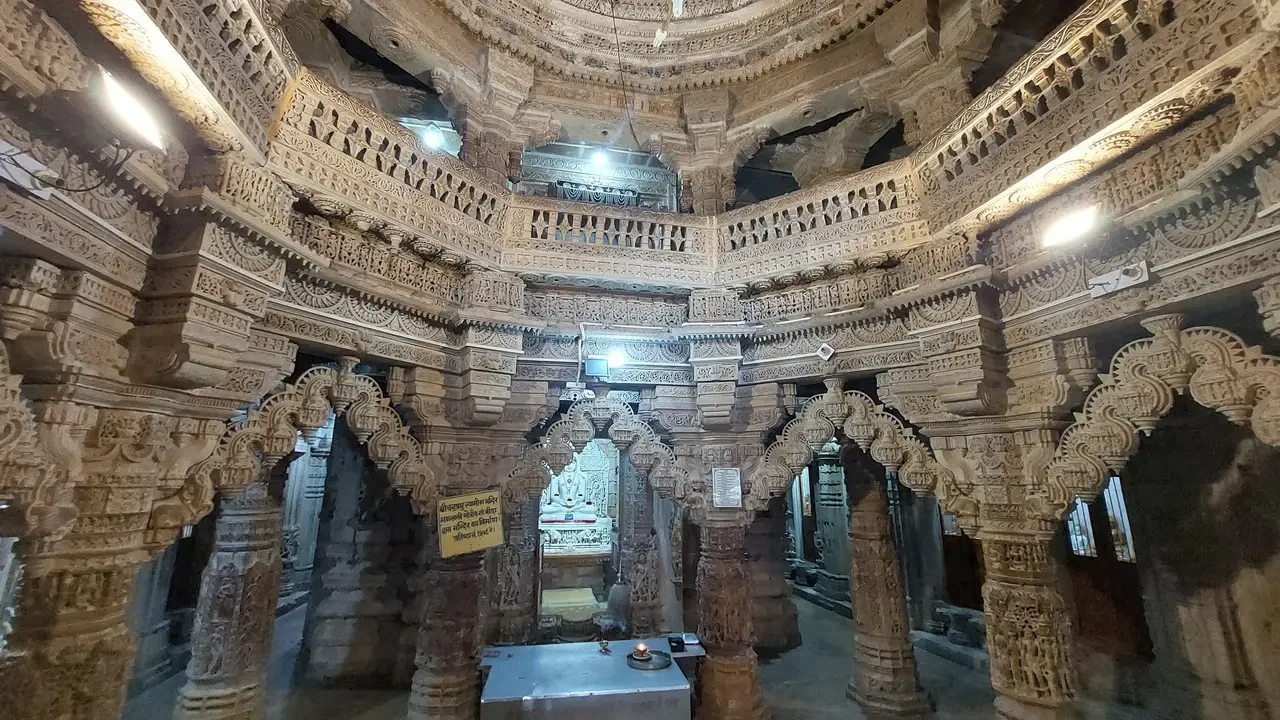
We continued along the road leading up to the fort, which was deliberately winding so that from one entrance, you couldn't see the next, and the enemy would be trapped between them during attacks. The defenders could then target them with stones or cylindrical pillars that were rolled down. Of the seven Jain temples inside the fort, we visited two (one is the Bhansali Gotriya Departure) open only in the morning, as the afternoon is exclusively used by Jains for prayer; the sandstone It appears beautifully inlaid, with the holy sanctuary at the center and a row of sculptures on either side, similar to Buddhas, usually in a smooth, white marble color. According to legend, the Jain monks in the area were attacked by criminal gangs and asked the maharaja of the time to allow them to be housed within the fort, build their temples, and be defended; he responded positively, saying that he would not ask for money or anything else, but they must guarantee that Hindu symbols were present and that people of other religions could also come to pray. This explains the presence of statues of Shiva, Parvati and Ganesh.
There seems to be a genuine popular devotion associated with this one, as its image appears painted on walls in various places, such as small statues and within private homes. Inside the temple, erotic scenes are depicted, because the three functions of man are yoga (meditation), food, and sex. The depiction was intended to reflect that people in the past were naive, and advice for life, imbued with sacredness, would certainly have been more effective.
Towards Laxmi Narayan Temple
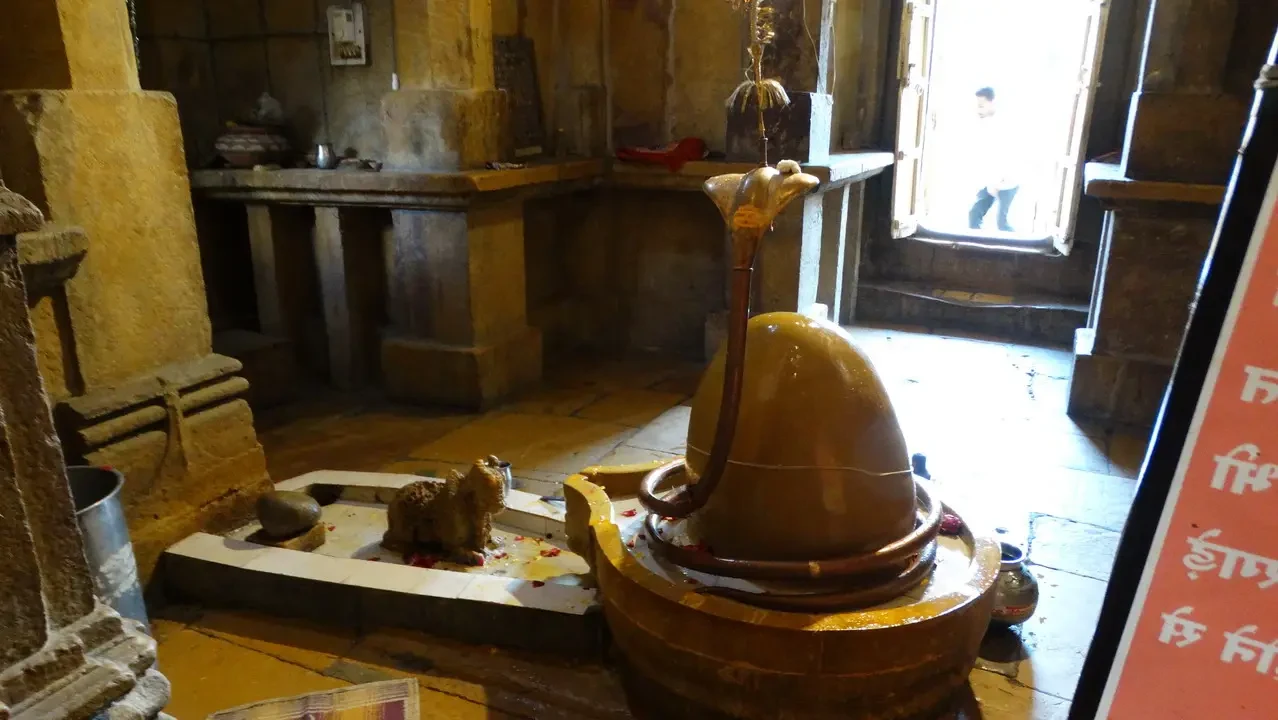
We move a short distance to see two small Hindu temples; they are more frequented and colorful, although less enclosed. The The first is dedicated to Vishnu and we are lucky enough to witness the puja ceremony, where a priest receives offerings and recites short mantras, which are answered in kind by the worshippers who circle the altar clockwise, while some sit cross-legged facing the altar chanting prayers. You enter by removing your shoes, washing your hands at a nearby sink, and leaving any plastic bottles outside; you enter by removing your shoes, washing your hands at a nearby sink, and leaving any plastic bottles outside; you exit by stepping back without turning your back to the altar. The second ( Laxmi Narayan Temple) is clearly dedicated to Shiva, with the linga above and the bull Nandi in front. The prayers are entirely directed towards the bull (Shiva's vehicle), as the god is perpetually mediating and the animal serves as a conduit. Some men pour purifying water on the head of the snake, which then slides down onto the linga to converge at the bottom represented by the yoni. A highly mystical atmosphere surrounds us, and it is interesting to observe the rituals that take place. The worshippers are strictly all men, whom we diligently follow as they make a clockwise circuit around the altar, but only for three-quarters of the way, as the passage is symbolically blocked by the river Ganga (Gange) which exits from the yoni; one returns and arrives at the same point on the other side without completing the full circle. Legend or belief says that the sacred river destined to make fertile the plain that bears its name originates in the sky and would destroy everything if its disruptive force were not mitigated by passing through Shiva's hair, thus transforming into the calm river we know.
Let's close this chapter and head to Jaisalmer to see it from above. fortified walls... even while enjoying a drink at a bar with stunning views from its terrace. We conclude with a visit to a fabric shop, where we are shown the weaving system used in villages scattered throughout the desert areas nearby. Most of the products sold in this cooperative-run store are made by women belonging to nomadic groups, who live off pastoral farming and traditional crafts adapted to tourist tastes; some particularly beautiful creations are packaged in patchwork style using pieces of decorated clothing for ceremonies. We continue along the narrow central streets, which would be lovely if not for the pervasive dirt. Cow droppings are collected from the wheels of vehicles and spread a few meters away, while artisans wander aimlessly from one pile of rubbish to another. Since cows have owners, according to some, they should not be allowed to roam freely in the streets. This is just one of many hygiene issues plaguing India, along with stray dogs, desperate beggars, and piles of garbage.
A couple of viewpoints offer opportunities to take photos on entrance gates to the fortress; Even in the morning, the golden color of the clay shines under a sun that is becoming increasingly warm. While passing by a women's clothing store, the guide explains that before getting married, women wear a suit consisting of trousers and a long tunic with a scarf (pashmina); once married, they only wear the sari, and the trousers are no longer used. Some Muslim women from a certain lineage wear obvious silver bracelets, the only gold jewelry they wear consists of a necklace and a ring hanging from their nose.
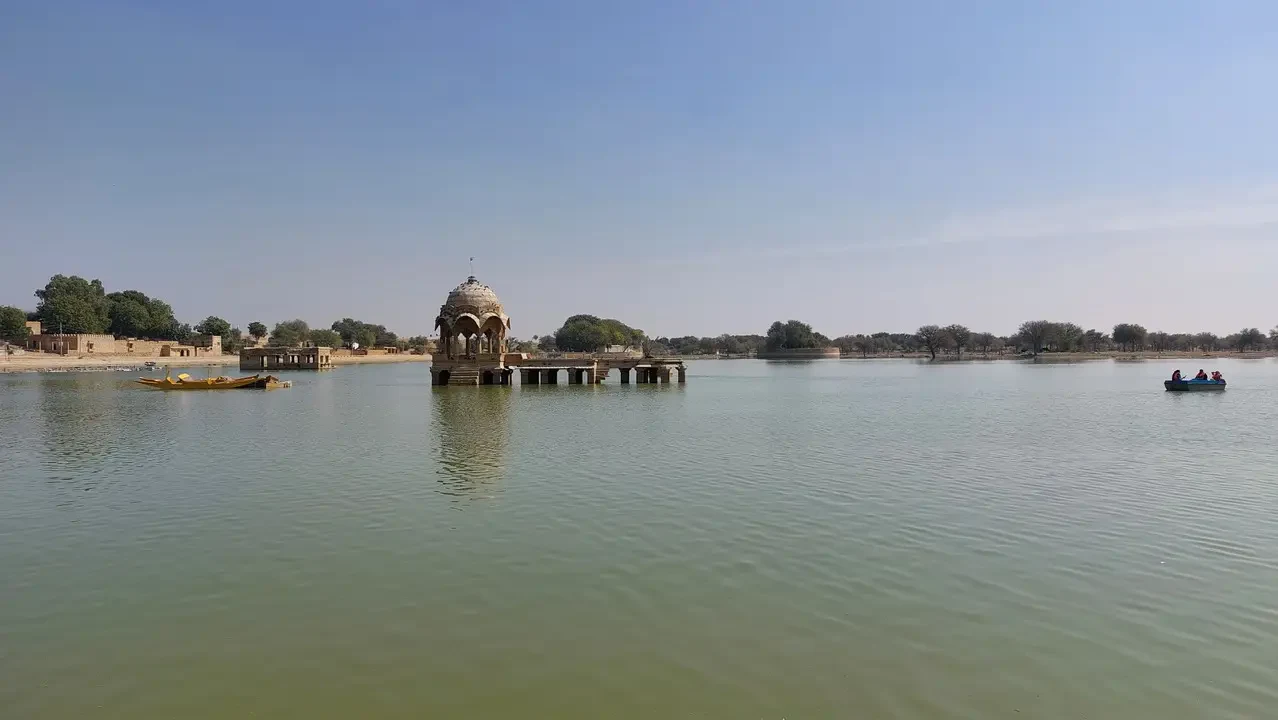
Although there isn't a strict division, the city is mainly inhabited by Hindus, while Muslims tend to live in the outskirts. We are assured that there is good coexistence, but it cannot be ruled out that there is an atmosphere of suspicion given the tensions with neighboring Pakistan. Let's go and see the Gadisar Lake, a beautiful artificial lake created centuries ago as a water reservoir, from which a cenotaph rises on the islet that seems to have been specially built. Water has always represented something valuable, and the need to exploit monsoon rains (less intense than elsewhere due to the city's peripheral location) led to the construction of the reservoir.
We head south towards the desert. As we move away, one last view of the city and on the fort that overlooks it, one can imagine how imposing it must have appeared to those who approached from the vast arid plain. The desert is frequently interrupted by areas where slender trees grow: during British rule, efforts were made to make the land as fertile as possible by planting seeds, even with helicopters, in order to create some vegetation. In a village in the countryside, we see a crowded bus Waiting to depart, the luggage area is overflowing and people are climbing all over it. This bus is heading towards the Pakistani border; from there, passengers will disembark to be picked up by another bus, likely just as crowded. Many of them are workers who work in this border zone; locals have easier access to cross it; the same applies to facilitating meetings between families separated by Partition; however, special permits are still required. In fact, the border between India and Pakistan was arbitrarily drawn at the end of British colonialism and did not take into account (and could hardly have) social needs. It attempted to separate Hindus from Muslims, knowing that there were both in every place and that it would ultimately dissatisfy everyone. But it is certain that the primary goal was not to accommodate local populations.
The village of Dhoba, located in the Thar Desert, is made up of a couple of houses adapted and integrate with the necessary services for tourist needs. Around here, goats graze on the limited available grass, and tomorrow morning we will see some peacocks that would find a place to stay in our luxurious villas. A welcome cup of tea, a few words about how life is here, and then we'll depart by jeep for take a ride on the dunes and a stop in a remote village lost in the middle of nowhere. A well, some bushes and plenty of sunshine are the main ingredients of a subsistence economy. To someone with poor eyesight, one might wonder how such a simple way of life could appeal to the people who live there, but this place is probably their paradise. And it doesn't matter that they only know this place. Children run happily, especially if they are offered sweets. women are busy with household chores. in the fields, there are few men and they are likely out searching for ways to bring back supplies. However, there are goats everywhere, from which milk and its products can be obtained, perhaps even meat if they are not vegetarians. These animals certainly represent a valuable commodity to trade with. The houses have straw roofs, which are replaced every two years. The sandy area is often lined with trees and bushes... sometimes the ground becomes hard and beneath it lies a city of large lizards, more like small monitor lizards; they live near holes where they can quickly retreat at any potential threat. Sometimes you can barely see their heads poking out. The old jeep struggles up and down the dunes, occasionally needing to back up to regain its uphill momentum and avoid getting stuck in the sand; looking at the dashboard, it's hard to believe it can still move, but eventually we return to our starting point. In the small village where we are staying, there is a well about 300 meters from the houses, where a man pulls up water with a bucket and pour it into a tank pulled by a camel; it will take a lot of effort and time to fill it, considering that the container leaks the precious liquid from all sides. In the meantime, some women arrive with beautiful colorful saris and empty containers which are appropriately placed one on top of the other on their heads. we approach another well there, nearby, and they start drawing water up. A bit for tradition, a bit to help, I offer my assistance, which they are very grateful for. When jokingly asking if I can continue, they indicate that they appreciate the gesture, and I can continue while we exchange smiles, which is the only possible means of communication. I need to be careful not to drop the bucket with the rope into the well; fortunately, everything goes well in the end. A photo with their faces covered (they say it's for the sun, perhaps due to cultural tradition), they leave with their containers full put pressure on the neck bone.
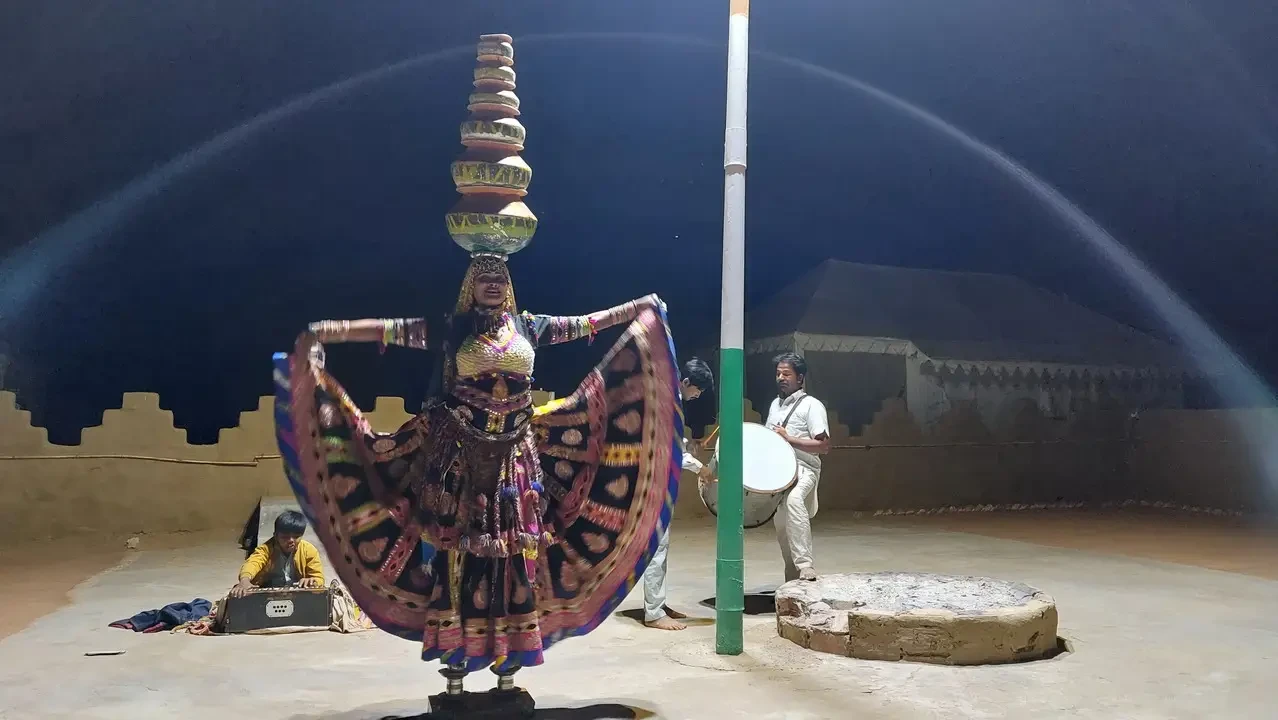
Always departing from Camp, we will soon be traveling on the back of a camel, one at a time. sunset point to enjoy the ethereal image of the sun slowly setting, changing color from yellow to a more intense red, and finally creating a violet screen that will soon turn black, enveloping the entire desert. It's time to return before it gets dark; at the camp, you can have dinner outside while watching a folk concert which contributes to making the otherwise good dinner less enjoyable: a family consisting of a father, mother, and two children begin to play, sing, and dance "traditional" melodies; we don't know if it depends on them or the musical genre, but the performance is not particularly captivating. We still appreciate the intention and the skill with which they play the drums and tambourines. After the concert, we are ready to spend a quiet night in the modern tent/bedroom; at some point, dogs agree to bark simultaneously, another concert that we could have done without, but which reminds us that even in the desert, like in India, silence does not have the right to exist, even at night. We will easily find a reason for this.