Day 7
Udaipur, Ajmer, Pushkar
The City Palace of Udaipur, the Jain temple in Ajmer and the holy city of Pushkar.
Morning in Udaipur
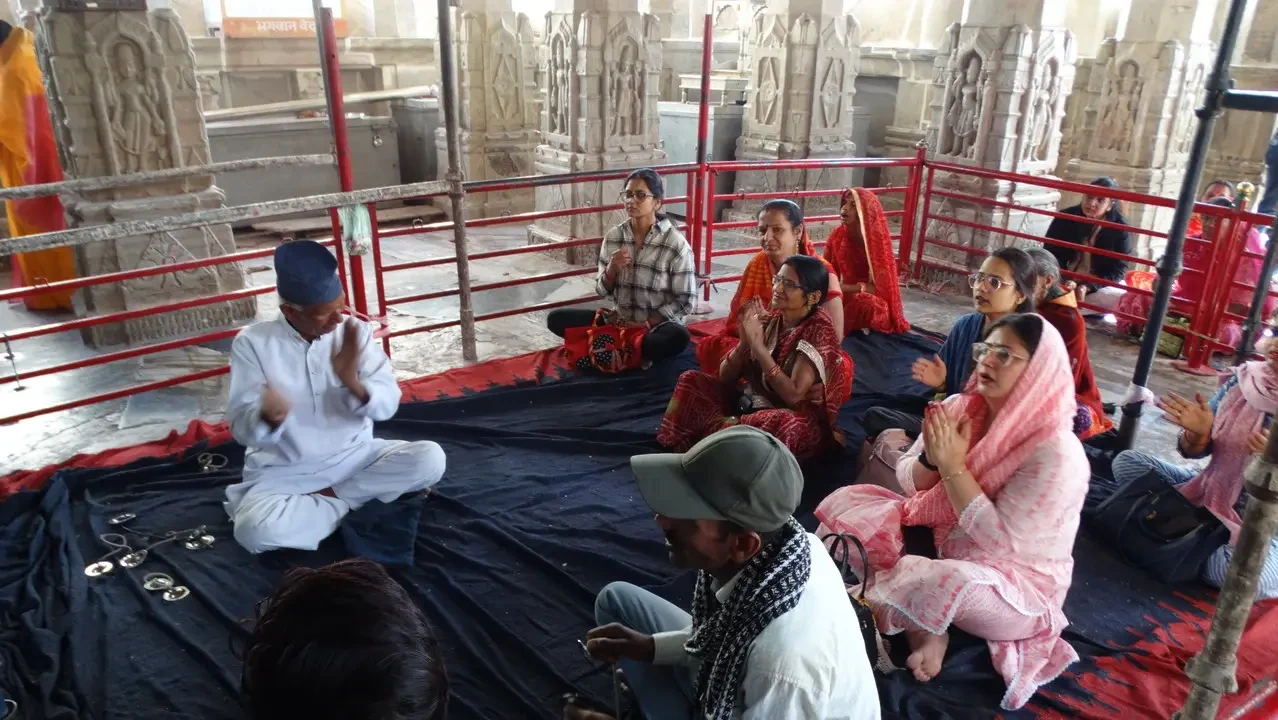
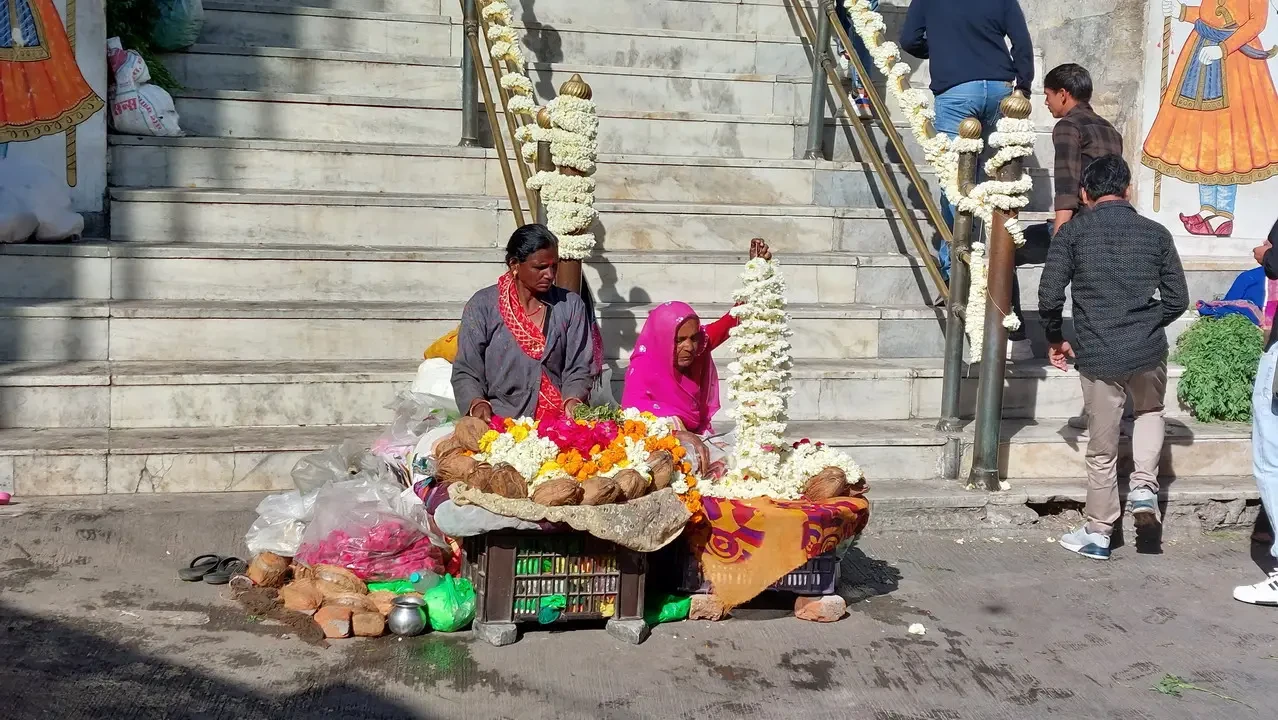
Breakfast on the terrace on the fourth floor of the hotel. Before the city wakes up, we take a brand new tuk-tuk and have it drive us to... by the lake, where the sun has just risen and offers fantastic views. pedestrian bridge, to the point that there are several couples of newlyweds posing for official photos. We only see the haveli from the outside, near which is located the Jagdish Temple - Mystically frequented by believers; inside a group chants mantras accompanied by the sound of drums. Crowns of white and orange flowers They release a subtle fragrance that becomes a feast for the senses. Women at the bottom of the staircase They sell flowers and fruit to be offered on altars. The exterior work on the temple. It's a refined finish, similar to what I've seen elsewhere, and overall definitely worth visiting.
The instinct of deception probably doesn't belong to the way of being of Indians, but the idea of attracting customers in any way can sometimes be irritating, or amusing depending on how you interpret it. On two occasions, within a few minutes, we met elderly gentlemen who provided us with some information about the monuments that came into view, without being asked, and specified that they were not guides but Brahmins; after discovering that we were Italian, in a similar script, we were told that they would go to Perugia for an interreligious peace meeting within a week. By chance, they had a small art gallery where they painted as a pastime, and they wanted us to see it and wouldn't refuse if we bought something. Of course, after two days in the country, we already have enough defenses to distinguish who wants to do business from those who approach us with ulterior motives; this is also because it is unpleasant to treat people indifferently who only come to ask for a photo with us. Both are pleasant and picturesque experiences, but they should be treated differently.
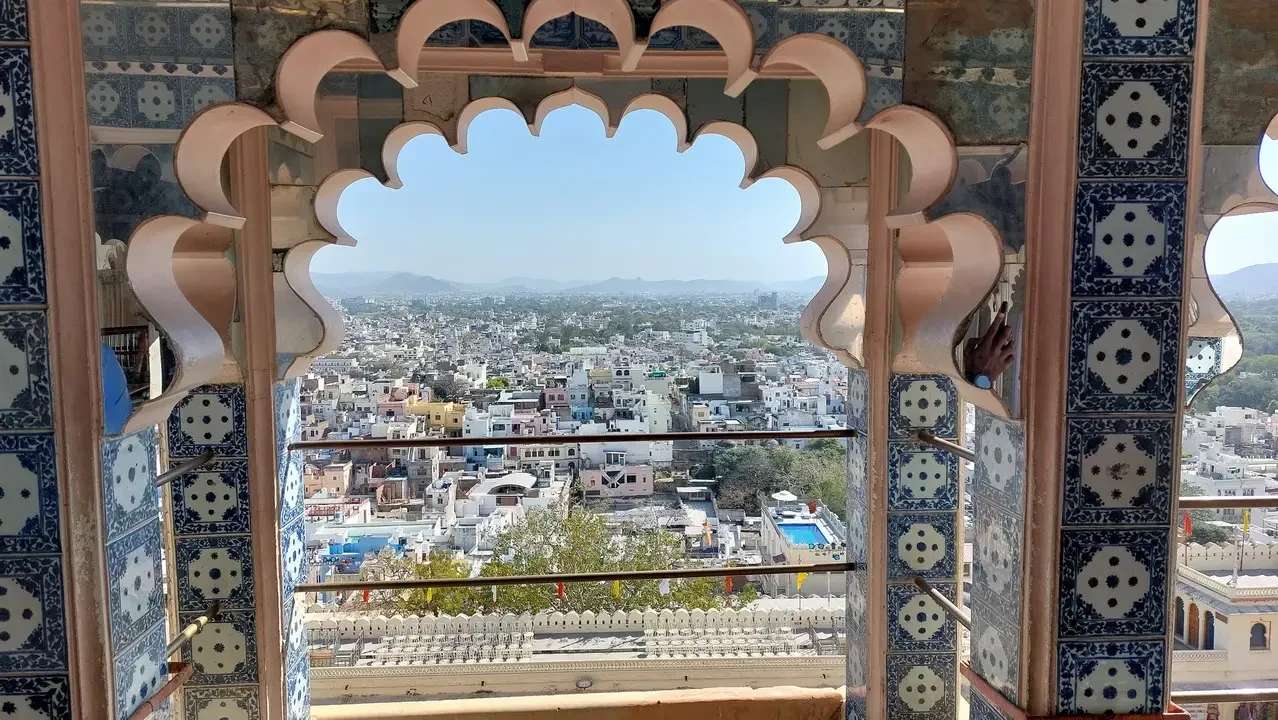
Just a few dozen meters away is the northern entrance to the City Palace, which has now been opened, and we can access the elegant rooms. Compared to other historical monuments seen in Udaipur in recent days, there is the advantage of the outdoor view, so that every window seems like a frame of a sublime painting, green and blue. The building itself is also interesting, with its luxurious rooms featuring mirrors, Delft-style ceramics with images reminiscent of our world, and multicolored stained glass windows that cast colorful shadows on the floor; there are occasional openings to... gardens called Bagh (exactly like in Persian!) or internal courtyards with the intarsia in the windows which allowed women to see without being seen. At the end, we return and meet with the driver at the southern entrance, ready to continue our journey north-east.
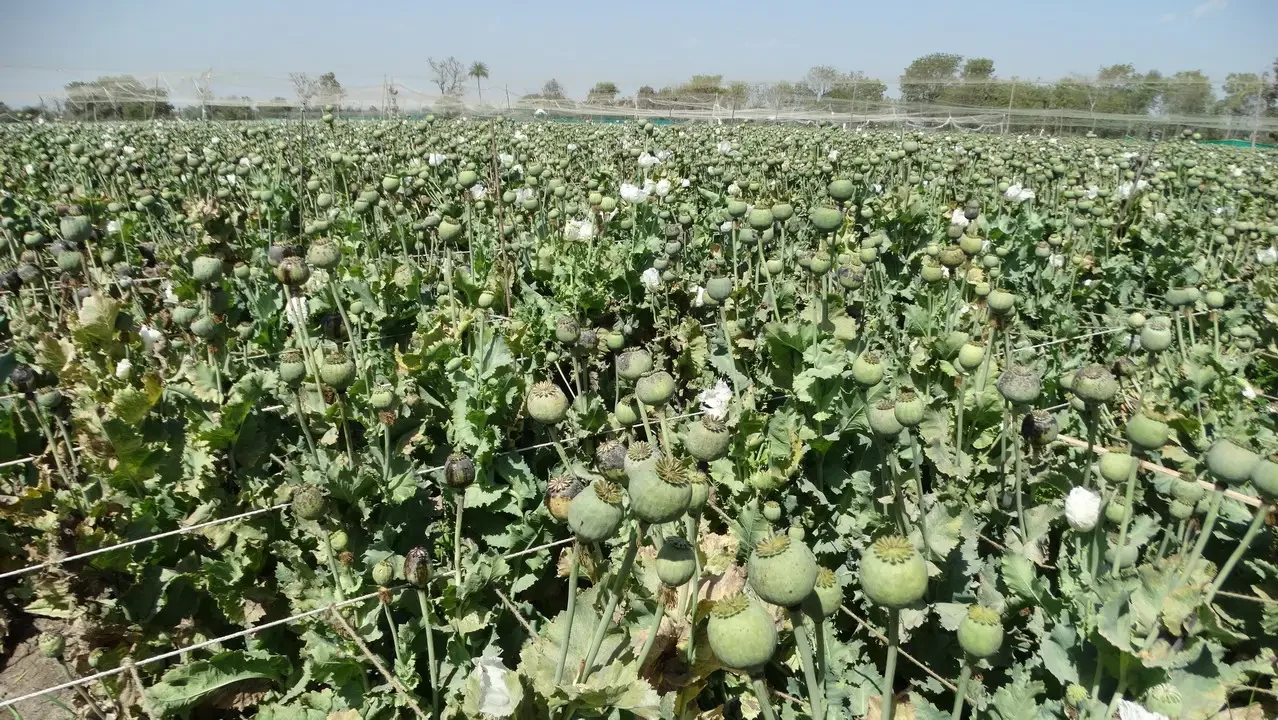
We take a high-speed road, longer than the main highway but shorter. At some point, we see... opium poppy fields; at the sign, everything is simple here. We park on one side of the highway and walk down to meet the farmer who is overseeing the irrigation. He explains to us in a disinterested but kind manner how the cultivation and harvesting process works: the plants of this variety of white poppy are annuals and ripen during this period. When they lose their petals, the calyx is marked with two longitudinal cuts, from which a dark liquid flows that solidifies, and the next day it is harvested. This operation is repeated at regular intervals to create about fifteen incisions. The poppies are sown in December, and harvesting takes place between February and March, so the harvest is soon finished as the plants have completed their cycle. We try to taste the liquid but do not find any intoxicating effect (even due to the small quantity), except for a disgusting bitter taste. The cultivation is obviously authorized; the owner has a permit and must deliver 8 kg of finished product to the State at a price of 500 Rs/kg in order to maintain his right; if he does not produce enough, he must buy it from others. The use of opium by the State is intended for medicinal purposes, while the company can sell any surplus as they see fit (at a price of around €2,100/kg), but the reality is that there is very little left, and the risk of not reaching the minimum required amount is high during seasons when the weather conditions are unfavorable. It is also used as a medicine to treat diarrhea and other ailments in children. The wealthy buy it at a very high price as a drug, but people use it during wedding celebrations: in these cases, it is mixed with water and smoked in a hookah. Near the field there are also two sleeping bags where the guards spend the night to prevent theft by those interested in reselling or consuming this valuable substance.
The urban face of Udaipur
Ajmer has more than half a million inhabitants and is a chaotic city, which is best to pass through, see the essentials and escape to quieter areas. Everyone moves as they can, compatible with the narrow spaces left by traffic and the 5 boys on a scooter They form a symbolic image. However, it is worth visiting the Jain temple, the Nasiyan Temple: in reality, the area dedicated to worship is only accessible to followers of this religion, but there is a large two-story hall where you can admire. plastic construction materials on a large scale, such as Mount Kailash or palaces. Furthermore there are elephants and other allegorical animals Probably used in the past for religious processions. The entire structure is rich in detail as well as in materials used, among which stand out invaluable amounts of gold and precious stones.
Although this region is mostly flat, a hill separates Ajmer from Pushkar, which can be crossed by ascending to a scenic hilltop where you can see Ajmer nestled below with its lake.
Pushkar is completely different: a holy city where crowds of pilgrims arrive to perform ablutions in the sacred waters of the lake with the same name, with the steps of the 52 ghats that outline its circumference and make it look like the basin of a stadium. It's already late afternoon, which is the perfect time to reach the sunset point and to enjoy the same yet different show of sun disappearing on the horizon; this time, the scene is no longer the desert but the lake itself, with the faithful immersing themselves in it. A group on the other side plays on traditional drums and chants mantras, a cow lingers on the steps leaving some traces of its passage, along with dogs searching for food; some elderly women wrapped in brightly colored saris gaze at the horizon, while others try to sell jewelry or beg for money. These images have become familiar and would perhaps surprise you if they weren't there.
During dinner, we discover that in this holy city, drinking beer and eating meat is not allowed: we give up our usual Kingfisher and enjoy a delicious vegetarian meal that ends with an exquisite dessert made with custard and fresh fruit without any problems. It's interesting how just a few kilometers outside the city, you can freely consume all kinds of alcoholic beverages. When it's time to sleep, a storm breaks out that will at least clear the streets for a while; the temperature is cool, and night falls on the holy city of Pushkar.