

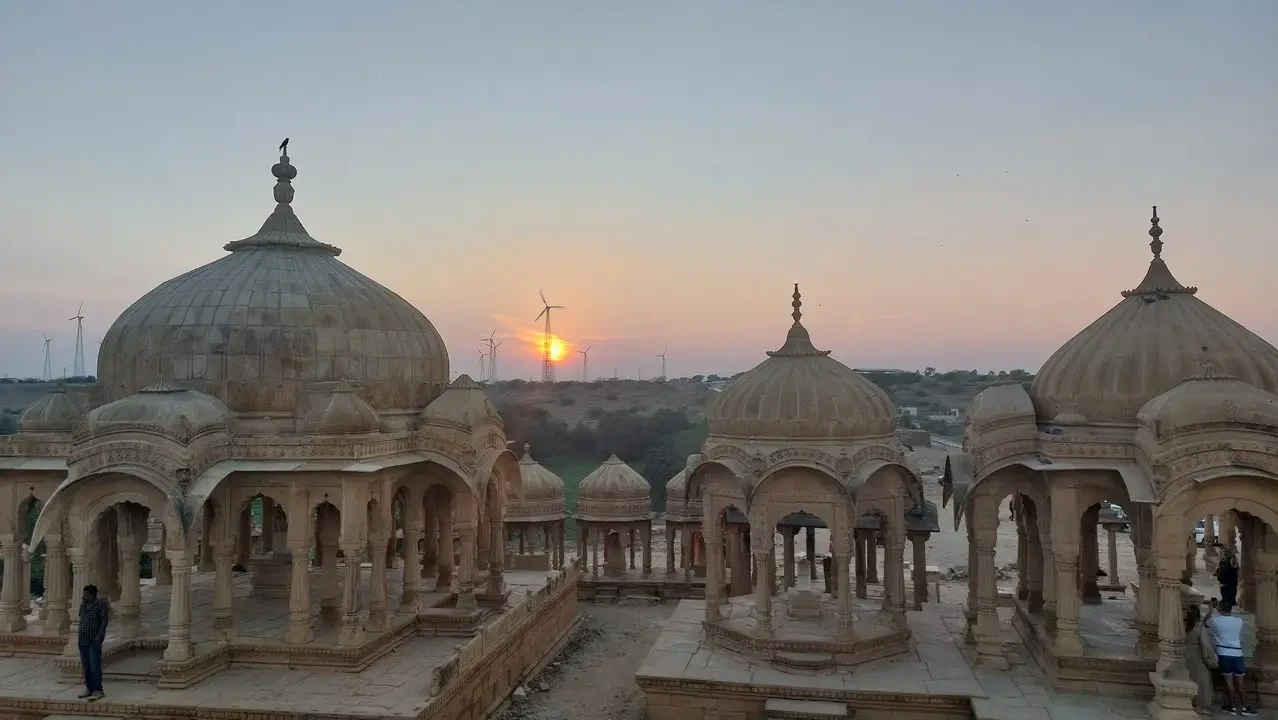
India
Rajasthan, Uttar Pradesh and Madhya Pradesh represent an amazing combination of history, art, and nature in India. But above all, they offer a valuable lesson to those who are willing to open their minds and see the world through a different lens, one that can appreciate the unique charm of Indian culture.
Map
India map - complete itinerary
My assessment of the country's geopolitical situation is regarding:
“Anyone who loves India knows: it's impossible to pinpoint exactly why one loves it. It is dirty, poor, and often ridden with disease; sometimes it is full of thieves and liars, frequently smells bad, corrupt, ruthless, and indifferent. Yet, once you experience it, you can't get enough.” Tiziano Terzani
Introduction
Once again, Asia is taking the lead in our travel desires. With a few exceptions (e.g., Taj Mahal), Rajasthan and Uttar Pradesh in India may not be the destination with unparalleled architectural or natural attractions. What instead fascinates is the consecutiveness of so many sites of great interest, especially when considering the social and religious components. This creates a more diverse picture, and the negative aspects (traffic, noise, and widespread dirt) blend together within this vibrant and different life. If the general rule of not looking at the reality of the countries you visit with your own eyes applies, then in India it becomes essential, without which the reality would be completely distorted. Fortunately, I left my Western eyes at home, so they don't judge what I see before me. However, I wonder what they will see when I put them back on. From an economic perspective, it may be better to be born in the West, but spiritually, India is probably the best place.
The lessons learned are numerous: firstly, to relativize and view existence as a passage (samsara, borrowing a term familiar even to us), to tolerate the presence of others and consider it useful for mutual benefit, and to detach from material possessions in order to live in a more contingent dimension. However, one should not think that all Indians live in an ethereal state of religious bliss; their feet remain firmly planted on the ground, but within a concrete reality. Without assuming that all Indians are equal; the 1.5 billion people who live in what is aptly called a sub-continent differ according to history, religion, latitude and other thousand distinctions that enrich humanity.
So, even social classes are shaped according to patterns increasingly linked to modernity, while often remaining anchored to the caste system: on one hand, a small percentage (not so much in terms of numbers, considering the population above) enjoys wealth that makes emirs and the bourgeoisie envious, while on the other hand, there is a poor fourth state forced to work under semi-slavery conditions, or begging on the streets alongside cows and dogs. The castes can actually be compared to the medieval divisions between nobles, clergy, and the third estate; the difference lies in the fact that they are still very present, and social advancement is only possible for a very small number of people, within the context of an upcoming secularization. It is not known with what real conviction the State guarantees seats in parliament for women and members of the lowest castes, but popular sentiment continues on its ancestral path. And this certainly represents a brake on the overall development of the country.
The contrasts in India are more apparent than anywhere else, both good and bad. We shouldn't confuse the outward poverty of much of the population with their inner richness. Similarly, we might be surprised by the outward dirtiness, but fascinated by the inner purity of its inhabitants. Not a people of saints, but rather a generally civil coexistence, far from being conflict-ridden.
Talking about "Indian disease" is a complex topic because there exists an India that causes harm. It's the one seen in the poor and downtrodden who beg for their living on the streets. But there also exists an India that invites you to return, to experience and learn, absorbing its values and the relativization of life inherent in its people.
From an economic perspective, I come from a fortunate part of the world, but spiritually, it's not so great. There are better places, for example, this country I just visited.
National character
Traffic and driving: always honking the horn, even without reason. It's like a conditioned reflex, a nearly ritualistic gesture repeated constantly, without realizing that we are also constantly making noise. India is a constant symphony of horns, particularly loud and annoying on scooters, especially when they pass by and you can hear the full sound through your headphones.
The term "acoustic pollution" is not yet part of the vocabulary, and neither is the concept of right-of-way in traffic regulations: cutting someone off is the rule, but it never causes altered reactions. The idea of letting others go first is so abstract that it's reasonable to question whether it's protected by traffic laws, which don't exist; violations of a code like ours are so frequent and obvious that the question arises spontaneously. The police are present everywhere, but they seem more concerned with maintaining peace than with enforcing regulations. Traffic wardens breathe exhaust fumes all day long, and their main job is to avoid being hit.
In this chaotic context, one wonders how things can somehow work. The answer is as simple and disarming as it is: because in India, everything eventually works out. The simplicity of the relationships and the existence of flexible rules allow problems (and traffic) to be resolved without conflict. The absence of tension and exploitation in personal relationships is essential in a high-density residential environment.
We discover that people spend enormous sums to celebrate the wedding; the bride and groom's parents even go into debt to make a good impression, inviting up to 2,000 guests, with the ceremony officiated by the priest continuing with lavish celebrations that would seem excessive or even ostentatious to many of us. It seems that an average family spends around €10,000, which is a fortune considering Indian standards.
Marriages between people of different religions are rare, as are those between different castes. Often, couples are chosen by their parents, with the future spouses agreeing to this arrangement because they believe that their young age would make it difficult for them to objectively choose the right person for life. In more conservative settings, families may even kill one of the partners if the marriage is arranged between different castes or not by the parents.
In fact, the four religions those that overlap (Hinduism, Jainism, Sikhism, and Buddhism) share many aspects in common. The first two are older, having emerged simultaneously and grown alongside each other: Hinduism is more sectarian, while Jainism has stricter customs, being particularly present in the north-west and Gujarat. Buddhism and Sikhism represent deviations from the main branch of Hinduism: one dating back 2500 years ago, the other only 500. Some consider them heretical, and they are indeed somewhat so, but with many common traits at their religious-philosophical root. Both do not share the caste system and advocate mutual assistance, but Buddhism shares with Hinduism the same idea regarding samsara and, in general, a detached view of life from materialism. Unlike Buddhism, which also involves interrupting the cycle of death and rebirth to achieve Nirvana, Hinduism advocates for achieving muksha; simply translating it (liberation) allows you to understand that no particular paradise is promised, but rather the cyclical repetition is stopped. The fact that they are not overly tied to earthly matters makes contact with death less severe.
The Jains have formed strong lobbies aimed at defending the social and economic interests of their followers; a cohesive and intelligent minority, capable of creating advantages and also causing problems. They are well represented both politically and in business, and proportionally, they represent the most prominent figures in Indian theater as bankers, merchants, etc.
There are cities like Pushkar, or even states like Gujarat, where alcohol is prohibited. However, just a few kilometers away from Pushkar, or by traveling to Rajasthan, you can drink whatever you want. This is why many residents of Gujarat come to spend their holidays in the land of the maharajas.
We learn about how the people of Gujarat are considered the Americans of India: merchants, open to new things and also a bit boastful, but highly appreciated for their abilities. Gandhi was originally from this state.
While the four religions mentioned originated in Indian territory (much discussion is ongoing about whether Lumbini, now in Nepal, was actually part of India at the time of Buddha's birth), Islam was imposed by conquerors from the west: Arabs, then Persians, and finally the Mughal dynasty originating from Islamic Central Asia. In some ways, this is antithetical to Indian and more generally Eastern faiths, and this also reflects on the cultural aspects of believers and consequently the population.

India is undoubtedly a country with strong spirituality, and unfortunately, some people take advantage of this to gain illicit benefits. Alongside sincere religious figures or gurus who teach the path to a relativized life in all its forms, there are also "babas," which means fathers, who exploit the naivety of their followers, extracting money, sexual favors, and other advantages. The unfortunate ones are often Westerners seeking an exotic esotericism, with India being one of the best examples. Some charlatans have become incredibly wealthy, and many have ended up in prison for taking money, plagiarism, and sexually assaulting women in ashrams. One of them, named Asaram, has particularly been able to avoid punishment due to his connection to Modi's party; the level of power accumulated, combined with a large bank account, made him immune from justice for a long time, until he became indefensible due to the severity of the charges against him and was sentenced to life in prison.
Internal tensions and threats from abroad (particularly from Pakistan) make India a country where the presence of... military And maintaining security is essential to maintain the status quo and prevent deterioration. In Delhi, barriers are a permanent part of the urban landscape, often left scattered along side streets, ready for use if needed. We had assumed that such a presence was largely due to the upcoming elections, in an attempt to prevent attacks or actions that could disrupt their smooth running; however, it is simply standard procedure and there are no reasons why this presence should be reduced after the vote.
A large area surrounding the Delhi airport is under military aviation control, with miles of wire-mesh fences running along the roads leading to the airfield. Jaisalmer (see below) is also heavily militarized, and it seems that in the more northerly areas with latent conflict, the situation is much worse.
The tension with Pakistan also manifests through spy games, making it difficult to cross the border between the two countries, especially for certain categories of citizens. There are some exceptions for those living in areas close to the border.
We saw columns of trucks carrying tanks heading east towards Jaisalmer, demonstrating that after three wars, the reasons for conflict remain present, especially during a period of global turmoil when the neighboring country has close ties with China, another designated adversary in Asia.
The military personnel are professionals, receive reasonable salaries, and also have a basic level of education, so it's not difficult to find new recruits.
Each state has its own clearly defined and monitored borders, its own laws, and the police cannot pursue a suspected criminal into an adjoining state. There is cooperation between law enforcement agencies, but there is no transnational organization like the FBI in the United States; this allows criminal gangs to exploit this ambiguity.
Some examples:
- lamb curry with lamb
- royal paneer korma and Mughlai paneer korma
- Malai kofta at Agra: Cottage cheese dumplings filled with dried fruits, served in a rich Mughlai sauce.
- From Bukhara to Agra: with black lentils cooked in a creamy sauce made with butter and mild spices.
- Paneer Butter Masala at Khajuraho
- Special meal: with lentils, etc.
Itinerary
Travel days
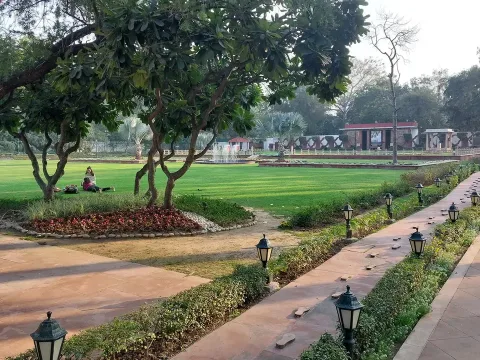
Delhi
First day in India between the Gandhi Smriti, temples, markets and traffic of Delhi.
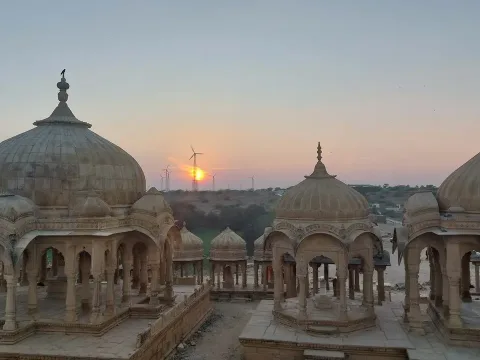
Jaisalmer
The flight from Delhi to Jaisalmer and visiting the golden city.
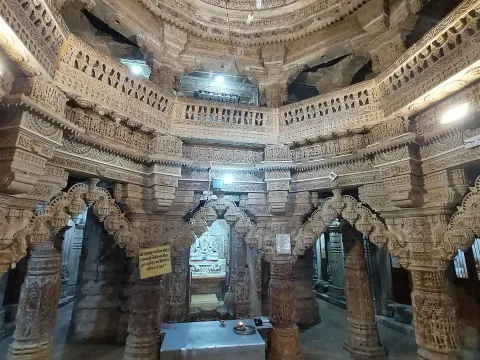
Thar Desert
Visit to the fort of Jaisalmer. The Thar desert with its dunes and sunsets.
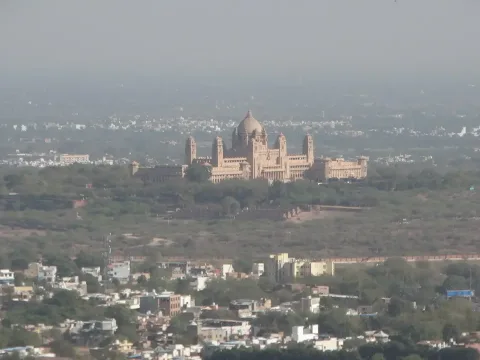
Jodhpur
Landscapes of Rajasthan and Jodhpur (the blue city), with its fort and lively urban center.
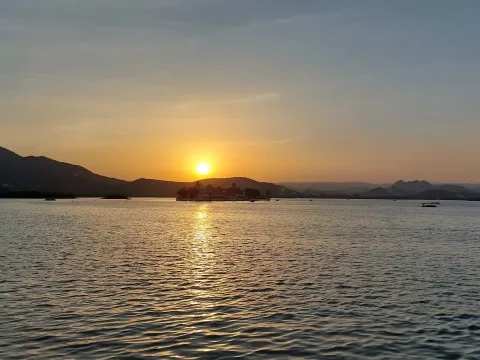
Ranakpur and Udaipur
Mystical atmosphere in the Jain temple of Ranakpur and Udaipur, the noble lake city.
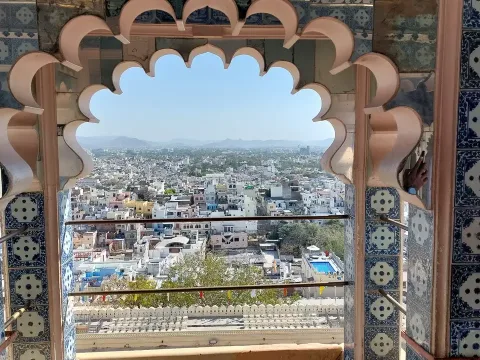
Udaipur, Ajmer, Pushkar
The City Palace of Udaipur, the Jain temple in Ajmer and the holy city of Pushkar.
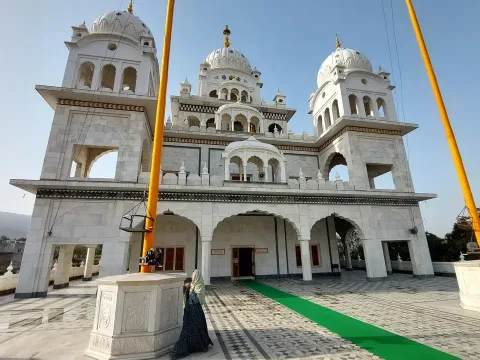
Pushkar and Jaipur
The ablutions in Pushkar and Jaipur, the capital of Rajasthan.
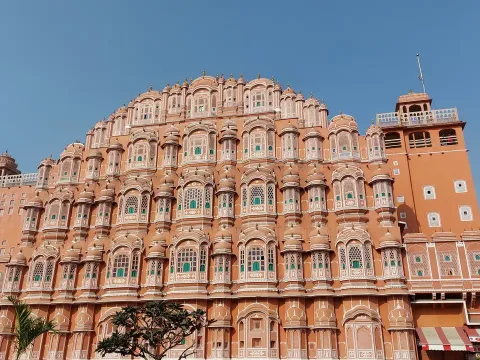
Jaipur
The Pink City: magnificent residences of Maharajas and the Amber Fort.
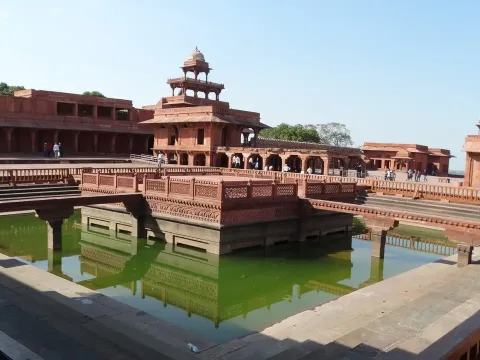
Abhaneri and Fatehpur Sikri
Abhaneri: the most beautiful stepwell – Fatehpur Sikri: the Mughal royal complex
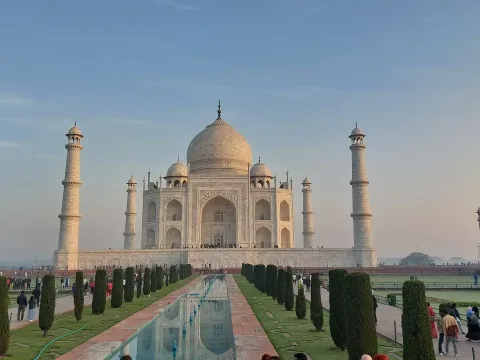
Agra, the Taj Mahal
At the Taj Mahal, one of the world's wonders – also visiting Gwalior and Orchha in Madhya Pradesh.
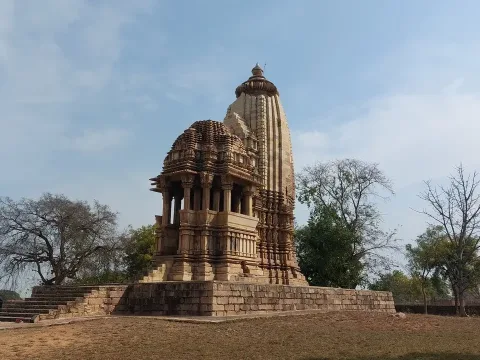
Khajuraho and Panna Tiger Reserve
Khajuraho, where the profane becomes sacred and Panna Safari, with its tigers in their natural habitat.
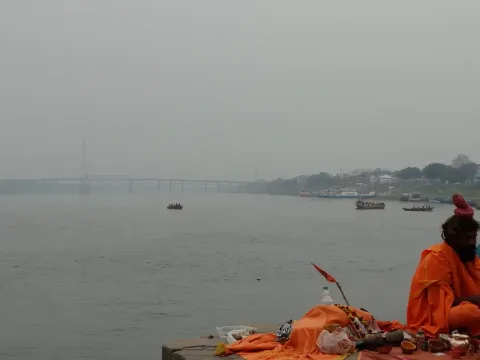
Varanasi
Varanasi, the holy city. A spirit that transcends religion.
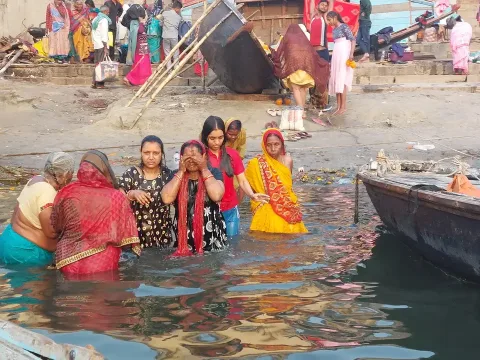
Varanasi
Varanasi: The Ganges and so it shall be! Sarnath, where the Buddha first preached. Return to Delhi.
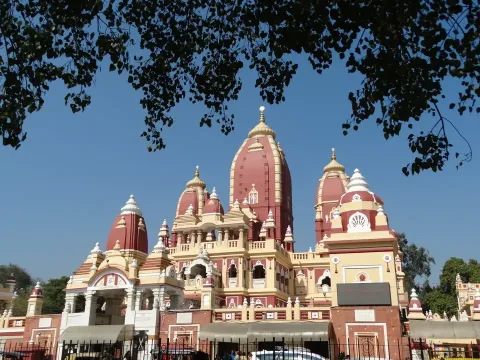
Delhi
The capital of the most populous country in the world: a world of history and sights.