

Day 9
Jaipur
The Pink City: magnificent residences of Maharajas and the Amber Fort.
Sunset in Jaipur
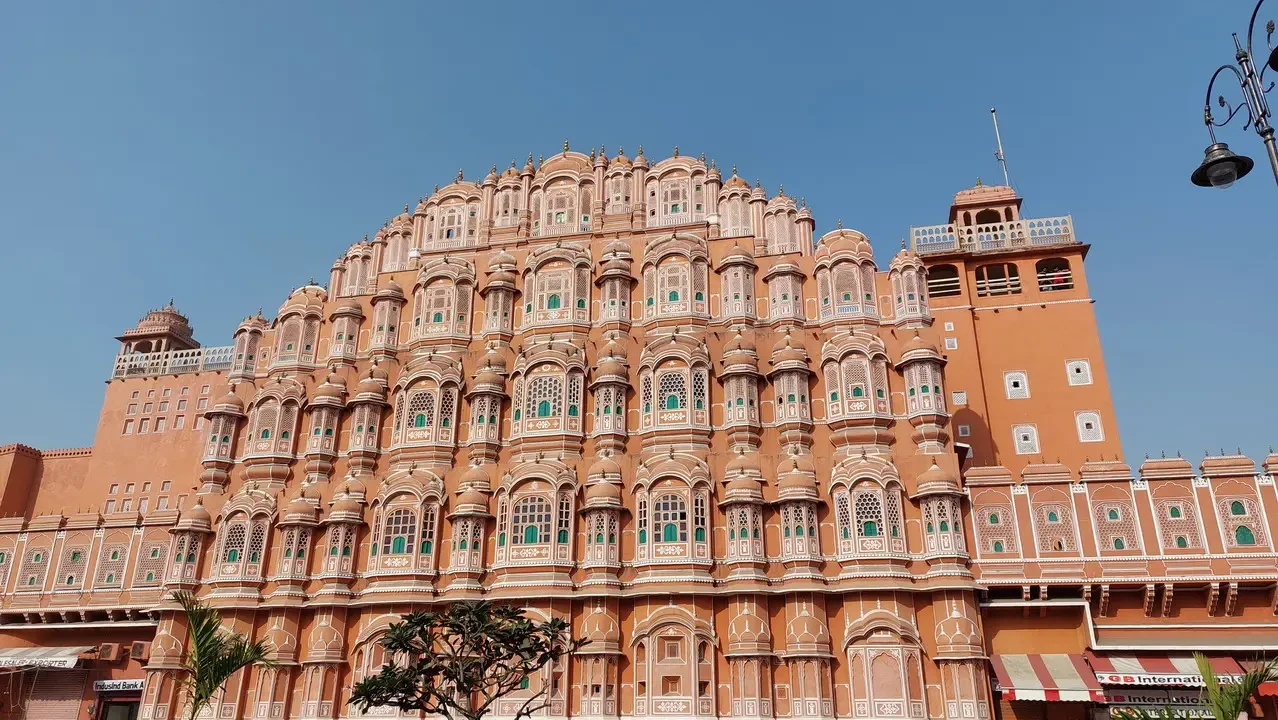
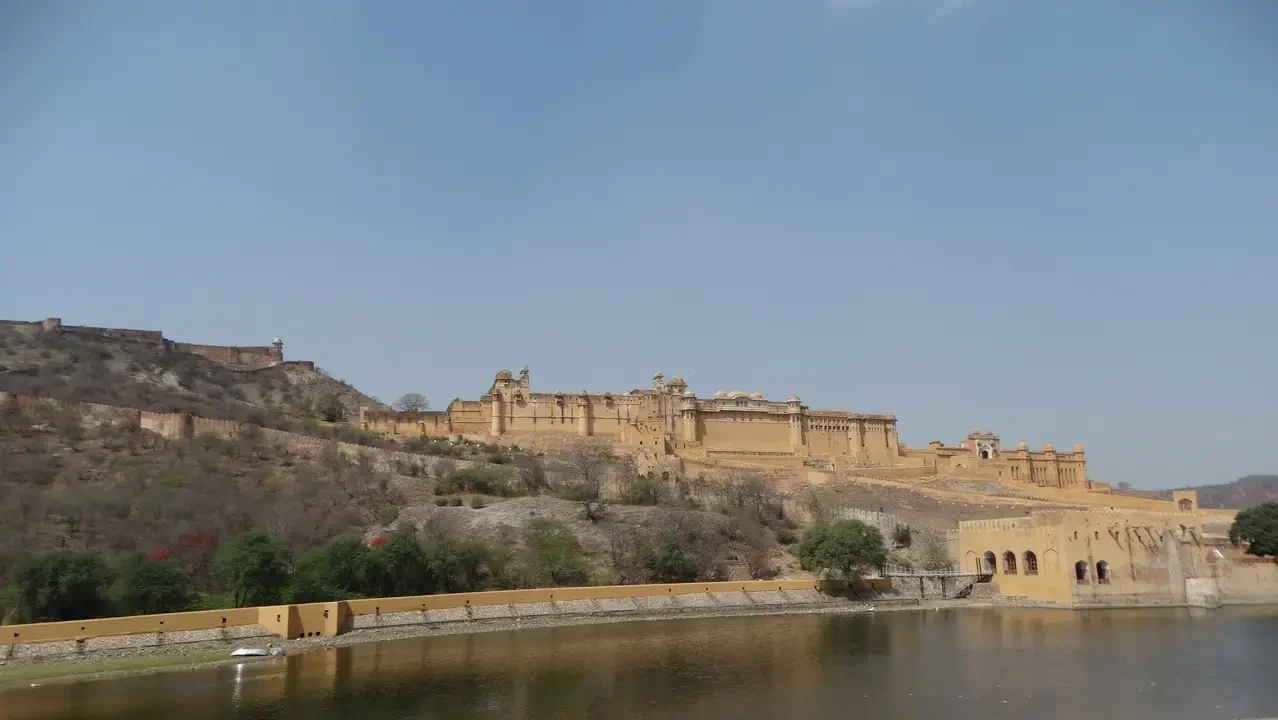
Within the context of differentiating the colors of cities in Rajasthan, where Jaisalmer is known as the golden city due to the coloration of its sandstone walls at sunset, and Jodhpur, the blue city with houses painted by Brahmins, Jaipur is the Pink City. ...when it was painted this color in the late 1800s to welcome a future king of England. Even now, the main monuments are still painted this color and are also well-restored. In the morning, we can immediately see the Hawa Mahal, perhaps the most interesting one, also known as the honeycomb palace. It features particular windows, built in such a way that noble women, within their gilded prison, could see the outside world without being seen. It is a building of great architectural value, which should be considered a substantial symbol of the city. Seen in the morning when the sun illuminates its facade, it seems to shine with its own light. Instead of visiting City Palace, we decided to take a walk through the lively streets adjacent to the historic center, full of all kinds of shops. stone carvers' quarter and stone carvers, true artists at work creating statues of all kinds (especially religious ones), rather than garden decorations or anything else; Udaipur is the Indian capital for the best quality marble, but here you can find a large market that distributes throughout India. Some shops display curious items, ranging from... ice blocks beautiful saris, up to the cots used to carry the bodies to cremation; actually, the graves are not needed given the Indian burial method. It will involve a long walk to outline a square where the following is arranged business exercises, several of which are only just opening now that it's 10:30. We enjoy a good lassi in the classic terracotta cups at a stall. Afterwards, we head out a few kilometers from Jaipur to visit the Amber Fort, also located on a long hill and surrounded by a considerable distance from the defensive perimeter of a wall although it is less imposing than the Chinese one, it rises and falls following the curves of the terrain. The climb to the castle can be facilitated by a service on board of elephant, like those of the past. It seems a shame to exploit these large animals; it is even more regrettable to see them forced to move as beasts of burden. The interior of the fort is interesting but not comparable to Jodhpur: it is a maze where it is difficult to find your way, definitely less renovated and less rich. What can be considered more a tactic than a symptom of poor organization, depending on how you look at it, is the sparse indication of routes and information when visiting monuments; without being too malicious, one can deduce that the intention is to facilitate the role of guides who want to offer their services at all costs and with relentless insistence. On the other hand, the view from above on the gardens surrounded by water. There are beautiful columns and enjoy clear views of the outside. There are many visitors, especially Indians, and we cannot help but notice how the emerging prosperity is expanding their circle. In particular, the ladies find it difficult to hide their curves under the beautiful and vibrant saris; in fact, because the garment reveals the stomach, sometimes the view is anything but splendid.
Jal Mahal
On the way back, we see an elephant being ridden by its mahout, returning home like any worker at the end of the day; it makes one wonder if they have enough space around their house to park the animal. A quick lunch that is already late, but we get the chance to try Gajar Ka Halwa, a typical sweet made with carrots, available only during this season when they are harvested. At some point, the Man Sagar lake opens up, and especially on an island entirely occupied by the building, stands the Jal Mahal, a magnificent palace, currently in a state of disrepair; but seen from afar and with the setting sun. represents one of the most beautiful views.
Royal Gaitor
The Royal Gaitor It turns out to be a wonderful surprise: they are the royal cenotaphs, which are both artistically beautiful and surrounded by lovely flower gardens.
Traditions and spirituality
There is still time, and we take advantage of it to spend a few moments of quiet in the complex. Natwar Ji Temple, created by businessman Birla, where there is a Jain temple, a venue for wedding ceremonies and fields where children can play.
Dinner offered a curious surprise regarding drinks: I ordered my usual Kingfisher, and the waiter glanced at the owner, who nodded; I hope I explained myself clearly and didn't ask for something illegal. Shortly after, the beer arrived wrapped in a napkin, and initially I thought it was just to keep it cool, but I discovered that wasn't the case when they politely asked me to reseal the bottle neck after pouring it. I think this secrecy stems from the fact that here too, the product is off-limits; actually, I found out that they simply don't have a license to sell alcoholic beverages. This isn't about fearing divine punishment, but rather the punishment of uniformed officials. However, adding a beer to the bill always pleases restaurateurs, and it's often worth the risk.
It should be noted that drinking beer for dinner is not a necessity and certainly not an attempt to violate any religious precepts, but apparently the karma during this trip has decided to make things difficult in this regard. A new and pleasant experience awaits us: at the hotel restaurant, two couples are celebrating their 7th and 1st wedding anniversaries respectively; some guests are literally stuffing the newlyweds with cake: pieces of cake in various flavors are continuously being put into the mouths of the couple. When they see us, they also offer us a slice of cake and ask us to take photos with them, which we gladly accept; several young diners speak English, and it is nice to exchange greetings and a few words with them.


