Day 10
Abhaneri and Fatehpur Sikri
Abhaneri: the most beautiful stepwell – Fatehpur Sikri: the Mughal royal complex
Traditions and spirituality
At 5:50, the call to prayer of the muezzin can be heard, summoning worshippers for the first prayer of the day on Friday. We take advantage of this to explore the other side, but soon the alarm clock rings and we set off towards Abhaneri, where we find... the most beautiful staircase well what we would have seen. There are 11 levels connected by stairs with perfectly symmetrical designs. It was used both for ablutions and as a source of water. The sun plays with the shadows. ...making the artwork seem more like a geometric design than a beautiful reality. Bright green parrots are flying around.
We continue eastward, along the road we find piles of manure The dried cow dung was processed and stacked in shapes that we could define as characteristic, ready to be used as fuel. More prosaically, a few dozen kilometers further on, there are kilns that apparently supply bricks for the entire region.
The urban face of Abhaneri
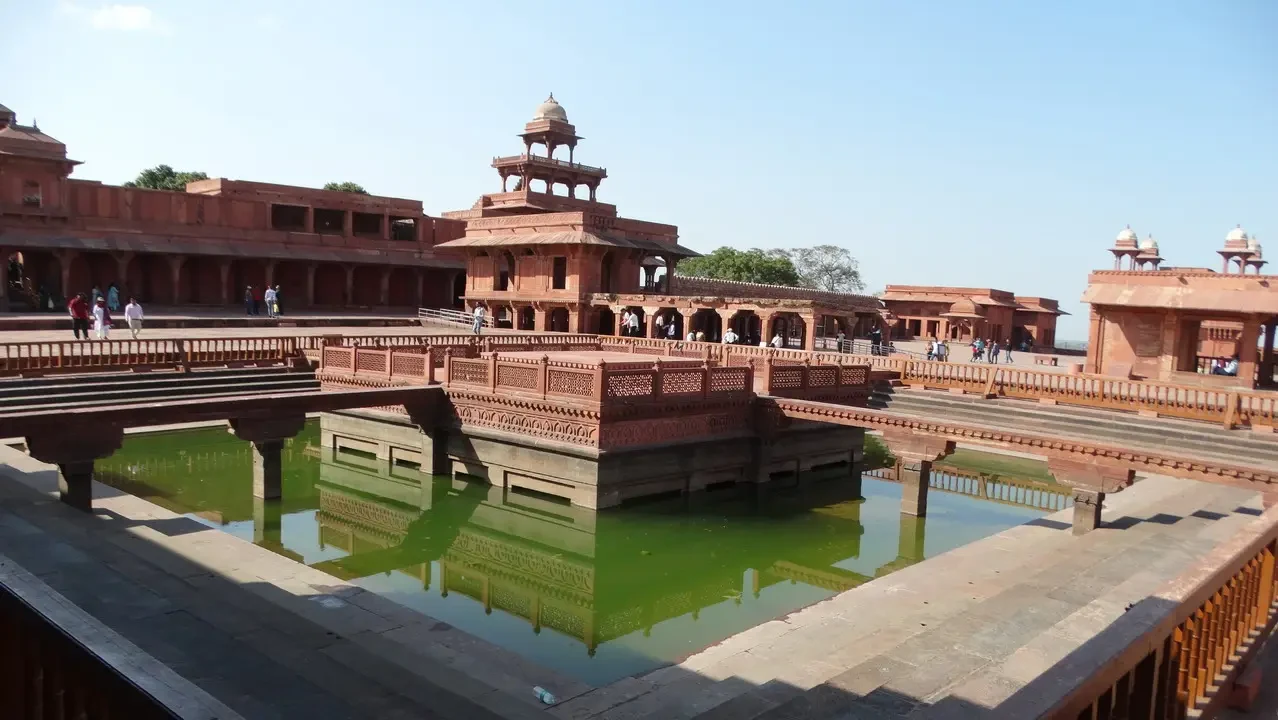
We are now at the magnificent Fatehpur Sikri, not far from Agra, which was once the capital of the Mughal Empire before being moved to Agra due to water shortages. It is a fortified city, very well maintained and heavily visited; you just need a little skill in avoiding all kinds of vendors, guides, and other people intent on making money, but always in an honest way. The visit is quite straightforward, and thanks to the good explanations in the Lonely Planet guide, we don't even need to hire a guide or rent an expensive audio guide. We start from the residential area with its small lakes and gardens to go to that religious place where it is located Jama Mosque The mosque is visited by a large group of devout worshippers. someone is sitting and reading the Quran. while others strangely money really counts in this sacred place Another remarkable monument inside the mosque (or rather, just outside) is the very tall Victory Arch, so impressive that it makes you crane your neck to see it properly. Given that the Mughal could rely on a virtually unlimited number of concubines, these were stayed in basic rooms tie them together with ropes attached to a loop.
Thanks to the clear weather and the perfect renovations, I got a very positive impression of the entire complex and its comprehensive representation of the Mughal dynasty, founded by Babur and successfully continued by Akbar, who aptly means "The Great."
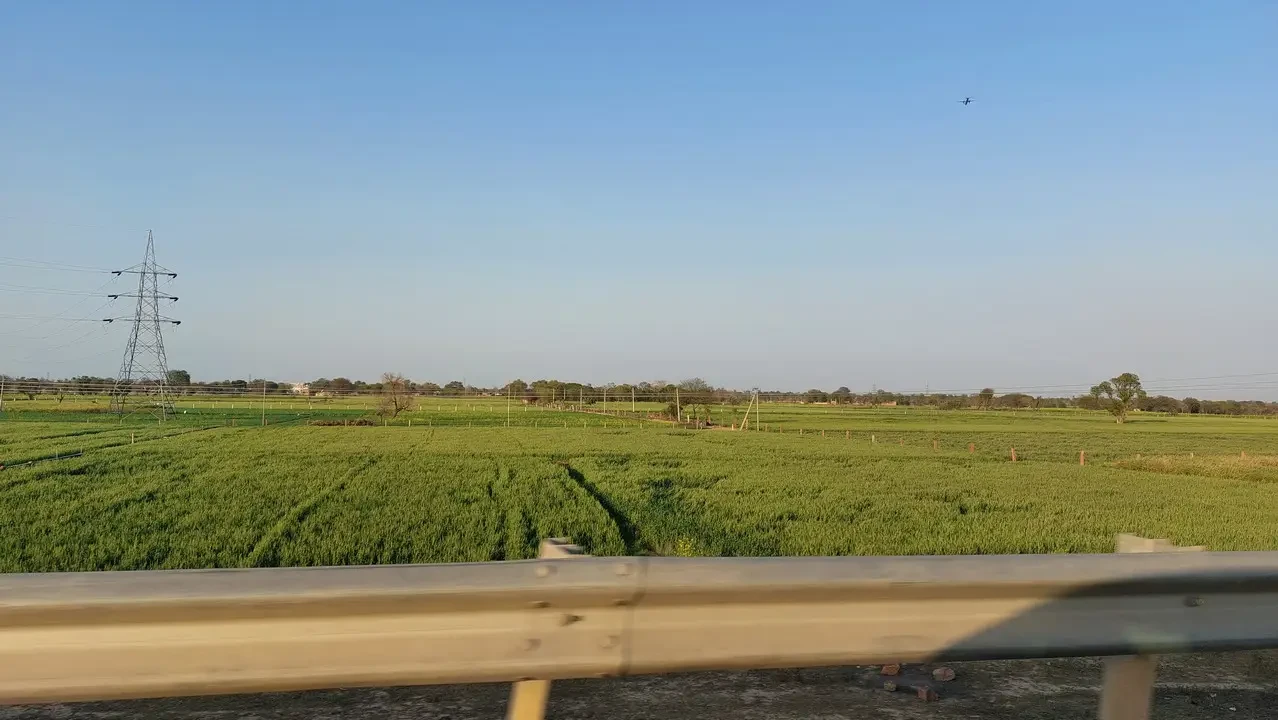
We continue eastward towards Agra. wheat fields, the city is located approximately 200 km south of Delhi and is a major transportation hub, as well as an important industrial center. But that's not the reason we're going there: the main reason is to see one of India's most iconic landmarks, the Taj Mahal.
The metro of Abhaneri
Once we arrived in town, we discovered its stark contrasts: while the outskirts are characterized by palpable poverty, the city center offers examples of modernity, such as... overground metro (with stations on the ground floor) under which a road runs along wide avenues; even the area around the hotels is at a good level, you just need to look up to see cows and dogs wandering around.