Day 5
Jodhpur
Landscapes of Rajasthan and Jodhpur (the blue city), with its fort and lively urban center.
Morning in Jodhpur
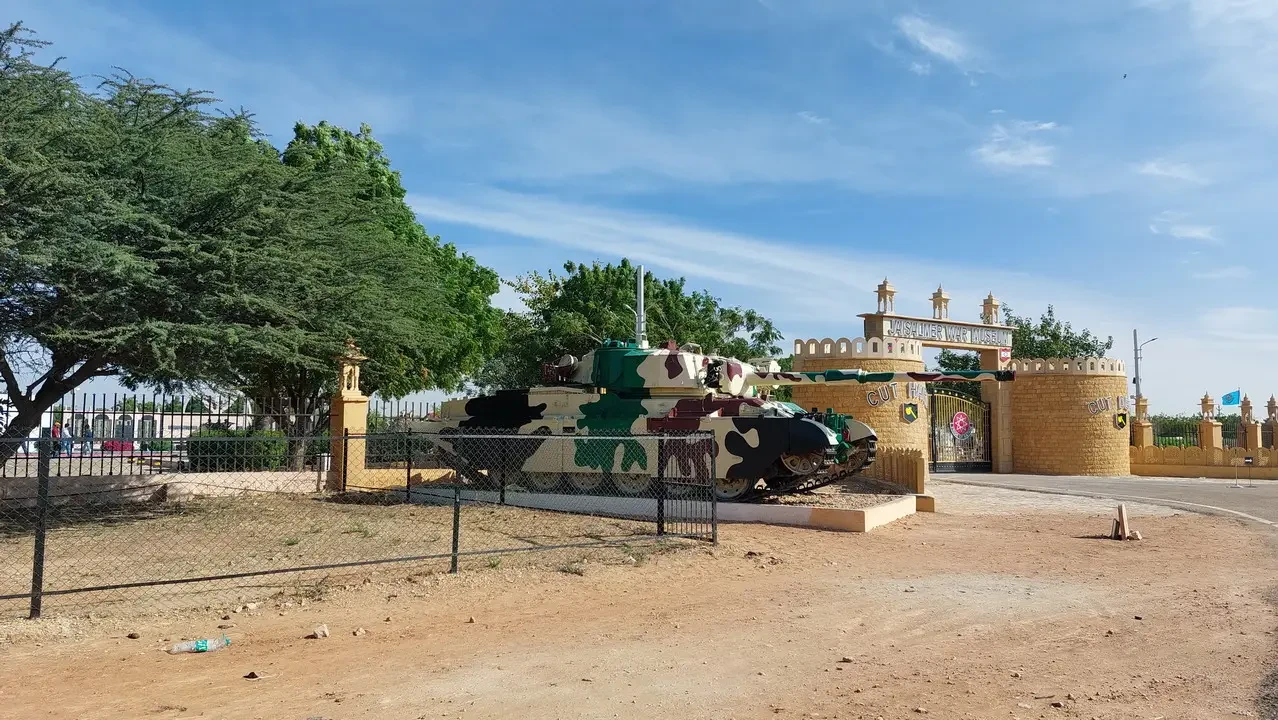
Breakfast and then return to Jaisalmer (as there are no other routes), continuing towards Jodhpur, our second destination in Rajasthan. The single-lane road is straight and relatively quiet. Outside the city, you find barracks and training grounds at a glance; there is even a military museum In support of national pride, it would be interesting to visit, but there isn't enough time. Propaganda is present at various points and tends to make the militarization of this area seem less significant, as it represents a border zone without natural barriers separating it from Pakistan. We see several trucks with tanks on board heading west, towards the border; we hope it's just a training exercise and not new hostilities.
Vast green areas are revealed, which turn out to be for the production of mustard oil, with Rajasthan being the first national producer, as well as lentils. In a small town divided by a road, we see cars decorated for a wedding celebration.
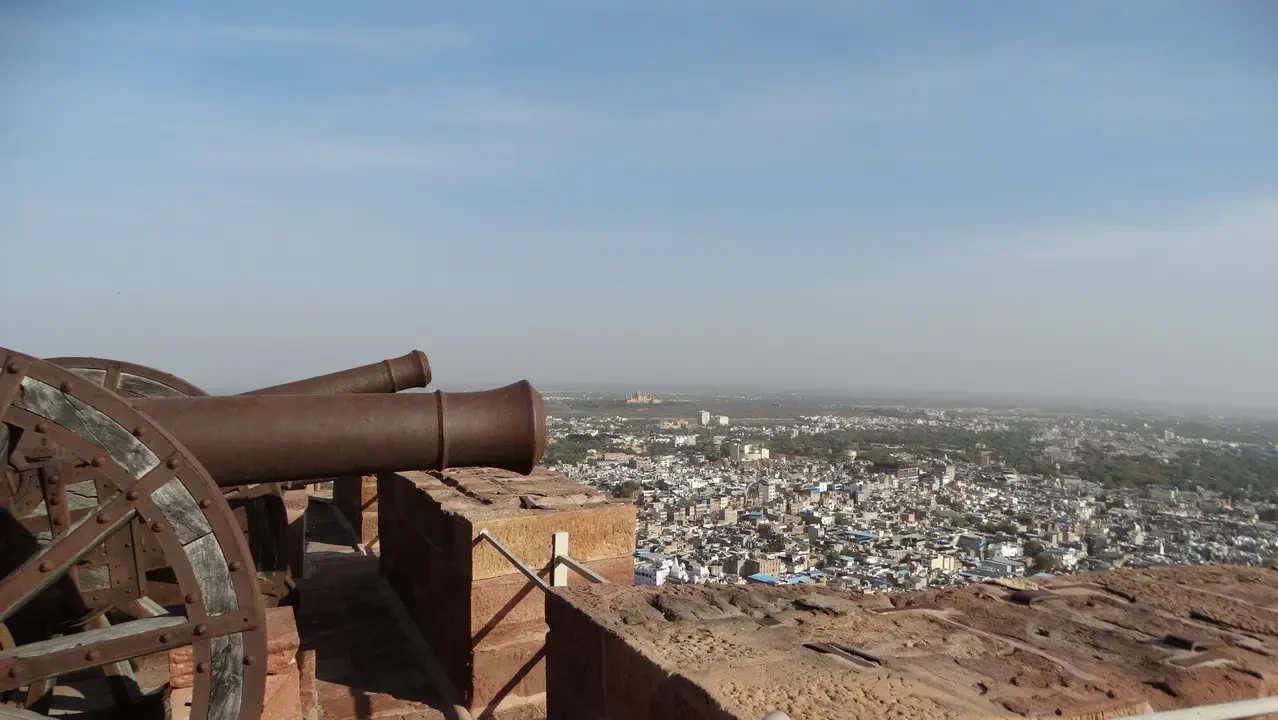
The distance is considerable for the busy Indian roads, which are always congested with motorcycles, tuk-tuks, animals and people, but we arrive in the early afternoon perfectly on time to visit the impressive. Mehrangarh Fort. Although having the same structure on top of a hill surrounded by plains, it stands out from the previous one in Jaisalmer due to its larger defensive attitudes, with impressive military features and high walls that in the past discouraged many armies from even approaching. Shortly after the last access gate on the left side, there is an image with stamps of The women's hands remind me of the traditional attire. of the wives of the maharajas, who left their mark before sacrificing themselves on their husband's pyre. The widows' situation is and remains a very sad one; in addition to the grief of losing their loved ones and often also their source of income, they must endure a real social ostracism that, in the past, reached extreme measures, and still does so in some cases. The fort is definitely interesting for the rich interiors, thanks to the audio guide, we can answer many of our questions. From above, you can admire the blue-stained houses Located in the old Jodhpur, these were those belonging to the Brahmin caste and have become a symbol to the point that the city is also called Blue City. Inside the fort, which we would not call romantically a castle, lived the maharaja, who is still the owner of the estate and exercises his rights to allow tourists to visit it, profiting from this. Together with the maharaja also lived the rajputs, the warrior class and advisors to the ruler. The fort was never conquered; in 1808 there was a battle with Jaipur, which can be seen as a modern and relocated version of the Trojan War: apparently, the maharaja of Udaipur had given his daughter's hand in marriage to the maharaja of Jaipur, who died and she was not given to the next one, but to Jodhpur. The siege failed and the troops of Jaipur returned to their city. It is interesting to see how the last gate had spikes to prevent elephants from breaking it down. Unlike Jaisalmer, there are no popular dwellings; the structure appears essentially intended for noble residence and as a defensive role.
It is noted that women played quite important roles, for example when there were meetings with foreign representatives and important decisions had to be made in the room; there were five niches within which other women were hidden behind a curtain. In this way, they could listen without being seen and provide valuable details about the meeting itself. There was also an area of the fortress dedicated exclusively to women, which were only served by eunuchs; but within this wing there were also people who came and went. These were not recluses; they had relationships with women from outside, but did not have complete freedom of action.
The urban face of Jodhpur
Water supply, however, proved to be a problem at the fort: according to legend, when King Joda (from whom the city takes its name) identified the location for building the fort, he found an hermit living there; upon leaving, the hermit cursed the area, saying that there would be no water. To end the curse, someone had to be sacrificed, and one of Joda's men volunteered to be buried alive, thus ending the situation.
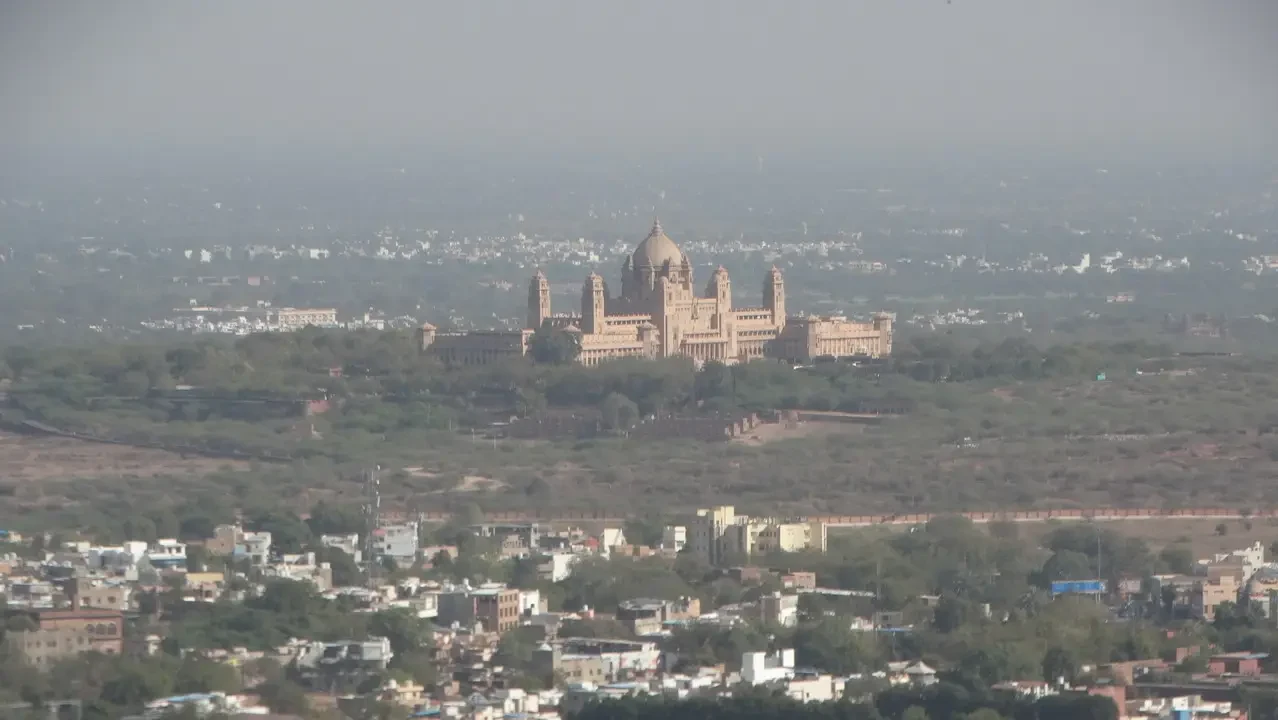
The current Maharaja lives in a villa / castle outside the city, partly accessible as a museum and partly used as a Grand Hotel.
Stop at Clock Tower
Our hotel is located in the city center and is a traditional house, also known as a "haveli," which is a historic bourgeois residence. It's convenient for taking walks to explore the historical sights. However, navigating the streets can be challenging, and it's important to be aware of your surroundings while walking or sightseeing. activities carried out by the artisans. The one that could be considered the main square, with the following features... Clock Tower and all around were vegetable stalls and markets. fabrics, a beautiful artificial lake provides water and a bar where We will enjoy the best lassi. (yogurt-based drink) throughout the trip. It's also the right place to buy spices: an engaging vendor explains the characteristics of the products, but it's even more interesting to see his persuasive sales technique, which aims to convince the customer to take as much as possible. Now it's getting dark, some stalls offer tasty street food – and thanks to our driver's approval – we dare to eat what we would have otherwise avoided: a digestive problem could jeopardize the trip; in this case, it will be a delight for the eyes, taste buds, and finally even for the stomach. We try the Dosa, a typical dish of southern India and a Tomato-based soup. The shopping? A couple of euros each, in total.
In the city, we see many Muslim women dressed in the traditional black tunic called a niqab, leaving only their eyes visible. It seems there is a good coexistence between the two communities, even though the differences are clear, especially when looking at the women's clothing. The shops also feature the crescent moon symbol rather than the swastika, indicating the owner's affiliation.
The hotel offers a terrace with a view, and we take advantage of it to spend some time there. night photo to end the day.