Day 8
Pushkar and Jaipur
The ablutions in Pushkar and Jaipur, the capital of Rajasthan.
Traditions and spirituality
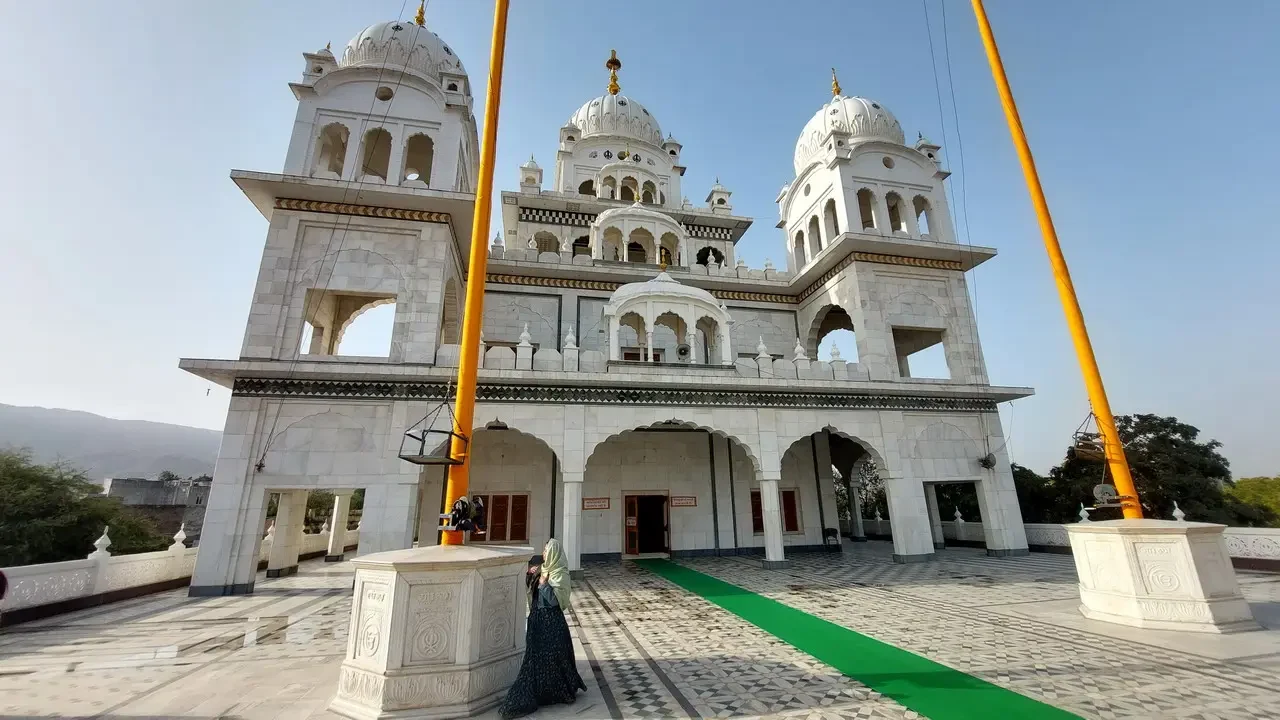
The hotel is not only beautiful but also conveniently located, within an acceptable walking distance to the city center. The route is easy and... Sikh temple It's worth visiting, even if it means taking off your shoes and socks, washing your hands, and wearing an orange scarf (for both men and women). The special thing about this place is having two tall orange pillars with a stone base around which the worshippers... the clockwise tour The sky has completely cleared, and the bright white domes stand out beautifully. We decide to make the lake tour starting from Sunset Point, where we were yesterday, although this requires us to put on and take off our shoes multiple times, causing irreparable damage to our socks. On the other side is the bustling center of wandering souls through the narrow alleys, a snapshot of society so different and therefore interesting. Starting from milk seller(figure already seen in previous days) with containers attached to both sides of the motorcycle, stopping to fill bottles brought by customers; an image that also existed here, eliminated by hygiene regulations. Opposite some flower sellers, a group stops playing instruments, each member playing their own tune on mismatched instruments; there is no talk of a melody, but the folkloristic aspect is still present. In proximity to the ghats The faithful begin to arrive: the men remain in their underwear, while the women undress and put on their saris. There are also metal changing rooms to provide some privacy for the ladies after changing. the diving, which for some reaches up to the knees while others simply hold their noses and go completely underwater, holding onto a rope to avoid slipping into deeper waters. We visit the Brahma temple, one of the few dedicated to this God of creation, while the vast majority are associated with Shiva, Vishnu and their various representations. Here too, you leave your shoes outside and cannot take photos inside, navigating through crowds of people trying to sell products and services (shoe racks, invented guides, etc.) of all kinds. We stop near a ghat to observe the rituals of the faithful. illuminated chapel It collects the offerings while the omnipresent cows are an integral part of the scene. We complete the circle by walking along a street parallel to the ghats, occasionally peeking over to see what's happening on the riverbank.
Local wildlife
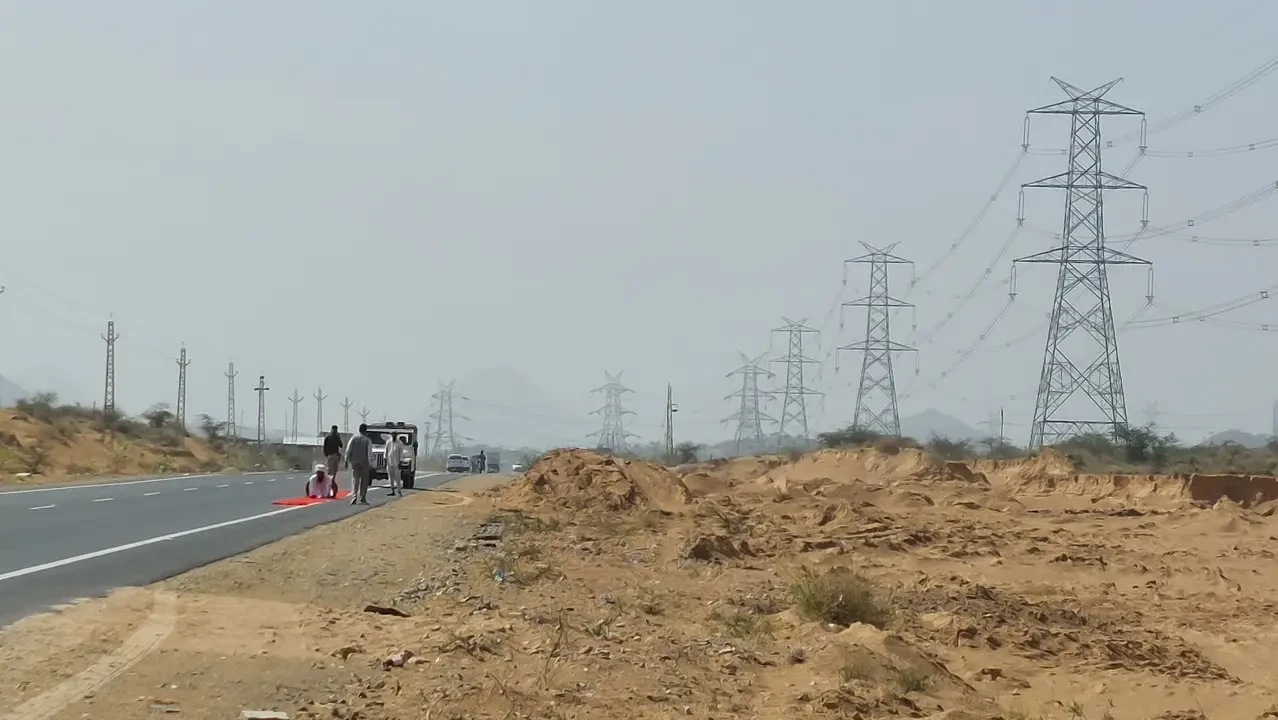
In the middle of the morning, we set off towards Jaipur. Shortly after Pushkar, on the road, we encounter a rather amusing and serious scene at the same time: a Jain man proceeds along the emergency lane on horseback. across the highway without stepping on the asphalt, thanks to a small team of people who are moving a red carpet about twenty meters long; he gets on top. do a couple of knee bends As we move forward, when it reaches the top, it shifts to one side, and the assistants help carry the carpet along. We hope it doesn't have too far to go because the heat is starting to become noticeable, and there isn't a single place to find shade.
Arrival in Pushkar
We once again enjoy a simple lunch at a small restaurant on the street, with paneer (a soft cheese) cut into cubes and served in a sauce that is always different and delicious – just specify when ordering that you don't want it very spicy. Arrival in the middle of a mess …which we have become accustomed to. In fact, it's worse because before entering the city, they are building overpasses and we are forced to go around them in a situation where everyone is trying to pass by, even without touching each other. A couple of photos at the Albert Hall Museum, a Enjoy your stay at a reliable hotel. and we head straight towards the Galta Temple (also known as the monkey temple). However, first we cross a large open-air stable, where we are told it is the cow temple, and it's obvious that the "queens" are there in abundance. The rituals performed seem at least questionable from our point of view: the urine of the quadruped animals is bottled and sold at high prices to the faithful who drink it on their hair or even use it as a sacred beverage; the same seems to happen with the dung used to cover the body. Of course, we respect and understand other people's beliefs, but it seems to us that this sect exaggerates in its fetishistic perversion. It is incredible how a country – despite being large – can land on the moon and at the same time have groups of people capable of such trivialities.
The monkey temple is located at the bottom of a small valley; at first glance, it looks like a place for a hippie gathering; it's quiet, and you can feel a peaceful and tolerant atmosphere towards every living being, which is typical in Hindu ideology. We find a guide who explains the history and significance of the temple, where there are many depictions of Shiva and Krishna, as well as Hanuman and the inevitable Ganesh. To our eyes, the complex is a a hidden gem The exterior paintings are deteriorating and the whole place has a decaying appearance; this is not the case for the Hindus, where aesthetics and earthly aspects are relative, with the focus being on the soul rather than the material. It's a shame that future generations won't be able to enjoy such decadent beauty. In the valley, there is a monkey nursery (mainly macaques) busily playing, many of them are small and don't fear humans, and they even pose for photos with us. As we climb, there are basins where fish used to live, most of which died due to the inappropriate food provided by tourists. The pigeons, like all animals, are also sacred and are heavily fed as part of the spectacle. Apart from the priests at night, the area is closed, and so-called "holy men" (sadhu) also live in a simple structure near the hill just above. Amidst the dirt, we continue to climb until we reach a vantage point where you can enjoy a view of... wide overview of Jaipur... just as the sun is setting. This little street then descends directly into town, avoiding the long drive. There are several hotels and restaurants in the area. one last bath which remains cool even in summer and is used for bathing the monkeys.
We can rightly say that it was a trip filled with unforgettable sunsets.
It's interesting how some temples state that it is not appropriate to leave tips or money for priests or staff, as this would be considered a form of corruption.
We visited a shop owned by a Kashmiri gentleman who, of course, sold fabrics from his region. We were explained the difference between cashmere and pashmina, where the latter is a particularly fine cashmere because the wool comes from the beard or neck of the animal, therefore being finer in itself and due to receiving less sunlight. To distinguish between a high-quality product and a poor one, you need to burn a small piece: the first will emit an odor of animal hair, while the second will wrap itself around, highlighting that it is a synthetic product.
All that's left is to go to the hotel (where we will be staying for two nights) and then have dinner at a nearby restaurant specializing in... chicken dish Huge pots display the prepared and beautifully coated product with the appetizing reddish hue of spices, while a tandir oven, around which incredible skilled bakers work, produces excellent… I ate some flatbread. The experience is definitely positive, and even though we can't order beer tonight, we don't mind at all.
Almost determined to keep us awake, we go to listen to a rather discordant group of desperate people playing and shouting what they call folk music. After having time for a masala chai, we quickly leave.