Day 12
Khajuraho and Panna Tiger Reserve
Khajuraho, where the profane becomes sacred and Panna Safari, with its tigers in their natural habitat.
The urban face of Khajuraho
We depart at 8 am for a day that promises to be very interesting – and it will be – from both a cultural and naturalistic point of view. A beautiful new highway strangely lacks traffic. It's Sunday, although here the holiday has relatively little importance, and it's still quite early in the morning, but having two lanes entirely for us with only a few slow-moving vehicles seems unbelievable. The construction of this road didn't pay attention to architectural or environmental aspects: we see houses that often lack the space facing the street, literally destroyed to make way for development. In some cases, there are still rubble, in others, a section of wall is interrupted.
The landscape is green, with fields of crops and several large rivers. In Uttar Pradesh, there is the largest national potato cultivation, which is harvested during this period.
Previously, it took about 6-7 hours to reach Khajuraho, but now it only takes a couple of hours. We arrived at our destination around 10 am and can start visiting the site.
Politics and society in Khajuraho
We are in the midst of the election campaign; today, a minister (apparently the interior minister) is expected to give a speech, and there's palpable tension, with roads closed and even more police at intersections. The billboards are completely covered with photos of Modi and other members of his party, while advertisements from the opposition are rare.
Visit to the Chaturbhuja Temple
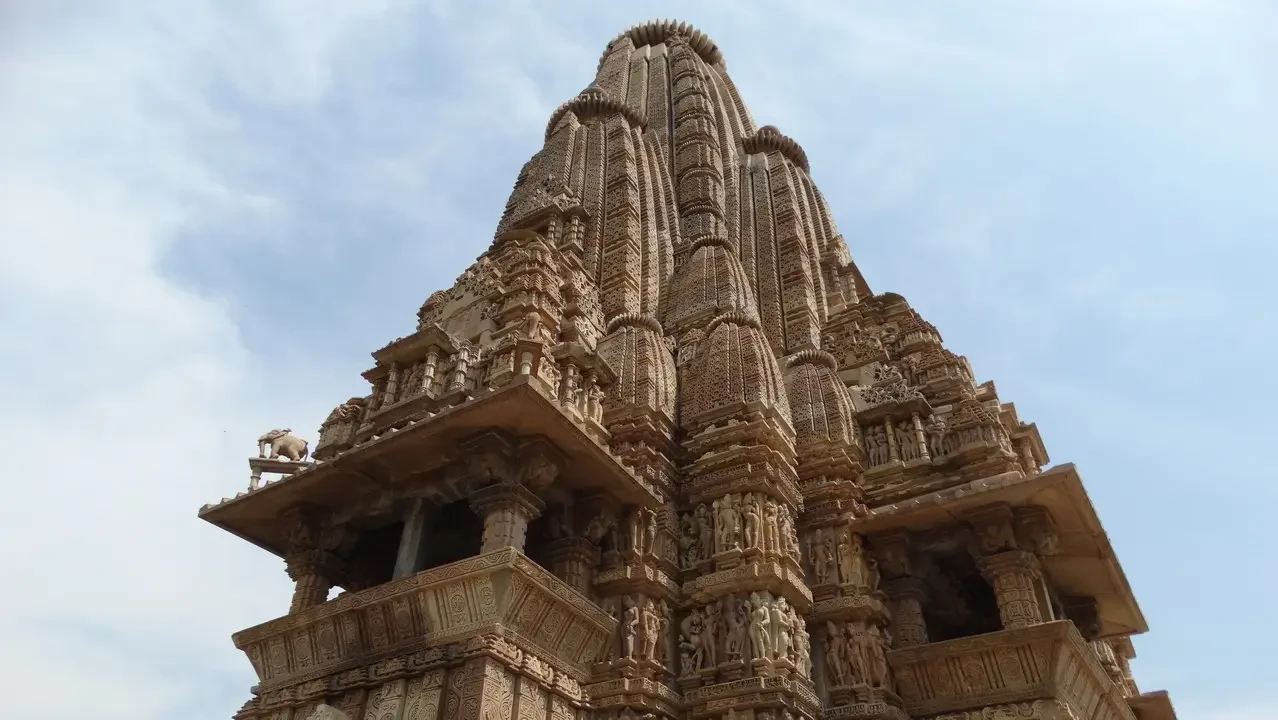
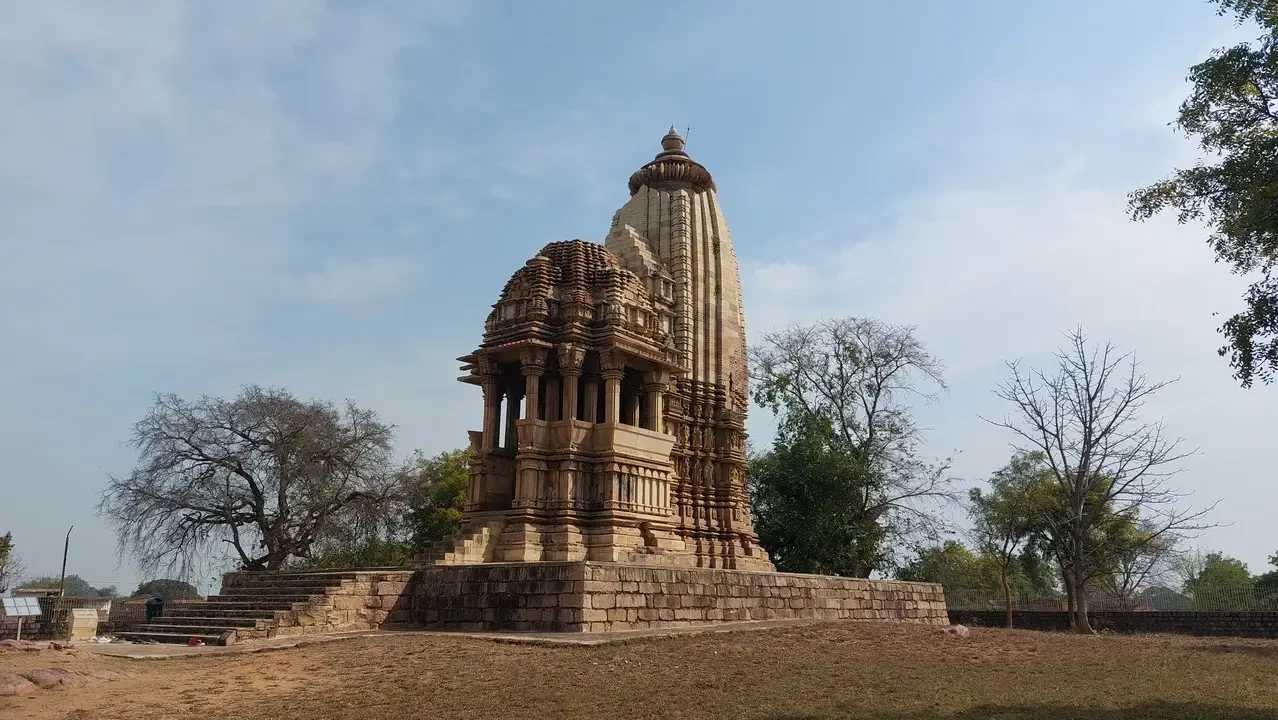
We first visit two temples located in the southern area (the Chaturbhuja Temple (and the Duladeo Temple), which are characteristic but less impressive than those you might see in the western part of the complex. We appreciated the domes, which somehow reminded us of Angkor Wat in Cambodia, and their vertical design, reminiscent of the mountain where the gods reside. We walked through a couple of colorful village with pastel-colored walls nearby, cheerful children are taking a shower at a water source, and you arrive in town to see the most interesting part.
Probably due to the congestion that was created, access to the Khajuraho temples has been moved beyond the lake basin on its left side, while the exit remains in the same location. The problem is quickly resolved, but another one soon appears, although it is of a minor scale. To pay for entry, you need to obtain a QR code, which allows you to open a booking website, fill out the various fields and pay with a credit card. At this point, you receive a new QR code that the staff scans with their smartphone. There must be reasons to avoid handling cash for the staff; of course, you need to arrive with a smartphone, a credit card, and some familiarity with online purchases. This is easy for many, but not for everyone.
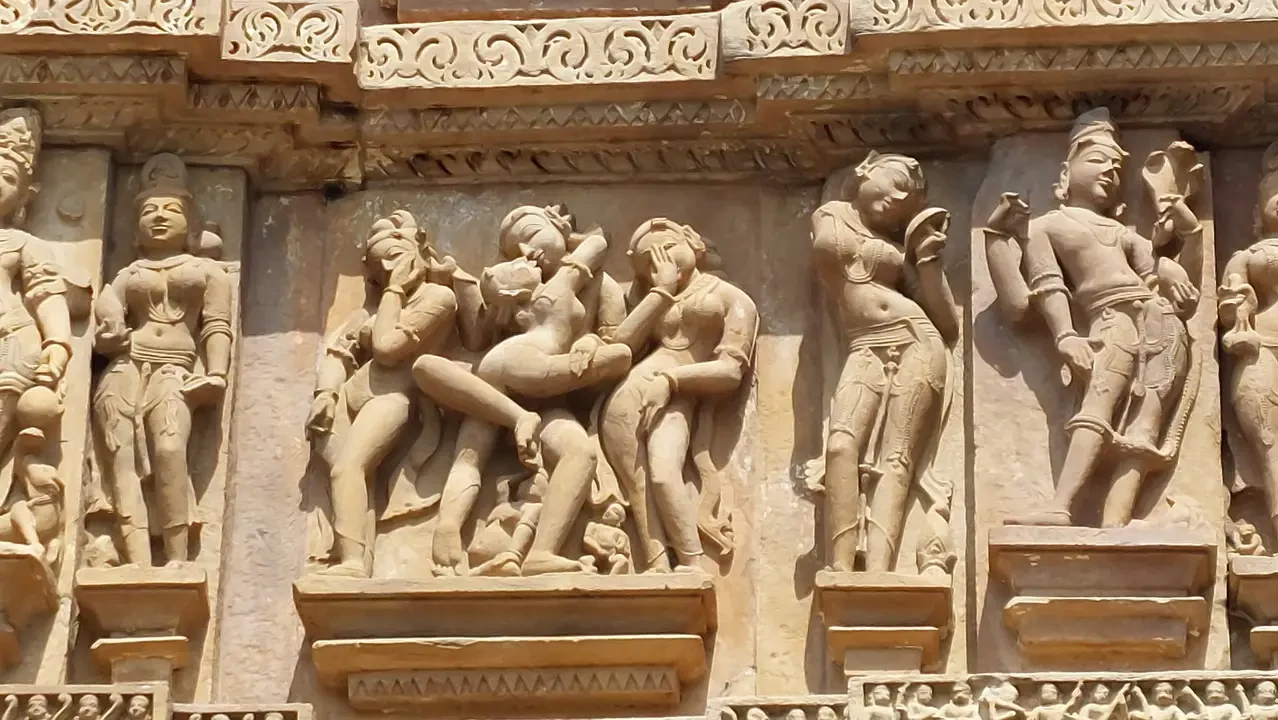
We have finally arrived at the site and are preparing to visit this place, which is a true architectural marvel. Having completed half of the lake's perimeter along a tree-lined avenue, we reached the first temples, which are remarkably well-preserved considering their age of over a thousand years. The fact that they had been forgotten for centuries and spared from the damage caused by wars certainly helped; when the English rediscovered them, there was only something left to restore that time had partially damaged. The interiors are dark. and there isn't much to see from the perspective of someone who is not a devout follower, while the incredibly fine carvings on the exterior walls would require days of careful observation; even without a guide, one can discern their symbolism and historical aspects, but it is the overall view to make these masterpieces unique. The alternation of scenes of war, everyday life, and sexuality provides a glimpse into the life and values of a bygone era. The reliefs communicate a deliberately refined sensuality, never vulgar. The women presented themselves with their curvy hips. and soft bodies almost inviting desire. Sometimes a certain hidden shyness is apparent, in depictions where people put their hands over their eyes but peek between their fingers. Apart from the scene of a man engaged in passionate lovemaking with a horse, the rest never descends into triviality, leaving the beauty to shine through and somehow the nobility of the loving gesture This happened during the time when Europe was swept by medieval dark ages, witch hunts, and a religion that even denied that the Earth revolved around the sun. We spent at least an hour and a half wandering through the complex architecture and characteristic alleyways, amidst beautiful gardens that served as a splendid complement to the temples.
Today everything is close by: from the exit of the site, to the hotel and the small restaurant where we will have lunch, it's only a few minutes walk.
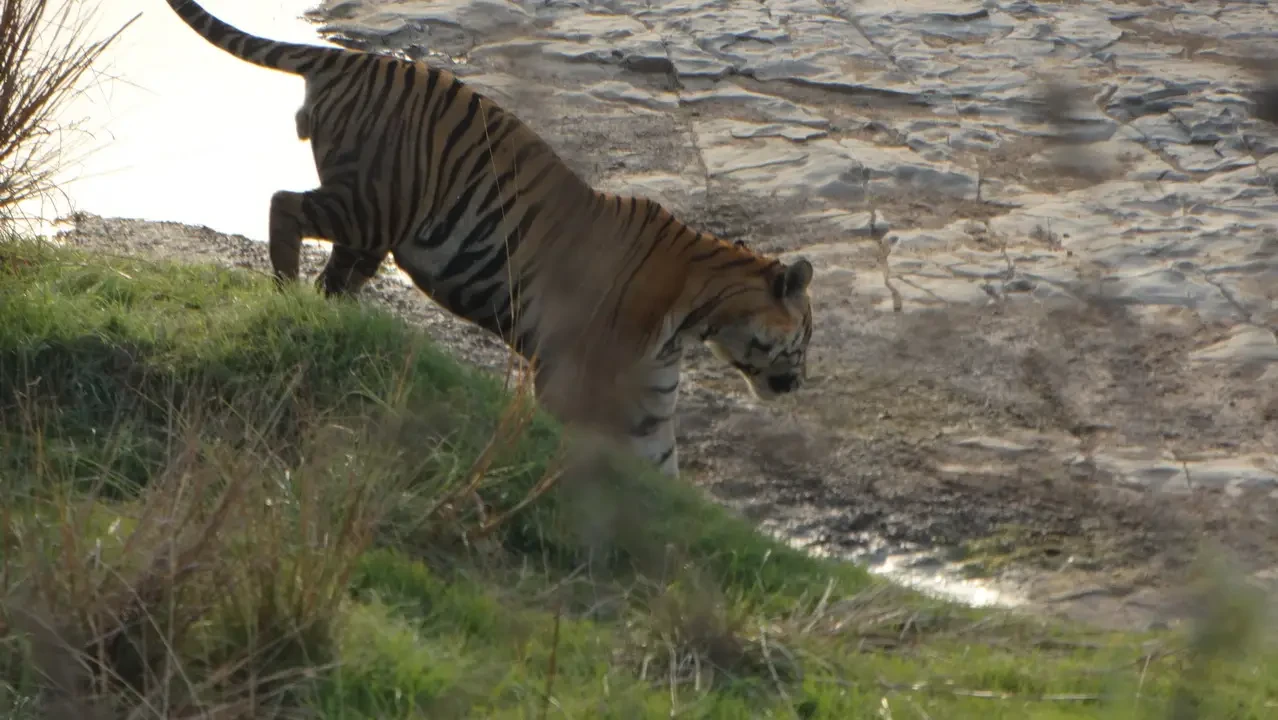
Shortly after, a jeep arrived to pick us up, and in about an hour's journey, we would reach the Panna Tiger Reserve. While safaris are enjoyable, they often have negative aspects: a large crowd of people crammed onto off-road vehicles jostle to see the animals, usually at a considerable distance and in a somewhat disrespectful setting. This time is different because the reserve is far removed from major tourist routes and has smaller dimensions, although it is included within a larger park, but 80% of it is not accessible. About ten years ago, tigers (but also leopards) were introduced, who found a suitable environment, and currently there are about 80 specimens. The forest is not particularly beautiful to look at: trees in winter attire, dry grass and dust. There are no flowering plants, except for those present in the rivers; water is scarce, and you can clearly see empty beehives that will soon be filled with the arrival of heavy rains. Despite this, many animals can be seen: from deer to scattered pieces from white to monkey colonies, which justifies the presence of carnivores. Speaking of carnivores, during a stop on the banks of the wide Ken River let's see a crocodile standing on the other bank. The sighting about the first tiger Arrives early, resting peacefully amidst the bushes without paying attention to our silent presence.
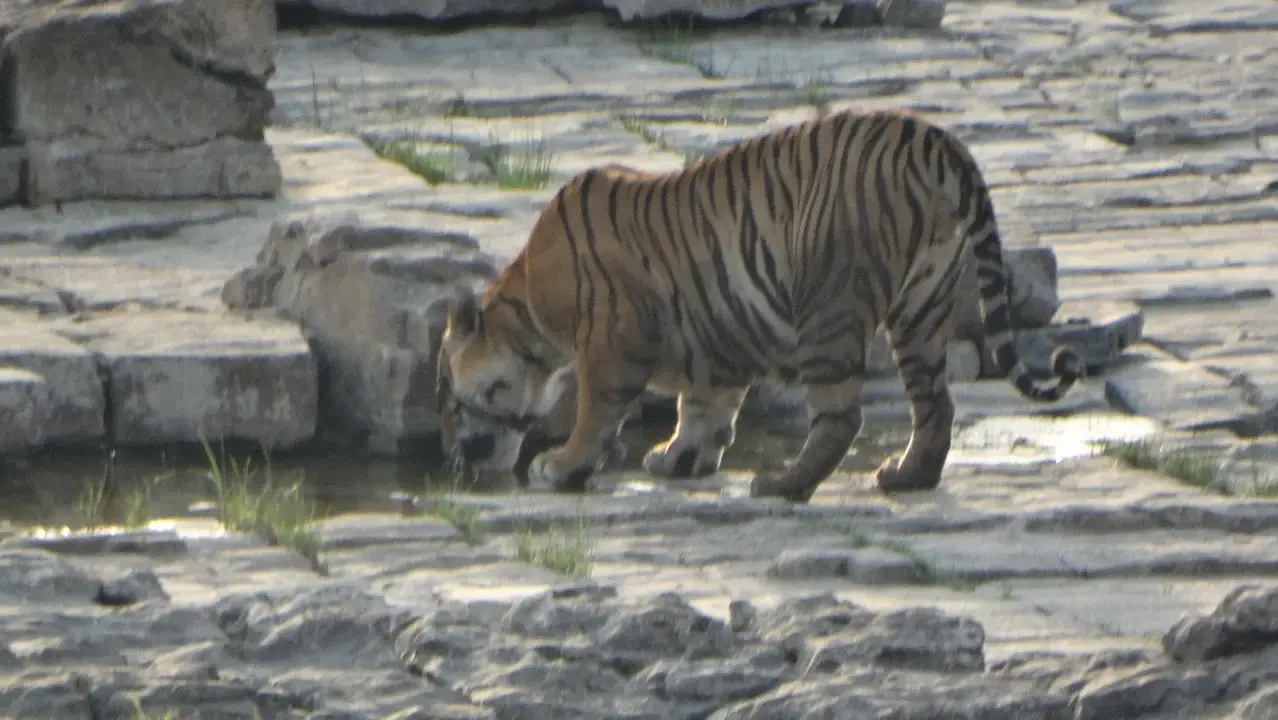
But the highlight happens when, from a considerable distance, we see another feline lying down in a cool pool created by a bend in the river. We can just barely focus on it with our most powerful cameras (even while yawning), but it's only a small dot and seems like a missed opportunity. At some point, the tiger gets up and moves towards us, but we are still quite far away. Today, things seem to be going well; it is approaching slowly, and within a few minutes, we find ourselves face-to-face with it. a few meters away. It's simply spectacular observe their movements... observe the disproportion between its hind and front legs; the former are slender for providing thrust during running, while the latter must be strong enough to act as a hunting weapon. It approaches the water, and there we see that The crocodile is moving to dive deep. (we'll discover another one right there in the pool); if the tiger notices, moves the tail and it goes find a safe place to drink The setting sun right in front makes the animal look stylized, outlining the curves of the majestic body. It's a male and quite large, to the point that it marks its territory and disappears in the middle of the tall grass. The local guides also assure us that this situation is not common, it feels like we were actually part of a documentary by National Geographic. The silhouettes of the crocodiles are visible in the shimmering water, their meal is postponed.
On the way back, another tiger appears in the bushes, standing still and at a certain distance. But at this point, it is more interesting to see the deer families that are very attentive to every sound. We discover that tigers typically hunt one animal per week; depending on their size, if it's a deer, they can finish hunting it in three days; when they get hungry again, they return to hunting. According to what we are told, the animals do not pose a danger to the local population and farmers because they don't like noise and have plenty of space available. Each tiger has its own territory: the young stay with their mother for about two years, then go in search of a place. We also see some deliberately set fires The park rangers are responsible for regulating the natural cycle and facilitating faster regrowth of grass and the undergrowth. Satisfied with our photographic hunting haul at 17:45, we begin to head back. when the sun is setting It's interesting to see the life in the villages (we pass through Bamitha again), which are humble but hardworking, where the women (still them) return with large bundles of freshly cut grass on their heads.