Day 11
Agra, the Taj Mahal
At the Taj Mahal, one of the world's wonders – also visiting Gwalior and Orchha in Madhya Pradesh.
Arrival at the Taj Mahal
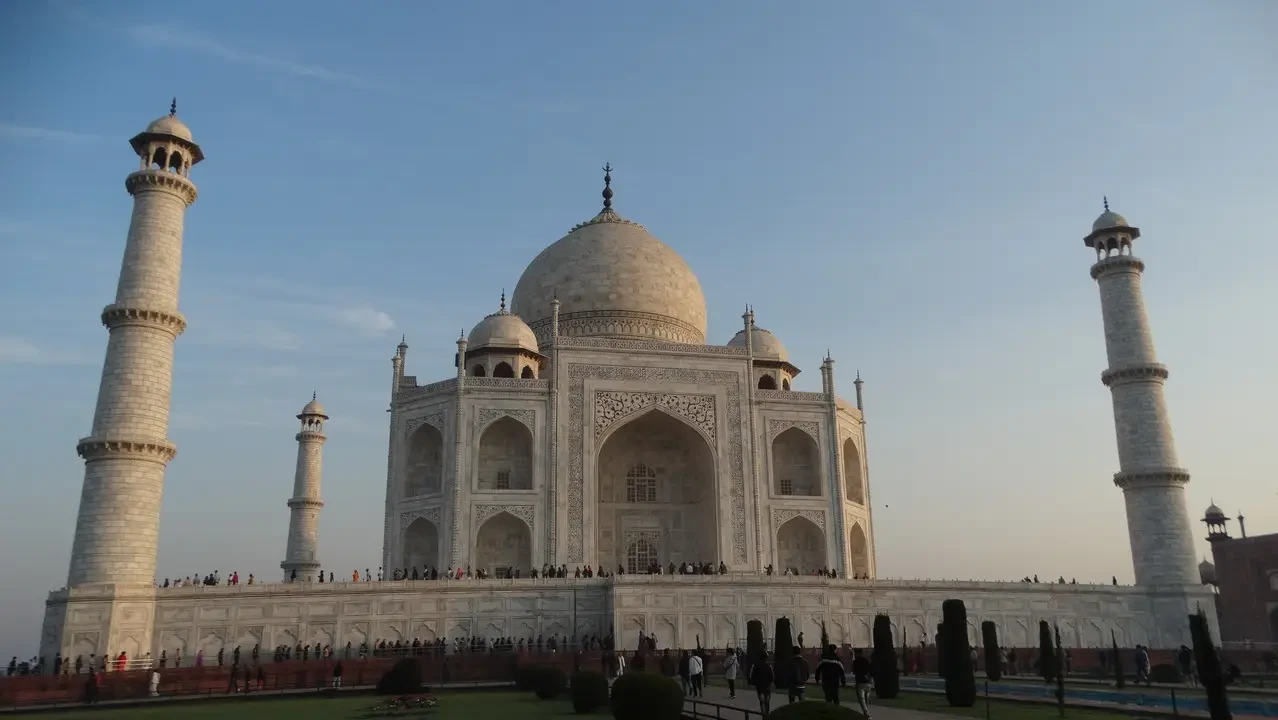
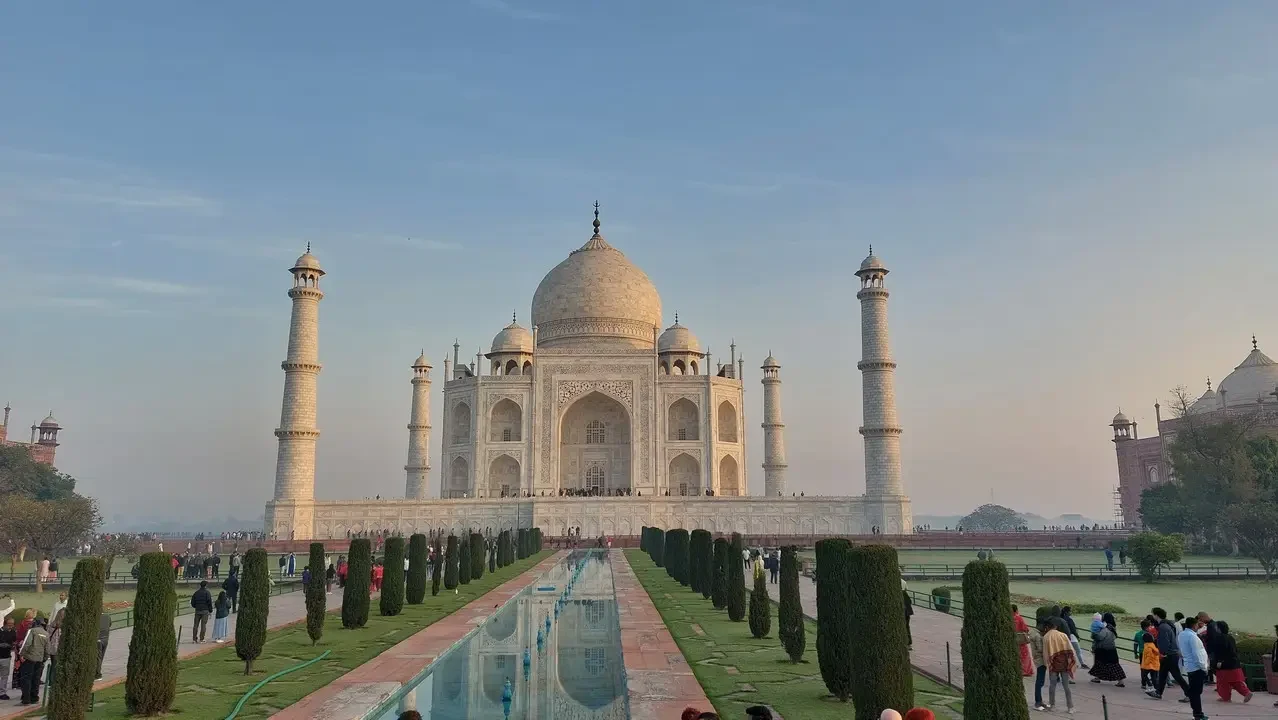
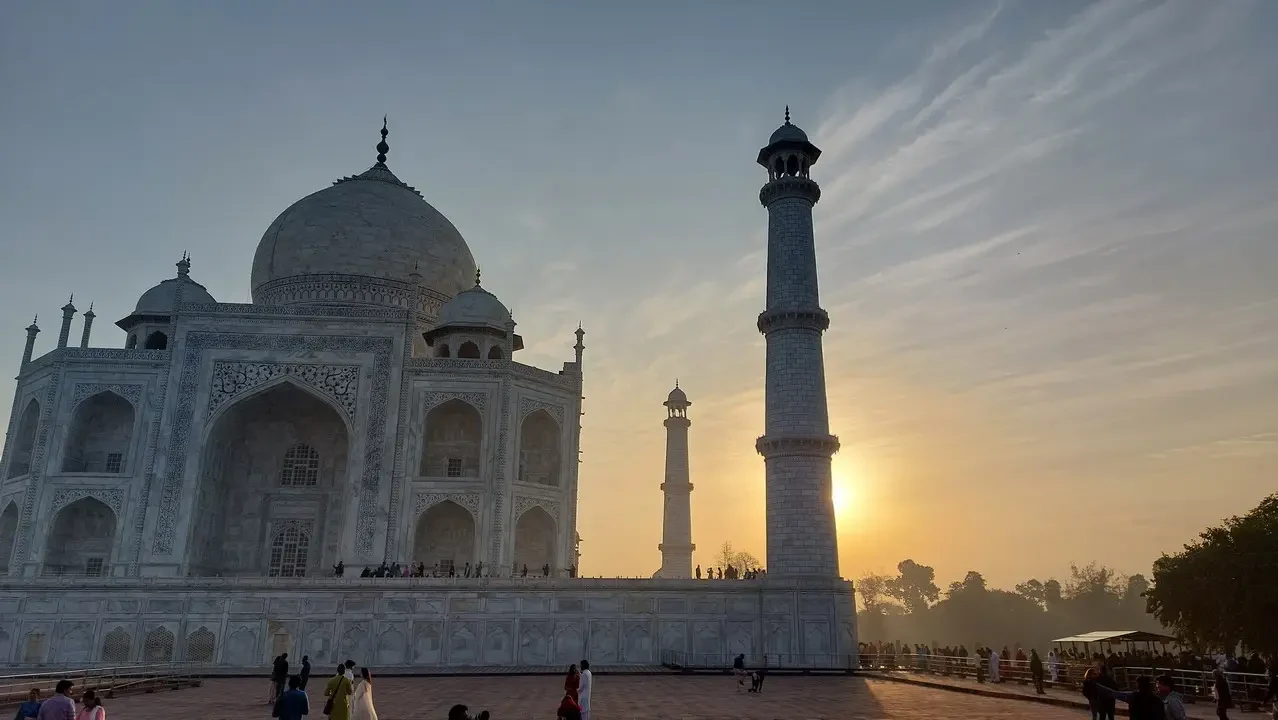
Today is the big day, although there was a risk that we might have missed it. At 6 am, we have an appointment with the driver who will take us to the nearby location where an electric train will allow us to reach the entrance. Despite the early hour, there is already quite a lot of activity at this place, which is considered one of the wonders of the world. Yesterday evening, we tried to buy tickets online but it was not possible. However, we know that there should be no problems if we move in time. We join the long queue waiting for the entrance to open (scheduled for dawn), only to realize that we are in the queue for those who already have tickets, not for purchasing them. We realize that we need another one, so we divide up to maintain our position. After a back and forth (although the ticket costs the equivalent of 15€, they only accept cash), we are ready to enter without losing any valuable time. The checks are thorough, and even our mint candies were confiscated because, in general, you cannot bring food. A courtyard with buildings and an impressive portal, and finally, we are face-to-face with the Taj Mahal; when we enter the courtyard, it appears before us in its opalescent majesty, with some warmer rays coming from the rising sun: a pearl both in color and substance. I can hardly believe the romantic legend of Mughal Shah Jahan, who supposedly went mad after his wife's death during her 14th childbirth, and built the mausoleum in her memory. It is true that this is impressive marble construction, the rising sun gives it a brilliance that is destined to disappear when it rises and takes on a more yellowish color. The base lifts it so that the only background is the sky. Behind is the Yamuna River and a park, so the view can be undisturbed by anything and focus solely on the building and its domes. Two red mosques The sand sculptures act as bridesmaids, remaining at a respectful distance from the main building. The crowd barely manages to appreciate its charm. wonderful gardens right next to it They contribute to creating a sense of depth, enhanced by the peaceful lagoons where the Taj reflects. Even now, in the 21st century, the structure inspires awe, and one can imagine what people might have said when seeing it centuries ago, considering that it was built in the mid-17th century. We'll join the queue to enter, walking clockwise around the area where the unfortunate wife of the Mughal emperor and her husband rest, who arrived 8 years later, and where photos are not allowed. The marble is of high quality. but what strikes me is their simplicity, especially when considering the national context where such constructions are usually elaborate. Stepping outside, we admire the walls, always made of marble with a single pearl-colored finish, only interrupted by geometric patterns in semi-precious stones. We see the back part from a distance, where... 4 prominent minarets towards the outside (probably to prevent them from falling on the mausoleum in case of an earthquake), and where the sacred Yamuna River flows here after passing through Delhi and before entering the Ganges at Allahabad. We retrace our steps through the flower garden and exit through the same door we entered. Some harmless clouds drift across the sky, dimming the brilliance of the mausoleum, but the visit is over; the same rubber-tired electric train, a walk to the hotel, and breakfast at dawn at 9 am. A note of color (dark): foreigners pay 1,300 Rs (approximately €15), while locals only pay 20 Rs (€0.20).
Forte Rosso
Leaving Agra, we simply take two photos at the Forte Rosso from the outside.
On the outskirts, the stalls are already set up, people are crowding, and traffic is chaotic; nothing new to see here. Along the road, a young man lies motionless on the ground after a motorcycle accident; the ambulance is approaching with its sirens blaring in reverse, hopefully it will be of some use.
About a hundred kilometers south of Agra lies the border between Rajasthan and Madhya Pradesh. From the area around Dholpur, in the region of... bridge over the Chambai River until about 20 years ago, there were gangs of up to 25 people who would steal and kidnap, then disappear into the countryside.
dense jungle that is very vast here. The authorities were unable to prevail with the criminals; in the end, they managed to find compromises to allow this people to live in decent conditions but within a legal framework, without having to steal and act like Indian Robin Hoods. In parallel, there is the story of Phoolan Devi, who was never really a young girl, sold by her father at 11 years old and lived through violence and abuse of all kinds. She became the commander of an underground group where she was called "Bandi Queen"; alongside the raids for survival, Phoolan avenged herself and the women victims of abuse. She negotiated surrender, was imprisoned where she suffered further abuses, obtained her freedom and became a champion of the poorest classes, even becoming a member of parliament despite belonging to the lowest caste. What seemed like a happy ending ended with her assassination, carried out by a member of the family of one of the rapists she had killed.
We have lunch at a Sikh restaurant where the atmosphere is unique; it's located along the highway and divided into two parts: a proper restaurant and a kind of refectory with various facilities for passing truck drivers who can also stay overnight here. Inside, we are greeted with large eyes by the diners, as if we were out of place, which is partly true since we don't wear turbans or veils, but after a few glances, we feel comfortable, and this applies to the food as well.
Traditions and spirituality
Generally, Sikhs are both intelligent and very supportive of each other, with a strong sense of integrity. Many of them work as truck drivers. Due to their religious beliefs, they cannot smoke but can consume alcohol.
We continue south, crossing large rivers and others that are dry (the so-called monsoon rivers), heading to Gwalior where we view the strong, tiled with blue azulejo tiles, which in the upper part depict tigers, elephants, and trees, with a strange row of ducks running along the entire upper part of the wall. It's a shame that many of the tiles are damaged; it would be wonderful to see it restored. The view from the fort opens up onto the city. ...almost as if we were trying to protect it, with a great view if you don't look for the details of the lower casbah. Several local tourists notice our fair skin and hair and ask us to take a photo together, which we happily do in exchange. Some girls are wearing beautiful saris, so beautiful even though they are no longer new.
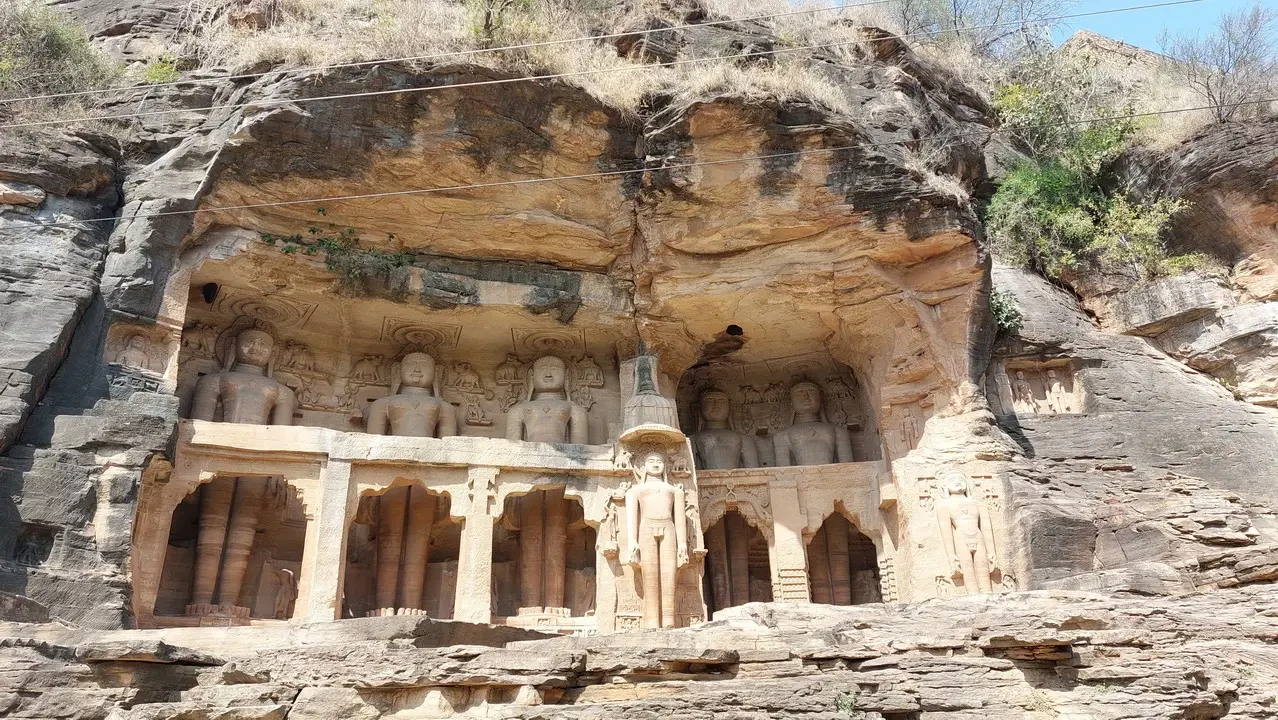
Let's have a drink. a glass of sugarcane juice Freshly ground, produced on a makeshift stand that crushes the reeds to extract the deliciously sweet liquid; another great example of street food. We also visit a couple more temples (the so-called mother-in-law and daughter's temple) and at the bottom of the narrow access road there are some... Engraved Buddha figures in the rock., similar to those still seen today in China or that have been destroyed in Afghanistan, but much smaller. We struggle to understand what they were used for in such a remote area from Buddhist influence, both in the present and in the past. Since this is not a major tourist attraction, we see many locals and schoolchildren visiting, wearing smart uniforms.
Let's see another castle perched on a hilltop atop of a hill, surrounded by a small village where life flows peacefully, and, as expected, there was a wedding ceremony taking place: in this case, the couple dipped their fingers into a bowl containing a colored liquid and went to touch doors of houses and altars of temples, as a welcoming gesture for the new family entering the community.
Local wildlife
We arrive in the Orchha area, where we don't find the exit from the highway, mainly because it's not marked. We realize this a kilometer later, so we turn around and, carefully, in reverse on the emergency lane, we reach the exit. Nothing like when we later see a tractor traveling calmly in the third lane, also in reverse. Everyone avoids it perfectly without saying anything. We call it tolerance to avoid using other adjectives.
About ten kilometers away is the pleasant village of Orchha. We are staying at a quiet hotel, where the owner warmly welcomes us and offers us tea in the garden with views of the castle. Outside, there's the usual hustle and bustle, but we venture out to explore the beauty of this town, which is surprisingly off the beaten tourist path. We are in Madhya Pradesh, and the impression of the people changes: while remaining correct and friendly, we notice a general sense of greater poverty, down to the small communities that live on subsistence farming by selling everyday items, alongside humble sleeping areas. The children roam around or, in many cases, "run" the shop, learning about life at just 5 or 6 years old. The Rajasthan visited a few days ago is much drier and, at first glance, potentially poorer; however, one perceives a more noble attitude, almost as if to emphasize a continuity with the Rajputs. It remains to be seen how they manage during the monsoon season; tents can perhaps offer some protection from a breeze, but certainly not from heavy rains.
Chaturbhuj Temple
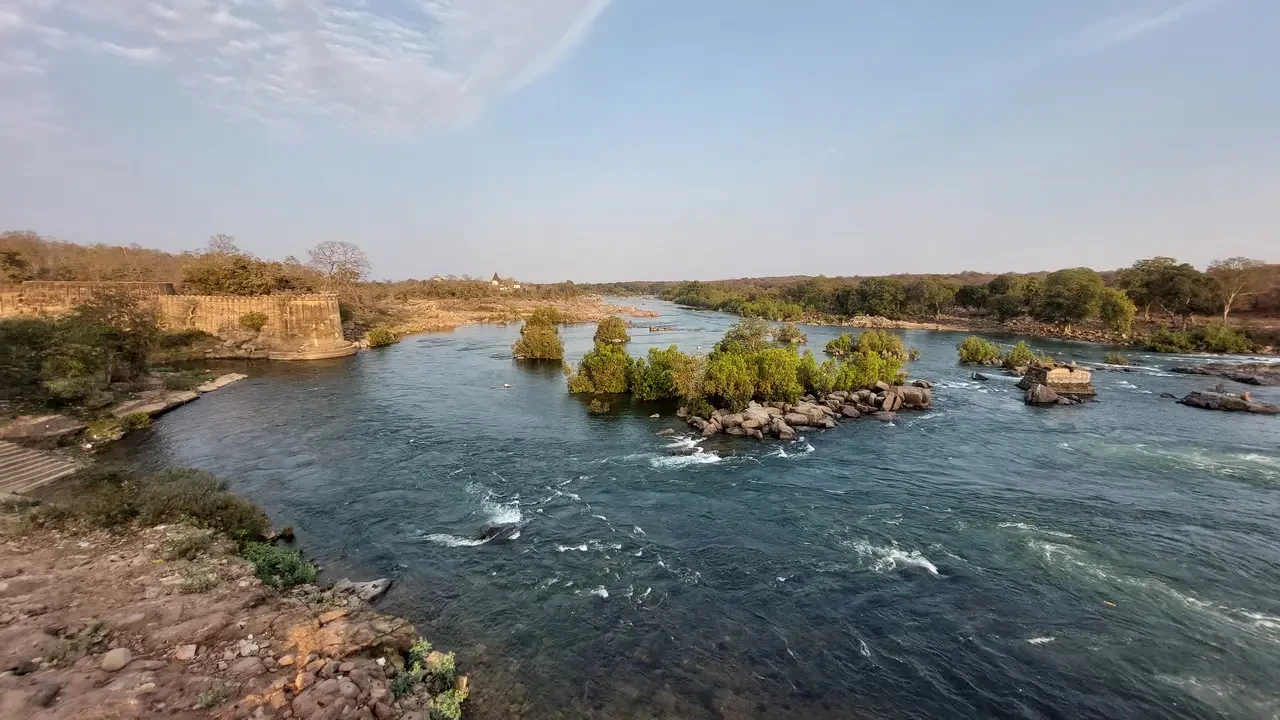
On a hill, crossing the bridge, you will find grand, stately palaces where Indian tourists come as couples or with their families to stroll and take photos, taking advantage of the historic scenery. On the other side of the river is the Ram Raja Temple, which attracts those we could define as "vagrants" around it on the square in front: actually, we can't understand whether they are lazy or not who dedicate their lives to asceticism, perhaps both are true. It's people of an advanced age, sitting on the ground alone or in small groups, talking and occasionally chanting mantras. The temple opens at 19:00 and we will visit it after dinner; next to it is also Chaturbhuj Temple seems closed. We also see the Betwa River, spacious and with ideal waters for rafting; the entire area is green thanks to the legacy of the monsoons and some seasonal rain that falls on time to maintain the vegetation. Dinner takes place in a place that cannot be called a restaurant. In an old building, a narrow staircase leads up to the first floor. open on the road From here you can see the intense activity even in the dark. The staff seems to be there after a day working in the mine, and there are only a few people sitting at the tables. We carefully (more for hygiene reasons than to spoil it) take the menu and order. Since the dish is taking a while to arrive, I glance from the internal staircase that leads to the kitchen and check my immune system to make sure I have everything. When the dishes arrive, we discover that we are in front of what will probably be the best meal of the entire trip. The Brinjal Masala is a real delight; eggplant with delicious spiced sauce but without being spicy, in a flavor balance worthy of a prize. It should be noted that there is no ready-made food; if you order something, it is prepared on the spot and the wait – which is well worth it – usually takes about 20 minutes.
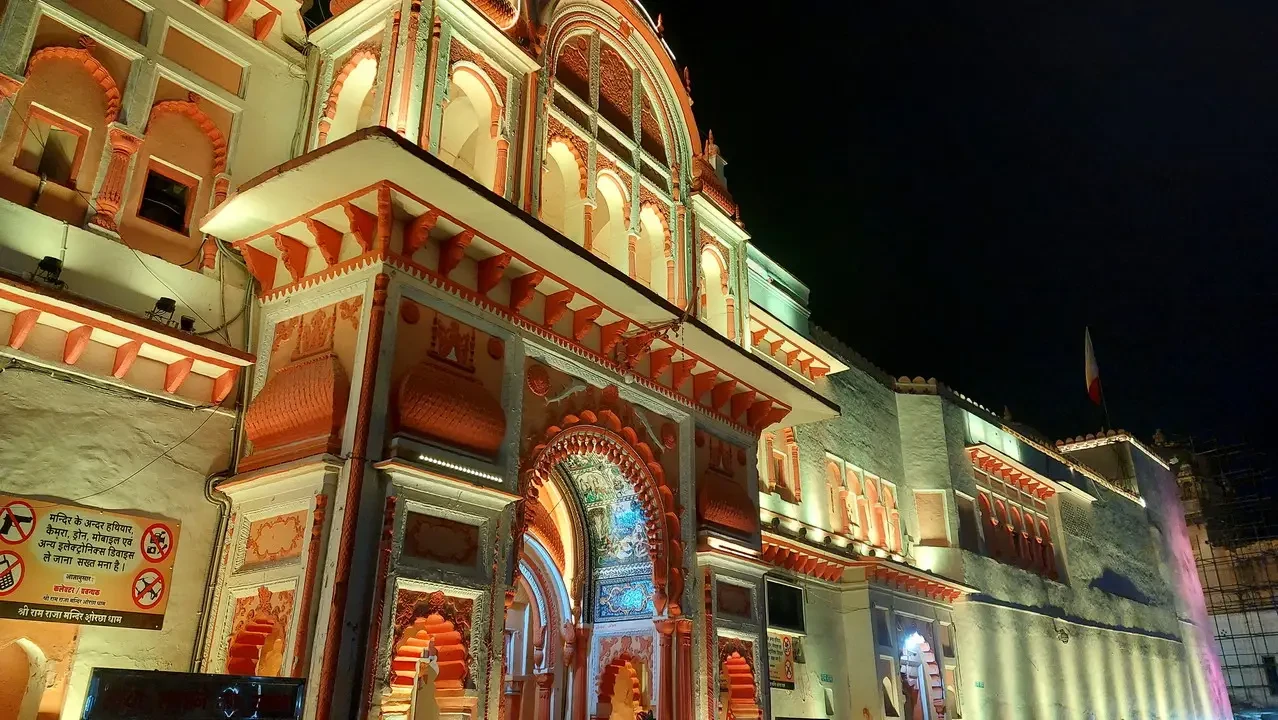
In the meantime the Hindu temple The doors opened and we went inside to explore, where groups of young people were singing to the rhythm of traditional drums. The exterior is also well lit, so that the yellow and orange colors stand out against the darkness; couples taking wedding photos are there, as are the usual sadhus sitting in the square, old people smoking while trying to earn a few coins, waiting for a sort of daily cycle where day chases night in the same way. Another masala chai, which has now become a ritual, and we retire.