Morning in Sossusvlei
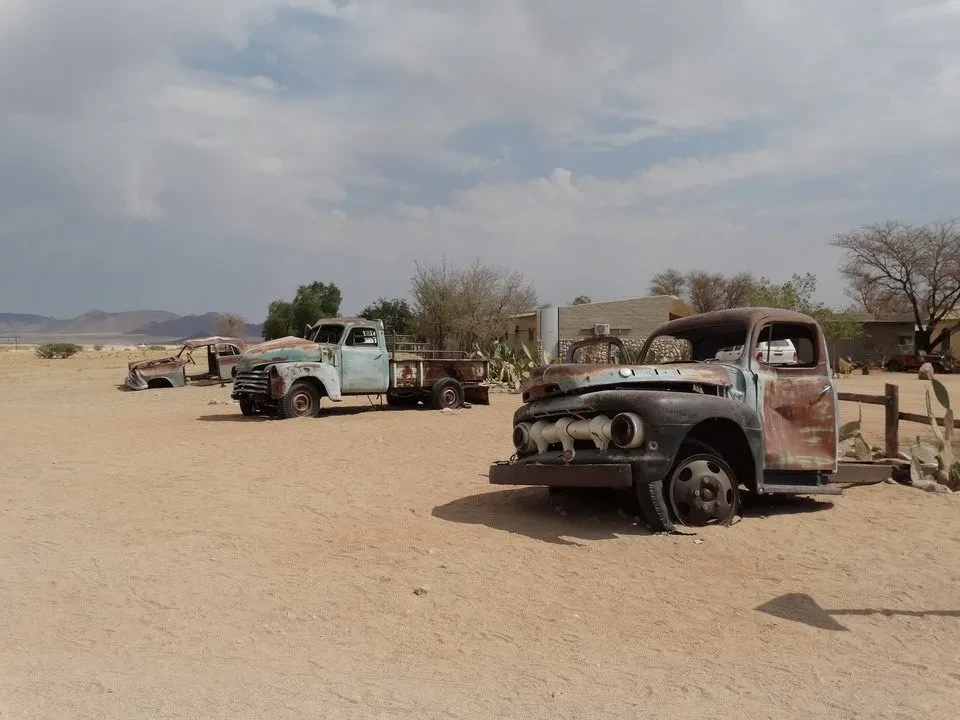
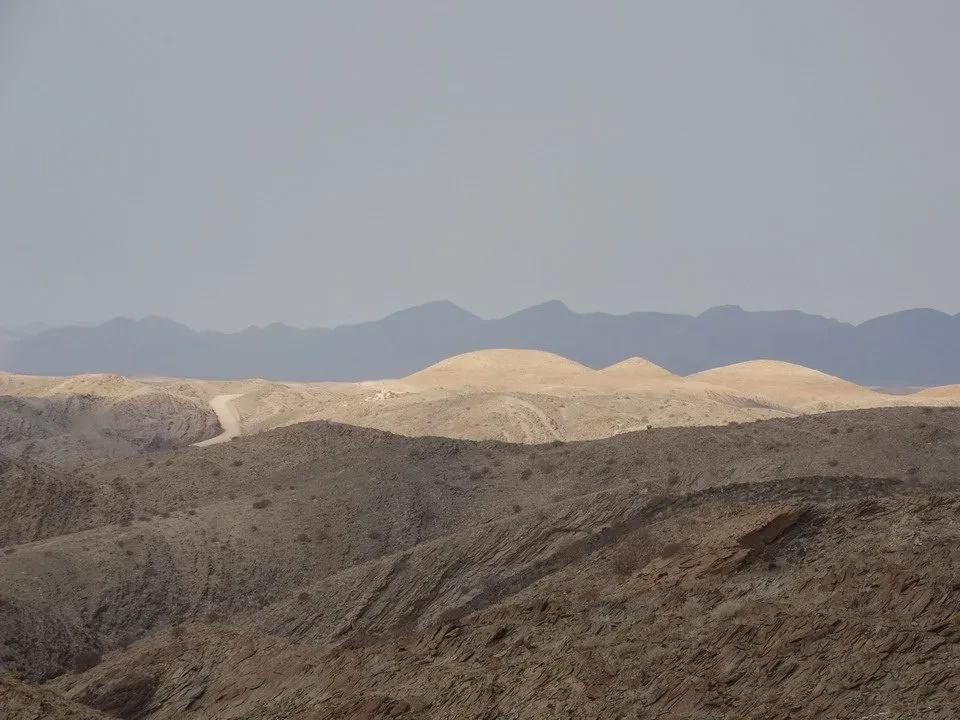
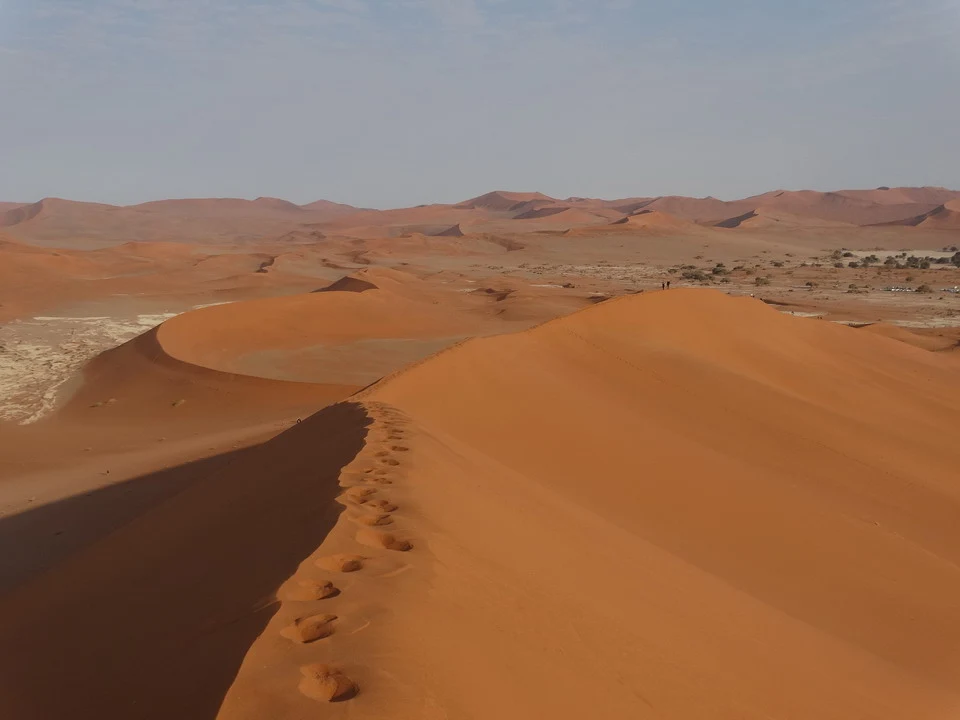
The sleep is good, it's a shame that the alarm goes off at 5:15 AM, when it's still dark. To properly close the curtains and, above all, to securely fasten the latches that cover them in order to prevent dust from entering requires particular attention without natural light, but by 6 AM we are ready to leave, considering that the Inner Gate, the entrance to the actual park, opens at 5:45 AM. There is activity in the campsite; everyone wants to see the sunrise in a place like this: we aim for west towards Sossusvlei, the speed limit is 60 km/h but, thanks to the good asphalt, the straight road and the desire to enjoy the moment, no one travels below 80/90 km/h. Along the way, we encounter a couple of ostriches enjoying the morning air. Once we arrive at the parking for 2WD cars, we deflate the tires to a pressure of 1.4 bar with the help of two friendly and helpful South Africans, who are also taking the same route, and we venture out on the last 4 km along a multiple sandy track, being careful not to get stuck. A 4x4 is essential, and upon returning, we will see another vehicle identical to ours properly cleaned despite having all-wheel drive. We climb the dune called Big Daddy located right above the Dead Vlei (vlei refers to the bed of an ancient dried-up lake, white, round or oval and flat). Global warming has not been to blame in this case; the aridity is due to the Benguela current and climate changes dating back millions of years. We are in one of the most fascinating places on the planet, where from a plain of dry, whitish mud, the dunes are like concrete. peach-colored sand, considered the highest in the world. Its chromatic appeal makes it one of the most photographed places, and it's easy to understand why. The dunes resemble the stands of a stadium, while the central plain is the field. In a remote time, a river called Tsauchab flowed through the valley surrounded by dunes, opening up at this point and allowing vegetation to thrive. Now, only the skeletons of trees remain: dried, sun-baked, they have been here for thousands of years, skeletons that the salt from the underlying soil has prevented from rotting; the environment is spectral and yet fascinating, a unique color contrast in the world, made intimate by the fact that we arrived here as some of the first visitors of the day. The temperature is pleasant, the sky is a deep blue, and we truly feel part of the ingenious and wonderful project created by nature. The riverbed can still be seen alongside a tree vegetation Along the valley, this indicates that water still flows intermittently. It is also true that there are underground leaks of water that allow for some form of life. The cloud cover in the sky makes the play of colors even more surreal. In reality, the Namib, whose name means "place without anyone," is an 80 million-year-old desert that stretches for 1,900 km along all of Namibia and has a width of about 120 km, but only in this place can you admire environments of such extraordinary beauty. And think that it all started with the Orange River, which marks the southern border with South Africa, which has carried vast amounts of sand to the sea over various eras; these were then pushed north by tides and the wind brought the sand inside the continent, where we can still see the dunes in motion. When we are about to leave, tourists form a long queue on the crest of Big Daddy, but for us it is now time for breakfast. We retrieve our vehicle and carefully drive back 4 km on the sand; upon reaching the parking lot, we inflate the tires while the coffee in the Italian-made moka pot begins to gurgle. But that's not all: we still want to give a quick look at the Hidden Vlei, another accessible floor with a 15-minute walk from the parking. The place is not as impressive as Dead Vlei, but the fact that it's deserted gives it a magical atmosphere, in which to immerse yourself and listen to the silence is the only thing to do. But not for too long, because today we still need to reach Walvis Bay, which is at least 300 km of unpaved road, and it's already 11 am! On the way back, we see people along the Duna 45, while the Duna 40 is quieter but still very beautiful. Arriving at Sesriem, we also visit the eponymous canyon (Sesriem Canyon), descending to the bottom at 30 meters from the overlying plateau. Inside, the rock is a conglomerate made of smooth stones embedded in a material that looks like cement. During the dry season there is no water, but when it rains, you have to take precautions, as we can see branches hanging at over 3 meters high. The vegetation is sparse, and small tree leaves They are green but appear to not contain water inside, they feel dry to the touch. It's amazing how they manage to survive in such conditions, feeding solely on the little dew that condenses at night. The road after Sesriem returns to being unpaved and of poor quality, as we already observed yesterday. We turn onto the C19 for Solitaire, a handful of houses in the middle of nowhere, where there is traditionally a famous bakery/pastry shop, and we enjoy the renowned apple pie. The old, dilapidated cars at the entrance mark the passage of time and evoke the pioneering era, while other installations of various styles give the area a very distinctive character. Tourists who visit during this period bring some activity, but living here during the off-season requires a good mental state. Originally intended as a possible settlement (a house built at the end of World War II) for grazing sheep, it has since "developed" into a crossroads between two roads with no traffic. Not far away, we cross off-road vehicle overturned recently and flattened like a sandwich, with a warning to maintain an appropriate speed and maximum attention. From here the C14 will take us up to Walvis Bay, following hills with curves that plunge into the beds of dry rivers (the Kuiseb Canyon in particular), which are not particularly narrow but require careful navigation due to the uneven ground. We cross the imaginary line of Capricorn Tropic at a spot where the plain stretches as far as the eye can see until it meets the Naukluft mountains, which rise to the east. Although we are in a dry area, the weather is unpredictable; take
I even love a few drops of rain, among the very few that fall during the year in this desert area.
Walvis Bay
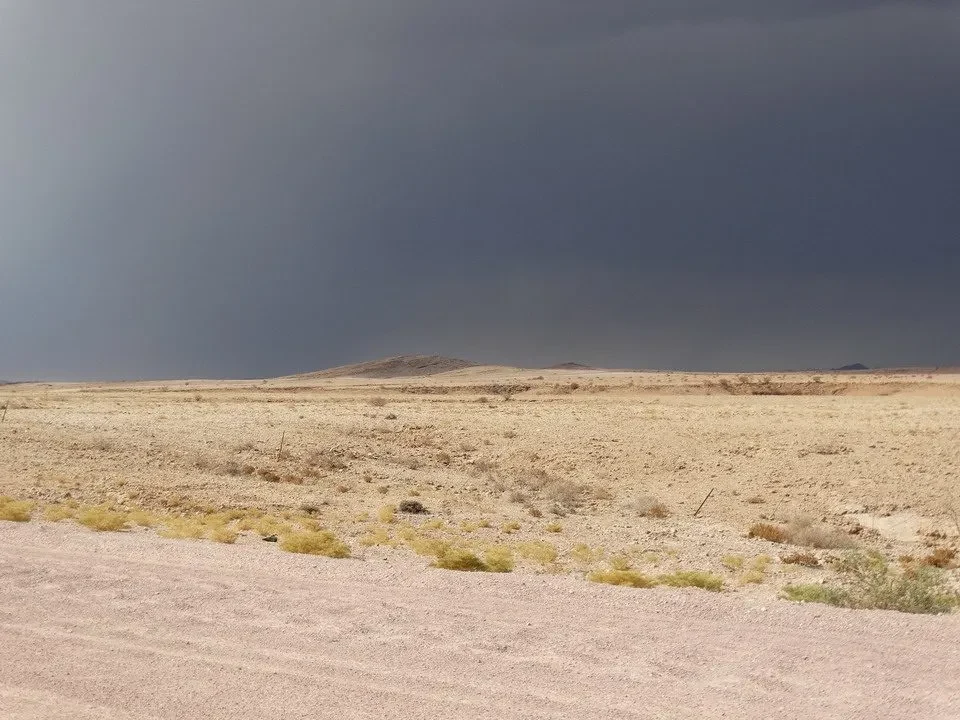
Lightning strikes down on the mountains ahead of us, while the clouds gathering in the distance create incredible light shows It's all so realistic that it seems artificial. The colors range from dark brown to the pink of the hills and the yellow of the sand where occasional animals graze. springbock The road improves significantly, becoming straight and with few potholes in the flat section where we even reach speeds of up to 90 km/h, allowing us to arrive in Walvis Bay before sunset. The city has a history that has always linked it to England and South Africa, being integrated into Namibia only in 1994, four years after the date of the nation's independence. The interest that attracted colonial powers was related to the strategic importance of the port and its resources of salt, guano, and fishing.
Before entering the city, we take a few photos of the lagoon where... flamingos They are looking for shellfish and at Duna 7 Today is a desolate and windy day, clearly the destination for weekend excursions. Around there are mines and guano extraction sites with their processing centers, and a constant flow of trucks. In Walvis Bay and Swakopmund, it's best to have shelter from the humidity that characterizes these areas: while rare drops fall, which will eventually form the average annual rainfall of 3 mm, we arrive at the lodge we booked for the evening. The manager, a friendly German who had just returned from a vacation in Italy, seems very excited about all the new things. Today's accommodation is also located in a quiet area and not right in the center, so as not to find one. It's striking to see how all the houses are surrounded by a tall wall with barbed wire on top, which, while providing defense against intrusions on one side, prevents anyone living there from seeing outside, leaving only a few meters between the windows and the walls. We are told that people value privacy above all else, and security is a secondary consideration. However, our impression is that the reasons are exactly reversed. Also, the dogs barking inside the courtyards don't seem to be just pets. The presence of anti-theft devices everywhere leaves no room for further interpretations.
At this point, it is necessary to discuss the few Namibian cities that deserve this name: walls and barbed wire, sometimes electrified, are a constant presence, although there is no real danger perceived, but it is clear that there is. The poorer colored population seeks work first in Windhoek and then in Walvis Bay; if they cannot find employment, they are forced to live on their wits, and consequently, the people must protect themselves in some way. It is difficult to understand the delicate mechanisms that govern Namibian society, but it is much simpler to understand its unspoken social rules: a 10% of white people control the economy (a form of social dominance) and cannot help but influence politics, which has been governed since 1990 by colored SWAPO party members, formerly communist-aligned during the struggle for independence, now transformed into moderate socialists. Colored people also hold high positions, as do the police officers, who are all black. In a poster showing photos of ministers and political figures, only one is white. It is clear that the relatively small percentage of marginalized people is represented solely by colored people. There is an impression that the inhabitants of rural areas, who have decided to live in cities despite a completely different culture and customs, have ultimately fallen into poverty and its negative consequences such as alcoholism and drug abuse: this is the result of urban failure due to lack of integration. Those who remain in the shacks are likely to have a more dignified standard of living, as we will see in the following days when we travel through the most deprived area of Namibia. At the same time, it should be noted that the country has a predominantly German organization, although Germany only dominated for thirty years between the two World Wars, the rest of the white population consists of South Africans who emigrated during the post-war period to independence. The organization that white people are able to create, despite the contrasts and injustices among different social classes, leads to a higher standard of living for everyone, particularly when compared to other neighboring countries, especially Zimbabwe where President Mugabe practiced a form of reverse apartheid.
Among the tourists we noticed a good presence of French people, as well as those who speak German and Flemish. It is difficult for both groups to determine whether they are travelers from Europe or local Namibians/South Africans. In the latter case, distinguishing between Flemish and Afrikaans is something we are not capable of.
Let's go for dinner at Waterfront at the informal and pleasant restaurant Anchor’s to enjoy some excellent fish. Outside, there is complete silence and the streets are practically deserted, so much so that we think we made a good choice taking the car, even though we could have easily covered the distance on foot. This is particularly interesting considering it's tourist season; even in Swakopmund, we would experience the same sensation: no one on the streets but locals full of visitors, many of whom are residents.