

Arrival at Woermannhaus
Today we allow ourselves to sleep until 7 am; the wind from yesterday has died down, and we go for a walk around Swakopmund. this small town Built in a German style from the early part of the last century, it is perhaps the only one worth visiting in the Namibian landscape. Breakfast at a bakery that could easily be found in any German city, then we continue to the Woermannhaus, the lighthouse near the monument to the fallen (the German ones, because there isn't yet a place dedicated to the local ones), the Evangelic church, the Hohenzollern The building and the Waterfront from which we can see the pier at the bottom of which is Jetty 1905, the restaurant where we had dinner last night. The parking attendants here don't seem particularly intrusive and have a friendly attitude, to the point that leaving them some change almost becomes a gesture of courtesy for the service provided. Even though it's the end of the dry season, there are still beautiful blooms, especially the geraniums planted in the ground and pruned so that they grow back from underneath to form proper bushes. Before we leave, we go shopping for game at the butcher shop recommended to us yesterday by the off-road vehicle driver, buying springbok, kudu, and ostrich. We head north along the coastal road. hardened ground due to salt... a straight and smooth road, so well-maintained that it's preferable to paved roads. You just need to be careful about the slippery surface in case of rain or high humidity. We stopped for a couple of photos at Mile 14, a popular seaside resort, especially during the summer vacation period (corresponding to Christmas holidays), near a small boat I don't know how long ago this happened; it's a truly rare case, which is why the area is called Skeleton Coast. And this is one of the skeletons left behind by a shipwreck. It's distressing to think about the sailors who survived a maritime disaster and found themselves facing the desert without water or food, forced to struggle for survival for a few days before dying of hunger or thirst. However, it's intriguing to notice (as also happens in Walvis and Swakop) how the last houses have their perimeter walls right up against the desert. At least until the next neighbor decides to build a house just beyond, and he will then define the new boundary between the village and the sandy world. We reach Henties Bay, where we can see the Dune hotel from outside; it's notable because it was the first building built in the town, but it doesn't have any other noteworthy features. What is interesting instead is the golf course located in the bed of the dried-up river, where it widens to flow into the sea. rope for hanging Located at the beginning of the town, this is a clear warning to anyone who might consider littering or damaging it: direct but easily understood methods. The landscape is completely desert-like, with only hardy lichens managing to survive clinging to the few rocks that emerge from the sand.
This area is considered one of the driest on Earth, with rainfall occurring only a few times in a decade. The coastline, as we know it now, is the result of an exceptional climate, in which the cold Benguela current, originating from Antarctica, plays a key role: the water temperature near the coast is approximately 12 degrees while, offshore, it is 18/20 degrees, and when the hot, humid air from offshore reaches the shore, the mixture of air masses with different temperatures causes significant condensation and persistent fog that covers the region for more than 250 days a year. This phenomenon is accentuated at night and in the early morning when the thick fog can sometimes cover the desert up to 50 kilometers inland. We must therefore consider it
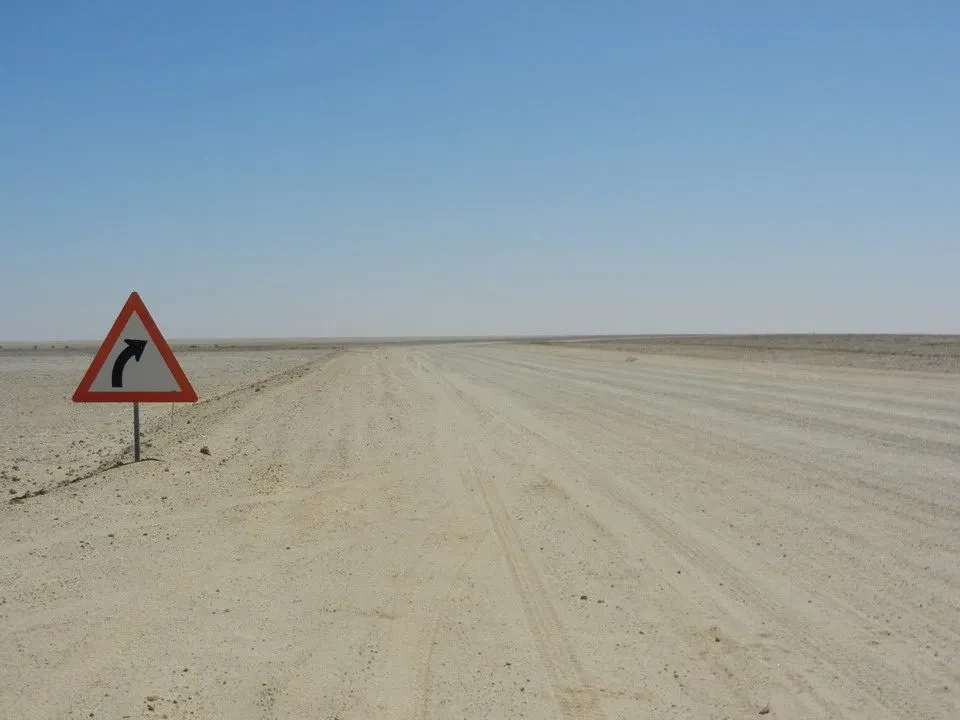
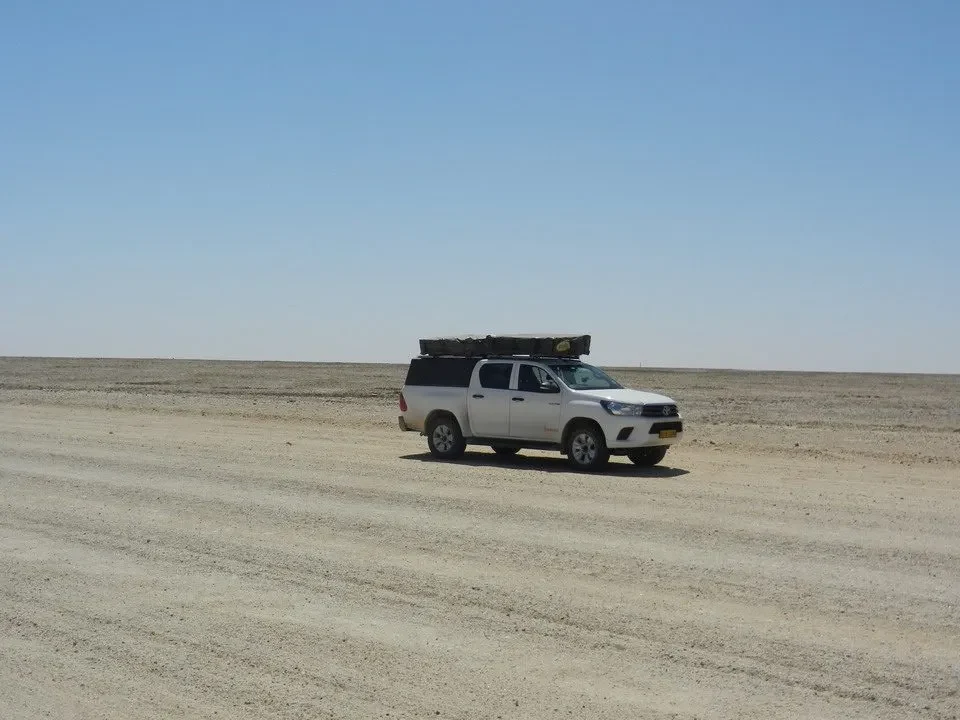
lucky, since the day is bright and sunny.Still a few dozen kilometers and we arrive at Cape Cross, known for its seal colony. We're not during peak season, nor do we intend to count them, but between those in the water and those resting on the sand, there should be around 80,000. In addition to the visual aspect, we can also sense that there are many from the smell they emit, of course unpleasant, although not unbearable as the guide says. We cannot help but take a moment to consider the animals that remain still etched on the stones as if they were monuments. The show costs around 80 NAD per person, which is paid at a ticket booth where the cashier is enclosed behind a cage that makes her seem like she's in prison. Near the penguins, you can also see... two crosses... copies of those posted by Diego Cao in 1486, the first European to set foot in present-day Namibia, right here. Along the route there are several side roads that deviate towards the ocean, clear signs for fishermen. There are also other salt flats and stalls scattered along kilometers of road with crystals on display; as we don't see any vendors, we assume they were placed there out of goodwill and the customer's trust. We return to our starting point in Henties Bay where we find a shady spot with trees and a garden for a quick lunch. We head east on a dirt road (the D1918) along which you can travel at 70/75 km/h. After a while, we don't see anyone, so we make a bet among ourselves about when we will meet the next vehicle. We estimate times ranging from 15 to 45 minutes: it would take a full 48 minutes before we encounter another car! Just before the turnoff towards Spitzkoppe, we stop to try the feeling of seeing nothing The scene that unfolds before us is straightforward: below, we see the yellow/grey of a barren desert with almost no vegetation, while above, the sky is as blue as ever. A horizontal line marks the boundary between the earthly and celestial realms. If you want to find something, you need to look… the road that runs Facing us, straight and endless, until it disappears into what we learned at school was the escape point. There's nothing to see, which is precisely why it's so beautiful. And the absolute silence that accompanies the scene completes the picture. Continuing on, there are campsites with schools and medical centers, likely belonging to the Damara tribe, people who seem to have darker skin than the Herero we’ve seen so far. Our destination is now in sight, and we begin to see the Spitzkoppe peak, which has been incorrectly compared to the Matterhorn. Its shape and structure are still captivating, but it's its overall complexity that creates a special magic. The red rocks under the setting sun hint at what will happen soon, at sunset. We enter the campsite when it’s only 4 pm, and we are told to set up camp in the area that suits us best. We take a short exploratory walk, considering that between one site and another there are less than 100 meters. The facilities are shared, with the rest offering a wonderful and relaxing solitude. A water source, showers, and a bar/restaurant can only be found at the entrance. I climb a few dozen meters. on the granite rocks above our parking lot to take some last photos from a distance; the ground provides good grip underfoot, and it's easy to climb, just be careful of the thorny branches. In the meantime, we spotted some wildlife today. ends on the barbecue (term used in Afrikaans that means barbecue) and the South African wine is chilled for a few minutes in the fridge. After dinner, we will take a walk among the nearby campsites: the moon illuminates the landscape is so bright that headlights are useless: its beauty won't please astronomy enthusiasts because it partially obscures the view of the southern hemisphere, which makes Namibia a place worth knowing. The full moon looks like a ball thrown ready to return to earth and continue playing. The silence is broken. Only by observing the animals, a gentle breeze slips between the rocks surrounding us, protecting our campsite. The sunrise at 6:15 am the following morning will also be impressive: the only problem will then be to sort through the dozens of photos taken. The vegetation also includes trees with tall trunks, indicating the presence of underground water. This area is much more welcoming than the lunar landscape seen yesterday.


