Etosha
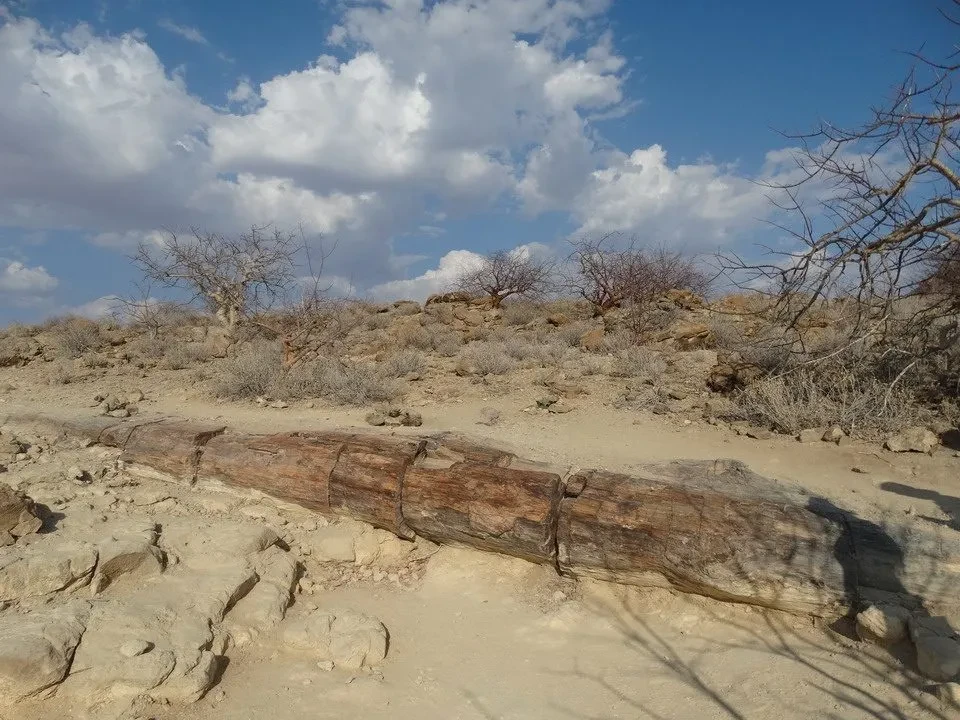
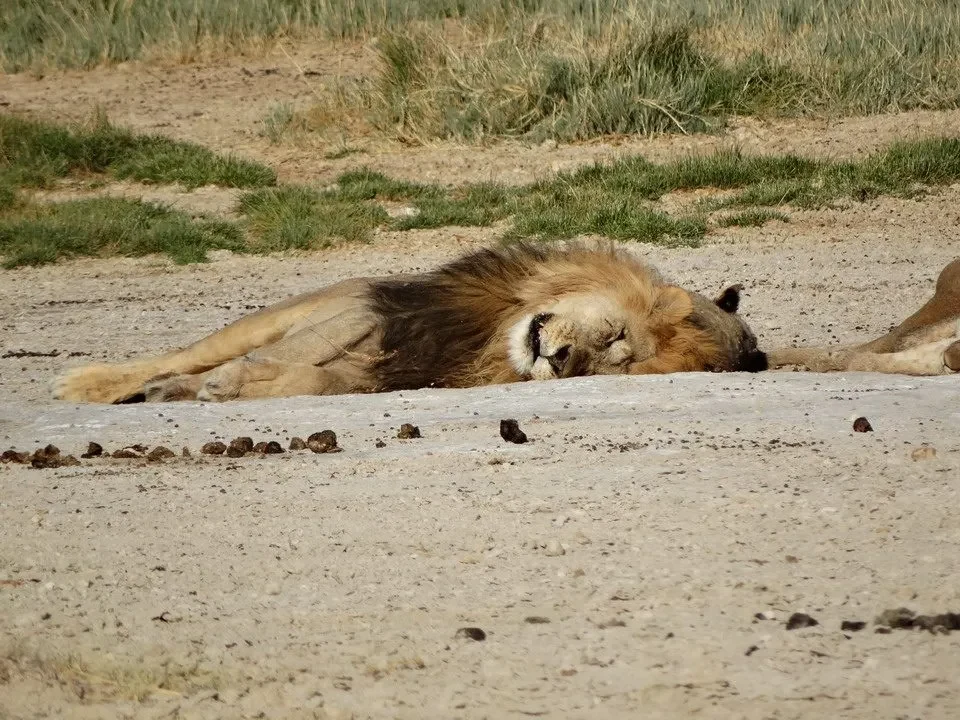
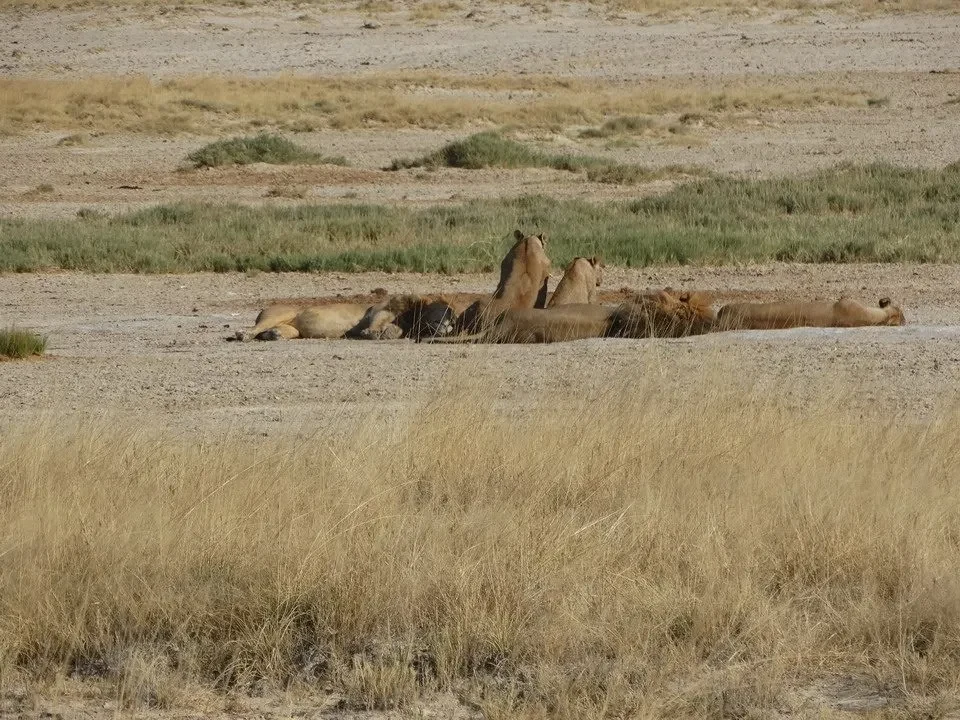
We leave the camp shortly after 7 am to head directly to the Petrified Forest, paying attention not to follow the handwritten signs that invite us to enter the "forest" at secondary sites managed by locals. However, we easily recognize the official entrance, where we are greeted by a Damara guide, who is very well-prepared and has studied good English in Khorixas and is taking her first steps with Spanish. She also tells us about their local language, which involves using a sound called "click"; this refers to the clicking of the tongue against the palate, and there are four different forms to create various sounds to express different states. It is used both by the Bushmen and the Damara. The Bushmen claim that the Damara, although belonging to the same San origin, do not belong to the same ethnic group. The trunks These trees, which were transported here from Central Africa through floods in ancient times, are covered in mud that has prevented oxygen from reaching them but has allowed for the filtration of some minerals, which have petrified the trunks. The branches and roots are believed to have been removed later, or perhaps never even reached this far. There are three colors: red, derived from iron oxide, black from manganese, and white from silicon. The longest trunk reaches 37 meters, which gives us an idea of the height of the forests in the past. To our surprise, the guide hands us a piece of trunk and he asks us to throw it on the ground: at first we are hesitant about handling such a piece of history and having to discard it, fearing that it might break. However, after his insistence, we do so and discover that not only does it not break, but upon impact it sounds like metal; in fact, the organic matter of the wood has been replaced by mineral cells, and now it is actually metal, although in the shape of a trunk with so much... of derivations where the branches were planted. The consequence of this process makes the specific weight of the former trunk higher than that of traditional stones. We also see a couple of specimens of Welwitscha... a thousand-year-old plant with two sun leaves that the wind cuts into various strands when they grow: those present here are about 100 years old. There are male and female plants, usually located very close together, and they reproduce through insect pollination. The female has longer leaves that, when opened, allow the flowers to emerge, while the male produces pollen. There is also another plant (see photo) whose scent is unpleasant but the fruits, once boiled, are useful for treating intestinal problems, while the berries are often given to horses as a dietary supplement. Although we are in a dry region, rainfall has further decreased in recent years, to the point that even during the rainy season, rivers no longer flow regularly: precipitation is expected in November, which is traditionally not very abundant but sufficient to make the landscape, which has been dry for months, bloom again. When we arrived, the parking attendant had noted that the front left tire was particularly flat. We decided to take a look to see if it was just a pressure problem or a puncture. Upon our return, the tire was still not completely deflated but it was clear that we had punctured it. We need to replace it with one of the two available, actually only one (the lower one requires a long key which is also used for the jack at a distance) but they forgot to give us this from the rental car. So we use the wheel located in the back seat and one of the attendants will earn a tip by operating the jack under the front axle. From here to Khorixas, there are only about twenty kilometers to reach the first gas station and have the punctured wheel repaired, which will be reimbursed by the insurance company. The gas stations are like bazaars, meeting places for various parties that are not always clean, where young petrol attendants compete for customers, calling them to their pump. There are even some private security guards, in uniform and with batons, to maintain order. We resolve everything in half an hour and can continue on to Outjo, where we plan to do our shopping. Shortly before, we pass a funeral procession: the hearse is a glass van, black-bordered, with its lights on, followed by a truck with an open bed loaded with people and a couple of cars. The electricity pylons are interesting, not planted in the ground but supported on a small base with 4 cables that hold them in position. In contrast, the stone mountain goats emerge sharply from the ground, the most notable example being the Vingerclip. We arrive at Etosha (*) around 3 pm by entering through the Andersson Gate, we take a two-day ticket and immediately head into the western sector to try our luck. see the lions near the Okondeka pond. Here we find a couple of males with four females and some cute puppies resting peacefully, not far from the water. They are sleeping soundly., but we also need to get up occasionally, stretch, and go back to sleep. We stay still for an hour, watching the slow movements of these magnificent forest creatures, amazed by their feline grace. We need to leave before sunset, around 5 pm.
Local wildlife
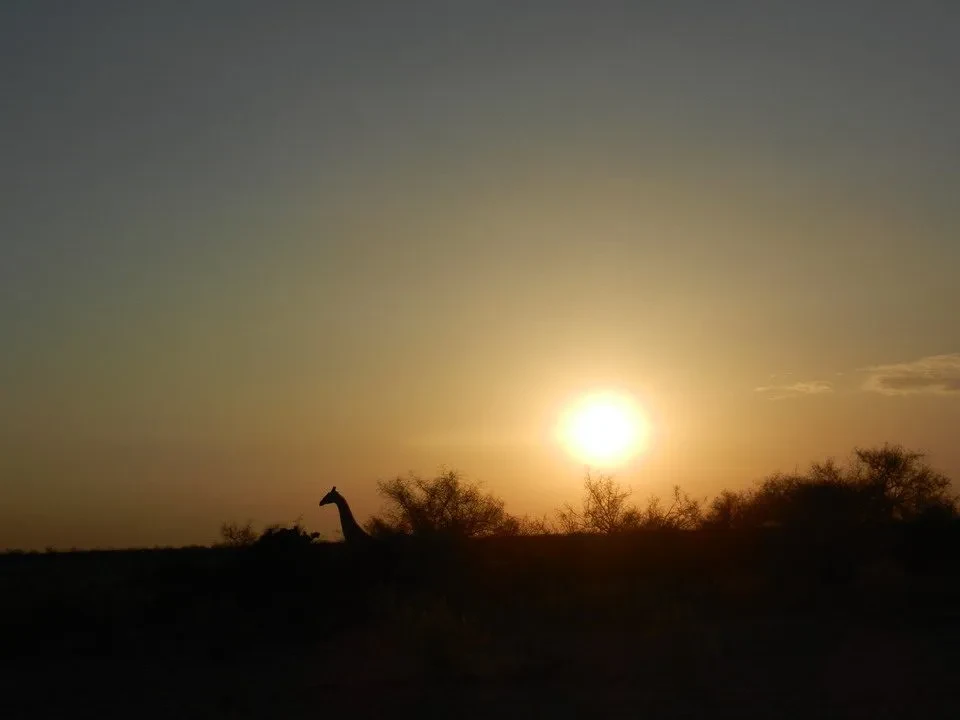
Meanwhile, we also visited other areas with abundant wildlife and promising photographic opportunities for tomorrow as well. The best thing about these large parks is that each visitor has control over their own research activities. There are almost a hundred ponds in total, and it's best to explore the ones with the most water during the early morning or late afternoon to witness spectacular scenes. Within the park, it's not allowed to get off the vehicles, except for designated safe areas where facilities are available. Given the size of the area, traffic is relatively light, which adds to the magic and allows for closer contact with both the animals and the surrounding environment. a group of hyenas I went to Gironzola shortly before sunset in search of meat. We left just in time when the sun tells us which is sufficient for today and we say goodbye to it with its orange semi-circle while it disappears into the distant west. The campsite is just a few minutes from the park entrance, and we are there immediately. Unfortunately, we see a nervous cheetah confined to captivity, but this doesn't matter from our hunting perspective: it's too easy to spot animals behind a metal grid. Speaking of grids, today on the barbecue we have sausages and kudu steaks. The area is very well equipped, it's hot but as the hours pass, the sleeping bag becomes the most suitable cover and there is none left over.
(*) Established in 1907, Etosha National Park is one of the first parks created for the protection of wildlife and flora. Originally, it encompassed a territory extending to the Skeleton Coast on the Atlantic Ocean. Currently, the reserve covers an area of 22,570 square kilometers, with its center being the "pan," a perfectly flat basin that stretches for about a hundred kilometers and is forty kilometers wide. The pan was, in the past, a lake connected to the Kunene River system, but it is now dry, and its surface of clay and salt glistens in the sunlight. Paradoxically, this white expanse offers protection to the most vulnerable animals because the absence of vegetation does not provide hiding places for dangerous predators.