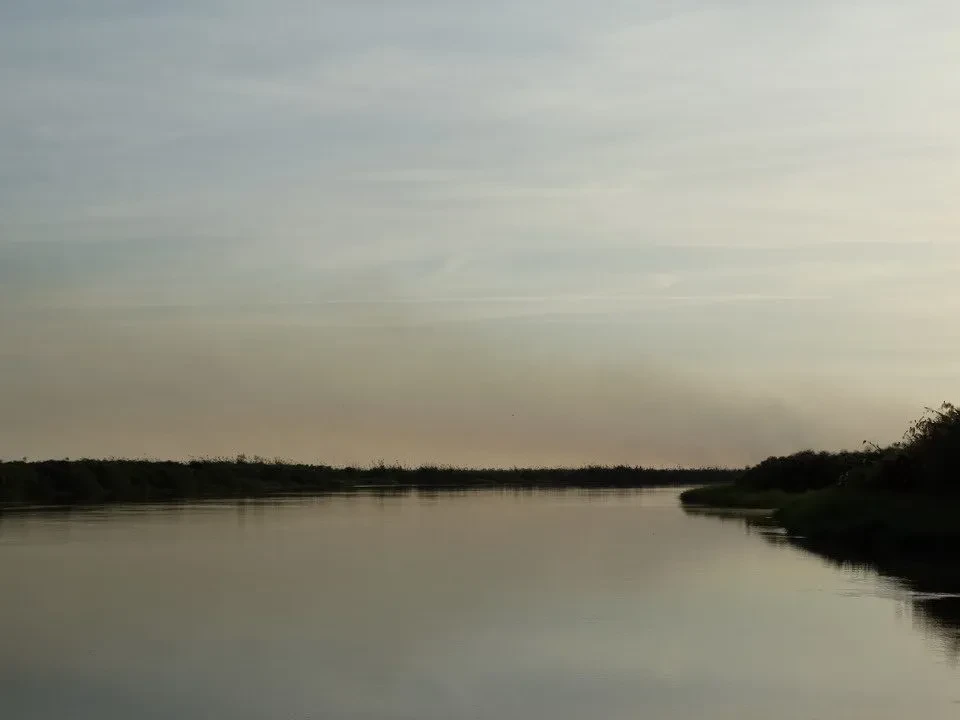
Morning in Tsodilo
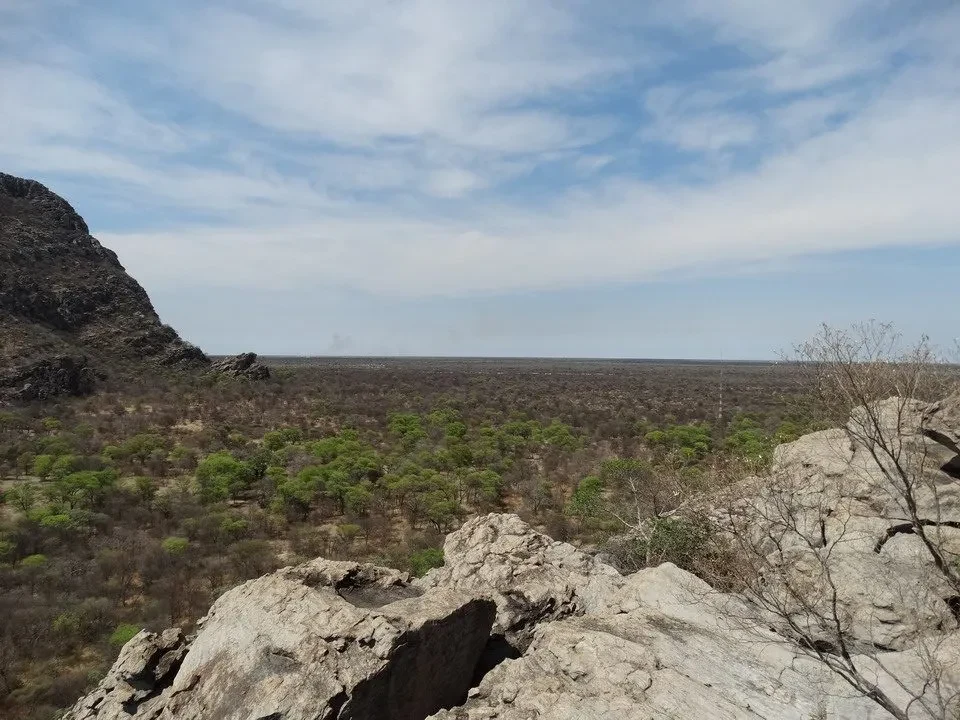
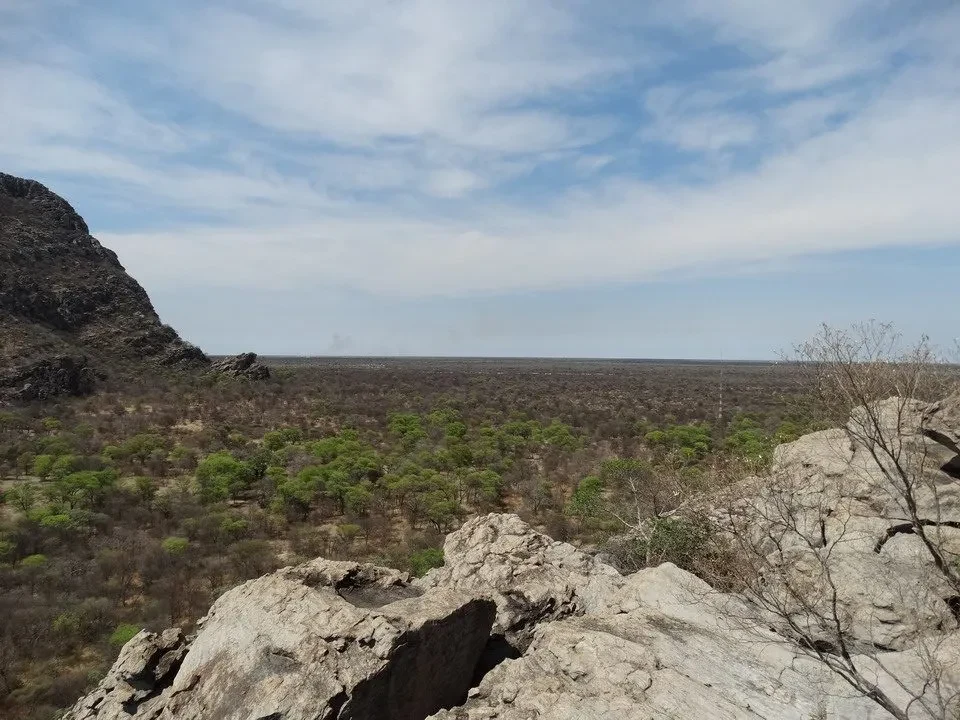
The following morning, the only reddish light was visible to the east, which appeared illuminated but this time it was just sunrise that woke us up. The fire had exhausted its destructive force; I headed towards the reception desk to collect some. pictures with a camera; the employee seems more relaxed, the area beyond only reveals more traces of burnt material on the upper bank. He doesn't even smoke, the reeds are completely burned and there is no large-diameter wood. We have breakfast and set off along the A35 in a southerly direction for about 30 km, before turning west onto a nice dirt road of 35 km towards the Tsodilo Hills, UNESCO World Heritage sites, located in the middle of a vast, flat plain and bearing the marks of ancient human activity. It's just after 8 am, and we are among the first to arrive at the entrance. We hire a guide and set off on the Rhino Trail. They explain to us about the rock paintings... discovering that they were created by healthy populations and are approximately 3000 years old. There are also depictions of whales here, and dolphins, providing evidence of past contacts with the coastal areas of South Africa or Namibia. The paintings can be made using white or red paint. The red ones depict wild animals, while the white ones are for pets or other representations. The red dye is prepared using animal blood, urine and earth, while the white one comes from broken bones, urine and light sand. There are many wild animals in the area, including leopards; we can see the hole dug by ants searching for prey. A tall baobab tree stands before us, having grown right in front of a rock to seek sunlight as part of its nourishment. We climb up the hill, avoiding rocks, to enjoy a privileged view: in front of us stands another formation that dominates the plain.
Beyond the interesting historical information about the site, we are also eager to learn about the local reality and the lives of the locals. We discover that the villages are part of the Boscimane ethnic group and the Mbukushu ethnic group. The San were nomadic tribes (now much less so), while the Boscimanes built stable dwellings from ancient times, therefore distinguishing themselves for their sedentary lifestyle. According to the guide, the term "Bantu" generally refers to all people with dark skin. When talking about malaria, we can see how it still represents a major problem during the humid summer that is coming. Last week there were the first rains and The vegetation is starting to turn colors. They say that AIDS is a disease specific to baboons, which is then transmitted to humans through sexual contact with animals. This is an assertion that we find difficult to confirm or deny. However, it is a tragic fact that Botswana has been literally ravaged by the disease in recent decades, and only now do we seem to see progress thanks to treatment and prevention. A free distribution of condoms can be obtained right at the entrance to the park building. It's 11 am when we leave to first tackle the 35 km of good dirt road and then the 400 km that will take us to Maun. In reality, the dirt road is better than the subsequent paved sections; these are a real nightmare of potholes, often very deep, which appear sporadically. Sometimes you can avoid them by passing on the side paths (which can be seen from afar and already serve as a warning), but often you have to go through them, drastically reducing your speed. This requires attention and tension for at least a couple of hours, until almost to the Sehithwa crossroads, where we turn east towards Maun on a better road. This does not mean lowering our guard, as the road is constantly crossed by donkeys or other domestic animals. In fact, we would have also liked to visit Lake Ngami, but it was again the sand that forced us to get back into 4x4. Before Sehithwa, we see the detours leading to the 13 villages of Etscha, built for Angolan refugees fleeing from war in their country at the end of the 1960s. We are stopped again at a health check point... where we need to disembark and place our feet on a mat soaked in calcium carbonate. We return with clean shoes while an attendant sprays the wheels of the off-road vehicle with the same substance using a handcart. We are asked if we have meat, eggs or fresh milk; we still have some leftover milk, which is discarded. In Maun, we fill up with fuel and do some shopping before heading to the Camp, located about 10 km north towards the delta. We won't find the separate pitches like in other campsites frequented these days, but we know that it's a very popular destination. We see trucks for deliveries intended to explore the delta, in a pleasant youthful setting and far from organized tourism. We are once again in a relatively large city for the context of the country, a communication center and base for wild Okawango tourism. At its entrance, large trees on either side of the road welcome the traveler almost as if it were entering an American campus. We buy a package of firewood for the BBQ, where we will cook our daily game.
with stalks and mixed salad. A refreshing and sweet pineapple will conclude the dinner.